
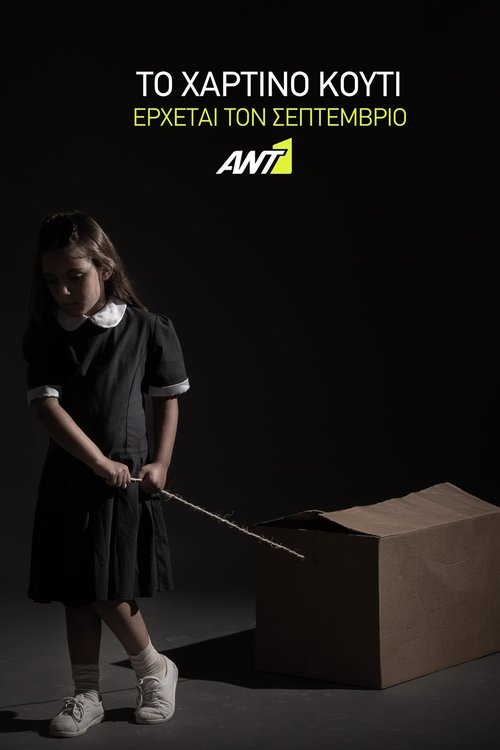










Popular
What motivates the main character, Eleni, to pursue her dreams despite the challenges she faces?
How does the relationship between Eleni and her childhood friend, Nikos, evolve throughout the series?
What role does the mysterious box play in Eleni's journey?
How does the character of Sofia influence Eleni's development throughout the series?
What are the key events that lead to the climax of Eleni's artistic journey?
Should I watch it?
Ask Your Own Question

What is the plot?
The story begins with a young woman named Eleni, who is struggling with the recent loss of her mother. She feels isolated and disconnected from her friends and family. One day, while going through her mother's belongings, she discovers a mysterious paper box hidden in the attic. Inside, she finds a collection of letters and photographs that reveal her mother's past, including a love story that Eleni never knew about.
Intrigued by the contents of the box, Eleni becomes determined to uncover the truth about her mother's life. She begins to piece together the timeline of her mother's relationship with a man named Andreas, who was a significant figure in her mother's youth. The letters are filled with passion and longing, and Eleni feels a deep connection to the emotions expressed within them.
As Eleni delves deeper into her mother's past, she decides to visit the locations mentioned in the letters. Her first stop is a quaint seaside town where her mother spent her summers. There, she meets an elderly woman named Sofia, who was a close friend of her mother. Sofia shares stories about Eleni's mother and Andreas, revealing the challenges they faced due to societal expectations and family pressures.
Eleni learns that her mother had to make a difficult choice between pursuing her love for Andreas and adhering to her family's wishes. This revelation stirs a mix of emotions within Eleni, as she grapples with her own feelings about love and sacrifice. She becomes more determined to find Andreas, believing that he holds the key to understanding her mother's choices.
Eleni's search leads her to a small café where she discovers that Andreas still lives in the same town. She gathers her courage and approaches him, introducing herself as the daughter of his long-lost love. Andreas is initially taken aback but agrees to meet with her. During their conversation, he shares his memories of her mother, recounting their passionate romance and the heartbreak of their separation.
As Eleni listens to Andreas, she feels a mix of sadness and admiration for her mother's strength. Andreas reveals that he never stopped loving Eleni's mother and often wondered what could have been. This confession deepens Eleni's understanding of her mother's sacrifices and the complexity of love.
Eleni's journey takes a turn when she discovers that her mother had written a final letter to Andreas, which was never sent. The letter expresses her enduring love and regret for not being able to be with him. Eleni feels compelled to deliver this letter to Andreas, believing it will provide closure for both of them.
In a poignant scene, Eleni hands the letter to Andreas, who reads it with tears in his eyes. The emotional weight of the moment is palpable as they both reflect on the love that was never fully realized. Andreas thanks Eleni for bringing the letter to him, and they share a moment of understanding and connection.
As Eleni prepares to leave the town, she feels a sense of peace. She has not only uncovered her mother's past but has also come to terms with her own feelings about love and loss. The experience has transformed her, allowing her to embrace her mother's legacy while forging her own path.
The series concludes with Eleni returning home, carrying the lessons learned from her mother's story. She feels a renewed sense of purpose and connection to her family, ready to face the future with a deeper understanding of love's complexities. The final scene shows Eleni placing the paper box back in the attic, a symbol of her journey and the enduring bond between mothers and daughters.







What is the ending?
In the ending of "Το Χάρτινο Κουτί," the main characters confront their pasts and the choices they have made. The story culminates in a series of emotional revelations and reconciliations, leading to a bittersweet resolution for each character.
As the final episodes unfold, we see the protagonist, Alex, grappling with the consequences of his decisions. He faces a pivotal moment where he must choose between pursuing his dreams or staying loyal to his family. In a heartfelt confrontation with his estranged father, Alex finally expresses his feelings of abandonment and hurt, leading to a moment of understanding between them. This reconciliation allows Alex to find closure and move forward with his life.
Meanwhile, Maria, Alex's love interest, struggles with her own demons. She confronts her past mistakes and the impact they have had on her relationship with Alex. In a poignant scene, she visits the place where they first met, reflecting on their journey together. This moment of introspection leads her to realize the importance of honesty and vulnerability in their relationship. By the end, she decides to fully commit to Alex, ready to face the future together.
The character of Dimitris, Alex's best friend, also experiences significant growth. He has been a source of comic relief throughout the series, but in the finale, he reveals deeper layers of his character. He confronts his own fears of failure and the pressure to conform to societal expectations. In a touching scene, he shares his aspirations with Alex, who encourages him to pursue his passion for art. This moment solidifies their friendship and highlights the theme of support and understanding among friends.
The series concludes with a montage of the characters moving forward in their lives. Alex and Maria are seen together, hand in hand, ready to face whatever challenges come their way. Dimitris is shown painting, finally embracing his artistic side. The final shot lingers on the paper box that symbolizes their shared memories and the journey they have taken together, emphasizing the importance of connection and the power of personal growth.
In summary, the ending of "Το Χάρτινο Κουτί" encapsulates the characters' journeys towards self-acceptance, reconciliation, and the strength of their relationships, leaving viewers with a sense of hope and possibility for the future.
Is there a post-credit scene?
In the TV show Το Χάρτινο Κουτί, there is indeed a post-credit scene that adds an intriguing layer to the narrative. After the final credits roll, the screen fades back in to a dimly lit room filled with scattered papers and photographs. The camera slowly pans across the clutter, revealing a large corkboard covered in notes and images that connect various characters and events from the series.
As the camera continues to move, it focuses on a particular photograph of a young girl, which is pinned prominently in the center. The girl's face is partially obscured, but her eyes seem to hold a deep sadness. A hand reaches into the frame, and we see a character from the series, Alex, staring intently at the photograph. His expression is a mix of determination and sorrow, suggesting unresolved feelings and a quest for answers.
The scene shifts slightly as Alex picks up a note from the table, which reads, "Find her before it's too late." The urgency in his voice echoes in the silence, hinting at a new mystery that will unfold. The camera zooms in on his face, capturing the intensity of his emotions--fear, hope, and a sense of responsibility.
As the screen fades to black, a soft, haunting melody plays, leaving viewers with a lingering sense of anticipation and curiosity about what lies ahead for Alex and the unresolved threads of the story. This post-credit scene effectively sets the stage for potential future developments, teasing the audience with the promise of deeper explorations into the characters' pasts and the overarching mysteries of the series.
What motivates the main character, Eleni, to pursue her dreams despite the challenges she faces?
Eleni is driven by a deep-seated desire to prove herself and escape the confines of her small-town life. Her passion for art and storytelling fuels her ambition, as she seeks validation from her estranged father, who is a renowned artist. This internal conflict creates a poignant emotional landscape, as she grapples with feelings of inadequacy and the fear of failure.
How does the relationship between Eleni and her childhood friend, Nikos, evolve throughout the series?
Initially, Eleni and Nikos share a close bond rooted in their shared past, but as Eleni's aspirations grow, tensions arise. Nikos feels left behind and struggles with his own insecurities, leading to misunderstandings and emotional distance. Their relationship becomes a central theme, showcasing the complexities of friendship, love, and ambition as they navigate their individual paths.
What role does the mysterious box play in Eleni's journey?
The mysterious box symbolizes Eleni's hidden potential and the secrets of her family's past. As she uncovers its contents, it reveals not only her family's history but also her own identity. This discovery acts as a catalyst for her growth, pushing her to confront her fears and embrace her artistic talents, ultimately shaping her journey.
How does the character of Sofia influence Eleni's development throughout the series?
Sofia, a mentor figure, represents the artistic freedom and success that Eleni aspires to achieve. Through their interactions, Sofia challenges Eleni to confront her self-doubt and encourages her to take risks in her art. This relationship is pivotal, as it provides Eleni with the guidance and support she needs to evolve, while also highlighting the sacrifices and struggles that come with pursuing one's passion.
What are the key events that lead to the climax of Eleni's artistic journey?
Key events include Eleni's participation in a prestigious art competition, her confrontation with her father about their strained relationship, and the discovery of the box's contents. Each event escalates the tension, forcing Eleni to confront her fears and insecurities. The climax occurs during the competition, where she must decide whether to stay true to her artistic vision or conform to external expectations, ultimately defining her path forward.
Is this family friendly?
"Το Χάρτινο Κουτί" is a drama series that explores complex themes and emotional narratives, which may not be suitable for very young audiences. Here are some potentially objectionable or upsetting aspects that could affect children or sensitive viewers:
-
Emotional Turmoil: The characters experience significant emotional struggles, including grief, betrayal, and loss, which may be intense for younger viewers to process.
-
Family Conflict: There are scenes depicting family disputes and tensions that can be distressing, showcasing the breakdown of relationships and the impact of secrets.
-
Mental Health Themes: The show touches on mental health issues, including anxiety and depression, which may be challenging for sensitive viewers.
-
Dramatic Tension: The series contains moments of high tension and conflict that could be unsettling, including confrontations and emotional outbursts.
-
Mature Themes: The narrative includes themes of infidelity and moral dilemmas that may not be appropriate for children.
-
Visual and Emotional Impact: Some scenes may be visually intense or emotionally charged, potentially leading to discomfort for younger audiences.
Overall, while the series offers rich storytelling and character development, its themes and emotional depth may be more suitable for older teens and adults.









