









Popular
Who is Leonardo San Juan and what motivates him throughout the story?
What role does the Nahuala play in the plot and how does it affect the characters?
How does Leonardo's relationship with his grandmother influence his actions?
What is the significance of the Day of the Dead in the story?
How does Leonardo's character evolve from the beginning to the end of the film?
Should I watch it?
Ask Your Own Question

What is the plot?
Sorry, we aren't able to watch and write up a full detailed plot yet. Check back in a few days.


What is the ending?
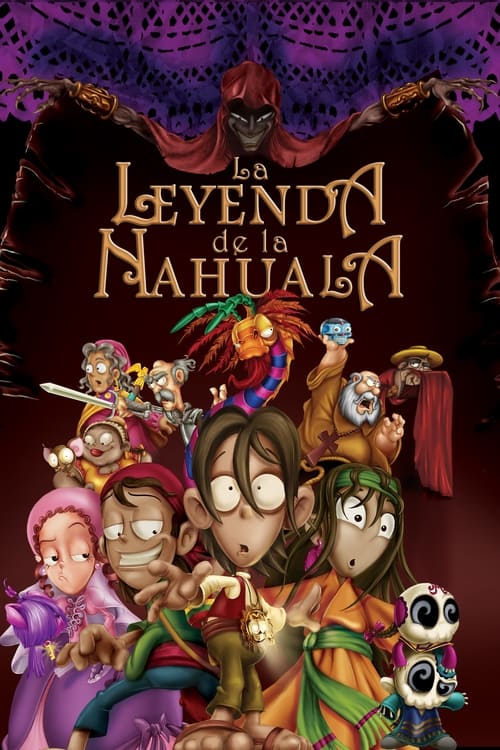
In the ending of "The Legend of the Nahuala," Leonardo San Juan confronts the Nahuala, a malevolent spirit, to save his town and his loved ones. With the help of his friends and the wisdom of his ancestors, he ultimately defeats the Nahuala, restoring peace. Leonardo's bravery and determination lead to a newfound confidence in himself, and he embraces his heritage. The film concludes with a celebration in the town, where Leonardo is recognized as a hero.
Now, let's delve into the ending in a more detailed narrative fashion:
As the climax of the story unfolds, Leonardo San Juan stands at the edge of the ancient cemetery, the moon casting an eerie glow over the gravestones. The air is thick with tension as he prepares to confront the Nahuala, the spirit that has terrorized his town. His heart races, a mix of fear and determination coursing through him. He recalls the teachings of his grandmother, who had instilled in him the importance of courage and the power of his cultural heritage.
In a pivotal moment, Leonardo is joined by his friends, who have come to support him despite their own fears. They form a circle, holding hands, drawing strength from one another. Together, they chant the protective incantations taught to them by the wise old man, Don Andrés. The atmosphere shifts as they summon the spirits of their ancestors, invoking their guidance and protection.
As the Nahuala materializes, a dark, shadowy figure with glowing eyes, the friends stand firm. Leonardo, feeling the weight of his responsibility, steps forward. He recalls the stories of bravery from his family's past, channeling their strength. The Nahuala lunges at him, but Leonardo, fueled by his newfound confidence, confronts the spirit with a powerful incantation. The words resonate in the air, a blend of fearlessness and cultural pride.
The battle between Leonardo and the Nahuala intensifies, with flashes of light and dark swirling around them. The spirit, once invincible, begins to falter as Leonardo's voice grows stronger. He realizes that the Nahuala is not just a monster but a manifestation of fear and misunderstanding. With one final, resounding chant, he breaks the Nahuala's hold over the town, causing the spirit to dissipate into a cloud of mist, finally at peace.
As dawn breaks, the townspeople emerge from their homes, witnessing the transformation of their surroundings. The once ominous atmosphere is replaced with a sense of calm and renewal. Leonardo, exhausted but triumphant, is embraced by his friends and family. His mother, who had worried for his safety, looks at him with pride, tears of joy streaming down her face. Leonardo's heart swells with a sense of belonging and purpose.
In the final scenes, the town gathers to celebrate their victory over the Nahuala. Colorful papel picado flutters in the breeze, and laughter fills the air as they honor their heritage. Leonardo stands at the center, a hero in the eyes of his community. He has not only defeated a great evil but has also discovered his own strength and identity. The film closes with a sense of hope and unity, emphasizing the importance of courage, friendship, and the rich cultural legacy that binds them all together.
As the credits roll, viewers are left with the image of Leonardo, now confident and proud, ready to embrace whatever challenges lie ahead, knowing he has the support of his loved ones and the strength of his ancestors behind him.
Is there a post-credit scene?
In "The Legend of the Nahuala," there is no post-credit scene. The film concludes its narrative without any additional scenes or content after the credits roll. The story wraps up with the resolution of the main conflict involving Leonardo San Juan and the Nahuala, leaving the audience with a sense of closure regarding the characters and their journey. The focus remains on the adventure and the lessons learned throughout the film, rather than teasing any future developments or sequels.
Who is Leonardo San Juan and what motivates him throughout the story?
Leonardo San Juan is the protagonist of 'The Legend of the Nahuala.' He is a timid and somewhat insecure young boy who is deeply connected to his family's heritage and the traditions of Puebla, Mexico. His motivation stems from a desire to overcome his fears, particularly after he learns about the Nahuala, a malevolent spirit that threatens his town. As the story progresses, Leonardo's journey transforms him from a frightened child into a brave hero, driven by love for his family and a sense of responsibility to protect his community.
What role does the Nahuala play in the plot and how does it affect the characters?
The Nahuala is a central figure in the film, representing an ancient evil spirit that awakens to wreak havoc on the town of Puebla. It is said to be the spirit of a witch who can transform into a Nahual, a creature that can shapeshift and instill fear. The presence of the Nahuala creates a sense of urgency and danger, particularly for Leonardo, who must confront his fears and ultimately face the spirit to save his loved ones. The Nahuala's influence drives the plot forward, as it forces characters to confront their own inner demons and the importance of bravery.
How does Leonardo's relationship with his grandmother influence his actions?
Leonardo's relationship with his grandmother, who is a wise and nurturing figure, plays a crucial role in shaping his character. She shares stories of the Nahuala and the importance of family traditions, instilling in him a sense of cultural pride and responsibility. Her encouragement and belief in his potential motivate Leonardo to embrace his heritage and confront the challenges posed by the Nahuala. Her wisdom serves as a guiding light for him, reinforcing the themes of courage and familial bonds throughout his journey.
What is the significance of the Day of the Dead in the story?
The Day of the Dead is a significant cultural backdrop in 'The Legend of the Nahuala.' It serves as a time when the spirits of the deceased are believed to return to the living world. This cultural event is intertwined with the plot, as it heightens the stakes for Leonardo, who must navigate the spiritual realm to confront the Nahuala. The celebration also emphasizes themes of remembrance and connection to one's ancestors, which are pivotal in Leonardo's quest to understand his heritage and the power of love and sacrifice.
How does Leonardo's character evolve from the beginning to the end of the film?
At the beginning of the film, Leonardo is portrayed as a timid and fearful boy, often bullied and unsure of himself. His character evolves significantly as he faces the threat of the Nahuala. Through his journey, he learns to embrace his fears, drawing strength from his family and cultural heritage. By the end of the film, Leonardo transforms into a courageous young hero who not only confronts the Nahuala but also inspires others in his community to stand up against fear. This evolution highlights his growth from insecurity to bravery, showcasing the power of self-discovery and resilience.
Is this family friendly?
The Legend of the Nahuala is generally considered family-friendly, but it does contain some elements that may be unsettling for younger children or sensitive viewers. Here are a few potentially objectionable aspects:
-
Supernatural Themes: The film revolves around the legend of the Nahuala, a supernatural creature that can be frightening. The portrayal of the Nahuala and its powers may be intense for some viewers.
-
Scary Scenes: There are moments of suspense and tension, particularly when characters encounter the Nahuala or face danger. These scenes may include dark imagery and sudden scares.
-
Emotional Struggles: The protagonist, Leonardo, experiences fear, anxiety, and feelings of inadequacy throughout the film. His emotional journey may resonate with some viewers but could be distressing for others.
-
Cultural References: The film incorporates elements of Mexican folklore, which may be unfamiliar to some audiences. While this adds depth, it could also lead to confusion or discomfort for those not familiar with the cultural context.
-
Mild Violence: There are instances of conflict and mild peril, including chase scenes and confrontations that may be intense but are not graphic.
Overall, while the film is designed for a family audience, parents may want to consider these elements when deciding if it is suitable for their children.









