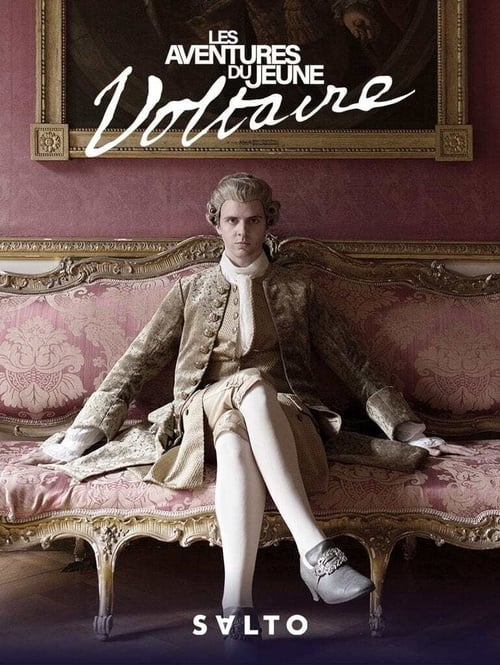



























Popular
What is the significance of the relationship between Voltaire and Émilie du Châtelet in the series?
How does Voltaire's rivalry with Rousseau develop throughout the series?
What role does the character of Madame de Pompadour play in Voltaire's life?
How does the series portray the impact of censorship on Voltaire's work?
What is the significance of the setting in 18th-century France for the characters' development?
Should I watch it?
Ask Your Own Question

What is the plot?
In the year 1733, the story begins in Paris, where the renowned philosopher and writer Voltaire, portrayed as a charismatic yet complex figure, is deeply engaged in the intellectual and cultural life of the city. He is seen attending salons, where he debates ideas with other Enlightenment thinkers. Voltaire's sharp wit and charm attract the attention of many, but he is also haunted by his past and the political turmoil of the time, which shapes his worldview.
Voltaire's life takes a turn when he meets Émilie du Châtelet, a brilliant mathematician and physicist. Their initial encounter is charged with intellectual chemistry, as they engage in a spirited discussion about science and philosophy. Émilie, played with passion and intelligence, is captivated by Voltaire's ideas and charisma. As they spend more time together, their relationship deepens, evolving from a friendship into a passionate love affair. The scenes depict their intimate conversations, filled with laughter and philosophical debates, showcasing their mutual respect and admiration.
As their romance blossoms, Émilie faces societal pressures and the constraints of her marriage to the wealthy but dull Marquis du Châtelet. She struggles with her desire for independence and her love for Voltaire. Meanwhile, Voltaire grapples with his own insecurities and fears of commitment, often retreating into his work to avoid confronting his feelings. The emotional tension between them builds, leading to moments of both joy and conflict.
The plot thickens when Émilie's husband discovers the affair. In a dramatic confrontation, the Marquis confronts Voltaire, leading to a heated exchange filled with accusations and threats. Voltaire, known for his sharp tongue, retaliates with biting remarks, but ultimately decides to leave to protect Émilie from further scandal. This decision weighs heavily on him, as he realizes the depth of his feelings for her.
In the aftermath, Émilie is torn between her loyalty to her husband and her love for Voltaire. She attempts to navigate her complicated life, seeking solace in her intellectual pursuits while longing for Voltaire's presence. The emotional turmoil is palpable as she writes letters to Voltaire, expressing her love and frustration, but he remains distant, focusing on his writing and public persona.
As the story progresses, Voltaire's political activism intensifies. He becomes embroiled in controversies that threaten his safety and reputation. His writings challenge the status quo, and he faces backlash from the authorities. Émilie, witnessing the dangers Voltaire faces, becomes increasingly worried for his safety. She decides to take a bold step by publicly supporting his ideas, risking her own reputation in the process.
The climax of the story occurs when Voltaire is arrested for his outspoken views. Émilie, determined to help him, uses her connections to secure his release. In a tense scene, she confronts powerful figures in the court, showcasing her intelligence and bravery. Her efforts pay off, and Voltaire is released, but the experience leaves them both shaken.
In the final act, Voltaire and Émilie reunite, but the toll of their struggles weighs heavily on their relationship. They share a poignant moment, reflecting on their love and the sacrifices they have made. However, the realities of their lives pull them apart once more. Émilie, realizing that her marriage and societal expectations will always come between them, makes the heart-wrenching decision to end their affair.
The series concludes with Voltaire returning to his work, now more resolute in his beliefs but forever changed by his love for Émilie. The final scenes depict him writing, with a sense of longing in his eyes, as he reflects on the impact Émilie had on his life. The emotional weight of their love story lingers, leaving a lasting impression on both characters as they navigate their separate paths in a world that often seeks to silence their voices.







What is the ending?
In the ending of "Voltaire in Love," the story culminates in a poignant confrontation between Voltaire and his beloved Émilie. Their relationship, fraught with passion and intellectual rivalry, reaches a critical juncture as they grapple with their feelings and the societal constraints surrounding them. Ultimately, they part ways, leaving Voltaire to reflect on the nature of love and sacrifice, while Émilie embarks on a new path, embracing her independence.
As the final scenes unfold, we see Voltaire in his study, surrounded by the remnants of his literary work. The room is dimly lit, with shadows dancing across the walls, symbolizing the turmoil within him. He clutches a letter from Émilie, her words echoing in his mind, filled with both love and sorrow. The weight of their shared history hangs heavily in the air, and Voltaire's expression shifts from longing to resignation. He understands that their love, while profound, cannot flourish in the face of societal expectations and personal ambitions.
In a contrasting scene, Émilie stands on a balcony overlooking the bustling streets of Paris. The vibrant life below contrasts sharply with her internal struggle. She gazes into the distance, contemplating her future without Voltaire. The wind tousles her hair, mirroring the chaos of her emotions. She knows that to pursue her own dreams, she must let go of the man she loves. This moment of clarity is bittersweet, as she embraces her independence, symbolizing a new chapter in her life.
The final moments of the series depict Voltaire walking through the streets of Paris, lost in thought. The camera captures the essence of the city, bustling with life yet filled with a sense of isolation. He reflects on the sacrifices made for love and the complexities of human relationships. As he passes by a group of young writers, he is reminded of his own aspirations and the legacy he wishes to leave behind. The scene fades to black, leaving the audience with a sense of unresolved longing.
In the closing credits, we see a montage of Voltaire's later works, hinting at his continued influence on literature and philosophy, while Émilie's journey unfolds in parallel, showcasing her contributions to the intellectual landscape of the time. Their paths diverge, yet the impact of their love story lingers, illustrating the enduring nature of passion and the sacrifices made in the name of personal growth.
Is there a post-credit scene?
In the 2021 series "Voltaire in Love," there is indeed a post-credit scene that adds a poignant layer to the narrative. After the final credits roll, the screen fades back in to reveal a dimly lit study, filled with books and papers scattered across a large wooden desk. The atmosphere is heavy with the weight of unspoken thoughts and lingering emotions.
In this scene, we find Voltaire, portrayed with a mix of weariness and determination, seated at his desk. He is writing fervently, his quill scratching against the parchment as he pours his heart into a letter. The flickering candlelight casts shadows across his face, highlighting the lines of age and experience etched into his features. His brow is furrowed, revealing the internal conflict he grapples with--his love for Émilie and the societal constraints that bind him.
As he writes, his voiceover begins, reflecting on the nature of love and the sacrifices it demands. He speaks of the fleeting moments of joy and the pain of separation, capturing the essence of his tumultuous relationship with Émilie. The camera slowly zooms in on the letter, revealing the words "To my dearest Émilie," before cutting to a close-up of Voltaire's face, where a single tear escapes his eye, signifying both his vulnerability and his unwavering passion.
The scene concludes with Voltaire sealing the letter with wax, a symbol of his commitment to his feelings, and placing it in an envelope. He looks out the window, where the moonlight bathes the garden in a silvery glow, hinting at the hope that love can transcend the barriers of time and circumstance. The screen fades to black, leaving the audience with a sense of bittersweet longing and the enduring power of love.
What is the significance of the relationship between Voltaire and Émilie du Châtelet in the series?
The relationship between Voltaire and Émilie du Châtelet is central to the narrative, showcasing a passionate and intellectually stimulating bond. Their interactions are filled with witty banter and deep philosophical discussions, reflecting their mutual respect and admiration. Émilie's fierce independence and intellect challenge Voltaire, pushing him to confront his own beliefs and vulnerabilities. This dynamic not only highlights the romantic tension but also serves as a commentary on the role of women in the Enlightenment era.
How does Voltaire's rivalry with Rousseau develop throughout the series?
Voltaire's rivalry with Rousseau is depicted through a series of escalating confrontations and ideological clashes. Initially, Voltaire dismisses Rousseau's romanticism and emotionalism, viewing them as a threat to reason and enlightenment. As the series progresses, their rivalry intensifies, culminating in public debates and personal attacks. This conflict reveals Voltaire's insecurities and his fear of being overshadowed, while also showcasing Rousseau's growing influence and the shifting tides of philosophical thought during the period.
What role does the character of Madame de Pompadour play in Voltaire's life?
Madame de Pompadour serves as a significant figure in Voltaire's life, acting as both a patron and a confidante. Her influence in the court of Louis XV provides Voltaire with opportunities to advance his career and disseminate his ideas. Their relationship is complex, marked by mutual admiration and political maneuvering. Pompadour's support is crucial for Voltaire, yet it also places him in precarious situations, as he navigates the treacherous waters of court politics and public opinion.
How does the series portray the impact of censorship on Voltaire's work?
The series vividly illustrates the challenges Voltaire faces due to censorship, showcasing the tension between his desire for free expression and the oppressive political climate of the time. Scenes depict Voltaire's frustration as he grapples with the limitations imposed on his writings, leading him to employ clever subterfuge and satire to convey his messages. This struggle not only highlights his resilience but also emphasizes the broader theme of the fight for intellectual freedom during the Enlightenment.
What is the significance of the setting in 18th-century France for the characters' development?
The 18th-century French setting is crucial for character development, as it reflects the societal norms, political tensions, and cultural movements of the Enlightenment. The opulence of the salons contrasts sharply with the struggles of the common people, influencing characters like Voltaire and Émilie to engage with social issues. The backdrop of revolution brewing in the streets serves as a catalyst for their ideas and actions, pushing them to confront their beliefs and the consequences of their intellectual pursuits.
Is this family friendly?
"Voltaire in Love," produced in 2021, is a historical drama that explores the life and romantic entanglements of the famous philosopher and writer, Voltaire. While the show delves into themes of love, passion, and intellectual discourse, it also contains elements that may not be suitable for all audiences, particularly children or sensitive viewers.
Potentially objectionable or upsetting aspects include:
-
Romantic Relationships: The series portrays complex romantic relationships, including infidelity and emotional turmoil, which may be difficult for younger viewers to understand.
-
Mature Themes: Discussions around love, betrayal, and the societal constraints of the 18th century may include mature themes that could be unsettling.
-
Conflict and Tension: The show features scenes of conflict, both personal and political, which may include heated arguments and emotional distress.
-
Historical Context: The portrayal of historical figures and events may include references to societal norms and practices that are outdated or considered inappropriate by modern standards.
-
Emotional Struggles: Characters experience significant emotional struggles, including heartbreak and existential crises, which may resonate deeply and evoke strong feelings.
These elements contribute to a narrative that, while rich in historical context and character development, may not be suitable for younger audiences or those sensitive to such themes.