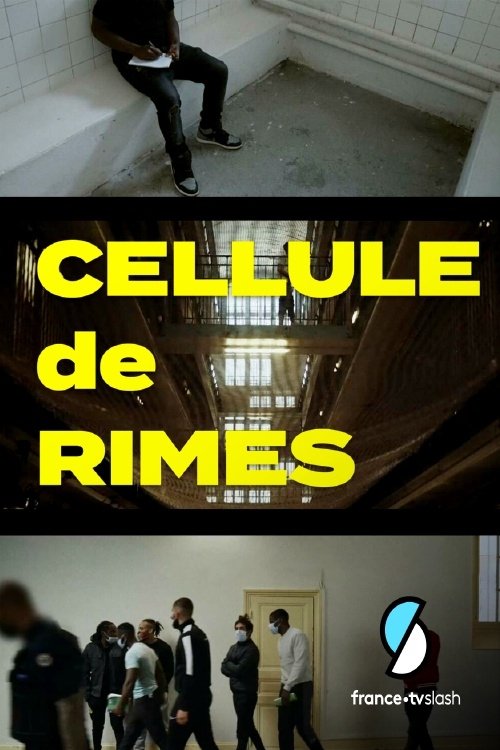



Popular
What motivates the main character, Léo, throughout the series?
How does the relationship between Léo and his mentor, Samir, evolve over the course of the series?
What role does the character of Jade play in Léo's journey?
How does the rivalry with the character of Malik impact Léo's growth?
What significant event leads to a turning point in Léo's career?
Should I watch it?
Ask Your Own Question

What is the plot?
In the opening scene of "Cellule de rimes," we are introduced to the protagonist, Léo, a talented but troubled young rapper living in a gritty urban neighborhood. He struggles with the pressures of his environment, including gang violence and familial expectations. Léo's passion for music serves as both an escape and a source of conflict, as his mother wants him to pursue a more stable career. The scene sets the tone for Léo's internal conflict between his dreams and reality.
As the story progresses, Léo is invited to participate in a local rap battle competition, which he sees as a chance to prove himself. He spends hours practicing with his best friend, Sam, who is supportive but also concerned about Léo's obsession with the competition. During a pivotal moment, Léo's estranged father unexpectedly shows up, expressing a desire to reconnect. This encounter stirs up a mix of emotions in Léo, who feels anger and disappointment but also a flicker of hope for reconciliation.
The day of the rap battle arrives, and the atmosphere is electric. Léo performs passionately, channeling his struggles into his lyrics. However, he faces fierce competition from a rival rapper, Malik, who is known for his aggressive style. The battle escalates, and Léo's performance is met with mixed reactions from the crowd. In a moment of vulnerability, Léo reveals personal details about his life, which resonates with the audience but also leaves him exposed to Malik's harsh rebuttals.
After the battle, Léo is devastated by his loss to Malik, who taunts him about his family issues. This defeat deepens Léo's internal conflict, leading him to question his talent and worth. In a moment of desperation, he turns to substance abuse, seeking solace in drugs to numb his pain. This decision alienates him from Sam and his family, who are worried about his well-being.
As Léo spirals further into addiction, he begins to neglect his music and relationships. Sam confronts him, urging him to seek help and focus on his passion for rap. This confrontation serves as a wake-up call for Léo, who realizes that he is on a destructive path. He decides to enter another rap competition, determined to reclaim his identity and prove himself.
In preparation for the new competition, Léo immerses himself in writing and practicing, drawing inspiration from his struggles and the support of his friends. He reconnects with his father, who shares his own regrets and encourages Léo to pursue his dreams. This moment of reconciliation provides Léo with a renewed sense of purpose and motivation.
The day of the new competition arrives, and Léo is more prepared than ever. He faces Malik again, but this time, he approaches the battle with confidence and authenticity. The crowd is captivated by Léo's raw emotion and powerful delivery. In a climactic moment, he confronts Malik with a verse that highlights their contrasting life experiences, turning the tide in his favor.
As the competition concludes, Léo is declared the winner, a moment that brings him immense joy and validation. However, instead of celebrating with his newfound fame, he chooses to share the spotlight with Sam and his family, acknowledging their support throughout his journey. This decision marks a significant shift in Léo's character, as he learns the importance of community and connection.
In the final scenes, Léo reflects on his journey, recognizing that while he has achieved success, the real victory lies in overcoming his personal struggles and rebuilding relationships. The series ends on a hopeful note, with Léo performing at a local venue, surrounded by friends and family, symbolizing his growth and commitment to his passion for music.
More TV Shows Like This
Browse All TV Shows →





What is the ending?
In the ending of "Cellule de rimes," the main characters confront their pasts and the consequences of their choices. The story culminates in a dramatic showdown that forces them to face their inner demons and the realities of their lives. Each character finds a resolution, leading to a mix of hope and despair as they navigate their futures.
As the final episodes unfold, we see the characters grappling with their decisions. The tension builds as they prepare for a final confrontation with the antagonistic forces that have shaped their lives. The protagonist, deeply affected by the events that have transpired, must make a choice that will determine not only their fate but also the fate of those around them.
In the climactic scene, the characters gather in a dimly lit warehouse, a symbolic representation of their entrapment in their pasts. The air is thick with tension as they exchange heated words, revealing their vulnerabilities and regrets. The protagonist stands at the center, torn between the desire for revenge and the need for redemption. Their internal struggle is palpable, as they reflect on the friendships and betrayals that have defined their journey.
As the confrontation escalates, the protagonist makes a pivotal decision to break the cycle of violence. They choose to extend an olive branch to their former enemies, seeking a path toward reconciliation rather than destruction. This moment is charged with emotion, as the characters' faces reveal a mix of surprise, anger, and ultimately, a glimmer of hope.
In the aftermath, the characters begin to part ways, each carrying the weight of their experiences. The protagonist, now transformed by their choices, steps into the light, symbolizing a new beginning. They are determined to forge a different path, one that embraces healing rather than revenge.
The fate of the main characters is revealed in the closing scenes. The protagonist finds solace in their newfound purpose, while other characters face the consequences of their actions. Some choose to seek redemption, while others remain trapped in their cycles of despair. The series ends on a note of ambiguity, leaving viewers to ponder the complexities of human relationships and the possibility of change.
In summary, "Cellule de rimes" concludes with a powerful exploration of choice, consequence, and the potential for redemption, as each character navigates their own path toward an uncertain future.
Is there a post-credit scene?
In the 2022 series "Cellule de rimes," there is indeed a post-credit scene that adds an intriguing layer to the narrative.
As the credits roll, the screen fades to black before transitioning to a dimly lit room filled with graffiti-covered walls, echoing the vibrant street art culture that permeates the show. The camera pans slowly, revealing a group of young aspiring rappers gathered in a circle, their faces illuminated by the flickering light of a single bulb hanging overhead.
Among them is Malik, one of the main characters, who appears contemplative yet energized. He leans forward, his eyes sparkling with passion as he shares his latest lyrical creation. The atmosphere is charged with anticipation, each member of the group hanging on his every word.
As Malik recites his verses, the camera zooms in on his face, capturing the intensity of his emotions--his determination to rise above the struggles he faces in his life and the desire to inspire others through his art. The scene is interspersed with quick cuts of the other rappers nodding in agreement, their expressions reflecting a mix of admiration and motivation.
Suddenly, the door swings open, and a figure steps in, casting a long shadow across the room. It's a well-known local rapper, someone Malik idolizes. The group falls silent, their eyes wide with disbelief. The rapper smiles, acknowledging Malik's talent, and invites him to perform at an upcoming underground event.
The scene ends with Malik's face lighting up with hope and excitement, a stark contrast to the struggles he faced throughout the series. The screen fades to black again, leaving viewers with a sense of anticipation for what lies ahead for Malik and his journey in the world of rap. This post-credit moment encapsulates the themes of aspiration, community, and the transformative power of music that are central to "Cellule de rimes."
What motivates the main character, Léo, throughout the series?
Léo is driven by a deep desire to prove himself as a talented rapper and to escape the shadows of his troubled past. His internal struggles with self-doubt and the pressure of his environment fuel his determination to succeed in the competitive world of hip-hop.
How does the relationship between Léo and his mentor, Samir, evolve over the course of the series?
Initially, Léo views Samir as a strict and demanding mentor, but as the series progresses, their relationship deepens into one of mutual respect and understanding. Samir's tough love approach helps Léo confront his fears and insecurities, ultimately leading to a bond that transcends their professional dynamic.
What role does the character of Jade play in Léo's journey?
Jade serves as both a romantic interest and a source of emotional support for Léo. Her belief in his talent and her own struggles with her family's expectations create a parallel narrative that highlights the challenges of pursuing one's dreams. Their relationship adds complexity to Léo's character development.
How does the rivalry with the character of Malik impact Léo's growth?
Malik represents the external challenges Léo faces in the hip-hop scene. Their rivalry pushes Léo to hone his skills and confront his insecurities. The tension between them serves as a catalyst for Léo's growth, forcing him to find his unique voice and style in a competitive environment.
What significant event leads to a turning point in Léo's career?
A pivotal moment occurs when Léo performs at a local rap battle, where he faces Malik. This event not only tests his skills but also serves as a public declaration of his commitment to his craft. The outcome of this battle significantly influences his reputation in the hip-hop community and sets the stage for his future endeavors.
Is this family friendly?
"Cellule de rimes," produced in 2022, is a show that explores themes of family, identity, and the struggles of youth through the lens of hip-hop culture. While it has a vibrant and engaging narrative, there are several aspects that may be considered objectionable or upsetting for children or sensitive viewers:
-
Language: The show features strong language and slang that may not be suitable for younger audiences. The dialogue often reflects the raw and unfiltered nature of street culture.
-
Violence: There are scenes depicting confrontations and altercations that may be intense or distressing. These moments are often tied to the characters' struggles and the environment they navigate.
-
Substance Use: The show addresses themes of drug use and its impact on the community, which may be unsettling for some viewers.
-
Emotional Turmoil: Characters experience significant emotional challenges, including feelings of abandonment, betrayal, and loss. These themes are explored deeply and may resonate strongly with sensitive viewers.
-
Social Issues: The narrative delves into complex social issues such as poverty, systemic inequality, and familial conflict, which may be heavy for younger audiences to process.
Overall, while "Cellule de rimes" offers valuable insights into the lives of its characters, its mature themes and content may not be suitable for all viewers, particularly children.