












Popular
How does Verity Greene’s arrival at Ditta change Maria’s work life, and what is the first sign that something is wrong with her?
What is Maria’s relationship with Kae, and how does he react when she tells him about Verity?
Why does Verity seem to target Maria specifically, rather than the rest of the office?
What is the significance of the school connection between Maria and Verity, and how does it shape Maria’s suspicions?
How do Maria’s colleagues and manager respond to her claims about Verity, and what does that do to Maria emotionally?
Should I watch it?
Ask Your Own Question

What is the plot?
Maria, a high-ranking development executive at the Ditta chocolate company, begins the episode at a focus-group tasting for her miso-jam candy bar, already tense because the product is controversial and she needs the session to go well. The atmosphere shifts when Verity Greene, an old school acquaintance Maria has not seen in years, arrives late and immediately unsettles her with her calm, piercing manner and her familiarity toward people Maria assumes she barely knows.
During the tasting, the group initially recoils from Maria's candy concept, but Verity intervenes with enough confidence and apparent authority that the room reverses course and starts praising the idea. Maria is startled by how quickly Verity seems able to bend the people around her, and her discomfort deepens when Verity corners her in the bathroom and casually reveals that she is applying for a job at Ditta. Maria leaves the encounter rattled, sensing that Verity has inserted herself into her professional life with deliberate precision.
Back home, Maria tells her boyfriend Kae about the encounter and tries to place Verity in the context of her school years. She recalls Verity as a lonely, socially isolated girl who spent her time in the computer lab, and she connects Verity to an old rumor involving teacher Mr. Kendrick and the cruel nickname "Milkmaid," which had been used by the school bully Natalie Caine. Maria's memory of Verity is colored by embarrassment, pity, and unease, and the encounter leaves her feeling that something unfinished from the past has returned.
The next day, Maria discovers that Verity has been hired at Ditta after a brief interview, despite Maria's certainty that there had been no open position. Verity settles into the team with unnerving speed and ease, behaving as if she belongs there, while Maria becomes increasingly watchful and defensive. As Verity's presence grows more embedded in the office, Maria begins to notice that details around her seem subtly wrong, and the sense that reality is shifting starts to erode her confidence in her own memory.
Maria's suspicion hardens when she realizes that changes are not limited to atmosphere or office politics: her work itself appears altered, damaging her standing and making her look careless or incompetent. Small discrepancies accumulate around her, each one more destabilizing than the last, and Maria's frustration turns into fear as she can no longer tell whether she is being sabotaged or is losing touch with reality. Verity remains composed throughout, while Maria's attempts to prove something is wrong only make her seem more anxious and erratic to the people around her.
As the incidents intensify, Maria becomes convinced that Verity is the source of the changes. Her mental state deteriorates under the pressure of being doubted, and she starts reading Verity's every gesture as a sign of deliberate manipulation. Maria's sense of self begins to fracture: she is no longer just worried about losing her job, but about losing any stable ground on which to trust her own perceptions.
The escalating pattern eventually forces Maria into direct confrontation with Verity's involvement in the distortions around her. Maria discovers that Verity possesses a pendant linked to a "quantum compiler," a device that lets her rewrite reality itself. That revelation reframes Verity's earlier calm and confidence as the behavior of someone who has been controlling events from the start, and Maria realizes that the humiliations, reversals, and contradictions she has endured were not accidents but weapons.
Maria attempts to seize the pendant from Verity, believing that taking it away will stop the reality manipulation and restore what has been stolen from her. The confrontation is driven by panic, rage, and desperation, with Maria finally acting on all the suspicion she has been swallowing since Verity reappeared. The episode ends on the confrontation's decisive outcome, with the truth of Verity's power exposed and Maria's reality left shattered by what she has learned.






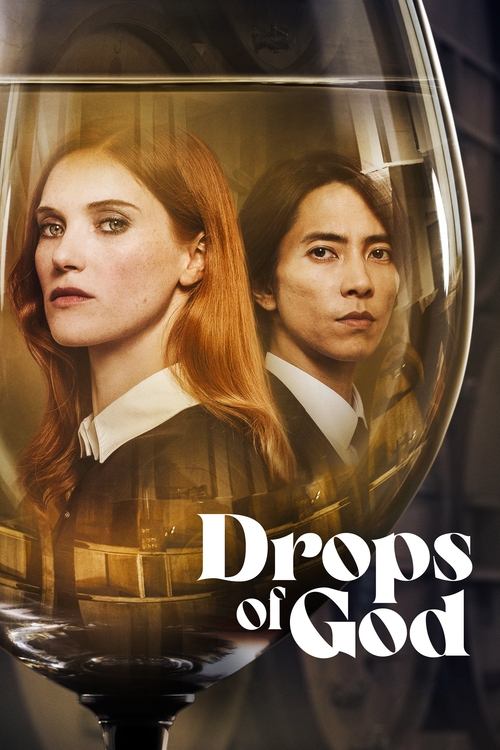


What is the ending?
The ending of Bête noire, episode 2 of Season 3, is dark and abrupt: Maria kills Verity during a violent confrontation, then takes control of the pendant and uses it to bend reality for herself. The episode ends with Maria no longer trapped by Verity's power, but rising into a new role of absolute dominance.
Maria goes to Verity's home in search of the pendant, determined to stop the distortions that have been ruining her life. Inside, she finds the device is not magic but a remote tied to a hidden quantum machine in the basement, and Verity calmly reveals that she has been using it to shift realities at will. Their confrontation turns physical, and the tension becomes desperate and frantic as Maria fights to survive while Verity keeps trying to control the scene.
Verity then uses the machine to create a reality where Maria appears to be the aggressor, and armed police are summoned into the house. The officers see Maria as the intruder, and the situation closes in on her fast. In that chaos, Maria grabs an officer's gun and shoots Verity in the head before Verity can alter reality again.
After Verity falls, Maria takes the pendant and uses Verity's own fingerprint to activate it for herself. She forces the device to work in her hands, and the officers are made to believe Verity killed herself. From there, Maria keeps shifting reality to her advantage, and the final image leaves her as the Empress of the Universe, fully in control of the power that once controlled her.
Maria's fate is that she survives, takes over the machine, and ends the story with godlike power. Verity's fate is death by gunshot. The police are left believing a false version of events, and the conflict ends with Maria replacing Verity at the center of the reality-bending power.
Is there a post-credit scene?
There is no evidence in the available sources that Bête noire, Season 3, Episode 2 has a post-credit scene. The episode descriptions and ending explanations all focus on the main ending, where Maria uses Verity's necklace to alter reality and becomes "Empress of the Universe," but none of the sources mention any separate scene after the credits.
If you want, I can instead describe the episode's final scene in detail.
How does Verity Greene’s arrival at Ditta change Maria’s work life, and what is the first sign that something is wrong with her?
Verity's arrival immediately destabilizes Maria's carefully controlled routine at the confectionery company, because Verity appears to know exactly how to unsettle her while everyone else treats her as harmless. The first clear sign that something is off is when tiny details in Maria's professional world start shifting in ways that make her look mistaken or unreliable, leaving her visibly rattled and isolated.
What is Maria’s relationship with Kae, and how does he react when she tells him about Verity?
Maria turns to Kae as the one person she expects to believe her, but his concern is tempered by confusion and doubt as her story grows stranger. His reaction deepens Maria's fear that she is losing not just control of her job, but also credibility at home.
Why does Verity seem to target Maria specifically, rather than the rest of the office?
Verity focuses on Maria with unnerving precision, as if she has arrived with a personal grievance rather than a normal job ambition. Maria gradually senses that Verity's calm, direct manner hides a deliberate campaign to make her question her own memory, competence, and sanity.
What is the significance of the school connection between Maria and Verity, and how does it shape Maria’s suspicions?
The old school connection is central because Maria remembers Verity as an outsider from their younger years, someone she associates with loneliness and a rumor-laden past. That history makes Verity's sudden appearance feel less like coincidence and more like a calculated return, intensifying Maria's suspicion that Verity has come to settle an old score.
How do Maria’s colleagues and manager respond to her claims about Verity, and what does that do to Maria emotionally?
Maria's colleagues and manager largely dismiss her concerns, which leaves her feeling humiliated, cornered, and increasingly desperate to prove that she is not imagining things. Their disbelief isolates her further, turning her from a confident specialist into someone fighting to preserve both her reputation and her grip on reality.
Is this family friendly?
Not really. The episode is rated TV-MA and is not a good fit for young children or very sensitive viewers.
Potentially upsetting elements include: - Frequent swearing. - Moderate violence, with some blood visible. - Psychological tension and intense scenes. - Brief nudity/non-sexual partial nudity in a shower scene. - Sexual references involving a teen and a teacher.
If needed, the safest short answer is: suitable for mature teens and adults, not family-friendly for younger kids.









