
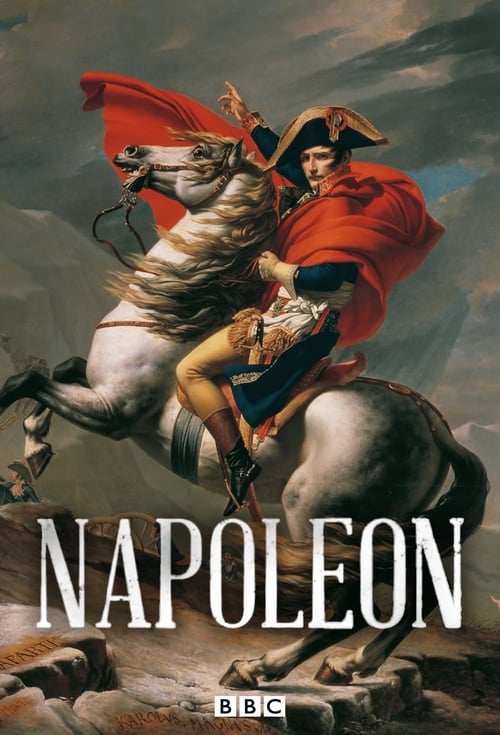



Popular
What are the key events that lead to Napoleon's rise to power in the series?
How does the relationship between Napoleon and Josephine evolve throughout the series?
What role does the character of Talleyrand play in Napoleon's political maneuvers?
How does the series depict the impact of the Napoleonic Wars on Europe?
What are the significant challenges Napoleon faces during his campaign in Russia?
Should I watch it?
Ask Your Own Question

What is the plot?
The miniseries "Napoleon," produced in 2015, begins with a young Napoleon Bonaparte in Corsica, where he is introduced as a bright but ambitious boy. His early life is marked by the political turmoil of the French Revolution, which shapes his worldview. He is sent to mainland France for military training, where he struggles with the language and culture but quickly rises through the ranks due to his intelligence and strategic mind.
As the Revolution intensifies, Napoleon becomes involved in the military campaigns against royalist forces. He demonstrates his tactical brilliance during the Siege of Toulon, where he orchestrates a successful attack that earns him a promotion to general. This victory solidifies his reputation and brings him into the political spotlight, where he begins to navigate the complex landscape of revolutionary politics.
Napoleon's rise continues as he marries Josephine de Beauharnais, a widow with two children. Their relationship is passionate but tumultuous, marked by infidelity and emotional strife. Despite their challenges, Josephine becomes a key figure in Napoleon's life, providing him with both support and a connection to the elite society he seeks to dominate.
The narrative shifts to the Italian campaign, where Napoleon leads his troops against the Austrians. His innovative tactics and charismatic leadership result in a series of stunning victories, including the Battle of Lodi and the capture of Milan. These successes not only expand French territory but also bolster his image as a military genius. However, the campaign takes a toll on his soldiers, and Napoleon grapples with the moral implications of war.
Upon returning to France, Napoleon orchestrates a coup d'état in 1799, overthrowing the Directory and establishing himself as First Consul. This pivotal moment marks his transition from military leader to political ruler. He implements a series of reforms aimed at stabilizing France, including the Napoleonic Code, which modernizes the legal system and reflects his vision of a meritocratic society.
As First Consul, Napoleon consolidates power, but his ambitions grow. He crowns himself Emperor of the French in a lavish ceremony at Notre-Dame Cathedral in 1804, symbolizing his complete control over the nation. This act alienates some of his former allies and sets the stage for future conflicts.
The series then delves into Napoleon's military campaigns across Europe, highlighting key battles such as Austerlitz, where he decisively defeats the Russian and Austrian forces. His strategic brilliance is on full display, as he uses deception and rapid maneuvers to outsmart his opponents. However, these victories come at a high cost, both in terms of lives lost and the growing resentment among conquered nations.
Napoleon's expansionist policies lead to the formation of coalitions against him, culminating in the disastrous invasion of Russia in 1812. The campaign begins with grand ambitions, but as the harsh winter sets in, his army suffers catastrophic losses due to starvation, disease, and relentless Russian tactics. The retreat from Moscow becomes a defining moment of failure, deeply affecting Napoleon's psyche and his standing in Europe.
In the aftermath of the Russian campaign, Napoleon faces increasing opposition from the Sixth Coalition, which includes Britain, Prussia, and Austria. Despite his attempts to regroup and rally his forces, he is ultimately defeated at the Battle of Leipzig in 1813. This loss forces him to abdicate the throne and he is exiled to the island of Elba, where he spends a year in relative isolation.
However, Napoleon's ambition is not extinguished. In 1815, he escapes from Elba and returns to France, where he regains support from his former soldiers and the populace. This period, known as the Hundred Days, sees him attempt to reclaim his empire. He faces off against the Seventh Coalition, culminating in the climactic Battle of Waterloo. Despite his initial successes, the battle turns against him, and he is ultimately defeated by the Duke of Wellington and Prussian forces.
Following his defeat at Waterloo, Napoleon is captured and exiled to the remote island of Saint Helena in the South Atlantic. The series concludes with his final years spent in isolation, reflecting on his life and legacy. His health deteriorates, and he dies in 1821, leaving behind a complex legacy as one of history's most controversial figures.









What is the ending?
In the ending of the 2015 TV show "Napoleon," the series culminates with Napoleon's final defeat at the Battle of Waterloo, leading to his exile to Saint Helena. The emotional weight of his downfall is palpable as he reflects on his life and legacy, surrounded by the remnants of his once-great empire. Key characters, including Josephine and his loyal generals, are left to grapple with the consequences of his ambition and the shifting tides of history.
As the final episodes unfold, we see Napoleon, now a shadow of his former self, in the aftermath of the catastrophic battle. The scene opens with the battlefield strewn with the remnants of war--fallen soldiers, abandoned weapons, and the haunting silence that follows chaos. Napoleon, dressed in his military uniform, stands amidst the devastation, his face a mask of disbelief and despair. The weight of his decisions hangs heavily on him, and the once-mighty leader is now confronted with the reality of his defeat.
In the following scenes, we witness the reactions of his closest allies. General Ney, who fought valiantly, is captured and faces the grim consequences of loyalty to a fallen leader. His fate is sealed as he is executed, a poignant reminder of the cost of ambition and loyalty in the face of overwhelming odds. The camera lingers on Ney's final moments, capturing the fear and resignation in his eyes, a stark contrast to the bravado he once displayed on the battlefield.
Meanwhile, Josephine, who has been a constant presence in Napoleon's life, is shown in her own moment of reflection. She receives news of his defeat with a mixture of sorrow and relief, understanding the toll that his relentless pursuit of power has taken on both of them. The emotional distance between them is palpable, as she grapples with her feelings of love and loss. The scene shifts to her solitary moments, where she gazes out at the horizon, contemplating the life they shared and the man he has become.
As Napoleon is forced into exile, the series captures his internal struggle. He is depicted in a small, dimly lit room on Saint Helena, surrounded by books and maps, a stark contrast to the grandeur of his past. The camera focuses on his hands as he writes, his expression a mix of regret and defiance. He reflects on his legacy, pondering the impact of his rule and the sacrifices made along the way. The isolation of his new life is palpable, and the audience can feel the weight of his solitude.
In the final moments of the series, Napoleon's health begins to decline. The once-vibrant leader is now frail, and the scenes depict his physical deterioration alongside his mental anguish. He is visited by a few loyal followers, who reminisce about the glory days, but the conversations are tinged with sadness and nostalgia. The series closes with a haunting image of Napoleon staring out at the ocean, a symbol of his lost empire and the dreams that have slipped away. His final words echo the themes of ambition, loss, and the relentless passage of time, leaving viewers with a poignant sense of the complexities of his character and the legacy he leaves behind.
In summary, the fates of the main characters are sealed in this tragic conclusion: Napoleon is exiled and reflects on his life in solitude, General Ney faces execution for his loyalty, and Josephine is left to mourn the man she loved while coming to terms with the consequences of his ambition. The series ends on a note of somber reflection, encapsulating the rise and fall of one of history's most enigmatic figures.
Is there a post-credit scene?
The 2015 miniseries "Napoleon" does not feature a post-credit scene. The series concludes with a powerful final episode that encapsulates the life and legacy of Napoleon Bonaparte, focusing on his final days in exile on the island of Saint Helena. The narrative wraps up the historical events and emotional arcs of the characters without any additional scenes after the credits. The ending emphasizes Napoleon's reflections on his life, his ambitions, and the impact of his actions, leaving viewers with a poignant sense of closure regarding his tumultuous journey.
What are the key events that lead to Napoleon's rise to power in the series?
The series begins with Napoleon Bonaparte's early military career, showcasing his strategic brilliance during the Italian campaign. Key events include his decisive victories against the Austrians, which earn him recognition and support from the French government. His ability to inspire his troops and his innovative tactics are highlighted, leading to his eventual appointment as First Consul after the coup of 18 Brumaire.
How does the relationship between Napoleon and Josephine evolve throughout the series?
Napoleon's relationship with Josephine is complex and evolves significantly. Initially, their romance is passionate, filled with intense emotions and mutual admiration. However, as Napoleon's ambitions grow, the strain of his political life and his infidelities create tension. Josephine's struggles with her inability to provide an heir further complicate their bond, leading to a poignant separation that reflects both personal and political ramifications.
What role does the character of Talleyrand play in Napoleon's political maneuvers?
Talleyrand serves as a cunning and pragmatic advisor to Napoleon, often acting as a mediator between the ambitious leader and the various factions within France. His motivations are rooted in self-preservation and political maneuvering, as he seeks to maintain his influence. Throughout the series, Talleyrand's advice often reflects a deep understanding of the political landscape, and his interactions with Napoleon reveal the tension between loyalty and ambition.
How does the series depict the impact of the Napoleonic Wars on Europe?
The series vividly portrays the Napoleonic Wars through intense battle scenes and the emotional toll on soldiers and civilians alike. The devastation of war is shown through the eyes of both French troops and their adversaries, highlighting the chaos and suffering that ensues. The political ramifications are also explored, as Napoleon's conquests lead to shifting alliances and the eventual rise of nationalism across Europe.
What are the significant challenges Napoleon faces during his campaign in Russia?
Napoleon's campaign in Russia is marked by significant challenges, including harsh weather conditions, logistical failures, and the scorched earth tactics employed by the Russian army. The series captures the desperation of his troops as they face starvation and extreme cold, leading to a dramatic decline in morale. Napoleon's initial confidence turns to frustration and despair as he realizes the extent of his miscalculations, culminating in a harrowing retreat that signifies a turning point in his fortunes.
Is this family friendly?
The 2015 TV show "Napoleon" contains several elements that may not be considered family-friendly. Here are some potentially objectionable or upsetting aspects:
-
Violence and Warfare: The series depicts numerous battle scenes, showcasing the brutality of war, including injuries and deaths of soldiers. The graphic nature of these scenes may be distressing for younger viewers.
-
Political Intrigue and Betrayal: The show explores themes of betrayal, ambition, and the darker sides of political maneuvering, which may be complex and unsettling for children to understand.
-
Death and Loss: Characters experience significant loss, including the deaths of loved ones, which can evoke strong emotional responses and may be upsetting for sensitive viewers.
-
Mature Themes: The series touches on themes of power, ambition, and the moral ambiguities of leadership, which may be challenging for younger audiences to grasp fully.
-
Emotional Turmoil: Characters often face intense emotional struggles, including feelings of isolation, despair, and conflict, which may resonate deeply and be overwhelming for some viewers.
These elements contribute to a narrative that is more suited for mature audiences, as they may not be appropriate for children or sensitive individuals.