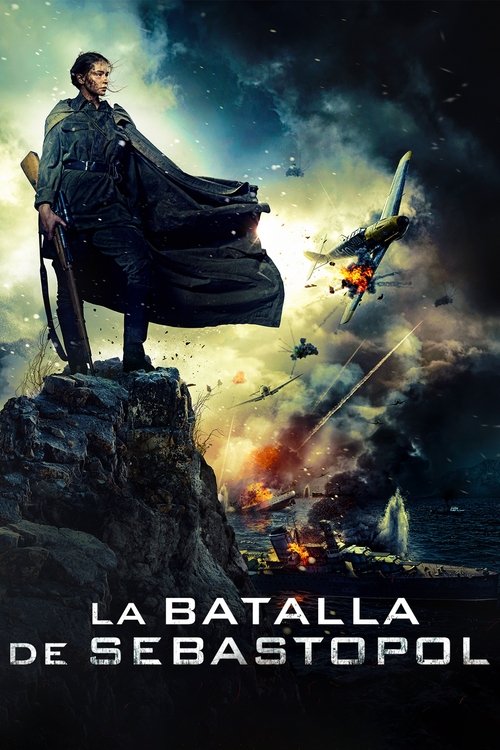








Popular
What motivates Lyudmila Pavlichenko to become a sniper during the war?
How does Lyudmila's relationship with her fellow soldiers evolve throughout the film?
What role does the character of the journalist play in Lyudmila's story?
How does the film depict the psychological impact of war on Lyudmila?
What significant events lead to Lyudmila's rise as a legendary sniper?
Should I watch it?
Ask Your Own Question

What is the plot?
The film opens in 1941, during World War II, as the German army invades the Soviet Union. We are introduced to Yevdokiya Zavaly, a skilled Soviet sniper, who is shown in her element, taking down enemy soldiers with precision. Her talent is recognized, and she is soon recruited into a special unit of snipers. The atmosphere is tense, filled with the sounds of gunfire and the chaos of war, as Yevdokiya grapples with the harsh realities of combat.
As the war progresses, Yevdokiya's unit is deployed to defend Sevastopol, a strategic port city in Crimea. The stakes are high, and the pressure mounts as the German forces advance. Yevdokiya forms a close bond with her fellow soldiers, particularly with a fellow sniper named Lyudmila Pavlichenko, who becomes a key figure in her life. The camaraderie among the snipers is palpable, as they share stories and support each other amidst the horrors of war.
In a pivotal scene, Yevdokiya and her unit are tasked with a dangerous mission to eliminate a high-ranking German officer. The tension is thick as they prepare for the operation, each sniper taking their position. The mission unfolds with meticulous planning, but as they execute their plan, they encounter unexpected resistance. A fierce firefight ensues, showcasing the chaos of battle, with bullets flying and explosions echoing. Yevdokiya's determination shines through as she takes out several enemy soldiers, but the mission takes a toll on her emotionally.
As the war drags on, Yevdokiya faces personal challenges. She struggles with the loss of comrades and the weight of her responsibilities as a sniper. Her internal conflict is highlighted in a scene where she reflects on the lives she has taken, questioning the morality of her actions. This moment of vulnerability adds depth to her character, revealing her humanity amidst the brutality of war.
The narrative shifts to a significant turning point when Yevdokiya is injured during a skirmish. She is taken to a field hospital, where she meets a doctor named Alexei. Their relationship begins to blossom, providing a glimmer of hope and normalcy in the midst of chaos. However, Yevdokiya's recovery is complicated by her desire to return to the front lines, driven by her sense of duty and the need to avenge her fallen comrades.
After her recovery, Yevdokiya re-joins her unit, and the stakes are higher than ever. The German forces launch a full-scale assault on Sevastopol, and the defenders are pushed to their limits. In a gripping sequence, Yevdokiya and her fellow snipers are forced to adapt their tactics as they face overwhelming odds. The tension escalates as they engage in a deadly game of cat and mouse with the enemy, utilizing their skills to outsmart and outmaneuver the German soldiers.
In a climactic battle, Yevdokiya's unit is cornered, and they must make a desperate stand. The scene is filled with intense action, as they fight fiercely to protect their position. Yevdokiya's leadership emerges as she coordinates their defense, showcasing her growth as a character. The emotional weight of the battle is palpable, with moments of heroism and sacrifice as comrades fall around her.
As the battle rages on, Yevdokiya faces a critical decision when she has the opportunity to take out a key enemy sniper who has been targeting her unit. The tension builds as she weighs the risks and consequences of her actions. Ultimately, she takes the shot, eliminating the threat but at a great personal cost, as she witnesses the impact of her decision on her fellow soldiers.
The film culminates in the aftermath of the battle, where the surviving members of Yevdokiya's unit reflect on their losses and the toll of war. Yevdokiya's character arc comes full circle as she grapples with the emotional scars left by her experiences. The final scenes depict her resolve to continue fighting, embodying the spirit of resilience and determination that defines her journey throughout the film. The story closes with a sense of hope, as Yevdokiya looks towards the future, ready to face whatever challenges lie ahead.







What is the ending?
The ending of "The Battle for Sevastopol" sees Lyudmila Pavlichenko, the protagonist, achieving a significant victory against the Nazis but at a great personal cost. After a series of intense battles, she is injured and ultimately leaves the battlefield. The film concludes with her reflecting on her experiences and the impact of war on her life, as well as the lives of those around her.
In a more detailed narrative:
As the final act unfolds, the atmosphere is thick with tension. The war rages on, and the stakes are higher than ever. Lyudmila Pavlichenko, portrayed as a fierce and determined sniper, is deeply entrenched in the conflict. The scene opens with her and her comrades preparing for an imminent assault. The sounds of gunfire and explosions echo in the background, creating a cacophony that underscores the chaos of war.
Lyudmila, now a celebrated sniper, is both revered and burdened by her fame. She feels the weight of her responsibilities, knowing that her skills are crucial for the survival of her fellow soldiers. In a moment of quiet before the storm, she shares a poignant conversation with her friend and fellow soldier, who expresses concern for her safety. Lyudmila reassures her, revealing her unwavering resolve to fight for her country and her people.
As the battle commences, the camera captures the harrowing sights of war: soldiers rushing into combat, the smoke rising from explosions, and the grim reality of loss. Lyudmila takes her position, her eyes sharp and focused. She expertly picks off enemy soldiers, her face a mask of concentration and determination. Each shot she takes is not just a kill; it is a testament to her commitment to her cause and her comrades.
However, the tide of battle turns. In a particularly intense moment, Lyudmila is ambushed. A sniper from the opposing side targets her, and despite her skills, she is hit. The scene is visceral, showing the immediate aftermath of her injury. Her comrades rush to her side, panic and fear etched on their faces. Lyudmila, though in pain, remains resolute, urging them to continue the fight without her.
As she is evacuated from the battlefield, the emotional weight of her experiences begins to settle in. The camera lingers on her face, capturing the mix of pain, determination, and a hint of sorrow for the lives lost around her. The journey back is filled with flashbacks of her time on the front lines, the friendships forged, and the sacrifices made.
In the final scenes, Lyudmila is seen recovering in a hospital. The once vibrant and fierce soldier now grapples with the reality of her injuries and the toll of war. She reflects on her journey, the friends she has lost, and the impact of her actions. The film closes with her looking out a window, a mixture of hope and melancholy in her eyes. She understands that while she has fought valiantly, the scars of war will remain with her forever.
The fate of the main characters is intertwined with the themes of sacrifice and resilience. Lyudmila, though injured, emerges as a symbol of strength and courage. Her friend, who had worried for her safety, continues to fight, inspired by Lyudmila's bravery. The film ends on a note of reflection, emphasizing the personal costs of war and the enduring spirit of those who fight for their homeland.
Is there a post-credit scene?
The Battle for Sevastopol, released in 2015, does not feature a post-credit scene. The film concludes with a poignant ending that encapsulates the emotional journey of its main character, Lyudmila Pavlichenko, a skilled Soviet sniper during World War II. The narrative wraps up her story without additional scenes after the credits, focusing instead on the impact of her experiences and the legacy she leaves behind. The film emphasizes themes of courage, sacrifice, and the harsh realities of war, leaving the audience with a sense of closure regarding her character's journey.
What motivates Lyudmila Pavlichenko to become a sniper during the war?
Lyudmila Pavlichenko is driven by a deep sense of patriotism and a desire to protect her homeland from the invading forces. Her initial motivations stem from personal loss and the desire to avenge the deaths of her friends and fellow soldiers. As she becomes more skilled, her determination grows, fueled by the recognition she receives and the responsibility she feels towards her fellow soldiers.
How does Lyudmila's relationship with her fellow soldiers evolve throughout the film?
Lyudmila's relationships with her fellow soldiers, particularly with her mentor and fellow sniper, are complex and evolve significantly. Initially, she faces skepticism and prejudice in a male-dominated environment, but as she proves her skills, she earns their respect. Her bond with her comrades deepens as they share the horrors of war, leading to moments of camaraderie, support, and emotional vulnerability.
What role does the character of the journalist play in Lyudmila's story?
The journalist, who is initially skeptical of Lyudmila's capabilities, becomes an important figure in her life. He documents her journey, helping to elevate her status as a national hero. Their relationship develops from professional to personal, as he becomes an emotional anchor for her amidst the chaos of war, providing a glimpse of normalcy and connection.
How does the film depict the psychological impact of war on Lyudmila?
The film poignantly illustrates the psychological toll of war on Lyudmila through her experiences on the battlefield. As she witnesses the brutality and loss around her, she grapples with feelings of guilt, fear, and trauma. These emotional struggles are depicted through her internal monologues and moments of solitude, showcasing her vulnerability and the heavy burden of her role as a sniper.
What significant events lead to Lyudmila's rise as a legendary sniper?
Lyudmila's rise as a legendary sniper is marked by several key events, including her first successful kills, which establish her reputation. A pivotal moment occurs during a critical battle where she single-handedly takes out enemy officers, turning the tide for her unit. Her strategic mind and exceptional marksmanship, combined with her bravery in the face of danger, solidify her status as a national hero.
Is this family friendly?
"The Battle for Sevastopol," while a historical drama centered around the events of World War II, contains several elements that may not be suitable for children or sensitive viewers. Here are some potentially objectionable or upsetting aspects:
-
War Violence: The show depicts intense battle scenes, including gunfire, explosions, and the aftermath of combat, which can be graphic and distressing.
-
Death and Injury: There are scenes showing the injuries and deaths of soldiers and civilians, which may be emotionally challenging for younger audiences.
-
Emotional Trauma: Characters experience significant emotional turmoil, including loss, grief, and the psychological effects of war, which may be heavy for sensitive viewers.
-
Depictions of Suffering: The show portrays the harsh realities of war, including suffering and hardship faced by both soldiers and civilians, which can be upsetting.
-
Mature Themes: Themes of sacrifice, patriotism, and the moral complexities of war are explored, which may require a level of maturity to fully understand and process.
These elements contribute to the overall tone of the series, making it more suitable for older teens and adults rather than a family-friendly viewing experience.