
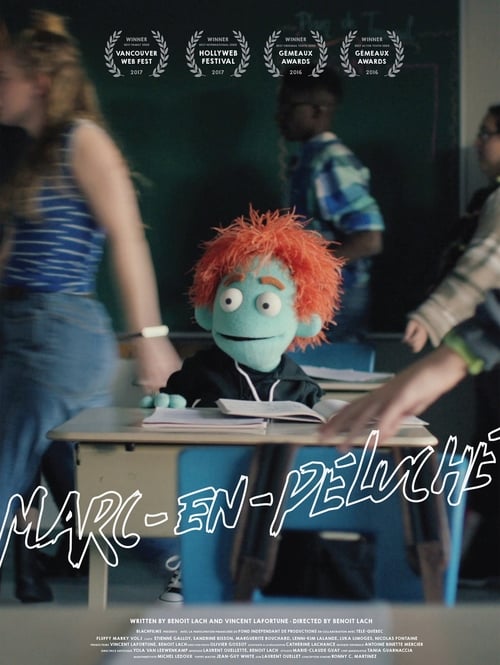




Popular
What role does the setting play in shaping the characters' experiences?
What motivates Marky to pursue his dreams despite the challenges he faces?
How does Fluffy's relationship with Marky evolve throughout the series?
What pivotal event causes a rift between Marky and his best friend?
How does the antagonist challenge Marky's journey?
Should I watch it?
Ask Your Own Question

What is the plot?
In the opening scene of "Fluffy Marky," we are introduced to Marky, a young, ambitious dog trainer living in a small town. He is seen working with a group of unruly dogs at a local shelter, showcasing his unique training methods that blend humor and compassion. Marky's passion for animals is evident as he interacts with the dogs, but he struggles with self-doubt about his abilities and dreams of opening his own training facility.
As the story progresses, Marky receives a call from a wealthy businessman, Mr. Thompson, who is interested in hiring him to train his prized show dog, Fluffy. Marky is initially hesitant, feeling unworthy of such an opportunity, but his best friend, Sarah, encourages him to take the chance. Marky decides to accept the job, seeing it as a stepping stone toward his dream.
Upon arriving at Mr. Thompson's lavish estate, Marky is introduced to Fluffy, a pampered and spoiled Pomeranian who is resistant to training. The first training session is chaotic, with Fluffy refusing to listen and causing a mess in the house. Marky feels overwhelmed but is determined to prove himself. He spends the night reflecting on his approach and devises a new plan that incorporates play and positive reinforcement.
In the following scenes, Marky begins to bond with Fluffy, using creative techniques to engage the dog. He takes Fluffy on walks around the estate, allowing the dog to explore and socialize. Slowly, Fluffy starts to respond to Marky's training, showcasing moments of progress that fill Marky with hope and excitement. However, Mr. Thompson remains skeptical, pushing Marky to achieve results quickly for an upcoming dog show.
As the dog show approaches, Marky faces increasing pressure. He discovers that Mr. Thompson has a history of being harsh with Fluffy, which has contributed to the dog's anxiety. This revelation deepens Marky's resolve to not only train Fluffy but also to advocate for the dog's well-being. He confronts Mr. Thompson about his methods, leading to a heated argument where Marky stands his ground, emphasizing the importance of kindness in training.
The day of the dog show arrives, and Marky is both nervous and excited. He has worked tirelessly with Fluffy, and they have developed a strong bond. As they prepare to enter the ring, Marky gives Fluffy a pep talk, reminding the dog of their journey together. The atmosphere is tense as they step onto the stage, surrounded by other competitors and their well-trained dogs.
During the performance, Fluffy initially struggles with distractions from the audience, but Marky remains calm and encourages the dog with gentle commands. In a pivotal moment, Fluffy unexpectedly performs a series of tricks that impress the judges and the crowd. Marky's heart swells with pride as he realizes that their bond has transformed Fluffy into a confident performer.
However, just as they are about to finish their routine, Mr. Thompson attempts to intervene, trying to take control of the situation. Marky stands firm, asserting that Fluffy is not just a show dog but a beloved companion. This confrontation draws the attention of the audience, who begin to cheer for Marky and Fluffy, creating a supportive atmosphere.
In the climax of the show, Fluffy executes a final trick flawlessly, earning a standing ovation. The judges announce the winners, and while Marky and Fluffy do not take first place, they receive a special award for "Best Teamwork." This recognition validates Marky's approach to training and reinforces his belief in the power of compassion.
After the show, Mr. Thompson has a change of heart, realizing the importance of treating Fluffy with love and respect. He apologizes to Marky and expresses a desire to learn more about positive training methods. Marky, feeling accomplished and fulfilled, agrees to help him, marking a new beginning for both Fluffy and Mr. Thompson.
The story concludes with Marky opening his own dog training facility, where he continues to advocate for humane training practices. Fluffy becomes a regular at the facility, and the bond between Marky and Fluffy symbolizes the journey they have taken together. The final scene shows Marky and Fluffy playing in the yard, surrounded by other dogs and trainers, embodying the joy and fulfillment that comes from their shared experiences.







What is the ending?
In the ending of "Fluffy Marky," the main characters confront their personal struggles and ultimately find resolution. Marky, having faced his fears, embraces his true self, while Fluffy learns to let go of his insecurities. The series concludes with a heartfelt reunion, where the characters reaffirm their bonds and look forward to a brighter future.
As the final episode unfolds, the scene opens in a vibrant park, where the sun casts a warm glow over the lush greenery. Marky stands at the edge of a small pond, his reflection rippling in the water. He is visibly anxious, his hands fidgeting as he contemplates the journey he has taken throughout the series. The weight of his insecurities hangs heavy on his shoulders, but there is a flicker of determination in his eyes. He takes a deep breath, recalling the moments of growth and the support of his friends.
Cut to Fluffy, who is sitting on a nearby bench, his fluffy exterior contrasting with the turmoil inside. He watches Marky with a mix of admiration and concern. Fluffy has struggled with his own self-image, often feeling overshadowed by Marky's charisma. As he observes Marky's moment of introspection, Fluffy realizes that he must confront his own fears. He stands up, his heart racing, and approaches Marky.
In a pivotal moment, Fluffy calls out to Marky, breaking the silence. "Hey, Marky! You've come so far. It's time to embrace who you really are!" His voice is filled with encouragement, and Marky turns, surprised but grateful. The two share a moment of understanding, their friendship deepening as they acknowledge their individual journeys.
The scene shifts to a gathering of their friends, who have come to support them. The atmosphere is filled with laughter and warmth, but there is an underlying tension as both Marky and Fluffy prepare to share their truths. As they stand before their friends, Marky speaks first, his voice steady yet emotional. "I've spent too long hiding behind a mask. I want to be true to myself, no matter what anyone thinks." His declaration is met with cheers and applause, affirming his courage.
Fluffy follows, his voice trembling but resolute. "I've always felt like I needed to be perfect, but I've learned that it's okay to be flawed. I want to be me, and I hope you all can accept that." The group responds with overwhelming support, creating a safe space for both characters to express their vulnerabilities.
As the episode draws to a close, the camera pans out, capturing the group in a circle, arms around each other, united in their acceptance of one another. The sun sets in the background, casting a golden hue over the scene, symbolizing hope and new beginnings. Marky and Fluffy exchange a knowing glance, their bond stronger than ever.
In the final moments, the characters reflect on their journey, each one having faced their own battles and emerged victorious. Marky is now more confident, ready to take on new challenges, while Fluffy has learned to embrace his uniqueness. The series ends on a hopeful note, with the characters looking forward to the future, ready to face whatever comes their way together.
Is there a post-credit scene?
In the 2016 TV show "Fluffy Marky," there is indeed a post-credit scene that adds a humorous twist to the series' conclusion.
As the credits roll, the screen fades back in to reveal Marky, the lovable and slightly clumsy protagonist, sitting on a park bench, looking contemplative. He is munching on a giant fluffy marshmallow, a nod to the show's whimsical theme. The sun is setting, casting a warm golden hue over the park, and the sounds of children playing can be heard in the background.
Suddenly, Fluffy, Marky's quirky sidekick--a talking, animated marshmallow character--bounces into the frame, his eyes wide with excitement. "Marky! Marky! You won't believe what I just found!" Fluffy exclaims, his voice filled with enthusiasm.
Marky, with a mouth full of marshmallow, raises an eyebrow, intrigued yet skeptical. "What is it this time, Fluffy? Another one of your wild ideas?"
Fluffy, undeterred, pulls out a colorful map that appears to be hand-drawn, with various doodles and arrows leading to a big "X." "It's a treasure map! It says there's a hidden stash of marshmallows somewhere in the park!"
Marky's eyes light up, a mix of childlike wonder and mischief dancing across his face. "Treasure? Count me in!" he replies, his previous contemplative mood instantly forgotten.
The scene ends with the two of them running off into the distance, Fluffy bouncing ahead and Marky trailing behind, both laughing and shouting about their impending adventure. The screen fades to black, leaving viewers with a sense of joy and anticipation for what mischief they might get into next.
This post-credit scene encapsulates the show's lighthearted spirit and reinforces the bond between Marky and Fluffy, leaving fans with a smile as they reflect on the series.
What role does the setting play in shaping the characters' experiences?
The vibrant yet challenging environment of the city serves as a backdrop that reflects the characters' struggles and aspirations. From bustling streets filled with distractions to quiet corners that offer solace, the setting influences their decisions and emotional states. Key locations, such as the local café where Marky finds inspiration, become symbolic of his journey.
What motivates Marky to pursue his dreams despite the challenges he faces?
Marky is driven by a deep-seated desire to prove himself to his family and community. He feels the weight of their expectations and the need to break free from the limitations imposed on him. This internal conflict fuels his determination, leading him to take risks and face obstacles head-on.
How does Fluffy's relationship with Marky evolve throughout the series?
Fluffy starts as a loyal companion, providing comic relief and emotional support. As the series progresses, their bond deepens, with Fluffy becoming a confidant who encourages Marky to embrace his true self. This evolution is marked by moments of vulnerability, where Fluffy helps Marky confront his fears and insecurities.
What pivotal event causes a rift between Marky and his best friend?
A significant turning point occurs when Marky makes a decision that prioritizes his ambitions over their friendship. This choice leads to a heated confrontation, revealing underlying tensions and unspoken resentments. The fallout from this event forces both characters to reevaluate their priorities and the value of their friendship.
How does the antagonist challenge Marky's journey?
The antagonist, a rival who embodies the societal pressures Marky seeks to escape, constantly undermines his efforts. This character uses manipulation and intimidation to create obstacles, forcing Marky to confront not only external challenges but also his own self-doubt. The rivalry intensifies, pushing Marky to grow stronger and more resilient.
Is this family friendly?
"Fluffy Marky," produced in 2016, is generally considered a family-friendly show, but it does contain some scenes and themes that may be potentially objectionable or upsetting for children or sensitive viewers.
-
Mild Language: There are instances of mild swearing or slang that may not be suitable for younger audiences.
-
Emotional Conflict: The show features scenes of emotional distress, such as family arguments or misunderstandings, which could be upsetting for sensitive viewers.
-
Mild Scares: Certain episodes include moments of suspense or mild horror elements that might be frightening for younger children.
-
Themes of Loss: The show touches on themes of loss and separation, which could evoke sadness or discomfort in viewers.
-
Social Issues: Some episodes address social issues like bullying or exclusion, which may resonate deeply and provoke emotional reactions.
While these elements are handled with care and often lead to positive resolutions, they may still be challenging for some viewers.









