





















Popular
Should I watch it?
Ask Your Own Question

What is the plot?
The story of Lucky Number Slevin opens with a haunting flashback set roughly twenty years before the main events. A young boy named Henry watches helplessly as his father, Max, is brutally murdered by two powerful crime bosses known only as The Boss and The Rabbi. The murder is cold and calculated--Max is suffocated with a plastic bag, a grim symbol of the ruthless lex talionis, or law of retaliation, that will come to define the film's dark narrative. This traumatic event sets the stage for a long, simmering revenge plot that will unfold decades later.
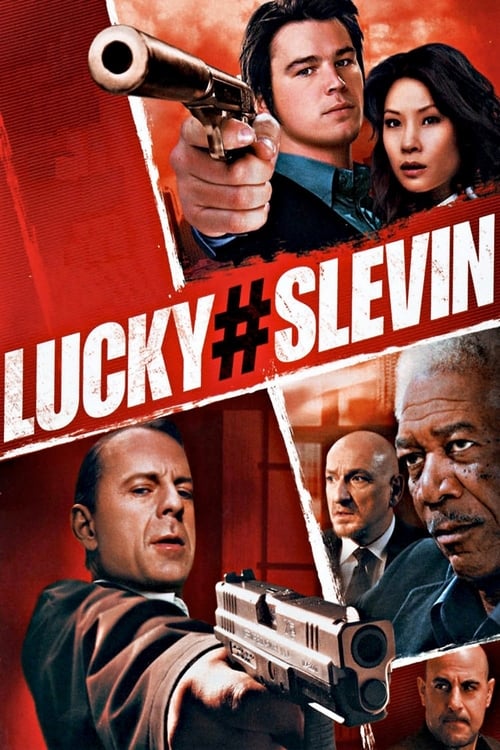
Fast forward to present-day New York City, where a man named Slevin Kelevra arrives at the apartment of his friend Nick Fisher. Slevin, played by Josh Hartnett, is unlucky and disoriented, having been mugged en route and lost his identification. The apartment is unlocked, and when Nick's neighbor Lindsey, portrayed by Lucy Liu, visits, she expresses concern about Nick's unexplained disappearance. She asks Slevin, "Have you seen Nick? Why is the apartment unlocked?" but Slevin has no answers. The atmosphere is tense and mysterious, the city's shadows creeping in as Slevin settles into the apartment, unaware that his life is about to spiral into chaos.
Almost immediately, Slevin is thrust into a deadly game of mistaken identity. Two rival crime lords, The Boss (Morgan Freeman) and The Rabbi (Ben Kingsley), each believe Slevin is Nick Fisher, a man deeply indebted to both. The Boss demands repayment of a $96,000 gambling debt, while The Rabbi pressures him for $33,000. Both are ruthless and unyielding, and their enforcers kidnap Slevin separately to intimidate him. The Boss's henchmen drag Slevin to a luxurious penthouse, where The Boss coldly tells him, "You owe me money, Nick. You have three days to pay, or you kill the Rabbi's son." The Rabbi's men later abduct Slevin as well, demanding their own payment and threatening dire consequences.
Caught between these two violent forces, Slevin must navigate their deadly feud. The Boss orders him to kill Yitzchok, known as "The Fairy," the gay son of The Rabbi, as revenge for the death of The Boss's own son. Slevin, maintaining a calm exterior, agrees to the task but quickly realizes the complexity of the situation. To gain access to Yitzchok, Slevin pretends to be gay, a ruse that allows him to infiltrate Yitzchok's apartment. The scene is charged with tension as Slevin and Mr. Goodkat, a mysterious assassin played by Bruce Willis, arrive to execute the hit. They kill Yitzchok and his bodyguards swiftly and silently, the violence stark against the muted apartment setting. This murder is staged to fuel the ongoing gang war, deepening the illusion that Slevin is truly Nick caught in the crossfire.
Detective Brikowski (Stanley Tucci) enters the narrative as a sharp, persistent investigator trying to unravel the chaos surrounding Slevin. His suspicions grow as he tails Slevin, sensing something deeper beneath the surface. Brikowski's presence adds a layer of pressure, his probing eyes watching every move, his voice laced with skepticism and menace.
Amid this turmoil, Lindsey's amateur investigation leads her closer to the truth. She photographs Goodkat during one of his secretive moves, unwittingly putting herself in grave danger. Goodkat, protective of his identity, shoots Lindsey to silence her. The scene is sudden and brutal, her fall to the ground shocking in its finality. Yet, in a twist revealing the film's intricate deception, Lindsey's death is later faked with Slevin's help, allowing her to survive and play a crucial role in the story's resolution.
The narrative's true depth is unveiled when Slevin and Goodkat kidnap The Boss and The Rabbi, restraining them in The Boss's penthouse. Here, the film's core secrets come to light. Slevin reveals his true identity: he is Henry, the son of Max, the boy from the opening flashback. Goodkat, once hired to kill young Henry, had a change of heart and raised him instead, grooming him into a skilled assassin and partner in vengeance. Slevin's entire presence in New York, the mistaken identity, the forced murders--they were all part of an elaborate plan to exact revenge on the men who destroyed his family.
In a chilling echo of the past, Slevin suffocates The Rabbi and The Boss with plastic bags, mirroring the method used to kill his father. The scene is suffused with grim satisfaction and cold justice, the two crime lords gasping futilely as Slevin watches, his expression unreadable but resolute. "This is for my father," he says quietly, sealing their fate.
The final confrontation comes when Slevin faces Detective Brikowski. The detective's dark past is revealed: he murdered Slevin's mother to pay off his own gambling debts, implicating him deeply in the family's ruin. The tension between them crackles as Slevin confronts Brikowski, who is shaken but still defiant. In a swift, decisive moment, Slevin kills Brikowski, completing his long-sought revenge. The detective's death is a grim punctuation mark on the story's violent arc.
The film's closing moments are layered with emotion and resolution. At a bus terminal, Slevin reunites with Lindsey, who is very much alive thanks to their ruse. Goodkat appears, aware of the deception but accepting Slevin's choice to protect Lindsey. He returns Max's old watch to Slevin, a poignant symbol of the past and the journey completed. Goodkat's parting words and disappearance into the crowd leave Slevin standing alone, the weight of his vengeance lifted but the scars of his past indelible.
The final flashback returns to the moment Goodkat spared young Henry, driving away with a radio playing the song "Kansas City Shuffle." This tune symbolizes the elaborate deception and intricate revenge that have defined the entire story. The camera lingers on the fading taillights, the past receding as Slevin steps into an uncertain future, his lucky number finally called.
Thus, Lucky Number Slevin weaves a complex tale of mistaken identity, revenge, and deception, where every death is a calculated move in a deadly chess game, every revelation a key unlocking a dark past, and every confrontation a step toward justice served cold.
More Movies Like This
Browse All Movies →

What is the ending?
In the ending of "Lucky Number Slevin," Slevin Kelevra reveals his true identity as a hitman named Mr. Goodkat. He orchestrates a plan that leads to the deaths of both mob bosses, the Rabbi and the Boss, while also avenging the death of his friend. Slevin ultimately walks away free, having manipulated the events to his advantage. The film concludes with Slevin and Lindsey, who have developed a romantic connection, leaving together, suggesting a new beginning for them.
Now, let's delve into the ending in a more detailed narrative fashion:
As the climax of "Lucky Number Slevin" unfolds, the tension reaches a boiling point in a dimly lit warehouse where Slevin Kelevra, played by Josh Hartnett, stands at the center of a deadly game. The air is thick with anticipation as he faces off against the two rival mob bosses: the Rabbi, portrayed by Ben Kingsley, and the Boss, played by Morgan Freeman. Slevin, who has been mistaken for a man named Klevin, has been maneuvering through a web of deception, and now the truth is about to be revealed.
In a pivotal moment, Slevin calmly explains his true identity as Mr. Goodkat, a hitman with a personal vendetta. The camera captures the shifting expressions on the faces of the mobsters as they realize they have been outplayed. Slevin's demeanor is cool and collected, a stark contrast to the chaos that surrounds him. He has orchestrated this confrontation with meticulous precision, and the stakes are life and death.
As the scene progresses, Slevin pulls out a gun, and the tension escalates. He reveals that he has set up a trap for both the Rabbi and the Boss, leading to a violent confrontation. The camera cuts between the characters, showcasing their fear and disbelief as Slevin's plan unfolds. In a swift and brutal sequence, Slevin executes both mob bosses, ensuring that they cannot retaliate against him or anyone he cares about. The sound of gunfire echoes through the warehouse, punctuating the finality of their demise.
With the mob bosses dead, Slevin's plan comes to fruition. He has avenged the death of his friend, who was killed as part of the mob's ruthless games. The emotional weight of this moment is palpable; Slevin has not only secured his own freedom but has also brought justice for his friend. The camera lingers on his face, revealing a mix of relief and sorrow as he processes the gravity of his actions.
In the aftermath, Slevin meets Lindsey, played by Lucy Liu, who has been a source of support and affection throughout his ordeal. Their connection deepens as they share a moment of understanding, both having faced the darkness of the world around them. The scene shifts to a brighter setting, symbolizing a new beginning. Slevin and Lindsey walk away together, leaving behind the chaos and violence that had engulfed their lives.
As the film concludes, the fate of the main characters is clear. Slevin, having reclaimed his identity and avenged his friend, steps into a future filled with hope alongside Lindsey. The mobsters, the Rabbi and the Boss, lie dead, their reign of terror ended by Slevin's calculated actions. The narrative closes on a note of resolution, with Slevin finally free from the burdens of his past, ready to embrace a new chapter in his life.
Is there a post-credit scene?
"Lucky Number Slevin," produced in 2006, does not have a post-credit scene. The film concludes with its final moments, wrapping up the intricate plot without any additional scenes after the credits. The story ends on a note that ties together the various threads of deception, revenge, and fate that have been woven throughout the film, leaving the audience with a sense of resolution regarding the main characters and their fates.
What is the significance of the name 'Slevin' in the movie?
The name 'Slevin' is significant as it is the alias used by the main character, played by Josh Hartnett, who is mistakenly identified as a man named Kharis. This mistaken identity sets off a chain of events that intertwines him with the lives of various characters, including mob bosses and a hitman, leading to a complex narrative of revenge and deception.
How does Slevin become involved with the two crime bosses?
Slevin becomes involved with the two crime bosses, The Rabbi and The Boss, when he is mistaken for Kharis, a man who owes money to both. This misunderstanding occurs when Slevin visits his friend's apartment in New York City, where he is confronted by henchmen from both crime families, leading to a series of violent and tense encounters.
What role does Lindsey play in Slevin's life?
Lindsey, played by Lucy Liu, is a neighbor who becomes romantically involved with Slevin. She is a pivotal character who provides emotional support and a sense of normalcy amidst the chaos surrounding Slevin. Their relationship develops quickly, and she becomes an ally, helping him navigate the dangerous world he has been thrust into.
What is the significance of the 'Kansas City Shuffle' in the plot?
The 'Kansas City Shuffle' is a con that is referenced throughout the film, symbolizing the theme of misdirection and deception. It is a strategy where one is led to believe they are witnessing one thing while the real action occurs elsewhere. This concept is central to Slevin's plan to outsmart his enemies and ultimately reveals the layers of manipulation at play in the story.
How does the character of Mr. Goodkat influence the story?
Mr. Goodkat, played by Bruce Willis, is a hitman with his own agenda who plays a crucial role in the unfolding events. His character is enigmatic and serves as a catalyst for Slevin's transformation from a victim of circumstance to an active participant in the violent world around him. Goodkat's motivations and connections to the other characters add depth to the plot and ultimately lead to the film's climactic revelations.
Is this family friendly?
"Lucky Number Slevin" is not considered family-friendly due to its mature themes and content. Here are some potentially objectionable or upsetting aspects that may occur for children or sensitive viewers:
-
Violence: The film contains several scenes of graphic violence, including shootings and physical confrontations that may be disturbing.
-
Strong Language: There is frequent use of profanity throughout the film, which may not be suitable for younger audiences.
-
Mature Themes: The plot revolves around organized crime, revenge, and betrayal, which may be complex and unsettling for children.
-
Death and Loss: Characters experience significant loss and trauma, which could be emotionally heavy for sensitive viewers.
-
Sexual Content: There are suggestive situations and innuendos that may not be appropriate for younger audiences.
Overall, the film's tone and content are geared towards an adult audience, making it unsuitable for children.








