
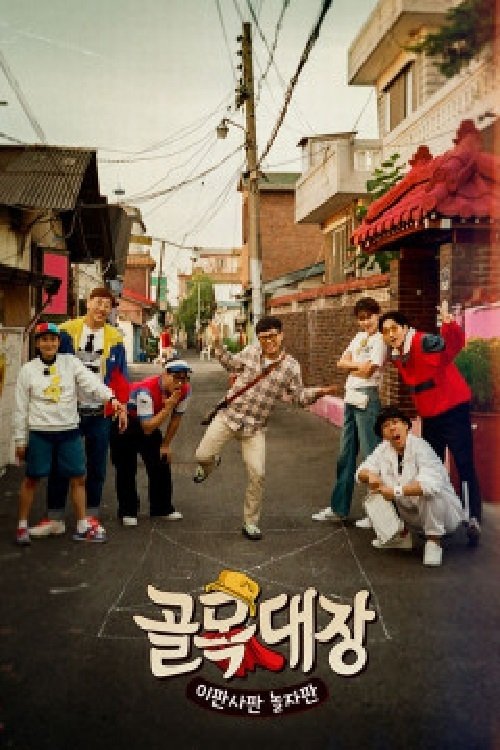









Popular
What specific events lead to the climax of the series?
What role does humor play in the interactions between characters?
What challenges does the main character face in the neighborhood?
How does the relationship between the main character and the supporting characters evolve throughout the series?
How does the main character's backstory influence their actions in the neighborhood?
Should I watch it?
Ask Your Own Question

What is the plot?
In the first episode of "골목대장," we are introduced to the main character, a charismatic and resourceful man named Jang Jae-suk, who is known for his ability to navigate the complexities of life in a small neighborhood. Jae-suk is seen helping local shop owners resolve their disputes, showcasing his leadership and problem-solving skills. He has a close-knit group of friends who support him, and they often gather at a local diner to discuss their lives and the challenges they face.
As the story unfolds, Jae-suk learns that a large corporation plans to buy out the neighborhood to build a shopping mall. This news sends shockwaves through the community, as many small businesses will be forced to close. Jae-suk feels a deep sense of responsibility to protect the neighborhood and its residents. He rallies his friends and the local shop owners to come together and devise a plan to resist the corporate takeover.
In the following episodes, Jae-suk and his friends organize community meetings to raise awareness about the impending threat. They create flyers and hold protests, trying to garner support from the residents. Tensions rise as the corporation sends representatives to intimidate the shop owners, leading to confrontations that highlight the emotional stakes for everyone involved. Jae-suk's determination grows stronger as he witnesses the fear and uncertainty in the eyes of his neighbors.
As the conflict escalates, Jae-suk discovers that one of his childhood friends, who now works for the corporation, is involved in the buyout. This revelation creates an internal struggle for Jae-suk, as he grapples with feelings of betrayal and the desire to confront his friend. He ultimately decides to reach out to his friend, hoping to persuade him to reconsider the corporate plans. Their conversation is tense, filled with nostalgia and unresolved feelings, but it ends without a resolution, leaving Jae-suk feeling more determined than ever.
In a pivotal moment, Jae-suk and his friends devise a plan to host a neighborhood festival to showcase the community's spirit and attract media attention. They work tirelessly to prepare for the event, decorating the streets and inviting local artists to perform. The festival becomes a vibrant celebration, drawing in crowds and creating a sense of unity among the residents. However, the corporation responds by sending in security to disrupt the event, leading to a dramatic confrontation between the community and the corporate representatives.
During the climax of the series, Jae-suk leads a passionate speech at the festival, urging the community to stand together against the corporate greed threatening their way of life. His words resonate deeply with the crowd, igniting a renewed sense of hope and determination. The emotional weight of the moment is palpable, as residents share their stories and express their commitment to fighting for their neighborhood.
In the final episodes, the community's efforts begin to pay off as they gain media attention and public support. Jae-suk's leadership is put to the test as he navigates negotiations with the corporation. He faces numerous challenges, including legal battles and attempts at bribery, but remains steadfast in his resolve. The emotional stakes reach a boiling point as Jae-suk confronts his friend once more, leading to a heartfelt exchange that ultimately sways his friend to support the community's cause.
The series culminates in a dramatic showdown where the community presents their case to the city council, advocating for the preservation of their neighborhood. Jae-suk's impassioned plea, combined with the testimonies of the residents, creates a powerful moment that sways the council's decision. In a surprising twist, the council votes against the corporation's plans, allowing the neighborhood to remain intact.
In the closing scenes, the community celebrates their victory, and Jae-suk reflects on the journey they have taken together. The bonds formed throughout the struggle are stronger than ever, and the neighborhood is revitalized with a renewed sense of purpose. Jae-suk's character arc comes full circle as he realizes the true value of community and friendship, setting the stage for a hopeful future.









What is the ending?
In the ending of the TV show "골목대장," the main character, a neighborhood leader, faces the culmination of his struggles to unite the community. After a series of challenges and conflicts, he successfully brings the residents together, fostering a sense of belonging and cooperation. The series concludes with a celebration in the neighborhood, symbolizing hope and unity.
As the final episode unfolds, the scene opens with the sun rising over the neighborhood, casting a warm glow on the streets that have been the backdrop for many of the characters' journeys. The protagonist, a determined and charismatic leader, stands at the center of the community square, his heart racing with anticipation. He has called for a gathering, hoping to resolve the lingering tensions that have divided the residents.
The camera pans to various characters, each reflecting their internal struggles. The elderly woman who has been skeptical of change watches from her window, her expression a mix of hope and doubt. The young couple, who have faced their own challenges, hold hands tightly, their eyes filled with uncertainty about the future. The local shop owner, who has been a pillar of the community, prepares his stall, his hands trembling slightly as he recalls the conflicts that have plagued their neighborhood.
As the gathering begins, the protagonist steps forward, his voice steady yet filled with emotion. He recounts the journey they have all taken together, acknowledging the pain and division but also celebrating the moments of joy and solidarity. The crowd listens intently, some nodding in agreement, while others remain hesitant, their faces etched with concern.
In a pivotal moment, the protagonist invites each resident to share their thoughts. One by one, they step forward, revealing their fears and hopes. The elderly woman finally speaks, her voice quivering as she expresses her desire for peace and connection. The young couple shares their dreams of a brighter future, and the shop owner recounts the history of the neighborhood, emphasizing the importance of unity.
As the sun sets, casting a golden hue over the gathering, the atmosphere shifts. Laughter begins to ripple through the crowd as they engage in games and activities, breaking down the barriers that have kept them apart. The protagonist watches with a sense of fulfillment, his heart swelling with pride as he sees the community coming together.
The final scene captures the essence of the neighborhood's transformation. The camera zooms out, revealing a vibrant celebration filled with music, food, and laughter. The protagonist stands at the center, surrounded by the residents who once felt like strangers. Their faces are illuminated with joy, and for the first time, there is a palpable sense of belonging.
As the credits roll, the fate of each main character is subtly hinted at. The elderly woman, once isolated, is seen laughing with her neighbors, her skepticism replaced by warmth. The young couple, now more united than ever, share a dance, their future bright with possibilities. The shop owner, with a renewed sense of purpose, serves food to the children playing nearby, embodying the spirit of community.
In this poignant conclusion, "골목대장" leaves viewers with a powerful message about the strength of unity and the importance of coming together, no matter the challenges faced. The protagonist's journey culminates not just in personal victory but in the collective triumph of a community that has learned to embrace its differences and celebrate its shared humanity.
Is there a post-credit scene?
In the 2017 TV show "골목대장" (also known as "The Alley Leader"), there is no post-credit scene. The series concludes its narrative without any additional scenes after the credits roll. The final moments of the show focus on the resolution of the main characters' arcs, emphasizing themes of community, friendship, and personal growth. The absence of a post-credit scene allows the audience to reflect on the journey of the characters and the lessons learned throughout the series, leaving a lasting emotional impact without any additional content.
What specific events lead to the climax of the series?
The climax is reached through a series of escalating conflicts, including a major confrontation with a rival group that threatens the neighborhood. Key events include a community gathering that turns chaotic, revealing hidden tensions and forcing the characters to confront their fears and insecurities.
What role does humor play in the interactions between characters?
Humor serves as a crucial element in the interactions, often providing relief during tense moments. The main character uses wit and playful banter to diffuse conflicts, while the supporting characters contribute comedic relief that highlights their personalities, creating a balance between serious themes and lightheartedness.
What challenges does the main character face in the neighborhood?
The main character, who takes on the role of a neighborhood leader, faces numerous challenges including conflicts with local gangs, issues of poverty, and the struggle to unite the community. These challenges are depicted through intense confrontations and emotional moments that highlight the character's determination to bring about positive change.
How does the relationship between the main character and the supporting characters evolve throughout the series?
The relationships in the series are dynamic, with the main character initially facing distrust from the supporting characters. As the story progresses, moments of vulnerability and shared experiences lead to deeper bonds, showcasing themes of friendship and loyalty as they work together to overcome obstacles.
How does the main character's backstory influence their actions in the neighborhood?
The main character's backstory, which includes a troubled childhood and experiences of loss, deeply influences their motivations. This history drives them to protect the neighborhood and its residents, often leading to impulsive decisions that reflect their desire for redemption and belonging.
Is this family friendly?
The TV show 골목대장 (Street Boss) produced in 2017 is generally family-friendly, but it does contain some elements that may be considered objectionable or upsetting for children or sensitive viewers.
-
Mild Violence: There are scenes that depict confrontations and physical altercations, which may be intense for younger viewers. While not graphic, the tension in these moments can be unsettling.
-
Emotional Conflict: The show explores themes of rivalry, betrayal, and personal struggles, which may evoke strong emotions. Characters often face moral dilemmas that can be heavy for sensitive audiences.
-
Language: There may be instances of strong language or heated exchanges that could be inappropriate for younger viewers.
-
Social Issues: The narrative touches on themes of poverty, crime, and social inequality, which might be difficult for children to fully understand or process.
-
Family Dynamics: Some scenes depict strained family relationships and conflicts that could resonate with viewers who have experienced similar issues, potentially causing discomfort.
Overall, while the show is engaging and entertaining, parents may want to preview episodes to determine their suitability for younger audiences.