
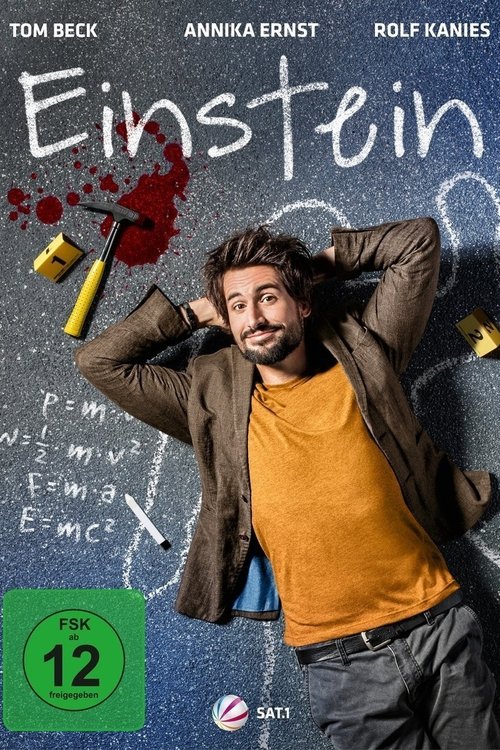






Popular
What challenges does Einstein face in his personal life throughout Season 1?
How does Einstein's relationship with his mentor, Max Talmey, influence his scientific journey?
What role does the political climate of early 20th century Europe play in Einstein's life and work?
How does Einstein's theory of relativity evolve throughout the season?
What impact does Einstein's relationship with his colleague, Michele Besso, have on his scientific discoveries?
Should I watch it?
Ask Your Own Question

What is the plot?
In the first episode of "Einstein," we are introduced to a young Albert Einstein, who is portrayed as a brilliant but misunderstood child. The story begins in 1905, where we see him working as a patent examiner in Bern, Switzerland. He is often distracted by his thoughts on physics and the nature of light. His mundane job contrasts sharply with his vibrant imagination and intellectual curiosity.
As the episode progresses, we witness Einstein's struggles with societal expectations and his desire to pursue theoretical physics. He faces skepticism from his peers and superiors, who do not recognize his genius. This frustration is compounded by his tumultuous personal life, including a strained relationship with his wife, Mileva Marić. Their interactions reveal the tension between his ambitions and the demands of family life.
A pivotal moment occurs when Einstein submits his groundbreaking paper on the photoelectric effect to a scientific journal. This paper is a significant step in his career, showcasing his innovative ideas about light and energy. However, the initial reception is lukewarm, leaving him feeling disheartened. Despite this setback, he remains determined to prove himself in the scientific community.
The narrative shifts to Einstein's interactions with other prominent scientists, including his friendship with Michele Besso, who supports and encourages him. Their discussions often delve into complex theories, highlighting Einstein's unique perspective on physics. Besso's belief in Einstein's potential serves as a source of motivation for him.
As the episode unfolds, we see Einstein's personal life further complicate his professional aspirations. His relationship with Mileva deteriorates, leading to emotional confrontations. Mileva feels neglected and struggles with her own ambitions, which adds to the tension between them. This personal turmoil is mirrored in Einstein's professional life, as he grapples with the challenges of being an innovator in a conservative scientific environment.
In a climactic moment, Einstein receives recognition for his work when his paper on special relativity is finally acknowledged. This breakthrough marks a turning point in his career, as he begins to gain respect within the scientific community. However, the newfound attention also brings pressure and scrutiny, forcing him to navigate the complexities of fame and expectation.
The episode concludes with Einstein standing at a crossroads, balancing his scientific ambitions with the realities of his personal life. He is faced with the decision to fully commit to his research or to prioritize his family. This internal conflict sets the stage for the challenges he will continue to face as he strives to leave his mark on the world of physics.







What is the ending?
In the ending of "Einstein," season 1, Albert Einstein faces the consequences of his choices and the impact of his theories on the world. He grapples with personal loss and the moral implications of his scientific work. The season concludes with a sense of unresolved tension regarding his relationships and the future of his theories.
As the final episodes unfold, we see Albert Einstein, portrayed with a mix of brilliance and vulnerability, wrestling with the ramifications of his scientific discoveries. The narrative builds towards a climax where Einstein's personal life intertwines with his professional ambitions.
In the penultimate scenes, Einstein is confronted by the political realities of his time, particularly the rise of fascism in Europe. He is depicted as a man torn between his commitment to science and the ethical dilemmas posed by the potential misuse of his work, especially in the context of nuclear weapons. This internal conflict is palpable as he reflects on the consequences of his theories, particularly the theory of relativity, which has far-reaching implications beyond the realm of physics.
Simultaneously, Einstein's relationships with his family and colleagues are strained. His marriage to Mileva Maric is fraught with tension, as they struggle to connect amidst the pressures of his career and her own sacrifices. The emotional weight of their relationship culminates in a poignant moment where they confront their shared history and the choices that have led them to this point. Mileva's disappointment and Einstein's regret are evident, highlighting the personal costs of his genius.
In the final scenes, Einstein's friendship with fellow scientists and his role in the scientific community are also explored. He faces criticism and skepticism from peers who question the implications of his work. This culminates in a powerful scene where he must defend his theories against those who fear their potential for destruction. The emotional stakes are high as he realizes that his legacy is not just about scientific achievement but also about the moral responsibilities that come with it.
As the season closes, we see Einstein standing at a crossroads, contemplating the future. The weight of his decisions hangs heavy, and the audience is left with a sense of uncertainty about the path he will choose. The fate of each main character is left somewhat open-ended, reflecting the complexities of their lives and the ongoing struggles they face. Einstein's journey is one of profound introspection, and the season ends with a lingering question about the balance between scientific pursuit and ethical responsibility.
Is there a post-credit scene?
In the show "Einstein," season 1, there is no post-credit scene. The episodes conclude without any additional scenes or content after the credits roll. Each episode wraps up its narrative within the main storyline, focusing on the life and challenges faced by Albert Einstein, his relationships, and the scientific breakthroughs he is known for. The series emphasizes character development and historical context, leaving viewers with a sense of closure at the end of each episode.
What challenges does Einstein face in his personal life throughout Season 1?
In Season 1 of 'Einstein', Albert Einstein grapples with significant personal challenges, including his tumultuous marriage to Mileva Marić. Their relationship is strained by financial difficulties and the pressures of Einstein's burgeoning career. As he becomes more consumed by his work, Mileva feels increasingly isolated and neglected, leading to emotional turmoil for both. Additionally, Einstein's relationship with his children, particularly his son Hans Albert, adds layers of complexity to his character, showcasing his struggles as a father.
How does Einstein's relationship with his mentor, Max Talmey, influence his scientific journey?
Max Talmey plays a crucial role in shaping Einstein's early scientific pursuits. As a mentor, Talmey introduces Einstein to advanced concepts in physics and mathematics, igniting his passion for the subject. Their relationship is marked by a deep intellectual bond, but it also highlights the generational divide and the pressures of academic expectations. Talmey's encouragement and belief in Einstein's potential serve as a catalyst for his groundbreaking ideas, while also creating a sense of obligation that weighs on Einstein.
What role does the political climate of early 20th century Europe play in Einstein's life and work?
The political climate of early 20th century Europe significantly impacts Einstein's life and work in Season 1. As tensions rise with the onset of World War I, Einstein's pacifist beliefs come into conflict with the nationalistic fervor surrounding him. This creates internal conflict as he navigates his scientific ambitions while advocating for peace. The rise of anti-Semitism also affects his personal and professional relationships, forcing him to confront the realities of being a Jewish intellectual in a volatile environment.
How does Einstein's theory of relativity evolve throughout the season?
Throughout Season 1, Einstein's theory of relativity undergoes significant evolution as he grapples with complex scientific ideas and the implications of his work. Initially, he struggles to articulate his theories, facing skepticism from the scientific community. However, as he collaborates with other physicists and refines his concepts, he begins to gain confidence. Key moments include his realization of the relationship between time and space, which leads to breakthroughs that challenge existing scientific paradigms, ultimately culminating in the publication of his revolutionary papers.
What impact does Einstein's relationship with his colleague, Michele Besso, have on his scientific discoveries?
Michele Besso serves as a vital sounding board for Einstein's ideas, providing both intellectual companionship and critical feedback. Their discussions often lead to breakthroughs in Einstein's thought process, as Besso challenges him to think differently about complex problems. This collaborative dynamic fosters an environment where Einstein feels free to explore radical concepts, ultimately contributing to the development of his theories. Besso's unwavering support and friendship also provide emotional stability for Einstein during turbulent times.
Is this family friendly?
"Einstein," season 1, produced in 2017, explores the life of the renowned physicist Albert Einstein, focusing on his personal and professional challenges. While the show is primarily a biographical drama, there are several aspects that may be considered objectionable or upsetting for children or sensitive viewers.
-
Complex Themes: The series delves into themes of war, political unrest, and the moral implications of scientific discovery, which may be difficult for younger audiences to fully grasp.
-
Emotional Turmoil: Characters experience significant emotional struggles, including betrayal, loss, and the impact of personal relationships on professional life. These scenes can be intense and may evoke strong feelings.
-
Depictions of Conflict: There are scenes that portray the effects of World War I and the societal tensions of the time, which may include violence or distressing situations.
-
Romantic Relationships: The show includes adult themes related to romantic relationships, infidelity, and the complexities of love, which may not be suitable for younger viewers.
-
Mental Health: Some characters deal with mental health issues, which are portrayed in a serious manner and may be unsettling for sensitive viewers.
Overall, while "Einstein" is a compelling portrayal of a historical figure, its mature themes and emotional depth may not be appropriate for all audiences, particularly children.









