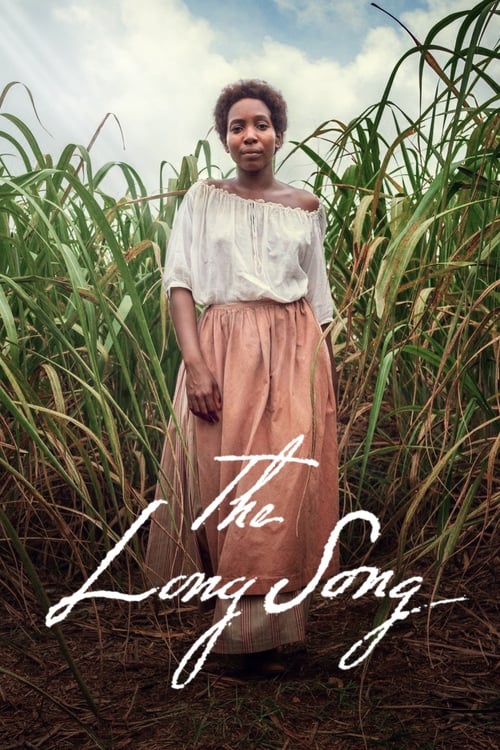
















Popular
What is the significance of July's relationship with Miss Clara in The Long Song?
How does July's character develop throughout the series?
What role does the plantation owner, Robert Goodwin, play in the story?
What events lead to July's quest for freedom?
How does the theme of motherhood manifest in July's character?
Should I watch it?
Ask Your Own Question

What is the plot?
The story begins in Jamaica during the early 19th century, where we meet July, a young enslaved woman working on a sugar plantation owned by the brutal and tyrannical owner, the plantation manager, and his wife. July is introduced as a spirited and resilient character, determined to maintain her sense of self despite the oppressive environment. She is often subjected to the harsh realities of plantation life, including the constant threat of violence and dehumanization.
As the narrative unfolds, July's life changes when she is chosen to be a servant for the plantation owner's wife, Caroline. This new position offers July a glimpse into a different world, one filled with privilege and power, but it also exposes her to the complexities of her relationship with Caroline. Caroline is portrayed as a conflicted character, struggling with her own position within the oppressive system while also exhibiting moments of kindness towards July.
The story takes a significant turn when July meets a man named Robert, a white abolitionist who becomes infatuated with her. Their relationship develops amidst the backdrop of the plantation's brutal realities. July is initially wary of Robert, aware of the societal boundaries that separate them, but she is also drawn to his ideals and the possibility of a different life. Their romance is fraught with tension, as July grapples with her feelings for Robert while remaining acutely aware of the risks involved in their relationship.
As the plantation faces increasing unrest from enslaved people seeking freedom, tensions rise. July witnesses the growing discontent among her fellow enslaved workers, who are inspired by the abolitionist movement. This unrest culminates in a rebellion, where July and her fellow enslaved individuals seize the opportunity to fight for their freedom. The rebellion is chaotic and violent, with July taking a central role in the uprising, driven by her desire for liberation and justice.
In the aftermath of the rebellion, July's life takes another dramatic turn. The plantation is thrown into disarray, and the consequences of the uprising lead to severe reprisals against the enslaved population. July is forced to confront the brutal reality of her choices and the impact of the rebellion on her community. The emotional weight of loss and sacrifice hangs heavily over her as she navigates the aftermath of the violence.
As the story progresses, July's relationship with Caroline becomes increasingly complex. Caroline, who has been affected by the rebellion and the changing social landscape, begins to see July not just as a servant but as a person with her own desires and dreams. This shift in perspective leads to moments of connection and understanding between the two women, highlighting the intricacies of their shared experiences within the oppressive system.
The narrative reaches a climax when July is faced with a pivotal decision regarding her future. With the plantation in turmoil and the possibility of escape on the horizon, she must weigh her options carefully. The emotional stakes are high as she considers the risks involved in leaving everything she has ever known behind. July's internal struggle is palpable as she grapples with her longing for freedom and the fear of the unknown.
Ultimately, July makes the courageous choice to escape, driven by her desire for autonomy and a better life. The escape is fraught with danger, as she and a group of fellow enslaved individuals navigate the treacherous landscape in search of freedom. The tension builds as they evade capture, relying on their wits and determination to survive.
In the final moments of the story, July's journey culminates in a bittersweet resolution. She finds herself in a new world, one that offers both hope and uncertainty. The emotional weight of her experiences lingers as she reflects on the sacrifices made and the relationships forged along the way. The story closes with a sense of resilience, as July embraces her newfound freedom while acknowledging the complexities of her past.







What is the ending?
In the ending of "The Long Song," the story culminates in a dramatic confrontation and resolution for the main characters. July, the protagonist, faces the aftermath of the rebellion and the changing social landscape of Jamaica. The narrative concludes with her finding a sense of hope and a new beginning, despite the scars of her past.
As the final episodes unfold, we see July, now a free woman, grappling with her identity and the impact of her experiences. The tension escalates as the plantation is engulfed in chaos during the rebellion. July's internal struggle is palpable; she is torn between her desire for freedom and the memories of her life as a slave.
In a pivotal scene, July confronts her former mistress, Caroline, who is now vulnerable and stripped of her power. The emotional weight of their shared history hangs heavily in the air. July's anger and pain surface as she reflects on the years of oppression she endured. Caroline, in her moment of weakness, reveals her own fears and regrets, creating a complex dynamic between the two women.
As the rebellion reaches its peak, the plantation is set ablaze, symbolizing the destruction of the old order. July witnesses the chaos around her, filled with a mix of fear and exhilaration. She understands that this moment represents a turning point not just for her, but for all enslaved people seeking liberation.
In the aftermath, July finds herself in a new world, one where she can begin to forge her own path. She encounters a group of freed individuals, and together they discuss the future, filled with uncertainty yet brimming with possibility. July's journey of self-discovery leads her to embrace her freedom, and she begins to envision a life beyond the plantation.
The fate of the main characters is intertwined with this transformation. Caroline, having lost her status and security, is left to confront the consequences of her past actions. July, on the other hand, emerges as a symbol of resilience and hope, ready to embrace the challenges of her new life.
In the final moments, the camera captures July standing tall against the backdrop of a changing landscape, embodying the spirit of a new era. The story closes on a note of optimism, suggesting that while the scars of the past remain, the future holds the promise of renewal and strength.
Is there a post-credit scene?
The Long Song, produced in 2018, does not feature a post-credit scene. The series concludes its narrative without any additional scenes after the credits roll. The final moments of the show focus on the resolution of the characters' arcs and the themes of resilience and hope in the face of adversity, leaving viewers with a poignant sense of closure. The story wraps up with the main character, July, reflecting on her journey and the impact of her experiences, emphasizing the emotional weight of her past and the possibilities of her future.
What is the significance of July's relationship with Miss Clara in The Long Song?
July's relationship with Miss Clara is complex and evolves throughout the series. Initially, July, a slave on a sugar plantation in Jamaica, is wary of Miss Clara, who represents the oppressive colonial power. However, as the story progresses, their relationship becomes more nuanced. July's feelings oscillate between resentment and a desire for connection, as Miss Clara's character reveals layers of vulnerability and humanity. This dynamic highlights the intricacies of power, race, and gender during the colonial era.
How does July's character develop throughout the series?
July's character undergoes significant development from a young, naive slave to a strong, independent woman. Initially, she is portrayed as a girl who dreams of freedom but is constrained by her circumstances. As the series unfolds, July experiences trauma, loss, and moments of empowerment, particularly as she navigates her relationships with other characters, including her love interests and her struggles against the oppressive system. Her resilience and determination to seek a better life for herself and her child become central to her character arc.
What role does the plantation owner, Robert Goodwin, play in the story?
Robert Goodwin, the plantation owner, is a pivotal character whose actions and attitudes embody the brutality of colonialism. He is depicted as a complex figure; while he exhibits moments of kindness towards July, he ultimately represents the oppressive system that exploits her and her fellow slaves. His relationship with July is fraught with tension, as she grapples with her feelings of fear, anger, and a complicated sense of dependency. Goodwin's character serves to illustrate the moral ambiguities of the time and the impact of colonial power on personal relationships.
What events lead to July's quest for freedom?
July's quest for freedom is ignited by a series of traumatic events, including the harsh realities of plantation life, the loss of loved ones, and the brutal treatment of slaves. A turning point occurs when she witnesses the violent repercussions of rebellion and the constant threat of punishment. These experiences fuel her desire to escape the confines of slavery. Additionally, her relationships with other characters, such as her mother and her romantic interests, further motivate her to seek a life beyond the plantation, culminating in her determination to find freedom for herself and her child.
How does the theme of motherhood manifest in July's character?
Motherhood is a central theme in July's character arc, profoundly influencing her decisions and emotional state. As she navigates the challenges of slavery, her relationship with her child becomes a driving force in her quest for freedom. July's fierce love and protective instincts lead her to make sacrifices and take risks that she might not have considered otherwise. The bond she shares with her child highlights her resilience and determination, showcasing the lengths to which a mother will go to secure a better future for her offspring amidst the harsh realities of her environment.
Is this family friendly?
"The Long Song," produced in 2018, is a historical drama set during the final years of slavery in Jamaica. While it offers a poignant narrative, it contains several elements that may not be suitable for children or sensitive viewers.
-
Violence and Brutality: The show depicts the harsh realities of slavery, including scenes of physical violence against enslaved individuals. This includes whippings and other forms of punishment that can be distressing.
-
Racial Injustice: The series addresses themes of racial oppression and discrimination, which may be difficult for younger audiences to fully comprehend or process.
-
Emotional Trauma: Characters experience significant emotional pain, loss, and trauma, which can be heavy and upsetting. The portrayal of family separations and the impact of slavery on personal relationships is particularly intense.
-
Sexual Content: There are instances of sexual exploitation and coercion that are depicted in the context of the power dynamics of slavery, which may be inappropriate for younger viewers.
-
Death and Suffering: The narrative includes scenes of death and suffering, reflecting the harsh realities of the time period, which can be emotionally challenging.
Overall, while "The Long Song" is a powerful story that addresses important historical themes, its content may be more suitable for mature audiences due to its graphic and emotional nature.