



















Popular
What role does Ava Gardner play in the series Arde Madrid?
How does the character of Manolo influence the story in Arde Madrid?
What is the significance of the setting in Arde Madrid?
How does the character of the housekeeper evolve throughout the series?
What conflicts arise between the characters in Arde Madrid?
Should I watch it?
Ask Your Own Question

What is the plot?
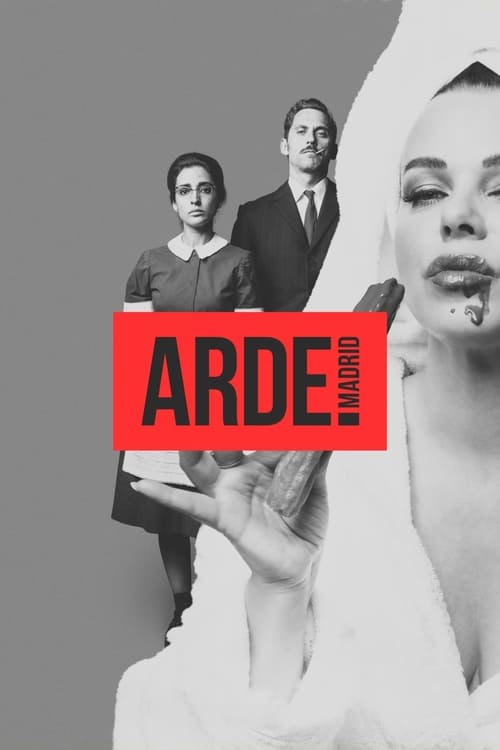
In 1960s Madrid, the story begins with the arrival of a young woman named Ana Mari, who is a devoted fan of the famous actress Ava Gardner. Ana Mari is hired as a maid for the actress, who is living in a luxurious apartment in the city. The initial scenes depict Ana Mari's excitement and nervousness as she prepares to meet her idol. She is determined to impress Ava and prove her worth as a maid, showcasing her enthusiasm and admiration for the actress.
As Ana Mari settles into her new role, she quickly realizes that Ava Gardner is not the glamorous figure she imagined. Ava is portrayed as a heavy-drinking, somewhat disillusioned star who struggles with her fame and personal demons. The dynamic between Ana Mari and Ava begins to develop, with Ana Mari often trying to care for Ava while also being drawn into her chaotic lifestyle. This includes witnessing Ava's interactions with various men and her struggles with loneliness.
The plot thickens when Ana Mari discovers that Ava is involved in a secretive relationship with a man named José. This relationship is complicated by the political climate of Spain at the time, as José is connected to the underground resistance against the Franco regime. Ana Mari becomes increasingly entangled in this world, feeling torn between her admiration for Ava and her growing awareness of the political tensions surrounding them.
As the story progresses, Ana Mari's loyalty to Ava is tested when she learns that José is planning a dangerous mission that could put them all at risk. Ava, in her reckless pursuit of love and freedom, encourages Ana Mari to join them, which creates a moral dilemma for Ana Mari. She grapples with her desire to support Ava and her fear of the consequences of their actions.
In a pivotal scene, the trio attends a clandestine meeting with other resistance members. The atmosphere is tense, filled with uncertainty and the threat of discovery. During this meeting, Ana Mari witnesses the passion and desperation of the resistance fighters, which ignites a sense of purpose within her. She begins to see the bigger picture of their struggle against oppression, and her admiration for Ava shifts from idolization to a more complex understanding of her as a flawed human being.
As the stakes rise, the group faces a series of close calls with the authorities. There are moments of suspense where they narrowly escape being caught, highlighting the dangers of their involvement in the resistance. Ana Mari's character evolves as she becomes more courageous, taking risks to protect Ava and José, even as she fears for her own safety.
The climax of the story occurs when the police raid their hideout during a critical meeting. In the chaos, Ana Mari, Ava, and José must make a split-second decision to flee. The scene is frantic, with the sound of sirens blaring and the tension palpable. They manage to escape through a back exit, but not without leaving behind crucial evidence that could implicate them.
In the aftermath of the raid, the trio goes into hiding. The emotional toll of their experiences weighs heavily on Ana Mari, who begins to question her choices and the cost of her loyalty. Ava, meanwhile, becomes increasingly erratic, struggling with the reality of her situation and the consequences of her past decisions.
As the series nears its conclusion, Ana Mari must confront the reality of her life choices. She faces a moment of reckoning when she realizes that her dreams of a glamorous life with Ava may not be attainable. The final scenes depict her making a difficult decision to distance herself from Ava and José, choosing to forge her own path rather than remain entangled in their tumultuous lives.
The story ends with Ana Mari stepping out into the streets of Madrid, symbolizing her newfound independence and the uncertain future that lies ahead. The emotional weight of her journey is evident as she reflects on her experiences, leaving behind the chaos of her time with Ava Gardner and the resistance.









What is the ending?
In the ending of "Arde Madrid," the story culminates with the characters facing the consequences of their actions during the tumultuous period of the Spanish Civil War. The main characters, including the actress Ava Gardner, the maid Ana, and the police officer, navigate their complex relationships and the political tensions surrounding them. The series concludes with a sense of unresolved tension, highlighting the impact of the war on their lives and the choices they have made.
As the final episodes unfold, we see the characters grappling with their identities and the shifting political landscape. Ava Gardner, portrayed as a glamorous yet vulnerable figure, finds herself increasingly isolated in her world of fame. Her interactions with Ana, who has been a loyal companion, reveal a deepening bond, but also the strain of their differing realities. Ana's desire for a better life clashes with the harsh realities of the war, leading her to make difficult choices.
In a pivotal scene, the police officer confronts the moral dilemmas of his role in the regime, torn between duty and his growing affection for Ana. This internal conflict reaches a climax as he must decide where his loyalties lie. The tension escalates when the characters are forced to confront the consequences of their actions, leading to a dramatic confrontation that leaves them all changed.
The series ends on a poignant note, with each character facing their own fate. Ava Gardner's future remains uncertain, symbolizing the fragility of fame in a time of chaos. Ana, having navigated her own struggles, is left to ponder her next steps in a world that feels increasingly hostile. The police officer, burdened by his choices, must reconcile his past with the future he envisions.
The final moments encapsulate the overarching themes of the series: the intersection of personal and political struggles, the impact of war on individual lives, and the enduring quest for identity amidst chaos. Each character's journey reflects the broader narrative of a society in turmoil, leaving viewers with a lingering sense of the complexities of human relationships in times of crisis.
Is there a post-credit scene?
"Arde Madrid," the 2018 Spanish television series, does not feature a post-credit scene. The show concludes its narrative without any additional scenes after the credits roll. The series wraps up its storylines and character arcs within the episodes themselves, focusing on the comedic and dramatic elements surrounding the life of actress Ava Gardner in Madrid during the 1960s, along with the interactions of her housekeeper and the political backdrop of the time. The absence of a post-credit scene allows the audience to reflect on the events and character developments that have unfolded throughout the series.
What role does Ava Gardner play in the series Arde Madrid?
In 'Arde Madrid', Ava Gardner is portrayed as a glamorous and enigmatic Hollywood star living in Madrid during the 1960s. Her character is central to the plot, as she becomes the object of fascination for the main characters, particularly for the housekeeper, who is both enamored and conflicted about her presence. Gardner's interactions with the locals and her attempts to navigate her celebrity status in a foreign land create a rich backdrop for the series.
How does the character of Manolo influence the story in Arde Madrid?
Manolo, the husband of the main character, plays a crucial role in 'Arde Madrid' as he embodies the struggles of a man caught between his wife's ambitions and the political climate of Spain. His character is often torn between supporting his wife's aspirations and dealing with the repercussions of their choices, which adds tension and depth to the narrative. His emotional state fluctuates between pride and frustration, reflecting the broader societal issues of the time.
What is the significance of the setting in Arde Madrid?
The setting of Madrid in the 1960s is significant in 'Arde Madrid' as it serves as a vibrant backdrop that influences the characters' lives and decisions. The contrast between the glamorous world of Ava Gardner and the everyday struggles of the locals highlights the cultural and political tensions of the era. The series uses the city's streets, cafes, and homes to create a rich tapestry that reflects the characters' internal conflicts and aspirations.
How does the character of the housekeeper evolve throughout the series?
The housekeeper in 'Arde Madrid' undergoes significant character development as she navigates her complex feelings towards Ava Gardner. Initially, she is starstruck and idolizes Gardner, but as the series progresses, she grapples with her own identity and the implications of being in the shadow of a celebrity. Her emotional journey is marked by moments of jealousy, admiration, and ultimately, a quest for self-acceptance, which adds depth to her character.
What conflicts arise between the characters in Arde Madrid?
Conflicts in 'Arde Madrid' often arise from the clash between personal ambitions and societal expectations. The main characters, including the housekeeper and her husband, face challenges related to their desires versus the realities of living in a politically charged environment. Tensions escalate as they navigate their relationships with Ava Gardner, leading to moments of betrayal, loyalty, and self-discovery that drive the plot forward.
Is this family friendly?
"Arde Madrid," produced in 2018, is a Spanish comedy-drama series that revolves around the life of the famous actress Ava Gardner during her time in Madrid in the 1960s. While the show has a humorous tone, it does contain elements that may not be suitable for children or sensitive viewers.
-
Mature Themes: The series explores themes of fame, politics, and personal relationships, which may include discussions or depictions of infidelity and the complexities of adult relationships.
-
Language: There is the use of strong language and adult humor that may not be appropriate for younger audiences.
-
Violence: Some scenes may depict violence or threats, particularly in the context of political tensions during the era, which could be unsettling for some viewers.
-
Substance Use: The show includes references to alcohol consumption and the party lifestyle of the 1960s, which may not be suitable for children.
-
Cultural References: Certain cultural and historical references may be complex or difficult for younger viewers to understand, potentially leading to confusion.
Overall, while "Arde Madrid" has comedic elements, its mature themes and content may make it more appropriate for older teens and adults rather than a family-friendly viewing experience.









