


























Popular
What is the reason for the Heffley family's road trip in The Long Haul?
How does Greg Heffley feel about the road trip?
What mishaps occur during the Heffley family's journey?
Who are the main antagonists the Heffleys face during their trip?
What role does the family pet, Sweetie, play in the story?
Should I watch it?
Ask Your Own Question

What is the plot?
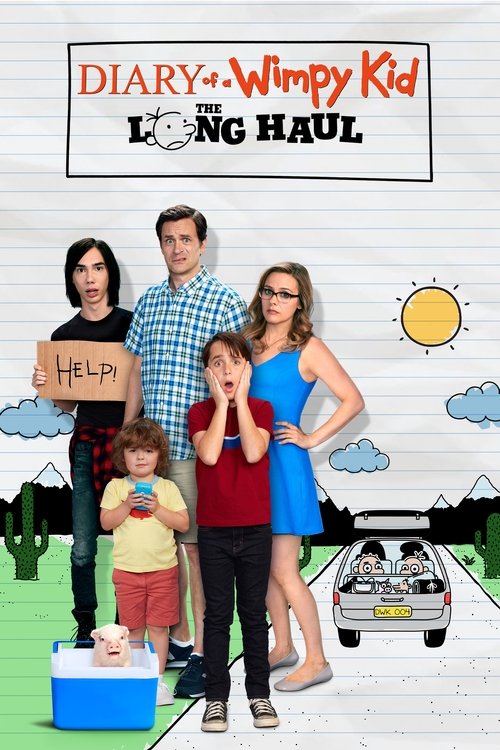
The story opens in the bright, noisy chaos of Corny's, a kids' restaurant drowning in neon lights, arcade sounds, and the shrill squeals of children ricocheting through plastic tubes and ball pits. At a booth under a grinning cartoon corn mascot, the Heffley family gathers: Susan Heffley, Frank Heffley, their middle‑school son Greg Heffley, sullen teen Rodrick Heffley, and toddler Manny Heffley. It is summer vacation, sometime before Meemaw's upcoming 90th birthday, and the place looks like the epicenter of sugar and overstimulation--blinking game machines, a costumed mascot waving, and everywhere the greasy smell of pizza and fries.
Susan leans forward, eyes bright with an optimism that makes Greg and Rodrick visibly tense. She taps her plastic cup to get everyone's attention over the restaurant music. She announces, with almost ceremonial pride, that she has planned a "family‑friendly road trip" to celebrate Meemaw's 90th birthday. No planes, no quick flights--just long miles together, talking, singing, bonding, and, as she stresses, no electronic devices. When she says, "We are going to have some old‑fashioned family fun," Greg slumps in his seat. Rodrick stares at her like she has just threatened to cancel civilization.
"All she cares about is family time," Greg mutters later, his voice carrying that blend of complaint and resignation. The way Susan says family makes Greg feel trapped; he loves them, but the idea of hours stuck in a van with no phone feels like a sentence.
Across the table, Frank Heffley, quieter and a little distracted, nods supportively, but inside he is calculating. He has not told his office he is officially on vacation. He is still technically "on the clock," sneaking work in around family plans. He has also not fully told Susan how much he is supposed to be available. His phone buzzes occasionally, and he silences it beneath the table, already starting his own little deception.
Manny fidgets, eyes drawn to the towering indoor play structure: spiraling plastic tubes and a ball pit under blinking lights. Eventually he wriggles loose and disappears into the maze. When Susan realizes he's gone, panic flickers in her voice. She turns to Greg.
"Greg, go get your brother. Please."
Greg sighs, already embarrassed just to be seen in a little kids' place, but he crawls into the tubes anyway, pushing past toddlers and foam obstacles, the clatter of small hands and socks echoing in the plastic. Inside, the air is hot and stuffy. He squeezes through twisty tunnels, calling, "Manny? Manny?" The sound bounces back at him.
He emerges at the ball pit, diving in to look under the shifting plastic spheres. As he digs, something cold and squishy slaps onto his hand. He looks down and realizes, with instant horror, that a used baby diaper is stuck to his skin. It smears against his fingers as he tries to shake it off.
He screams.
Kids around him start screaming too. Some point. Someone shouts, "He's got a diaper!" Phones appear in the hands of older kids and parents, cameras lifted, as Greg thrashes in the ball pit, frantically trying to dislodge the diaper. His face twists in pure panic and disgust; he flails, sinking deeper into the balls. The spectacle is ridiculous and humiliating, framed perfectly for a thirty‑second clip.
Later, that clip explodes online. Greg discovers, perhaps that night or soon after, that he has become trending meme "Diaper Hands." On phones and laptops across the internet, his contorted face, his flailing arms, and that diaper glued to his hand loop endlessly. A caption flashes: DIAPER HANDS. At school, kids laugh and show him the clip; his identity collapses into that meme. It is not just a moment of embarrassment--it becomes the digital mask he cannot take off.
Back home in their suburban house, the humiliation still fresh, Greg hangs out with his best friend, Rowley Jefferson. They spread a paper road map on the floor. Greg traces a line from their town to the location of Meemaw's 90th birthday party. On the map, a little printed logo marks the Player Expo--a big video gaming convention featuring famous gamer Mac Digby.
Greg's eyes light up. In his mind, an idea forms: if he can get to Player Expo and capture a video with Mac Digby, he can post it online, become famous for something else, and bury Diaper Hands beneath new content. He measures the distance on the map with his fingers and declares that the convention is "only two inches away" from Meemaw's party.
Rowley, earnest and literal, frowns and says, "I don't think that's how maps work."
But Greg is adamant. Two inches on the map doesn't seem far. He decides he can use the family road trip as cover, secretly detouring the route to Player Expo. The birthday trip becomes his personal redemption plan.
Meanwhile, in another room, Susan is in full planning mode. She piles board games, crafts, and wholesome activity books on the table. She rehearses conversations about "unplugging" and "being present." She gathers a basket where confiscated electronics will go. For her, this road trip is a chance to repair what she thinks is broken in modern family life: kids hunched over screens, nobody talking.
Outside, the family van waits in the driveway, hatch open. The Heffleys pack it beyond reason--suitcases, coolers, pillows, all jammed into every nook. They hitch a boat to the back of the van, loading more luggage into the boat and covering it with a wide tarp, bungee‑corded down. The whole setup looks precarious, but they're satisfied.
Frank, phone in pocket, helps tie down the tarp while glancing at incoming work emails. He is already feeling torn--this trip is supposed to be family time, but also, he has deadlines. He is going to try to juggle both and hope nobody notices.
Inside, Susan gathers everyone in the front hall with a solemn tone. She holds out a container.
"Okay, phones," she says. "Tablets. Game systems. Hand them over."
Greg protests. Rodrick protests louder. Greg argues, "You want me to read. I'm reading text! What's the difference?" But she is unmoved. Greg watches, miserable, as his lifeline--his phone--is taken and dropped into the basket. Rodrick clutches his own phone like a survival tool until he finally surrenders it under pressure, muttering. Even Frank relinquishes his, though he has plans to sneak it back out.
They climb into the van, Manny strapped into his car seat, Rodrick slouching in the back, Greg squeezed next to him among backpacks and random gear. The engine starts, and they roll away from home into summer daylight, the boat rattling behind them.
On the highway, Susan launches into her version of fun: conversation prompts, sing‑along suggestions. The boys stare vacantly. Greg, however, is thinking strategy. Road signs flash by. He looks for any indication of an exit that might lead toward Player Expo. He knows the general area from the map. He starts nudging conversation, suggesting stops that incidentally angle them in that direction.
Frank, meanwhile, keeps his own secret. He has not actually "taken vacation" with his boss; instead, he is pretending to still be available. Whenever Susan looks away, he stealthily retrieves his phone, answering work calls in a forced casual tone. It is a precarious balance--if his boss discovers he's driving cross‑country instead of working, there will be repercussions.
As the hours pass, the van becomes a pressure cooker. Rodrick and Greg occasionally make bids to recover their phones from Susan's stash, arguing, negotiating, but she holds firm. She thinks she is doing them a favor; they think she's conducting an oppressive experiment.
Eventually, after long miles of bickering and boredom, they pull into their first overnight stop: a crummy roadside motel. The parking lot is lit by flickering neon; inside, the carpet is thin and stained, the air thick with the smell of decades of cigarettes and cleaning chemicals. Greg looks around the room--questionable sheets, buzzing air conditioner--and feels his skin crawl.
That night, when everyone seems settled, Greg quietly slips the motel room door open and steps into the night. The parking lot is dim, shadows stretching under sodium streetlights. He creeps to the van, unlocks it, and rummages through the front seats until he finds the basket: Susan's cache of electronics. His hand closes around his phone. Relief washes over him as the screen lights up. He tucks it away like contraband and returns inside.
Later, he and Rodrick sit together in the motel hot tub, steam rising into the cool night air. The water bubbles around them, fake tropical plants framing the small concrete enclosure. Rodrick eyes Greg suspiciously.
"What are you up to?" he asks, sensing that Greg has some scheme. Greg hesitates, then confides in him: he is planning to use the trip to get to Player Expo, to meet Mac Digby, to record a video and overwrite Diaper Hands. He talks about how everyone at school mocks him, how he sees this as his one chance to change the story.
Rodrick smirks, impressed despite himself. "You're never gonna pull this off," he says, but there's a hint of admiration. Greg pleads with him not to tell Susan. After some banter, Rodrick agrees to keep the secret and even help steer the route, on one condition--he gets something out of it too, like maybe special treatment or leverage later. In that hot tub, under the hum of the motel lights, they form a conspiratorial pact.
Later that night, Greg hears a loud metallic crash in the hallway: the repeated slam of something heavy hitting a wall. Curiosity--and irritation--pull him out of the room. He steps into the corridor and sees two kids, strangers, ramming a wheeled snack cart into the wall over and over, giggling. The cart rattles violently, its metal frame scraping the scuffed wallpaper.
Greg, tired and annoyed, frowns. "Hey, cut it out!" he snaps. "You're gonna get kicked out if you keep it up." He threatens to tell management, hoping that will scare them into stopping.
The kids, from a family Greg will mentally dub "the Beardos" because of their father's prominent beard, glance at each other. The Beardo daughter, defiant, shoves the cart forward--aimed toward Greg. He steps back. The cart rolls past him and slams instead into the Beardo family's van parked just outside the motel door, loudly scratching its side.
At that moment, the door opens and Mr. Beardo steps out--a large man with a bushy beard, wearing a T‑shirt and shorts, exuding tired grumpiness. He sees the fresh scratch on his van and the snack cart still pressed against it.
"What happened to my van?" he demands.
His daughter points at Greg and lies without a flicker of guilt. She insists Greg pushed the cart, and to twist the knife, she claims he called her father "Fat Beardo." The words hang in the air.
Greg's eyes widen. "I didn't--" he starts, but Mr. Beardo's face darkens with anger. The insult hits his pride. He glares at Greg, and in that look, an unofficial feud begins. Mr. Beardo storms back inside, but his expression promises payback. Greg returns to his room, already sensing that this encounter is going to haunt the rest of their trip.
Morning comes, and the Heffleys pile back into the van, the motel receding behind them. The trip continues in an uneven rhythm of minor mishaps and route adjustments. At one point, they pass a grocery store while Manny sleeps in his car seat. Susan, terrified of waking him, decides that waking Manny would be "really bad," so they bend the logistics around his nap. She and Frank drop Greg and Rodrick off at the store with a list, promising to loop around with Manny in the van while the older boys shop.
Inside the grocery store, fluorescent lights buzz overhead. Susan's list is full of healthy items--carrot sticks, whole‑grain crackers, fruit. As soon as she is out of sight, Rodrick tosses the list aside and heads for the junk food aisles. Greg trails behind as Rodrick gleefully grabs candy, sugary cereals, chips, and sodas, ignoring every guideline. The cart fills with brightly colored wrappers. It's a small rebellion against Susan's rules--one Greg doesn't fight.
They rendezvous with the van, groceries loaded, and roll on.
The next major stop is a rural country fair, visible from the road as a patchwork of tents, rides, and a Ferris wheel turning slowly against the afternoon sky. Susan, delighted, insists they stop for some "wholesome local fun." The fair is a swirl of sights and sounds: a banjo‑playing band in dungarees plucking out twangy tunes, fairground rides squeaking and spinning, the smell of livestock mingling with deep‑fried everything. One stand sells "deep fried butter on a stick," a local specialty that both fascinates and horrifies Susan.
They wander through the fairgrounds. Manny is drawn to a small game stall--a simple contest with balloons or rings, something that promises a prize. He participates, and in a stroke of fortune, wins a living prize: a tiny pink piglet, snuffling and squeaking in his arms. His face lights up. The piglet wriggles, adorable and utterly impractical.
Susan hesitates. A live animal is not on her list of approved souvenirs. But Manny clutches the piglet with such earnest joy that she cannot bring herself to say no. The piglet becomes an unplanned member of the traveling party.
As they move through the fair, Greg attempts a joke, trying to distance himself from this rural scene. He says, in earshot of some locals, "We don't live on farms, we're normal people." The words land with a thud. A few nearby fairgoers turn to look at him, expressions offended. Susan winces; she knows her son has just insulted half the fair. Greg, oblivious until too late, adds another layer of tension to their day.
With Manny's piglet in tow, they leave the fair and resume their journey. The piglet squeals occasionally from its improvised container, adding a new sound to the car's ongoing soundtrack of arguments and complaints. It will be smuggled into places they're not supposed to bring pets and cause silent havoc.
As the miles unspool, the road trip becomes a chain of increasingly miserable motel stays. They check into another hotel that looks marginally better from the outside, only to discover strict no‑pet policies inside. To avoid leaving the piglet in the car, they decide to sneak it in hidden inside a cooler. Manny watches anxiously as Frank and Susan casually lug the closed cooler past the front desk. The piglet's muffled squeals are covered by the rolling of luggage wheels and lobby chatter.
Once they reach their room, the cooler lid comes off and the piglet bursts out, exploring. For a while, the Heffleys are busy with unpacking and arguing. No one notices that the pig has found its way to the minibar. The tiny refrigerator door, not firmly latched, pops open under the pig's nudging snout. Inside are miniature liquor bottles, chocolates, and snacks. The piglet goes to work, tearing into packaging, chewing, and devouring everything it can reach.
Later, Frank returns to the room and opens the minibar, only to find it completely empty--wrappers torn, contents gone. His face hardens.
"Do you know how much this is going to cost?" he snaps, exasperated. The minibar bill will be high, and he is already stressed from juggling work calls and the mounting chaos. The piglet, oblivious, snuffles in the corner, licking its snout.
Around this time, the Beardos reappear, again and again. At various rest stops and motels, Greg spots the distinctive Beardo van and the bearded father. Each time, the tension ratchets up: glares exchanged, muttered comments, and petty gestures. The motel snack cart incident has cemented a mutual enmity. The Beardo kids smirk when they see Greg; Mr. Beardo still believes Greg called him "Fat Beardo," that Greg damaged his van.
On the road itself, the dangers remain comic but real enough to rattle nerves. In one sequence, as the Heffleys drive along a highway, a truck veers too close to their van, nearly running them off the road. Frank, in the middle of a clandestine work call, reacts with a jolt. The van swerves, tires screeching. As he grabs the wheel, his phone slips and clatters to the floor.
In his panic, with his boss on the line, he blurts out the truth--that he's actually taken time off and is on a family road trip, not at home working. The admission hangs in the air. His boss now knows he has been deceptive. Frank's secret collapses. He now has to deal with whatever fallout will come from that call, and Susan is not thrilled to learn how he's been balancing work and family by pretending to both.
As the journey continues, one thread runs underneath everything: Greg's obsession with Player Expo. Using roadside maps, highway exits, and subtle suggestions, he nudges the family closer to the city hosting the gaming convention. He pushes for certain stops, argues for routes that "save time," all while internally aligning their path with his private goal.
Finally, the moment arrives. By a combination of misdirection and convenience, the family ends up near the Player Expo venue--a large convention center crowded with banners, posters, and throngs of gamers. Greg feels a surge of adrenaline. His phone--quietly retrieved whenever he can--becomes his ticket. He just needs one good video with Mac Digby to rewrite his online identity.
Inside Player Expo, the atmosphere is electric: bright LED screens flashing game footage, booths vying for attention, costumed fans moving through the packed aisles. A massive stage at the center hosts Mac Digby, a superstar gamer, addressing fans. Greg fights through the crowd, Rodrick nearby, as they try to get close enough to Mac. Greg clutches his phone like a lifeline.
When Mac appears, the audience erupts. Greg maneuvers himself into a spot that he thinks will put him right next to Mac. At a key moment, he manages to get onto or near the stage area, the cameras and crowd all around. In the chaos, he holds up his phone and hits record, convinced he is capturing a glorious moment of standing beside his idol.
But the sequence goes wrong. Something happens--maybe a mishap, maybe a pratfall--that turns the scene into yet another humiliation. Instead of looking cool, Greg again becomes the butt of the joke, with the crowd laughing, cameras capturing his embarrassment. Mac and the audience get excited, but the excitement is not about Greg triumphing; it's about watching yet another awkward spectacle.
To make matters worse, when he finally checks the recording, Greg realizes he has been using the front‑facing camera the entire time. The footage shows mostly his own face, off‑center, panicked, with Mac Digby barely visible or not visible at all. He has no proof that he was next to Mac. The chance to supplant Diaper Hands evaporates.
Staggering under this failure, Greg exits the convention center feeling worse than before. The one plan he believed could rescue his reputation has backfired, leaving him exposed and foolish. Outside, under the harsh light of the parking lot, emotions boil over.
Susan confronts him, furious and hurt that he has manipulated the family trip, lied about his intentions, and dragged them into a chaotic detour to a gaming convention instead of focusing on Meemaw's birthday. Greg, raw from humiliation, lashes out. He accuses her of being controlling, of ignoring what anyone else wants.
"You've been making everybody do what you want," he tells her, voice raised, pain bleeding into anger. "You don't care about what we want." He calls her out on what he sees as hypocrisy--talking about family, but not really listening to the family. It is not a joke; it is a hurt kid speaking bluntly.
The words hit Susan hard. She stands there, shocked and wounded, as she realizes that in her zeal for "family time," she may have steamrolled over her children's voices. Her smile, so constant throughout the trip, falls away. For the first time, she acknowledges that she might be wrong about something.
In a moment that shifts the emotional balance of the story, she reaches into her things and pulls out Greg's confiscated phone. Quietly, she hands it to him.
"I just wanted us to be together," she admits, her voice softer. But she relents. By returning the phone, she is not just giving back a device; she is showing that she is willing to compromise, to trust him, to accept that his needs and wants matter too.
Back on the highway afterward, the emotional landscape has changed. The family is bruised--by fights, by failures, by the chaos of the trip--but they have crossed an invisible line. Some truths have been spoken; some secrets exposed. They head on toward Meemaw's house, the miles ticking down.
Then physical chaos crashes in again. The tarp covering the boat behind their van begins to flap in the wind. At first it's a small flutter, but soon the wind catches it fully and yanks it loose. The tarp billows, then flies off entirely. The luggage and belongings, once secured in the boat, start to shift and then spill onto the road behind them. Suitcases tumble, clothes fly, bags burst open, scattering the Heffleys' life across the highway.
Cars behind them swerve. Horns blare. The Heffleys pull over in a flurry of panic. They turn to see the road littered with their stuff: clothing, supplies, personal items. They barely have time to process the disaster before another familiar vehicle arrives: the Beardos' van.
Mr. Beardo pulls up, sees the mess, and recognizes his chance for "payback." He and his kids climb out and begin collecting the scattered belongings--suitcases, bags--treating them as spoils. To them, this is justice for the motel van scratch and the insulting "Fat Beardo" comment they believe Greg made. They load the Heffley items into their own van.
Greg watches, furious and helpless, as the Beardos drive off with their property.
The Heffleys give chase, but almost immediately, they hit a wall of brake lights: a thick traffic jam stretching ahead. Cars are stopped, engines idling, people impatient. With every minute, the Beardos get farther away. Meemaw's party time is approaching; they are now missing their belongings, stuck on the freeway, and behind schedule.
They cannot afford to sit there. Frank spots a smaller road branching off from the main highway--a possible back road. The family quickly agrees: they will leave the jam, take the back road, and try to catch up to the Beardos another way. The van lurches off the main route, the boat wobbling behind them.
The back road winds through quieter areas--smaller towns, patches of countryside. They scan every parking lot, every motel they pass, looking for the Beardo van. Tension rises: the feud that began at the first motel snack cart, compounded through repeated encounters, has now escalated into outright theft and pursuit.
Finally, they see it: the Beardos' van, parked outside yet another motel. The sight snaps the family into focused determination. This is their chance to end the conflict and salvage what they can of the trip.
They pull in, parking at a discreet distance. Together, they creep toward the Beardos' spot. The motel architecture is familiar: doors opening directly onto the parking lot, dim balcony lights. The Heffleys move quietly, whispering. Their resentment and frustration unify them; for once, they are cooperating without argument.
Near or inside the Beardo van, they find their belongings--suitcases, bags, items clearly theirs. They move quickly, grabbing their stuff and backing away, hands full, hearts racing. It is a low‑stakes heist, played for comedy rather than danger, but for them it feels like taking back dignity. No punches are thrown; no insults exchanged. They simply reclaim what is theirs and retreat to their own van.
As they drive away, the Beardo feud essentially ends--not with an apology or a handshake, but with the Heffleys having their possessions back and leaving the trashed relationship as it is. The Beardos remain angry in their own orbit; the Heffleys choose to focus forward.
Now the final leg of the journey begins in earnest. Their belongings are restored, if somewhat rumpled. The map shows they are close to Meemaw's house. The clock--though never precisely spelled out in onscreen times--is ticking toward the 90th birthday celebration. They press the accelerator, determined not to miss it despite every derailment.
In the van, the mood has shifted once more. Greg holds his phone, but he is not obsessively checking for viral fame anymore. He knows his Player Expo video is useless--his own face blocking the shot, Mac Digby essentially absent. The Diaper Hands meme still exists. He has failed to overwrite it with something epic. Yet the raw desperation has cooled; the huge blowout with his mother has cleared some air. Susan, chastened, is quieter, more reflective. Frank, having confronted the consequences of his work lie, is less divided in his attention.
They arrive at Meemaw's neighborhood with almost cinematic timing. As they approach, they make a final decision to detach the boat slightly, so that Greg can ride in it for a dramatic arrival. The boat remains hooked to the trailer, but visually separate, like a ridiculous parade float rolling down a suburban street.
The Heffley van turns into Meemaw's driveway, dragging the boat behind. Inside the boat stands Greg, gripping the sides, the scene absurd and triumphant--after all the humiliation, all the mishaps, here he is, arriving like a strange, low‑budget hero. Relatives gathered on the lawn and porch turn to look, faces turning from confusion to amusement to warm welcome.
Meemaw's house is decorated for the 90th birthday: balloons, banners, family members mingling. It's the destination that has given this whole "long haul" its name, the point Susan has been aiming at from the first announcement in Corny's. They have made it, battered but intact.
The family pours out of the van. Greg climbs out of the boat, cheeks flushed but smiling. Manny clutches his piglet, which has survived every motel cooler, every forbidden hotel room, every stolen minibar snack. The extended family laughs at the story of their ridiculous journey. The chaos that nearly tore them apart becomes an anecdote to share.
In the final scenes, the film shifts away from internet memes and feuds and focuses on the family's internal resolution. Greg's online reputation as Diaper Hands is not magically erased; the meme still exists. His attempt at gaining new fame through Mac Digby has failed. But he is no longer defined entirely by that failure in his own mind. The experience has forced him to confront what matters to him beyond likes and views.
Susan, having heard his harsh but honest words about her controlling nature, has softened. She allows him his phone. She listens more. The trip she wanted--a road‑bonding experience--has happened, but not in the idealized way she imagined. Instead, it came through conflict, pain, and reluctant compromises, which is closer to real family life than her brochure version.
Frank's deception with his job is out; he cannot hide behind secret calls anymore. Whatever consequences come, he faces them with his family at his side, not as separate compartments in his life. The piglet, the symbol of impulsive choices and disorder, continues to be both trouble and delight--its presence in the final moments providing a clever, unexpected gag involving Manny that shows the youngest Heffley is far more observant and capable than people assume.
There are no deaths. No one is killed; no characters die on‑screen or off‑screen. Every moment of peril--the truck swerving, the luggage spill, the Beardo confrontations--ends non‑lethally, in comedy rather than tragedy. The story is about humiliation, schemes, and family friction, not about physical stakes of life and death.
In those last shots at Meemaw's house, the Heffleys stand together as extended relatives mill around them, the noise of conversation and laughter filling the air. Greg glances at his phone, then at his family. Manny runs by with the piglet. Rodrick makes some snide comment, but there's less venom to it now. Susan smiles, genuinely this time, without forcing it.
The long haul is over. The road has been messy, humiliating, frustrating, and ridiculous. There has been stealing and lying and yelling, but also reluctant teamwork and small moments of honesty. Greg does not get the fame he chased. Instead, he ends the trip not as internet hero or victim, but as a kid who has survived a disastrous family road trip and arrived at his great‑grandmother's 90th birthday party with everyone still alive, still arguing, and still, in their flawed way, together.
What is the ending?
In the ending of "Diary of a Wimpy Kid: The Long Haul," the Heffley family finally comes together after a series of misadventures during their road trip. They manage to escape from the clutches of the angry pig and the rival family, the Befflers. Ultimately, they arrive at their destination, a family reunion, where they realize the importance of sticking together as a family despite the chaos they faced.
As the film concludes, Greg Heffley reflects on the journey, acknowledging that even though it was filled with mishaps, it brought them closer together. The family shares a moment of laughter, and Greg feels a sense of belonging and acceptance within his family.
Now, let's delve into the ending in a more detailed, chronological narrative.
The climax of the film unfolds as the Heffley family, having endured a series of comedic and chaotic events, finds themselves in a tense confrontation with the Beffler family, who have been their rivals throughout the trip. The Befflers, led by their overzealous parents, are determined to outdo the Heffleys at every turn. The tension reaches a peak when both families are at a carnival, where a series of misunderstandings and mishaps lead to a chaotic chase involving a runaway pig.
As the Heffleys attempt to escape the chaos, they find themselves in a series of slapstick situations, including a wild ride on a carnival attraction that sends them flying through the air. Greg, who has been feeling overshadowed by his family's antics, begins to realize that despite the embarrassment and the chaos, these moments are what make their family unique. He starts to appreciate the bond he shares with his family, especially with his younger brother, Manny, and his older brother, Rodrick.
In a pivotal moment, the Heffleys manage to outsmart the Befflers, leading to a humorous showdown that culminates in the pig causing a mess that ultimately embarrasses the Befflers. The Heffleys, covered in mud and laughter, find themselves united in their shared experience. They escape the carnival, and as they drive away, they share a moment of camaraderie, laughing about the absurdity of their trip.
The family finally arrives at their destination, a family reunion, where they are greeted by relatives who are excited to see them. Greg, who had been anxious about the trip and the family reunion, feels a wave of relief and happiness wash over him. He realizes that the journey, with all its ups and downs, has brought them closer together.
In the final scenes, the Heffleys sit together, sharing stories and laughter with their relatives. Greg looks around and sees his family enjoying each other's company, and he feels a sense of belonging. The film closes with Greg reflecting on the importance of family, realizing that even though they may not be perfect, they are his family, and that's what matters most.
As the credits roll, the audience is left with a sense of warmth, knowing that the Heffleys have not only survived their long haul but have also emerged stronger and more united than ever. Each character, from Greg to his parents, learns to embrace their quirks and the chaos of family life, ultimately finding joy in their shared experiences.
Is there a post-credit scene?
In "Diary of a Wimpy Kid: The Long Haul," there is no post-credit scene. The film concludes without any additional scenes or content after the credits roll. The story wraps up with the Heffley family reflecting on their chaotic road trip and the lessons learned, but it does not include any further developments or humorous moments that are often found in post-credit scenes of other films.
What is the reason for the Heffley family's road trip in The Long Haul?
The Heffley family embarks on a road trip to attend their grandmother's 90th birthday party, which serves as the catalyst for the events that unfold throughout the film.
How does Greg Heffley feel about the road trip?
Greg Heffley is initially disinterested and frustrated about the road trip, viewing it as a boring family obligation that disrupts his plans, particularly his desire to attend a video game convention.
What mishaps occur during the Heffley family's journey?
Throughout their journey, the Heffley family encounters a series of comedic mishaps, including a car breakdown, a run-in with a pig, and a disastrous hotel stay, all of which test their patience and family bonds.
Who are the main antagonists the Heffleys face during their trip?
The main antagonists are a family known as the Befflers, who are competitive and cause trouble for the Heffleys, particularly when they steal their belongings and create chaos during the road trip.
What role does the family pet, Sweetie, play in the story?
Sweetie, the Heffley family's pet dog, adds to the chaos of the trip as he gets lost, causes trouble, and ultimately plays a key role in the family's adventures and misadventures along the way.
Is this family friendly?
"Diary of a Wimpy Kid: The Long Haul" is generally considered a family-friendly film, aimed at a younger audience. However, there are a few scenes and aspects that might be potentially objectionable or upsetting for children or sensitive viewers:
-
Sibling Rivalry: The film features moments of conflict and rivalry between the main character, Greg, and his younger brother, Manny. This includes teasing and pranks that may resonate with children but could also be seen as mean-spirited.
-
Embarrassing Situations: Greg often finds himself in embarrassing predicaments, such as being humiliated in public or facing awkward family moments, which could be uncomfortable for some viewers.
-
Mild Crude Humor: There are instances of mild crude humor, including references to bodily functions and some slapstick comedy that may not be suitable for all audiences.
-
Family Frustrations: The film portrays typical family frustrations and misunderstandings, which could evoke feelings of discomfort for sensitive viewers who may relate to the stress of family dynamics.
-
Chase Scenes: There are several chase sequences that involve comedic but chaotic situations, which might be intense for younger children.
Overall, while the film is designed to be humorous and entertaining for families, these elements may require parental guidance for younger viewers or those who are particularly sensitive to such themes.









