

Popular
What are some of the most memorable antics of Tikki and Plagg in Miraculous: Chibi?
How does Marinette's relationship with Luka develop in Miraculous: Chibi?
What are some of the challenges that Alya faces as Lady Wifi in Miraculous: Chibi?
What role does Chloe play in the comedic dynamics of Miraculous: Chibi?
How do the characters react to the various akumatized villains in Miraculous: Chibi?
Should I watch it?
Ask Your Own Question

What is the plot?
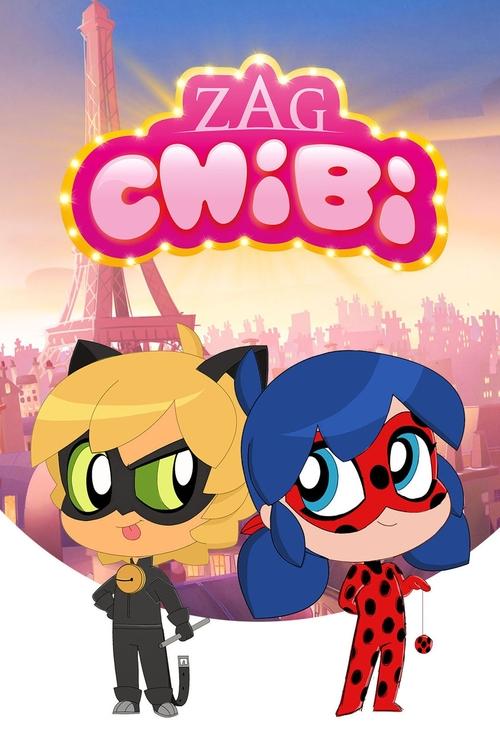
"Miraculous: Chibi" is a series of short episodes featuring the beloved characters from "Miraculous: Tales of Ladybug & Cat Noir" in a chibi art style. The episodes are light-hearted and comedic, focusing on the everyday lives and antics of the characters rather than a continuous overarching plot.
In the first episode, we see Marinette Dupain-Cheng, who is excitedly preparing for a school project. She is determined to impress her classmates and is seen frantically organizing her materials. Meanwhile, her crush, Adrien Agreste, is also working on the same project. Marinette's internal monologue reveals her nervousness about presenting in front of him, showcasing her typical blend of confidence and insecurity.
As the episode progresses, Marinette's best friend Alya encourages her to be bold and express her feelings. This leads to a humorous sequence where Marinette tries to practice her presentation in front of her stuffed animals, only to become increasingly flustered. The scene is filled with exaggerated expressions and comedic timing, highlighting Marinette's chibi form.
In another episode, we see Cat Noir and Ladybug engaging in a playful banter while trying to defeat a minor villain. The villain, a comically inept character, creates chaos in the park. Cat Noir attempts to use his charm to distract the villain, but his antics lead to more confusion. Ladybug, with her quick thinking, devises a plan to use her yo-yo to trap the villain, showcasing her leadership and resourcefulness.
The next episode shifts focus to Tikki and Plagg, the kwamis of Ladybug and Cat Noir, respectively. They are seen bickering over who is the better superhero. Their argument escalates into a series of challenges, each trying to prove their worth. The challenges are filled with slapstick humor, as they attempt to outdo each other in increasingly ridiculous ways, such as racing through the city or trying to create the best snack.
In a later episode, Marinette and Alya decide to host a sleepover. The preparations lead to a series of comedic mishaps, including Marinette accidentally spilling flour everywhere while trying to bake cookies. The chaos of the sleepover is depicted with vibrant colors and exaggerated reactions, emphasizing the fun and friendship between the characters.
As the series continues, we see various interactions between the characters, including Chloe's attempts to assert her dominance in school, which often leads to humorous confrontations with Marinette. Chloe's over-the-top personality contrasts with Marinette's more reserved nature, creating a dynamic filled with comedic tension.
In one episode, the group decides to have a talent show. Each character showcases their unique abilities, leading to a variety of funny performances. Marinette's attempt at a magic trick goes awry, while Alya's dance routine is met with unexpected interruptions. The talent show serves as a backdrop for character development, as they all support each other despite the mishaps.
The final episodes of the series bring back the theme of teamwork, as the characters come together to solve a problem that affects their school. They brainstorm ideas and work collaboratively, showcasing their growth and friendship. The resolution is filled with laughter and joy, as they celebrate their success together.
Throughout "Miraculous: Chibi," the episodes maintain a light-hearted tone, focusing on the characters' relationships and everyday adventures rather than a singular plot. Each episode is a standalone story, filled with humor, friendship, and the charm of the chibi art style.

What is the ending?
In the ending of "Miraculous: Chibi," the series concludes with a light-hearted and comedic tone, showcasing the characters in various humorous situations. The final scenes highlight the friendships and playful dynamics among the characters, leaving viewers with a sense of joy and camaraderie.
As the episode unfolds, we see Marinette Dupain-Cheng, also known as Ladybug, and her friends engaging in a series of silly antics. The characters, including Alya, Luka, and Tikki, are involved in a playful competition to see who can create the best dessert. The atmosphere is filled with laughter and friendly rivalry, showcasing their strong bonds.
In the climax of the episode, the characters gather to taste each other's creations. The scene is filled with exaggerated reactions as they sample the desserts, leading to comical outcomes. Marinette's dessert, while initially looking promising, ends up being a hilarious disaster, causing everyone to burst into laughter.
The episode wraps up with the characters enjoying their time together, emphasizing the importance of friendship and fun. The final moments show them sharing a group hug, solidifying their connections and leaving a warm, cheerful impression as the screen fades to black.
Now, let's delve into the ending in a more detailed, chronological narrative.
The final episode begins with a bright, sunny day in Paris, where Marinette Dupain-Cheng is bustling around her room, preparing for a friendly dessert competition with her friends. The camera pans across her room, filled with sketches and baking supplies, reflecting her dual life as a student and a superhero. Marinette's excitement is palpable as she talks to Tikki, her kwami, about the competition. Tikki encourages her, reminding her that it's all in good fun.
Scene transitions to Alya, who is in her own kitchen, determined to create the most impressive dessert. She is seen mixing ingredients with enthusiasm, her competitive spirit shining through. The scene captures her determination, with flour flying everywhere as she tries to perfect her recipe.
Next, we see Luka, who is calm and collected, preparing his dessert with a serene smile. He hums a tune, showcasing his laid-back personality. The contrast between Alya's frantic energy and Luka's relaxed demeanor adds a layer of humor to the unfolding events.
As the characters gather in a park for the competition, the atmosphere is filled with excitement. Marinette, Alya, and Luka set up their dessert stations, each showcasing their creations. The camera zooms in on the colorful desserts, highlighting the effort each character has put into their dish.
The tasting begins, and the characters take turns sampling each other's desserts. Marinette presents her dessert with pride, but as her friends take a bite, their expressions shift from anticipation to shock. The dessert, which looked beautiful, turns out to be a hilarious disaster, causing everyone to erupt in laughter. Marinette's embarrassment is evident, but she quickly joins in the laughter, showcasing her ability to take things lightly.
Alya's dessert, while initially impressive, also leads to a comical mishap, with whipped cream flying everywhere. Luka's dessert, on the other hand, is met with admiration, but he playfully downplays his success, embodying his humble nature.
The episode culminates in a heartwarming scene where the characters, covered in dessert remnants, share a group hug. Their laughter echoes through the park, emphasizing the joy of friendship and the fun they have together. The camera pulls back, showing the beautiful Paris skyline as the sun sets, symbolizing the warmth of their bonds.
As the screen fades to black, viewers are left with a sense of happiness, knowing that despite the chaos, the characters have strengthened their friendships and created lasting memories together. Each character, from Marinette to Alya and Luka, leaves the competition with smiles, reinforcing the theme of camaraderie and the joy of simply being together.
Is there a post-credit scene?
In "Miraculous: Chibi," there are indeed post-credit scenes that add a humorous twist to the episodes. These scenes typically feature the characters in lighthearted, comedic situations that often play off the main plot of the episode.
For example, in one post-credit scene, after a particularly chaotic adventure, we see Marinette and Alya trying to enjoy a peaceful moment at a café. Just as they settle down, Tikki, the kwami of creation, accidentally spills a drink all over Marinette, leading to a playful exchange where Marinette expresses her frustration while Tikki tries to apologize, resulting in laughter.
These moments serve to highlight the characters' personalities and their relationships, showcasing Marinette's patience and Tikki's endearing clumsiness. The scenes are brief but packed with charm, leaving viewers with a smile as they wrap up the episode. Each post-credit scene maintains the lighthearted tone of the series, reinforcing the fun and whimsical nature of "Miraculous: Chibi."
What are some of the most memorable antics of Tikki and Plagg in Miraculous: Chibi?
In 'Miraculous: Chibi', Tikki and Plagg often find themselves in humorous situations that highlight their contrasting personalities. Tikki, the gentle and nurturing kwami, frequently tries to keep Plagg, the mischievous and lazy kwami, in check. One memorable scene involves Tikki attempting to bake a cake for Marinette's birthday, only for Plagg to sneak in and eat all the ingredients, leading to a chaotic kitchen filled with flour and frosting. Tikki's frustration is palpable as she tries to salvage the situation, showcasing her determination and care for her friends.
How does Marinette's relationship with Luka develop in Miraculous: Chibi?
In 'Miraculous: Chibi', Marinette's relationship with Luka is portrayed in a lighthearted and playful manner. Their interactions often revolve around music, with Luka encouraging Marinette to express herself through song. In one episode, they collaborate on a duet, which leads to a series of comedic misunderstandings as they try to impress each other. Marinette's shyness and Luka's laid-back demeanor create a charming dynamic, filled with sweet moments that highlight their budding friendship and potential romantic feelings.
What are some of the challenges that Alya faces as Lady Wifi in Miraculous: Chibi?
Alya, as Lady Wifi, faces humorous yet relatable challenges in 'Miraculous: Chibi'. One episode features her trying to capture a video of Ladybug in action, but her overzealous nature leads to a series of comedic blunders. She accidentally films herself tripping over her own feet while trying to sneak up on a villain, resulting in a viral video that embarrasses her. Despite the setbacks, Alya's determination to be a hero shines through, showcasing her resilience and passion for justice.
What role does Chloe play in the comedic dynamics of Miraculous: Chibi?
Chloe's character in 'Miraculous: Chibi' serves as a source of comedic tension and rivalry. Her over-the-top diva personality often clashes with the other characters, leading to humorous confrontations. In one episode, Chloe attempts to outshine Marinette during a school project, only to have her plans backfire when her project hilariously malfunctions. The exaggerated reactions from Chloe, combined with the reactions of her classmates, create a comedic atmosphere that highlights her need for attention and the group's camaraderie.
How do the characters react to the various akumatized villains in Miraculous: Chibi?
In 'Miraculous: Chibi', the characters' reactions to akumatized villains are often exaggerated and comedic. Each time a new villain appears, the characters display a mix of fear, excitement, and humor. For instance, when a villain named 'Gamer' appears, the characters engage in a playful debate about their favorite video games, completely forgetting the danger at hand. This lighthearted approach to serious situations showcases the characters' camaraderie and their ability to find humor even in the face of adversity, emphasizing their growth and teamwork.
Is this family friendly?
"Miraculous: Chibi" is generally considered family-friendly, designed to appeal to a younger audience with its lighthearted humor and whimsical storytelling. However, there are a few aspects that might be considered potentially objectionable or upsetting for some children or sensitive viewers:
-
Mild Frights: Some scenes may include characters transforming into their superhero forms, which can be visually intense or surprising, though they are not meant to be scary.
-
Conflict and Rivalry: The show features playful rivalries and conflicts between characters, which may lead to moments of tension or emotional distress, but these are typically resolved in a humorous or light-hearted manner.
-
Silly Villainy: The presence of villains, while comedic and exaggerated, may still present scenarios where characters face challenges or threats, albeit in a non-threatening way.
-
Emotional Reactions: Characters may experience exaggerated emotional responses, such as jealousy or frustration, which could resonate with sensitive viewers but are portrayed in a comedic context.
Overall, while there are elements that could be mildly upsetting, they are presented in a way that is intended to be humorous and light, making the show suitable for its target audience.