


Popular
What role does the mysterious artifact play in the story?
How does the character of Mark evolve throughout the series?
What is the significance of the character named Anna in Dark Stories?
How does the relationship between Anna and Mark develop throughout the series?
What are the consequences of the choices made by the character of Sarah?
Should I watch it?
Ask Your Own Question

What is the plot?
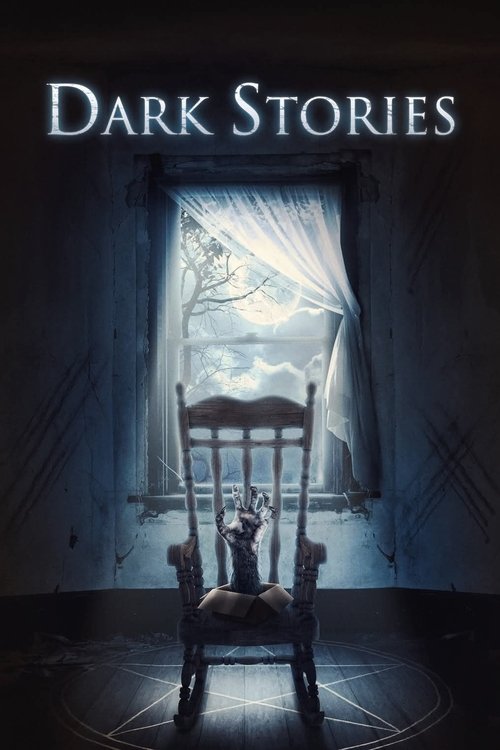
In the small town of Haverford, a series of mysterious events begins to unfold when a local teenager, Mia, discovers an old, dusty book in her attic. The book contains dark stories that seem to come to life, each tale more sinister than the last. Intrigued, Mia starts reading the stories aloud, unaware of the consequences that will follow. As she reads, strange occurrences begin to happen around her, including shadows moving on their own and whispers echoing through the halls of her home.
Mia's best friend, Jake, notices her increasingly erratic behavior and becomes concerned. He confronts her about the book, urging her to stop reading it. However, Mia is drawn deeper into the stories, feeling a strange connection to the characters and their fates. One night, while reading a particularly chilling tale about a haunted mirror, Mia accidentally breaks the mirror in her room. This act unleashes a malevolent spirit that begins to haunt her, manifesting as a dark figure that lurks in the corners of her vision.
As the haunting intensifies, Mia starts experiencing vivid nightmares that blend with her waking life. In one dream, she sees a girl from the stories, who warns her that she must stop reading or face dire consequences. Disturbed, Mia confides in Jake, who suggests they seek help from a local historian, Mrs. Thompson, who has knowledge of the town's dark past. They visit Mrs. Thompson, who reveals that the book is cursed and that the stories are based on real events that led to the deaths of several townspeople.
Determined to break the curse, Mia and Jake decide to confront the spirit. They gather items that belonged to the victims mentioned in the stories, hoping to appease the restless souls. During a tense night in Mia's house, they perform a ritual to communicate with the spirit. As they chant, the dark figure appears, and Mia realizes it is the girl from her dreams. The spirit reveals that she was wronged in life and seeks revenge on those who have wronged her.
In a moment of desperation, Mia offers to help the spirit find peace. The spirit agrees but demands that Mia must face the truth about her own fears and regrets. This leads to a series of flashbacks where Mia confronts her past mistakes, including her strained relationship with her mother and her feelings of inadequacy. Each revelation weakens the spirit's hold on her, but it also intensifies the haunting.
As the final confrontation approaches, Mia and Jake discover that the key to breaking the curse lies in rewriting the last story in the book. They gather their courage and begin to write a new ending that reflects forgiveness and healing. As they write, the dark figure becomes more agitated, trying to stop them. The room fills with chaos as objects fly and shadows grow darker.
In a climactic moment, Mia finishes the new story, and the spirit is momentarily calmed. However, the dark figure lashes out one last time, attempting to drag Mia into the shadows. Jake intervenes, pulling Mia back just in time. The moment of connection between them strengthens Mia's resolve, and she reads the new ending aloud. As the words leave her lips, the dark figure dissipates, and a sense of peace fills the room.
With the curse broken, Mia and Jake find themselves back in the attic, the book now blank. They realize that the stories have been rewritten, and the dark past of Haverford has been altered. Mia feels a weight lifted off her shoulders, and she embraces Jake, grateful for his support. The final scene shows them leaving the attic, the sun shining brightly outside, symbolizing a new beginning free from the shadows of the past.
More TV Shows Like This
Browse All TV Shows →

What is the ending?
In the ending of "Dark Stories," the characters confront their deepest fears and the consequences of their actions. The narrative culminates in a series of revelations that tie together the various threads of the story, leading to a resolution that leaves some characters changed forever while others face dire consequences.
As the final scenes unfold, we see the main characters grappling with the aftermath of their choices. The tension builds as they confront the darkness within themselves and the impact of their decisions on those around them. The story concludes with a sense of ambiguity, leaving the audience to ponder the true nature of the characters' fates.
The final act of "Dark Stories" begins with a dimly lit room, where the main character, Alex, sits alone, his face illuminated by the flickering light of a single bulb. He is visibly shaken, reflecting on the events that have transpired. The weight of his guilt hangs heavily on him, as he recalls the choices that led him to this moment. The camera zooms in on his eyes, filled with regret and fear, as he grapples with the consequences of his actions.
In the next scene, we shift to Sarah, who is pacing nervously in her apartment. She clutches a photograph of her family, her hands trembling. The emotional turmoil is evident on her face as she struggles to reconcile her past with her present. The audience can feel her desperation as she contemplates the choices she has made, which have led her to a crossroads. The tension in the room is palpable, and the sound of her breathing fills the silence.
Meanwhile, we see Mark, who is in a dark alley, his back against the cold brick wall. He is confronted by a figure from his past, a ghost of sorts, representing the mistakes he cannot escape. The confrontation is intense, filled with raw emotion as Mark faces the reality of his actions. The dialogue is sharp, revealing the pain and anger that have been festering within him. The scene is drenched in shadows, symbolizing the darkness that has consumed him.
As the characters' paths converge, they find themselves in a final confrontation at an abandoned warehouse. The atmosphere is thick with tension as they face each other, the weight of their shared history hanging in the air. Alex, Sarah, and Mark stand in a triangle, each representing a different aspect of the story's central conflict. The dialogue is charged, revealing their vulnerabilities and the fears that have driven them apart.
In a climactic moment, Alex breaks down, confessing his deepest fears and regrets. His voice trembles as he speaks, and tears stream down his face. Sarah, moved by his honesty, steps forward, offering her support. Mark, however, remains distant, his anger boiling beneath the surface. The emotional stakes are high as they confront the reality of their relationships and the choices that have led them to this point.
The scene shifts to a montage of flashbacks, showing pivotal moments from their pasts that have shaped their current selves. The visuals are haunting, interspersed with quick cuts of their faces, reflecting the pain and joy of their shared experiences. The audience is drawn into their memories, feeling the weight of their collective history.
As the confrontation reaches its peak, a sudden event occurs--a loud crash echoes through the warehouse, causing chaos. In the ensuing confusion, the characters are forced to confront not only each other but also the external forces that have been at play throughout the story. The tension escalates, and the stakes become life or death.
In the final moments, the characters make their choices. Alex decides to take responsibility for his actions, stepping forward to protect Sarah from the impending danger. His sacrifice is a poignant moment, showcasing his growth and willingness to change. Sarah, inspired by his bravery, finds her own strength and confronts Mark, urging him to let go of his anger and embrace forgiveness.
Mark, however, is unable to break free from his past. In a tragic turn, he succumbs to the darkness that has consumed him, leaving the warehouse in despair. The camera lingers on his retreating figure, a stark contrast to the hope that Alex and Sarah have found in each other.
The story concludes with Alex and Sarah standing together, their hands intertwined, as they look out into the uncertain future. The warehouse, once a place of confrontation, now symbolizes a new beginning for them. The final shot captures their faces, filled with a mix of hope and trepidation, as they step into the light, leaving the darkness behind.
In the end, Alex chooses redemption, Sarah finds her strength, and Mark is left to grapple with the consequences of his choices, highlighting the themes of responsibility, forgiveness, and the struggle against one's inner demons. The fate of each character serves as a reflection of their journeys, leaving the audience with a lingering sense of the complexities of human nature and the choices that define us.
Is there a post-credit scene?
In the TV show "Dark Stories," produced in 2019, there is no post-credit scene. The series concludes its episodes without any additional content after the credits, focusing instead on delivering a complete narrative within the main storyline. Each episode wraps up its plot, leaving viewers with a sense of closure regarding the events that transpired. The absence of a post-credit scene allows the audience to reflect on the themes and moral dilemmas presented throughout the series without the distraction of additional material.
What role does the mysterious artifact play in the story?
The mysterious artifact serves as a catalyst for the unfolding events in Dark Stories. It is imbued with a sense of foreboding and curiosity, drawing characters into its orbit. As the story progresses, the artifact's true nature is revealed, symbolizing the hidden truths and secrets that each character must confront. Its presence heightens the tension and propels the narrative forward, intertwining the fates of the characters.
How does the character of Mark evolve throughout the series?
Mark begins as a seemingly ordinary man, but as the series progresses, his character reveals deeper layers of complexity. Initially portrayed as a supportive friend, he becomes increasingly entangled in the darker aspects of the narrative. His internal conflict is palpable as he struggles with guilt and the consequences of his actions, leading to a transformation that challenges his moral compass.
What is the significance of the character named Anna in Dark Stories?
Anna is a pivotal character whose journey reflects the themes of loss and redemption. Her emotional turmoil is evident as she grapples with her past decisions, particularly her relationship with her estranged father. Throughout the series, Anna's motivations are driven by a desire to reconnect with her family and find closure, which leads her to confront painful memories and ultimately seek forgiveness.
How does the relationship between Anna and Mark develop throughout the series?
The relationship between Anna and Mark is fraught with tension and complexity. Initially, they share a bond rooted in friendship, but as the plot thickens, their interactions become charged with unspoken feelings and unresolved issues. Anna's vulnerability and Mark's protective instincts create a dynamic that oscillates between support and conflict, ultimately leading to moments of intimacy that challenge their understanding of each other.
What are the consequences of the choices made by the character of Sarah?
Sarah's choices are central to the narrative's conflict, as they set off a chain reaction of events that impact all characters involved. Her decisions, often driven by desperation and fear, lead to unforeseen consequences that ripple through the storyline. The emotional weight of her actions is explored in depth, showcasing her internal struggle and the moral dilemmas she faces, ultimately forcing her to confront the fallout of her choices.
Is this family friendly?
"Dark Stories," produced in 2019, is not considered family-friendly due to its mature themes and unsettling content. The show delves into dark and complex narratives that often explore human fears, moral dilemmas, and psychological horror.
Potentially objectionable or upsetting aspects include:
-
Violence and Gore: Several episodes feature graphic depictions of violence, including physical harm to characters, which may be distressing for younger viewers.
-
Psychological Tension: The series often builds a sense of dread and anxiety, with characters facing intense emotional turmoil and existential crises that could be unsettling.
-
Themes of Death and Loss: Many stories revolve around death, grief, and the impact of loss on individuals and families, which could be particularly upsetting for sensitive viewers.
-
Supernatural Elements: The presence of supernatural occurrences and entities can evoke fear and anxiety, contributing to an overall dark atmosphere.
-
Mature Language and Situations: The dialogue may include strong language and adult situations that are not suitable for children.
Overall, the series is designed for an adult audience and may not be appropriate for children or those who are sensitive to dark themes.