
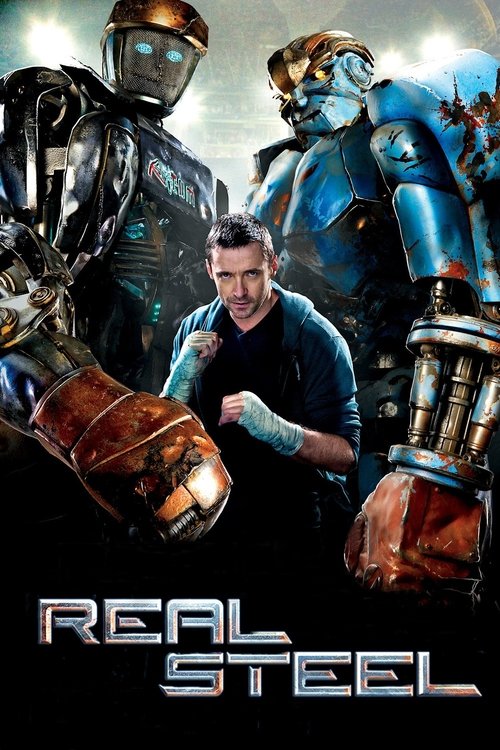









































Popular
What is the relationship between Charlie Kenton and his son Max?
How does Max discover the capabilities of Atom?
What motivates Charlie to enter the robot boxing matches?
What challenges do Charlie and Max face while training Atom?
How does the character of Bailey Tallet influence Charlie and Max's journey?
Should I watch it?
Ask Your Own Question

What is the plot?
Sorry, we aren't able to watch and write up a full detailed plot yet. Check back in a few days.

What is the ending?
In the ending of Real Steel, Charlie and his son Max face off against the formidable robot Zeus in the championship match. Despite the odds, they manage to push through, showcasing their bond and teamwork. Atom, their robot, fights valiantly but ultimately loses the match. However, they gain respect and recognition, and Charlie reconciles with Max, promising to be a better father.
As the final scenes unfold, Charlie and Max watch Atom's last fight on a screen, reflecting on their journey together. The film concludes with a sense of hope and a renewed relationship between father and son.
The climax of Real Steel unfolds in a high-stakes championship match, where Charlie Kenton and his son Max are determined to prove themselves against the reigning champion, Zeus. The atmosphere is electric, filled with the roar of the crowd and the anticipation of the fight. Charlie, who has struggled with his role as a father and a trainer, stands ringside, his heart pounding with a mix of anxiety and hope. Max, filled with youthful determination, is at his side, ready to support their robot, Atom, who has become a symbol of their bond.
As the match begins, Atom enters the ring, facing the towering and powerful Zeus. The contrast between the two robots is stark; Zeus is a sleek, advanced machine, while Atom is a scrappy underdog, built from spare parts and ingenuity. The fight starts with Zeus dominating the early rounds, showcasing its strength and speed. Charlie watches, his mind racing with strategies, while Max cheers for Atom, believing in its potential.
In a pivotal moment, Charlie recalls the lessons he has learned from Max and the bond they have formed. He realizes that Atom is not just a robot; it embodies their teamwork and resilience. As the fight progresses, Atom begins to adapt, using its agility to dodge Zeus's powerful blows. The crowd is captivated, and the tension builds as Atom starts to land some hits, showcasing its heart and determination.
Despite their efforts, the fight takes a turn when Zeus delivers a devastating blow, knocking Atom down. Charlie's heart sinks, and he feels the weight of his failures as a father and a trainer. However, Max, filled with unwavering belief, encourages Atom to get back up. This moment is crucial; it symbolizes the strength of their relationship and the hope they have for each other.
As Atom rises, the crowd erupts in cheers, rallying behind the underdog. The fight continues, and Atom, fueled by the support of Charlie and Max, begins to fight back with renewed vigor. The choreography of the fight is intense, with Atom dodging and weaving, landing punches that resonate with the audience. The emotional stakes are high, as Charlie and Max share glances filled with determination and pride.
In the final moments of the match, Atom gives it everything it has, but ultimately, Zeus proves to be too powerful. The final blow lands, and Atom collapses, unable to continue. The referee counts down, and the match ends with Zeus declared the winner. Charlie and Max watch in despair, but instead of feeling defeated, they realize the journey they have taken together has transformed their relationship.
As the crowd begins to disperse, Charlie kneels beside Atom, feeling a mix of pride and sadness. Max joins him, and they share a moment of reflection, understanding that their bond has grown stronger through this experience. They have gained respect from the audience and the boxing community, and more importantly, they have found a way to connect as father and son.
In the closing scenes, Charlie and Max leave the arena, their spirits lifted despite the loss. They watch a replay of Atom's fight on a screen, reminiscing about their journey and the challenges they faced together. Charlie promises Max that he will be a better father, and they walk away hand in hand, ready to face whatever comes next, united in their newfound relationship. The film ends on a hopeful note, emphasizing the themes of perseverance, family, and the power of believing in one another.
Is there a post-credit scene?
In the movie "Real Steel," there is no post-credit scene. The film concludes with a sense of resolution as Charlie Kenton, played by Hugh Jackman, reconciles with his son Max, portrayed by Dakota Goyo, after their journey through the world of robot boxing. The final moments focus on their bond and the future they can build together, leaving the audience with a heartfelt conclusion without any additional scenes after the credits.
What is the relationship between Charlie Kenton and his son Max?
Charlie Kenton, played by Hugh Jackman, is a washed-up former boxer who has a strained relationship with his son Max, portrayed by Dakota Goyo. After being absent for much of Max's life, Charlie is forced to reconnect with him when he learns that he must take care of him during the summer. Initially, Charlie is more focused on his own ambitions in the world of robot boxing than on being a father. However, as they work together to build and train a robot named Atom, their bond deepens, and Charlie begins to understand the importance of family.
How does Max discover the capabilities of Atom?
Max discovers Atom's unique capabilities when he finds the discarded robot in a junkyard. Unlike other robots, Atom has a special feature that allows him to mimic the movements of his opponent, which Max realizes can be used strategically in fights. This discovery is pivotal as it sets the stage for their journey in the robot boxing world, showcasing Max's ingenuity and understanding of the sport, as well as his growing confidence.
What motivates Charlie to enter the robot boxing matches?
Charlie's motivation to enter the robot boxing matches stems from his desperation to reclaim his former glory and earn money to pay off debts. Initially, he sees the matches as a way to make quick cash, but as he spends time with Max and sees the potential in Atom, his motivations shift. He begins to fight not just for money, but to prove himself as a father and to create a legacy with his son.
What challenges do Charlie and Max face while training Atom?
Charlie and Max face numerous challenges while training Atom, including the robot's initial lack of experience and the need to teach it how to fight effectively. They struggle with financial constraints, as they cannot afford the best equipment or training facilities. Additionally, they encounter skepticism from others in the robot boxing community, who doubt Atom's capabilities. These challenges test their resolve and force them to innovate, ultimately strengthening their partnership.
How does the character of Bailey Tallet influence Charlie and Max's journey?
Bailey Tallet, played by Evangeline Lilly, is a former boxer and Charlie's love interest who owns a gym. She serves as a grounding influence on both Charlie and Max, encouraging them to believe in Atom and in themselves. Bailey's support and expertise in the boxing world help them navigate the challenges they face. Her character also represents a connection to Charlie's past and a potential future, as she pushes him to confront his responsibilities as a father and to embrace the possibility of redemption.
Is this family friendly?
"Real Steel," produced in 2011, is generally considered family-friendly, but it does contain some elements that may be objectionable or upsetting for children or sensitive viewers. Here are a few aspects to consider:
-
Violence: The film features robot boxing matches that can be intense and violent, with robots being damaged and destroyed. While the violence is not graphic in a human context, the destruction of the robots can be quite dramatic.
-
Emotional Themes: The story explores themes of abandonment, loss, and the struggle for redemption. The protagonist, Charlie Kenton, has a strained relationship with his son, Max, which may evoke feelings of sadness or discomfort.
-
Parental Conflict: There are scenes that depict Charlie's irresponsible behavior and his struggles with fatherhood, which may resonate with children who have experienced family issues.
-
Mild Language: The film contains some mild profanity and language that may not be suitable for very young viewers.
-
Dramatic Tension: There are moments of high tension and emotional stakes, particularly during the robot fights and the father-son relationship dynamics, which could be upsetting for sensitive viewers.
Overall, while "Real Steel" is designed to be an entertaining family film, these elements may warrant consideration for younger audiences or those who are particularly sensitive to emotional or violent content.







