
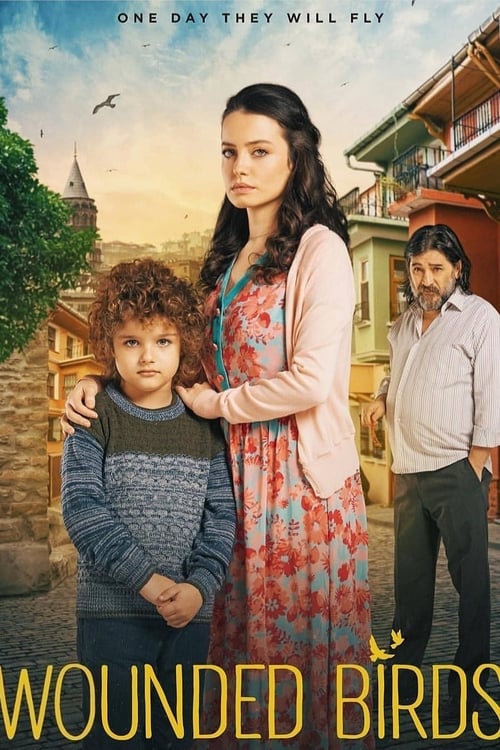












Popular
What are the main character's motivations throughout the series?
What role does the setting play in the characters' development?
How does Aysel's relationship with her father evolve in the series?
What are the significant turning points in Aysel's journey?
How do the supporting characters influence Aysel's choices?
Should I watch it?
Ask Your Own Question

What is the plot?
In the opening scenes of "Wounded Birds," we are introduced to the protagonist, a young woman named Aline, who is living in a small, rural town. Aline is struggling with her past, haunted by memories of a traumatic event that occurred during her childhood. The narrative begins with her working at a local diner, where she interacts with various townsfolk, showcasing her desire for a fresh start while grappling with her internal demons.
One day, Aline receives a letter from her estranged father, who she has not seen in years. The letter reveals that he is gravely ill and wishes to reconcile before he dies. Torn between her resentment and the longing for closure, Aline decides to visit him. This decision marks a pivotal moment in her journey, as it forces her to confront her past and the unresolved feelings she harbors towards her father.
As Aline travels to her father's home, flashbacks reveal the nature of their tumultuous relationship. We see glimpses of her father's struggles with addiction and the impact it had on Aline's childhood. These memories are interspersed with scenes of her current life, highlighting the stark contrast between her desire for a normal life and the chaos of her upbringing.
Upon arriving at her father's house, Aline is met with a mix of emotions. Her father, now frail and remorseful, attempts to apologize for his past mistakes. Aline is initially cold and distant, struggling to let go of her anger. However, as they spend time together, she begins to see glimpses of the man he once was, and her defenses start to lower.
During her stay, Aline discovers that her father has been involved in a local community project aimed at helping troubled youth. This revelation surprises her and adds complexity to her understanding of him. She witnesses him interacting with the kids, showing a side of him that she never knew existed. This experience stirs conflicting feelings within Aline, as she grapples with the idea that people can change.
As the days pass, Aline's relationship with her father deepens, but so does the tension. Aline learns that her father is not only battling his illness but also facing threats from a local gang that has been causing trouble in the community. This gang is involved in drug trafficking, and her father's project is seen as a threat to their operations. Aline becomes increasingly concerned for her father's safety, which reignites her protective instincts.
One night, the gang confronts Aline and her father at the community center. Aline witnesses her father standing up to the gang members, showcasing newfound courage. However, the confrontation escalates into violence, and Aline is forced to intervene. In a tense moment, she grabs a nearby object to defend her father, leading to a chaotic fight where they manage to fend off the gang, but not without sustaining injuries.
In the aftermath of the confrontation, Aline and her father are left shaken but more united than ever. They begin to work together to strengthen the community project, rallying support from other townsfolk. Aline finds herself becoming a leader, channeling her pain into a purpose that helps others. This transformation is cathartic for her, as she starts to heal from her own wounds.
As the project gains momentum, the gang retaliates, escalating their threats. Aline and her father receive warnings, and the tension in the town rises. Aline's father insists on continuing the project despite the danger, believing it is worth the risk. Aline, however, is torn between her desire to protect him and her commitment to the community.
In a climactic sequence, the gang launches a full-scale attack on the community center during a fundraising event. Aline and her father, along with the townsfolk, band together to defend their space. The scene is chaotic, filled with shouting, physical confrontations, and a palpable sense of fear. Aline takes charge, directing people to safety while also confronting the gang members head-on.
During the confrontation, Aline faces off against the gang leader, who taunts her about her past. In a moment of clarity, Aline draws on her inner strength, confronting her fears and standing her ground. The fight culminates in a tense standoff, where Aline's determination inspires others to join her in the fight, ultimately driving the gang away.
In the aftermath of the battle, the community comes together to rebuild. Aline's relationship with her father reaches a new level of understanding and forgiveness. They share a heartfelt conversation, acknowledging their past while looking forward to a hopeful future. Aline realizes that healing is a journey, and while the scars of their past remain, they can move forward together.
The series concludes with Aline taking on a leadership role in the community, symbolizing her growth and resilience. She stands in front of the community center, now a symbol of hope and recovery, ready to face whatever challenges lie ahead, embodying the spirit of the wounded birds that have found their way back home.








What is the ending?
In the ending of "Wounded Birds," the main characters confront their past traumas and seek redemption. The story culminates in a tense standoff that leads to a resolution of their internal conflicts, ultimately allowing them to find a path toward healing and forgiveness.
As the final act unfolds, the characters are drawn together in a series of emotionally charged encounters. The protagonist, burdened by guilt and regret, faces the consequences of their actions. In a pivotal moment, they confront a figure from their past, leading to a cathartic exchange that reveals deep-seated pain and longing for closure. The atmosphere is thick with tension, as the characters grapple with their emotions, each seeking to break free from the chains of their history.
In the climax, a confrontation occurs that forces the characters to make choices that will define their futures. The protagonist takes a stand, choosing to embrace vulnerability rather than retreat into anger or despair. This decision resonates with the other characters, prompting them to reflect on their own choices and the impact of their pasts.
As the dust settles, the characters begin to forge new paths. Some find solace in forgiveness, while others choose to move forward with a renewed sense of purpose. The final scenes depict a sense of hope, as the characters step into the light of a new beginning, leaving behind the shadows of their past.
The fate of each main character is revealed: the protagonist finds a measure of peace, having confronted their demons; another character reconciles with their family, mending broken relationships; while a third character, who has struggled with addiction, takes the first steps toward recovery. The story closes on a note of resilience, emphasizing the possibility of healing and the strength found in vulnerability.
In summary, the ending of "Wounded Birds" encapsulates the journey of its characters as they navigate the complexities of their pasts, ultimately leading to a place of understanding and hope for the future.
Is there a post-credit scene?
"Wounded Birds," produced in 2019, does not feature a post-credit scene. The series concludes its narrative without any additional scenes after the credits roll, focusing instead on the resolution of its main plot and character arcs. The final moments of the show encapsulate the emotional journeys of the characters, leaving viewers with a sense of closure regarding their struggles and growth throughout the series.
What are the main character's motivations throughout the series?
The main character, a young woman named Aysel, is driven by her desire to escape her troubled past and find a sense of belonging. Her journey is marked by her struggles with family expectations and her quest for personal freedom. Aysel's internal conflict is palpable as she navigates her relationships, particularly with her estranged father, who represents both a source of pain and a potential path to healing.
What role does the setting play in the characters' development?
The setting, a small coastal town, serves as a backdrop that reflects the characters' emotional states. The isolation of the town mirrors Aysel's feelings of loneliness and entrapment. Key scenes, such as Aysel walking along the beach at sunset, symbolize her yearning for freedom and change. The town's close-knit community also amplifies the pressure Aysel feels, as everyone knows her family's history, adding layers to her character development.
How does Aysel's relationship with her father evolve in the series?
Aysel's relationship with her father is tumultuous and fraught with tension. Initially, she harbors deep resentment towards him for abandoning the family. As the series progresses, moments of vulnerability and shared grief begin to bridge the gap between them. A pivotal scene occurs when they confront their shared loss, leading to a fragile reconciliation that highlights Aysel's longing for connection and understanding.
What are the significant turning points in Aysel's journey?
Significant turning points in Aysel's journey include her decision to confront her father about their past, which marks a shift from avoidance to confrontation. Another crucial moment occurs when she befriends a local artist, who encourages her to express her emotions through art. This friendship becomes a catalyst for Aysel's growth, pushing her to face her fears and ultimately embrace her identity.
How do the supporting characters influence Aysel's choices?
Supporting characters, such as Aysel's best friend and the local artist, play pivotal roles in shaping her choices. Her best friend represents a voice of reason, often urging Aysel to take risks and pursue her dreams. The artist, on the other hand, challenges Aysel to confront her pain through creativity, leading her to make bold decisions about her future. Their influence highlights the importance of relationships in Aysel's journey towards self-discovery.
Is this family friendly?
"Wounded Birds," produced in 2019, is a drama that delves into complex themes and emotional struggles. While it offers a rich narrative, there are several aspects that may be considered objectionable or upsetting for children or sensitive viewers:
-
Emotional Turmoil: The characters experience significant emotional distress, including grief, loss, and betrayal, which may be intense for younger audiences.
-
Family Conflict: There are scenes depicting familial strife and conflict, showcasing arguments and tension that could be unsettling.
-
Themes of Violence: The show touches on themes of violence and its repercussions, which may be distressing for some viewers.
-
Substance Abuse: There are references to substance abuse and its impact on family dynamics, which could be inappropriate for younger viewers.
-
Mental Health Issues: The portrayal of mental health struggles may be heavy and could resonate deeply with sensitive individuals.
-
Tragic Events: The narrative includes tragic events that can evoke strong emotional reactions, including scenes of loss and mourning.
These elements contribute to a narrative that, while rich and engaging, may not be suitable for all audiences, particularly children or those who are sensitive to such themes.









