


















Popular
What role does Brother William of Baskerville play in the investigation of the murders?
How does Adso of Melk's relationship with William evolve throughout the series?
What significance does the library hold in the story?
What are the motivations behind the murders occurring in the abbey?
How does the character of Jorge of Burgos influence the events in the abbey?
Should I watch it?
Ask Your Own Question

What is the plot?
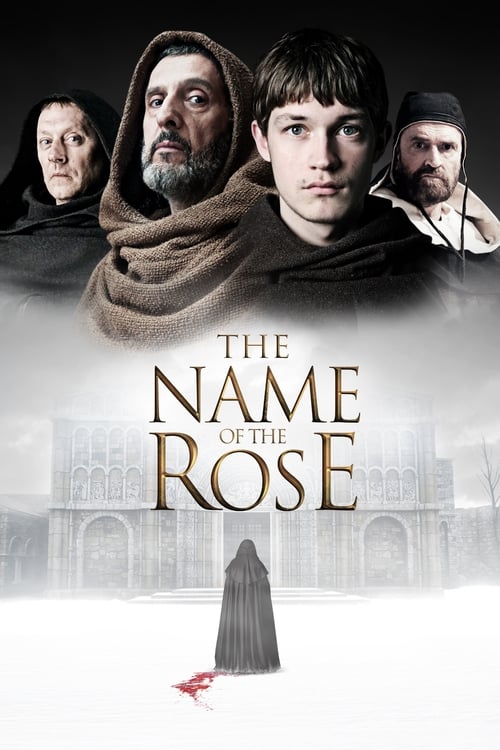
In the year 1327, a Franciscan friar named William of Baskerville arrives at a remote abbey in Northern Italy with his novice, Adso of Melk. They are there to attend a theological debate between the Franciscans and the Pope's representatives. As they approach the abbey, they are struck by its imposing architecture and the somber atmosphere surrounding it. William, a keen observer and a man of reason, is intrigued by the abbey's secrets, while Adso, a young and impressionable novice, is filled with a mix of awe and trepidation.
Upon their arrival, they are greeted by the abbot, who is wary of outsiders. The abbey is home to a group of monks, each with distinct personalities and roles. William quickly senses tension among the monks, particularly regarding the upcoming debate. The atmosphere becomes more charged when a monk is found dead under mysterious circumstances. William's curiosity is piqued, and he decides to investigate the death, believing it to be linked to the abbey's hidden knowledge.
As William delves deeper into the abbey's secrets, he discovers a hidden library that contains forbidden texts. He learns that the library is guarded by strict rules, and only a select few monks have access to its contents. William's investigation leads him to question the motives of the monks, particularly Jorge of Burgos, an elderly monk who is staunchly against the pursuit of knowledge and believes that ignorance is a path to salvation. Jorge's disdain for the Franciscans and their progressive ideas becomes increasingly evident.
The tension escalates when another monk is found dead, this time in a gruesome manner. William and Adso begin to piece together clues, leading them to suspect that the deaths are not mere accidents but rather part of a larger conspiracy. William's logical approach clashes with the superstitions held by some of the monks, creating a rift between him and those who are more inclined to believe in divine intervention.
As William continues his investigation, he encounters a young woman named The Name of the Rose, who has been captured by the monks. Adso becomes infatuated with her, and their brief interactions reveal a budding romance. However, the presence of the woman complicates matters, as her fate becomes intertwined with the unfolding mystery. William's protective instincts for Adso and the woman grow stronger as the danger within the abbey intensifies.
The debate approaches, and the atmosphere becomes increasingly fraught with tension. William uncovers a connection between the deaths and the library's forbidden texts, leading him to confront Jorge. In a heated exchange, Jorge reveals his belief that knowledge leads to sin and that the deaths are a necessary sacrifice to protect the abbey's sanctity. William's determination to expose the truth puts him at odds with Jorge and the other monks who support him.
As the investigation reaches its climax, William and Adso discover a hidden chamber within the library that contains the true nature of the forbidden texts. They realize that the deaths are part of a deliberate plan to silence dissenting voices and maintain control over the abbey's knowledge. In a desperate attempt to save the woman and prevent further bloodshed, William confronts Jorge and the other conspirators.
A confrontation ensues, leading to a chaotic struggle within the abbey. William and Adso fight against the monks who wish to protect their secrets at any cost. The struggle is intense, with physical altercations and emotional turmoil as loyalties are tested. In the midst of the chaos, the abbey itself becomes a character, its dark corridors and hidden passages reflecting the secrets it holds.
In the aftermath of the confrontation, the abbey is left in ruins, and the truth about the deaths is revealed. William's quest for knowledge and justice comes at a great cost, as he must grapple with the consequences of his actions. Adso, deeply affected by the events, reflects on the nature of faith, knowledge, and the price of truth.
As the story concludes, William and Adso leave the abbey, forever changed by their experiences. The weight of the knowledge they have uncovered lingers, and the bond between them is tested by the trials they have faced. The final scenes capture the haunting beauty of the abbey, now a place of both enlightenment and tragedy, as the two men walk away from its shadow, carrying the burden of their journey into an uncertain future.




What is the ending?
In the ending of the 2019 adaptation of "The Name of the Rose," Brother William of Baskerville and his novice Adso of Melk confront the truth behind the murders in the abbey. They discover that the library, filled with forbidden texts, is the source of the conflict. The abbey is set ablaze, leading to a tragic conclusion for several characters. William and Adso escape, but the experience leaves a profound impact on them, particularly Adso, who reflects on the nature of knowledge and faith.
As the final scenes unfold, the tension in the abbey reaches its peak. The camera captures the flickering shadows of the library, where the secrets of the past linger. William, having unraveled the mystery of the deaths, stands resolute, yet troubled by the implications of what he has uncovered. The library, a symbol of knowledge and power, becomes a battleground for ideas, leading to a confrontation with the Inquisition.
In a pivotal moment, the abbey's inhabitants gather, and the atmosphere is thick with fear and suspicion. The character of Bernando Gui, the inquisitor, embodies the oppressive force of dogma, as he seeks to root out heresy. His relentless pursuit of William and Adso culminates in a tense standoff, where the stakes are not just life and death, but the very essence of knowledge itself.
As the flames engulf the library, the camera captures the chaos and despair of the monks, their faces illuminated by the fire's glow. William and Adso manage to escape the inferno, but not without witnessing the destruction of the knowledge they sought to protect. The emotional weight of the moment is palpable, as Adso grapples with the loss of innocence and the realization that the pursuit of truth can lead to devastating consequences.
In the aftermath, William and Adso find themselves outside the abbey, the smoke rising behind them. Adso, reflecting on the events, expresses a deep sense of loss and confusion. He has been irrevocably changed by the experience, and his internal struggle is evident as he contemplates the nature of faith, knowledge, and the human condition.
The fate of the main characters is sealed in this tragic conclusion. William, though a seeker of truth, is left with the burden of knowledge that has cost lives. Adso, now a man shaped by his experiences, carries the weight of the past with him, forever marked by the events that transpired within the abbey's walls. The story closes on a somber note, emphasizing the fragility of knowledge and the often-painful journey of understanding.
Is there a post-credit scene?
The 2019 adaptation of "The Name of the Rose" does not include a post-credit scene. The series concludes with the final episode, wrapping up the story without any additional scenes or content after the credits. The narrative focuses on the resolution of the central mystery surrounding the murders in the abbey, the philosophical debates, and the fate of the main characters, William of Baskerville and Adso of Melk. The ending leaves viewers with a sense of closure regarding the events that transpired within the abbey, emphasizing the themes of knowledge, faith, and the conflict between reason and belief.
What role does Brother William of Baskerville play in the investigation of the murders?
Brother William of Baskerville, portrayed by John Turturro, is a Franciscan friar and a brilliant detective. He arrives at the abbey with his novice, Adso of Melk, to attend a theological debate. However, he quickly becomes embroiled in a series of mysterious deaths. William's keen intellect and logical reasoning drive him to investigate the murders, using his knowledge of philosophy, theology, and the natural world. His motivations are rooted in a desire for truth and justice, as he seeks to uncover the dark secrets hidden within the abbey.
How does Adso of Melk's relationship with William evolve throughout the series?
Adso of Melk, played by Damian Hardung, begins as a naive and impressionable novice, deeply admiring William's intellect and wisdom. As they navigate the treacherous environment of the abbey, Adso's relationship with William evolves from that of a student to a more complex partnership. Adso grapples with his own beliefs and the moral implications of their investigation, particularly as he witnesses the darker sides of human nature and the consequences of knowledge. His emotional journey is marked by moments of awe, fear, and ultimately, a painful awakening to the harsh realities of the world.
What significance does the library hold in the story?
The library of the abbey is a labyrinthine structure, symbolizing the vastness of knowledge and the power it holds. It is a place of both enlightenment and danger, containing forbidden texts that challenge the Church's authority. As William and Adso explore the library, they uncover not only the secrets of the abbey but also the lengths to which individuals will go to protect or suppress knowledge. The library's architecture, with its towering shelves and hidden passages, reflects the tension between light and darkness, knowledge and ignorance, and becomes a central element in the unfolding mystery.
What are the motivations behind the murders occurring in the abbey?
The murders in the abbey are driven by a complex interplay of power, fear, and the desire to control knowledge. As William investigates, he uncovers that the deaths are linked to a secretive group within the Church that seeks to suppress certain philosophical ideas that threaten their authority. The motivations of the killers are rooted in a fear of losing control over the narrative of faith and reason, leading to a desperate and violent attempt to maintain their grip on power. This theme of knowledge as both a weapon and a shield is central to the unfolding drama.
How does the character of Jorge of Burgos influence the events in the abbey?
Jorge of Burgos, portrayed by Michael Emerson, is an elderly monk whose extreme views on knowledge and heresy cast a long shadow over the events in the abbey. He represents the fear of knowledge and the belief that certain truths should remain hidden to protect faith. Jorge's motivations stem from a deep-seated belief that the pursuit of knowledge can lead to moral decay and chaos. His influence is felt throughout the series as he manipulates events from the shadows, ultimately revealing the lengths to which he will go to protect his ideology, culminating in a chilling confrontation with William.
Is this family friendly?
The 2019 adaptation of "The Name of the Rose" contains several elements that may not be suitable for children or sensitive viewers. Here are some potentially objectionable aspects:
-
Violence and Death: The series includes scenes depicting murder and violence, which can be graphic and unsettling. The investigation into the deaths at the abbey reveals dark themes and the consequences of violence.
-
Religious Themes: The show explores complex religious themes, including heresy and the conflict between faith and reason. Some viewers may find the portrayal of religious figures and their actions distressing.
-
Mystery and Suspense: The atmosphere is tense and filled with suspense, which may be frightening for younger audiences. The sense of danger and the unknown can create a feeling of unease.
-
Mental Illness: There are references to madness and the treatment of individuals with mental health issues, which may be sensitive topics for some viewers.
-
Sexual Content: There are subtle references to sexuality and relationships that may not be appropriate for younger viewers.
-
Dark Themes: The overall tone of the series is quite dark, dealing with themes of betrayal, power struggles, and moral ambiguity, which may be heavy for children.
These elements contribute to a mature viewing experience, and parental discretion is advised.