









































Popular
What is the significance of the mysterious artifact found in the first episode?
How does the character of Lucas evolve throughout the series?
What role does the character of Sofia play in uncovering the conspiracy?
What are the implications of the government cover-up revealed in season one?
How does the relationship between Lucas and Sofia develop throughout the series?
Should I watch it?
Ask Your Own Question

What is the plot?
In the opening scene of "Teorias da Conspiração," we are introduced to the protagonist, a young journalist named Clara, who is investigating a series of mysterious disappearances in her small town. The atmosphere is tense as Clara interviews locals, who share their fears and suspicions about a secretive government facility on the outskirts of town. Clara's determination to uncover the truth is palpable, and she feels a personal connection to the case, as one of the missing individuals is her childhood friend.
As Clara delves deeper into her investigation, she discovers a hidden file in the town's archives that hints at a cover-up involving the government facility. The file contains cryptic notes and photographs of strange experiments conducted on residents. This revelation ignites Clara's curiosity and fear, pushing her to confront the facility's director, Dr. Almeida, who dismisses her inquiries and warns her to stay away from the site. Clara's frustration grows as she realizes the extent of the conspiracy, and she resolves to gather more evidence.
Clara enlists the help of her tech-savvy friend, Lucas, who assists her in hacking into the facility's security system. They manage to access live surveillance footage, revealing unsettling scenes of individuals being taken into the facility and never returning. The emotional weight of this discovery hits Clara hard, as she realizes the implications of what she has uncovered. Fueled by a mix of anger and fear, she decides they must infiltrate the facility to find out what is truly happening inside.
One night, Clara and Lucas sneak onto the facility's grounds, using a combination of stealth and technology to avoid detection. They navigate through dark hallways, their hearts racing as they hear distant sounds of machinery and muffled voices. Clara's determination is evident as she pushes forward, driven by the need to find answers. They eventually stumble upon a laboratory where they witness a shocking experiment involving mind control techniques being tested on unwilling subjects. The sight is horrifying, and Clara's resolve strengthens; she knows they must expose this to the world.
As they attempt to escape, Clara and Lucas are discovered by security personnel. A tense chase ensues through the facility, with Clara using her knowledge of the layout to evade capture. They duck into a storage room, where Clara finds a stash of documents that detail the experiments and the identities of the missing individuals. Just as they are about to leave, they are cornered by Dr. Almeida, who reveals that Clara's friend was part of the experiments and is still alive, but in a state of altered consciousness.
In a moment of desperation, Clara confronts Dr. Almeida, demanding to know the truth about her friend. The doctor reveals that the experiments were designed to create a new form of control over the population, and Clara's friend was a key subject due to her unique psychological profile. Clara's emotional turmoil is evident as she grapples with the implications of this revelation. She realizes that not only is her friend a victim, but she is also part of a larger scheme that threatens the entire community.
With renewed determination, Clara and Lucas manage to escape the facility, but not without a final confrontation with Dr. Almeida, who attempts to stop them. A struggle ensues, and Clara uses her quick thinking to outsmart the doctor, ultimately knocking him unconscious. They flee into the night, clutching the evidence they gathered, knowing they must expose the truth to the public.
In the final act, Clara and Lucas work tirelessly to compile their findings into a comprehensive report. They face numerous obstacles, including threats from the government and attempts to discredit their work. Clara's emotional state fluctuates between hope and despair as she fights against the powerful forces trying to silence them. The climax builds as they finally secure a meeting with a prominent news outlet, where they present their evidence.
The series concludes with a dramatic broadcast revealing the conspiracy to the world. Clara watches as the truth unfolds, feeling a mix of relief and anxiety about the repercussions. The final scene shows Clara standing outside the facility, now surrounded by reporters and activists demanding justice, symbolizing the beginning of a larger movement against the corruption she uncovered.







What is the ending?
In the ending of "Teorias da Conspiração," the main characters confront the truth behind the conspiracy they have been investigating. As they piece together the final clues, they realize the extent of the deception that has been woven into their lives. The climax reveals a shocking betrayal, leading to a tense standoff. Ultimately, the characters must decide whether to expose the truth or protect their loved ones, resulting in a bittersweet resolution.
As the final episode unfolds, the atmosphere is thick with tension. The camera pans over a dimly lit warehouse, where the main characters--Lucas, Sofia, and Miguel--gather for what they believe will be the final confrontation with the shadowy organization behind the conspiracy. The air is heavy with uncertainty, and each character's face reflects a mix of determination and fear.
Scene 1: The Confrontation Lucas stands at the forefront, his brow furrowed as he clutches a folder filled with evidence. He feels the weight of responsibility pressing down on him; he knows that exposing the truth could have dire consequences. Sofia, her eyes wide with anxiety, glances at Lucas, silently urging him to be cautious. Miguel, ever the skeptic, paces back and forth, his mind racing with the implications of their findings.
Scene 2: The Betrayal As they delve deeper into the conspiracy, a figure emerges from the shadows--it's Clara, a trusted ally who has been feeding them information throughout their investigation. However, her demeanor is cold and calculating. The revelation that she has been working for the organization all along hits Lucas like a punch to the gut. The betrayal cuts deep, and the emotional turmoil is palpable. Clara's motivations are revealed; she believes that the organization is protecting society from greater evils, and she tries to convince the group to abandon their quest for truth.
Scene 3: The Standoff Tensions escalate as Clara pulls out a weapon, demanding that they hand over the evidence. Lucas, fueled by a mix of anger and desperation, stands his ground. Sofia, torn between her loyalty to Lucas and the fear of violence, pleads for a peaceful resolution. Miguel, sensing the imminent danger, tries to negotiate, but the situation spirals out of control. The warehouse echoes with heated words and accusations, each character grappling with their own fears and desires.
Scene 4: The Decision In a moment of clarity, Lucas realizes that they must choose between exposing the truth and protecting their loved ones. He makes a bold move, throwing the evidence into the air, scattering the papers like confetti. The act symbolizes his rejection of the conspiracy's hold over them. Clara, momentarily taken aback, hesitates, allowing the group to escape. The emotional weight of the decision hangs heavy in the air as they flee the warehouse, leaving behind the chaos.
Scene 5: The Aftermath The final scenes depict the characters in their respective homes, reflecting on the events that transpired. Lucas sits alone, staring at the scattered papers, contemplating the cost of their pursuit of truth. Sofia, in her apartment, clutches a photo of the group, tears streaming down her face as she grapples with the loss of trust. Miguel, in a bar, raises a glass to the friends they once were, mourning the innocence that has been lost.
In the closing moments, the camera zooms out, showing the city skyline at dusk, a metaphor for the ongoing struggle between truth and deception. The fate of each character is left ambiguous; they are forever changed by their experiences, haunted by the choices they made. The series ends on a note of uncertainty, leaving viewers to ponder the complexities of trust, loyalty, and the nature of conspiracy itself.
Is there a post-credit scene?
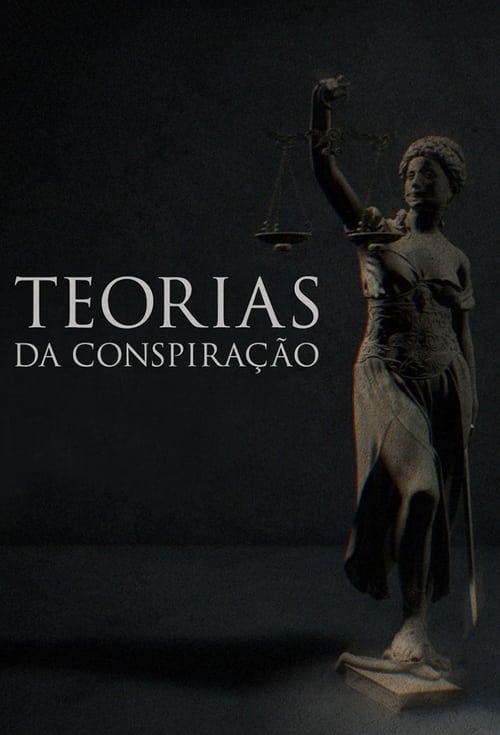
In the 2019 series "Teorias da Conspiração," there is indeed a post-credit scene that adds an intriguing layer to the narrative.
As the credits roll, the screen fades to black before transitioning to a dimly lit room filled with scattered papers and glowing computer screens. The camera pans slowly across the clutter, revealing a wall covered in photographs, newspaper clippings, and red string connecting various points of interest--an homage to classic conspiracy theory aesthetics.
In the center of the room sits a figure, partially obscured by shadows, hunched over a laptop. The soft glow of the screen illuminates their face, revealing a look of intense concentration mixed with a hint of anxiety. The character, who has been a minor yet enigmatic presence throughout the series, types furiously, their eyes darting between the screen and the wall of evidence.
Suddenly, a notification chimes from the laptop, and the figure leans closer, their expression shifting from focus to shock. The camera zooms in on the screen, revealing a message that reads, "They know you're looking." The figure's breath quickens, and they glance nervously over their shoulder, as if sensing unseen eyes watching them.
The scene cuts to black, leaving viewers with a lingering sense of unease and curiosity about the implications of this revelation. It hints at deeper conspiracies at play, suggesting that the characters' investigations may have attracted unwanted attention, setting the stage for potential conflicts in future storylines. The emotional weight of fear and paranoia hangs in the air, encapsulating the essence of the series and its exploration of hidden truths.
What is the significance of the mysterious artifact found in the first episode?
The mysterious artifact found in the first episode serves as a catalyst for the entire series, drawing the main characters into a web of conspiracy and intrigue. It is revealed to have connections to ancient civilizations and is believed to hold secrets that could alter the course of history. The characters' motivations shift as they seek to uncover its origins, leading to personal conflicts and alliances.
How does the character of Lucas evolve throughout the series?
Lucas begins as a skeptical journalist, driven by a desire for truth but burdened by self-doubt. As the series progresses, he becomes more embroiled in the conspiracies surrounding the artifact, leading to a transformation where he embraces his role as a seeker of truth. His emotional journey is marked by moments of fear, betrayal, and ultimately, a sense of purpose as he confronts the darker aspects of the conspiracy.
What role does the character of Sofia play in uncovering the conspiracy?
Sofia is introduced as a brilliant but reclusive historian with a deep knowledge of ancient texts. Her expertise becomes crucial in deciphering the clues related to the artifact. Throughout the series, her character grapples with her past and the loss of her mentor, which fuels her determination to expose the truth. Her emotional investment in the conspiracy adds depth to her interactions with Lucas and other characters.
What are the implications of the government cover-up revealed in season one?
The government cover-up revealed in season one has far-reaching implications, suggesting that powerful entities are willing to go to great lengths to suppress the truth. This revelation heightens the stakes for the main characters, who must navigate a dangerous landscape filled with espionage and betrayal. The emotional weight of this discovery forces them to confront their own beliefs about authority and trust.
How does the relationship between Lucas and Sofia develop throughout the series?
The relationship between Lucas and Sofia develops from initial distrust to a deep bond forged through shared experiences and challenges. As they work together to uncover the conspiracy, their emotional connection grows, marked by moments of vulnerability and support. However, their relationship is also tested by external pressures and personal demons, creating a complex dynamic that adds tension to the narrative.
Is this family friendly?
"Teorias da Conspiração," produced in 2019, delves into various conspiracy theories, often exploring dark and complex themes. While the show is not explicitly designed for children, it does contain elements that may be unsettling or objectionable for younger viewers or sensitive individuals.
-
Paranoia and Distrust: The show frequently portrays characters grappling with intense feelings of paranoia and distrust, which may be distressing for some viewers.
-
Dark Themes: Many episodes explore themes of government cover-ups, secret societies, and existential threats, which can be heavy and potentially frightening.
-
Violence and Threats: There are scenes that depict violence or threats, which may be intense and unsettling, even if not graphic.
-
Psychological Tension: The emotional states of characters often include anxiety, fear, and desperation, which could be overwhelming for sensitive viewers.
-
Mature Discussions: Conversations around controversial topics may include mature language or concepts that are not suitable for children.
Overall, while the show is engaging for an adult audience interested in conspiracy theories, it may not be appropriate for younger viewers or those who are easily disturbed.









