















Popular
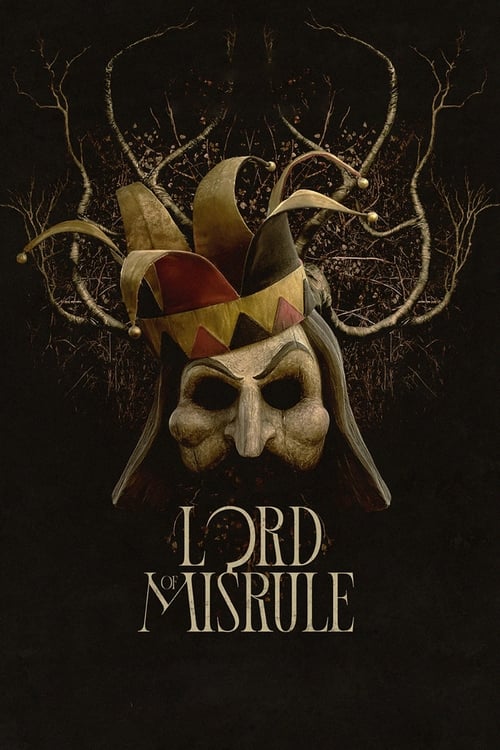
In Lord of Misrule (2023), why is Grace chosen as the Harvest Angel and what happens to her during the festival?
Who is Jocelyn Abney in Lord of Misrule (2023), and what role does he play in the village’s rituals?
What is the Black Barn in Lord of Misrule (2023), and why is it important?
What happened to Jocelyn Abney’s son in Lord of Misrule (2023), and how does that affect his character?
How does Rebecca Holland respond to the villagers’ demands in Lord of Misrule (2023)?
Should I watch it?
Ask Your Own Question

What is the plot?
Rebecca Holland arrives in the rural village of Berrow with her husband, Henry Holland, and their young daughter, Grace Holland, hoping to begin a quiet new life as the village vicar. Instead, she steps into a community that already feels sealed shut around its own customs, its own fears, and its own secrets. The villagers are outwardly polite, even warm, but their friendliness has a rehearsed quality, as if every smile is being offered from behind a locked door. From the beginning, Berrow is shown as a place where the harvest is not merely agricultural business but a sacred civic performance, one tied to the old seasonal figure of the Lord of Misrule and the darker power he is said to keep away: Gallowgog, the "Lord of Blight." Rebecca, as the new minister, stands apart from all of it. She preaches Christianity in the church, but outside those walls the village still bows to older rhythms, and she can feel the tension immediately.
The annual harvest festival begins with all the bright, theatrical surfaces of a local tradition, yet there is something wrong in the pageantry from the first moment. The villagers are not just celebrating; they are participating in a ritual whose meaning is understood by everyone except the newcomers. Grace, still young enough to be both curious and trusting, is drawn into the festivities and is chosen as the Harvest Angel, a role that at first seems ceremonial and harmless, but which in retrospect marks her as singled out by the village itself. Rebecca watches her daughter in the crowd with a rising unease that is not yet fully nameable, while Henry, more instinctively practical, tries to enjoy the event and keep the family settled. The harvest ritual is supposed to protect the village from Gallowgog, but it already feels less like protection than appeasement, less like celebration than preparation.
Then Grace disappears.
The loss happens during the festival, and the story tightens instantly into panic. One moment she is there, absorbed into the crowd and the spectacle, and the next she is gone, swallowed by the village's festive confusion and the encroaching woods. A search begins at once, involving villagers and police, but the search is haunted by a sense that everyone already knows more than they are saying. Rebecca and Henry search frantically, calling for Grace, combing through the grounds, trying to piece together who last saw her and where she might have gone. The police move through procedure, but the village itself moves through silence. People answer questions too carefully. Faces close over. Doors remain shut. The communal warmth Rebecca had hoped for becomes something colder and more coordinated, as if the entire village has shifted into defensive formation.
Rebecca's first suspicion is not that Grace has simply wandered off or been lost. She begins to sense that her daughter has been taken, and that the taking is tied to the village's old beliefs. That suspicion sharpens when she starts pressing locals about the festival and the customs around it. The villagers' responses are evasive, and their evasiveness confirms her fear more than any direct admission could. The annual rites, she learns, are not innocent folklore. The story of the Lord of Misrule is not just a symbolic pageant: it is bound to a much older bargain involving Gallowgog, a malevolent spirit associated with blight, hunger, and failed harvests. The festival's outward purpose is to drive that force away and preserve the land's fertility, but underneath the performance lies a system of sacrifice.
As Rebecca digs deeper, the village begins to reveal its hidden architecture. At the center of it all stands Jocelyn Abney, the elder who presents himself as a keeper of local tradition and who is in fact the key authority behind the ritual order. He is not merely an old man with opinions about village customs; he is the anointed leader of the pagan structure that has governed Berrow for years. He speaks with the calm certainty of someone who believes the village's prosperity depends on obedience to a necessity older than morality. In one of their confrontations, Rebecca senses that Jocelyn is not surprised by her accusations. He has expected this resistance, and he treats her not as a moral equal but as another temporary obstacle to the continuation of an ancient arrangement.
The deeper Rebecca goes, the clearer the pattern becomes. Grace's disappearance is not random. It is part of a ritual selection, and the child is intended as the latest sacrifice to Gallowgog. The village has done this before. Fourteen years earlier, another child vanished during the harvest festival, and the wound left by that event has never truly healed. Jocelyn's own son was sacrificed to Gallowgog twelve to fourteen years earlier, depending on the account, and that death has shaped Jocelyn into the man he is now: a custodian of terror who justifies cruelty as duty. The revelation gives the town's silence a new meaning. The villagers are not merely afraid of gossip or scandal; they are preserving a structure that has demanded blood in exchange for abundance. Their solidarity is not innocent community but collective complicity.
Rebecca learns that Grace is not the only one marked by the bargain. Henry, too, is caught in the village's logic, and the gift demanded by Gallowgog extends beyond the child. The sacrifice system is broader and colder than Rebecca first understands. The village's good fortune is purchased through repeated offerings, and once the logic of the bargain is accepted, human beings become seasonal resources. The revelation lands with increasing horror because it exposes the village's rituals as a machine: symbolic on the surface, murderous at the core. The Christian vicar has entered a community that has converted folklore into social control, and every attempt she makes to break through the secrecy only tightens the net around her.
The investigation moves through key village spaces that each carry a different kind of menace. The church and vicarage represent Rebecca's faith and her sense of ordered moral life, yet they are increasingly isolated from the village around them. The Laughing Goat pub functions as a social hub where people gather in apparent normality, but it is also one of the places where the village's consensus is reinforced and outsiders are quietly measured. The woods become the site of disappearance and pursuit, the place where Grace is seen moving with a hooded figure and where the boundary between natural landscape and ritual space collapses. And beyond all of these stands the most important hidden location of all: the Black Barn, the concealed sacrificial chamber where the village's darkest acts are carried out.
As Rebecca follows the trail toward these places, she experiences not just fear but betrayal. She keeps encountering people who appear helpful while subtly obstructing her. Questions are answered with half-truths. Leads go nowhere. Information disappears into social niceness. The village's power lies in its ability to make resistance feel socially impossible. No one has to openly threaten Rebecca; the whole community applies pressure through silence, shared looks, and ritualized deflection. Even when the police are involved, the investigation feels less like an inquiry than a performance staged around the true center of power, which remains hidden from official sight.
The confrontation with Jocelyn finally forces the truth into daylight. Rebecca challenges him directly over Grace's disappearance, the village's old stories, and the sacrifices attached to Gallowgog. Jocelyn responds with the cold conviction of a man who sees himself as a steward rather than a criminal. He insists, in effect, that the village survives because it obeys the terms of the old covenant. Gallowgog must be fed. The land demands it. The cost is terrible, but so is the alternative. Rebecca rejects this completely. To her, the sacrifice of children is not a tradition but murder dressed in ritual language, and Jocelyn's pious fatalism only deepens her resolve to find Grace alive.
The tension escalates toward a public and brutal climax. The villagers, at Jocelyn's behest, recreate the execution of the man who originally brought Gallowgog to Berrow centuries earlier, turning an ancestral punishment into a present-tense warning. Henry becomes entangled in this violence and is killed when the townspeople carry out the ritual killing under Jocelyn's direction. The act is presented not as an accident or a spontaneous mob attack, but as a deliberate, communal execution: the village reenacts its foundational violence in order to preserve its order. Henry's death is one of the film's hardest shocks because it transforms the search for Grace into irreversible tragedy. Rebecca has now lost not only her daughter's safety but her husband's life, and the village has shown her exactly what it is willing to do to maintain its bargain.
The film's violence is not limited to one death or one confrontation. Derry Nash, who attempts to interfere with the cult and claims he tried to save Grace from being trapped in the Black Barn too late, becomes another casualty of the village's fanaticism. He confronts Jocelyn and draws the mob's attention in the process. Rebecca witnesses Jocelyn kill Derry ruthlessly when Derry tries to disrupt the ritual order. The death reinforces the pattern: anyone who attempts to break the village's system is punished immediately, and the punishment is public. The message is unmistakable. Berrow is a place where truth is not merely unwelcome; it is lethal.
By this point Rebecca has crossed from investigation into open opposition. She can no longer trust the village, the police, or the ritualized explanations being offered to her. The only path forward is into the hidden center of the myth itself. She enters the Black Barn, the site the villagers have tried to keep sealed away from ordinary sight, and there she finally confronts Gallowgog directly. The moment is the culmination of everything the film has been building: the cold logic of the harvest rites, the village's obedience, the ancestral wound, the loss of Henry, and the horror of Grace's disappearance all converge in a space that feels both physical and spiritual. The barn is not simply a location. It is the material form of the village's secret soul.
Inside, Rebecca finds Grace. The child is there, but not in the way Rebecca hoped. Grace emerges from the Black Barn alive in body but lifeless and cold, a haunting indication that the sacrifice has already happened in some deeper sense, even if her physical body remains intact. This is one of the film's most devastating revelations, because it refuses a simple rescue. Rebecca does not recover her daughter from danger untouched. She receives Grace back as a body emptied of vitality, suggesting that Gallowgog has claimed something essential, whether through death, possession, spiritual ruin, or some combination of all three. The horror is not only that Grace has been taken; it is that she comes back altered by what has been done to her.
Rebecca's encounter with Gallowgog is not staged as a conventional battle. Instead, it becomes an act of dangerous negotiation, defiance, and submission all at once. She faces the immense devil-like presence, holds herself steady, and offers up part of herself--her hair--as a gift. In doing so, she changes the terms of the sacrifice. Rather than allowing Grace to be fully consumed, she becomes the one who is marked. This act is ambiguous and unsettling: it reads as both a refusal of the village's logic and a surrender into a different form of it. Rebecca survives, but survival now seems inseparable from contamination. She is not merely resisting the old system; she is stepping into a new, unstable relationship with the force at its center.
When Rebecca comes out of the Black Barn with Grace in her arms, the villagers are forced to revise what they believe. For a moment, Jocelyn's authority falters. The fact that Rebecca returns from the barn alive, with Grace in her possession, suggests to the villagers that Gallowgog has somehow bestowed an extraordinary gift rather than taken a sacrifice. This destabilizes the old leader's certainty and weakens his hold on the community. The same villagers who had protected Jocelyn's version of events begin to doubt him. Rebecca, who began as the outsider minister trying to survive in a hostile village, now stands at the center of its symbolic order. Her survival becomes proof enough for the villagers to shift their allegiance.
The power reversal completes itself in the final burst of violence. With the villagers now believing in Rebecca's transformed authority, she directs them to kill Jocelyn Abney. According to the ending explanation, he is shot with a bow and arrow on Rebecca's order, and then the villagers burn him. The man who had ruled through inherited fear and ritual discipline is destroyed by the very community that once obeyed him. The death is not clean justice; it is a ritual overthrow, a replacement of one sacrificial logic with another. Jocelyn dies because the village decides, in this moment, to accept Rebecca as its new center of meaning. The old priestess of blight is consumed by fire, and the villagers' obedience transfers to the woman they had been resisting.
The film's final movement is deeply unsettling because it does not restore moral order. Instead, it leaves Rebecca transformed in ways that are both spiritual and ambiguous. She continues as the village's vicar, but her appearance and bearing show a significant change, as if Gallowgog now lives within her or has marked her indelibly. The ending does not present a neat victory of Christianity over paganism, nor a simple triumph of pagan power over Christianity. Instead, it suggests a fusion, corruption, or replacement that cannot be cleanly named. Rebecca, who began the film preaching from the pulpit, now stands at the intersection of belief systems, her body and role altered by what she has seen and done. The church reappears in the final scene, but it is no longer a place of straightforward faith. It becomes the site of ambiguity, where the question is not just what Rebecca believes, but what, exactly, now believes through her.
The last image leaves the film open-ended and deeply unnerving. Rebecca's survival does not bring closure in any ordinary sense. Henry is dead. Jocelyn is dead. Derry is dead. Grace is alive, but not truly alive in the way she once was. The village's sacrificial structure has been disrupted, but not purified. Rebecca has entered the barn, confronted the thing the village feared, and emerged changed. The harvest has been "saved," if that word still means anything, but the cost is impossible to measure. The church stands at the end as the final setting, yet it no longer resolves the conflict between faith and ritual. Instead, it holds the question open: has Rebecca banished Gallowgog, absorbed him, or become his new vessel?




What is the ending?
Rebecca brings Grace back from the Black Barn, but the ending does not leave things clean or ordinary. Henry is dead, Jocelyn is killed in the village's ritual violence, the villagers accept Rebecca as their new spiritual leader, and Rebecca returns to the church with Grace alive but changed.
Rebecca leads the story's final sequence by confronting Gallowgog in the Black Barn after Grace has been taken there as a sacrifice. She enters the barn, finds Grace, and faces the entity directly instead of turning away from it. Grace comes out with Rebecca, and the villagers then treat Rebecca as the new Lord of Misrule, which leads them to turn on Jocelyn and kill him on her orders. Henry does not survive the ending; he is killed earlier in the final stretch of the story as part of the escalation that pushes Rebecca into the barn and forces her choice.
In simple terms, the ending is this: Rebecca saves Grace, but the rescue comes at a cost. The village accepts Rebecca in a new role, Henry dies, Jocelyn dies, and Grace is returned to her mother's side.
Scene by scene, the ending unfolds like this:
Rebecca is pushed to the edge after the village's secret beliefs and rituals fully surface. Grace has been taken to the Black Barn, and Rebecca understands that the child is meant to be claimed by Gallowgog unless she submits to the village's terms.
Henry is killed during the final conflict, and his death becomes the event that drives Rebecca into direct confrontation with the force behind the sacrifice. Jocelyn, who has been guiding the village's actions, is then killed in front of Rebecca as the villagers act on the new order that forms around her.
Rebecca goes to the Black Barn and faces Gallowgog. She does not flee, and she does not follow the old pattern of fear. She brings Grace out of the barn afterward, and the child appears alive in the final movement of the story. Some accounts describe Grace as visibly lifeless or ambiguous in that moment, while others read the ending as Grace surviving and later standing with Rebecca in the church; the film deliberately leaves that final condition uncertain.
After the Black Barn sequence, Rebecca returns to the village church and continues in her role as vicar. Her appearance and manner are changed, and the film shows that something about her relationship to the village's power and belief has altered. The villagers now accept her authority, and the ending leaves her standing at the center of the community's religious life, with Grace back beside her.
The fates of the main characters at the end are these: Rebecca survives and remains the village vicar, but she is marked by what happened in the barn; Grace is brought back from the sacrifice, though the film leaves her exact condition ambiguous; Henry dies before the ending is complete; Jocelyn is killed by the villagers under Rebecca's direction; and Gallowgog remains present as the force that the story never fully closes off.
Is there a post-credit scene?
No. According to available reviews and post-credits tracking, Lord of Misrule (2023) does not have a postcredit scene.
The film does have an ending-credits song that continues the folk-horror atmosphere, but that is part of the credits themselves rather than a separate scene after them.
In Lord of Misrule (2023), why is Grace chosen as the Harvest Angel and what happens to her during the festival?
Grace is the vicar's daughter, and the harvest festival places her in a central ceremonial role as the Harvest Angel. During the celebration, she disappears, which triggers the search that drives the film's story.
Who is Jocelyn Abney in Lord of Misrule (2023), and what role does he play in the village’s rituals?
Jocelyn Abney is the village elder and a major local authority figure tied to the old rites. The film presents him as the man who defends the town's beliefs, oversees or legitimizes the rituals, and stands in Rebecca's way as she searches for Grace.
What is the Black Barn in Lord of Misrule (2023), and why is it important?
The Black Barn is the site associated with sacrifice and the village's darkest rituals. It becomes crucial when Rebecca confronts the force behind Grace's disappearance there and uncovers how deeply the town's traditions are bound to the spirit Gallowgog.
What happened to Jocelyn Abney’s son in Lord of Misrule (2023), and how does that affect his character?
The film reveals that Jocelyn Abney's son was sacrificed to Gallowgog twelve years earlier. That loss explains why Jocelyn is so committed to the village's customs and why he treats the sacrifice as part of the town's order rather than a crime.
How does Rebecca Holland respond to the villagers’ demands in Lord of Misrule (2023)?
Rebecca refuses to accept the sacrifice of her daughter and pushes back against the village's demands. Her resistance leads her into direct conflict with Jocelyn and the community, and she ultimately confronts the source of the town's power herself.
Is this family friendly?
No, it is not family friendly. It is a horror/folk horror film with an unrated content description that includes frightening images, child abduction, and violence.
Potentially upsetting elements for children or sensitive viewers include: - A missing child / child abduction theme that drives the story. - Frightening imagery and a generally eerie, oppressive atmosphere. - Violence, including at least one described murder scene. - Sacrifice-related and pagan/occult folklore elements, which may be disturbing for some viewers. - Scary harvest-festival and rural cult-like behavior, with the village's secrecy and menace central to the film. - Intense emotional distress around a parent searching for a child.
If you want, I can also give you a very brief "safe for teens?" assessment without spoilers.








