


















Popular
What is the significance of the character Jacob Marley in Dickensian?
How does the relationship between Fagin and Oliver Twist develop in Dickensian?
What role does Nancy play in the story, and how does her relationship with Bill Sikes evolve?
How does the character of Ebenezer Scrooge evolve throughout the series?
What is the significance of the setting in the story, particularly the depiction of Victorian London?
Should I watch it?
Ask Your Own Question

What is the plot?
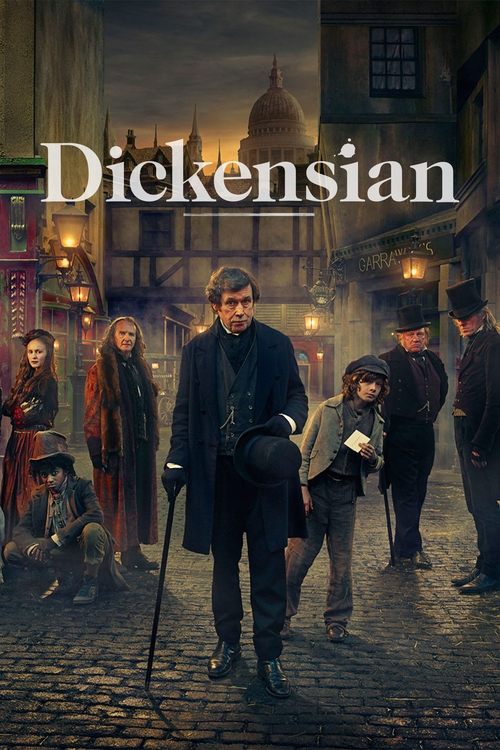
In the opening scenes of "Dickensian," we are introduced to the bustling streets of Victorian London, where various characters from Charles Dickens' novels intersect. The story begins with the murder of Jacob Marley, a key figure in "A Christmas Carol." His death sets off a chain of events that intertwines the lives of several iconic Dickens characters, including Ebenezer Scrooge, Fagin, and Oliver Twist.
As the investigation into Marley's murder unfolds, we see Ebenezer Scrooge, a cold and miserly businessman, grappling with his own moral dilemmas. He is portrayed as a man who prioritizes wealth over human connection. Scrooge's interactions with Marley's widow, who is distraught over her husband's death, reveal his lack of empathy and emotional detachment. Meanwhile, Fagin, a cunning and manipulative character, is introduced as he schemes to maintain control over his gang of child thieves, including the innocent Oliver Twist.
Oliver, a young boy who has recently escaped from a workhouse, is shown struggling to survive on the streets. He encounters Fagin, who takes him in, but Oliver remains unaware of Fagin's true intentions. The audience witnesses Oliver's internal conflict as he yearns for a better life while being drawn into Fagin's world of crime. Fagin's motivations are driven by his need to protect his own interests, and he sees Oliver as a valuable asset.
As the plot progresses, we are introduced to Nancy, a strong-willed woman who is involved with Bill Sikes, a violent criminal. Nancy's loyalty to Sikes is tested as she becomes increasingly aware of the dangers he poses, especially to Oliver. Her internal struggle is palpable as she grapples with her feelings for Sikes and her desire to protect the innocent boy. This tension culminates in a pivotal moment when Nancy decides to help Oliver escape from Fagin and Sikes, showcasing her bravery and maternal instincts.
The narrative shifts to the character of Mr. Bumble, the workhouse beadle, who is portrayed as pompous and self-serving. He is revealed to have a connection to Oliver's past, and his decisions impact the boy's fate. Bumble's interactions with other characters, including the workhouse matron, highlight the corruption and moral decay within the system. His motivations are driven by a desire for power and status, often at the expense of the vulnerable.
As the investigation into Marley's murder deepens, Inspector Bucket, a determined and astute detective, becomes a central figure. He interviews various characters, piecing together clues that lead him closer to the truth. Bucket's relentless pursuit of justice contrasts with the moral ambiguity of the other characters, and his character embodies the struggle between right and wrong in a corrupt society.
The tension escalates when Sikes discovers Nancy's betrayal. In a violent confrontation, Sikes confronts Nancy about her alliance with Oliver. The scene is charged with emotion as Nancy pleads for Sikes to change his ways, but he is consumed by rage. In a tragic turn of events, Sikes murders Nancy, a moment that shocks the other characters and propels the narrative forward. This act of violence serves as a catalyst for Oliver's eventual escape and the unraveling of Fagin's criminal empire.
Following Nancy's death, Oliver is thrust into a dangerous situation as Sikes seeks revenge on anyone associated with her. The stakes are raised as Oliver becomes a target, and Fagin's hold over him begins to weaken. Oliver's journey takes him through the dark underbelly of London, where he encounters both allies and enemies. His resilience and innocence shine through as he navigates this treacherous landscape.
In a climactic sequence, Inspector Bucket finally uncovers the truth behind Marley's murder. The investigation leads him to confront Fagin and Sikes, revealing their roles in the crime. The tension builds as Bucket gathers evidence and prepares to bring the criminals to justice. The confrontation is fraught with danger, as Sikes attempts to escape, leading to a dramatic chase through the streets of London.
The story reaches its resolution as justice is served. Fagin is apprehended, and Sikes meets a fitting end, reflecting the consequences of his violent actions. Oliver, having endured so much, is finally offered a chance at a new life. He is taken in by a kind-hearted benefactor, who represents hope and redemption. The final scenes depict Oliver's transformation from a victim of circumstance to a boy with a future, symbolizing the possibility of change in a harsh world.
As the series concludes, the interconnected lives of the characters leave a lasting impact, showcasing the complexities of human nature and the enduring struggle between good and evil. The narrative weaves together themes of love, betrayal, and redemption, culminating in a rich tapestry that honors Dickens' legacy while telling a unique story of its own.





What is the ending?
In the ending of "Dickensian," several character arcs converge as the story reaches its climax. The fates of key characters are revealed, with some finding resolution and others facing dire consequences.
As the series concludes, we see the aftermath of the murder of Jacob Marley, which has been a central mystery throughout. The character of Inspector Bucket, who has been investigating the case, finally uncovers the truth behind the crime. Meanwhile, the lives of other characters, such as Fagin, Nancy, and Oliver Twist, intertwine in a way that reflects the broader themes of redemption and justice.
Fagin faces the consequences of his actions, and his fate is sealed as he is apprehended. Nancy, who has been torn between her loyalty to Fagin and her desire to protect Oliver, ultimately sacrifices herself in a bid to save the boy. Her tragic end highlights the struggles of those caught in the web of crime and poverty.
Oliver, innocent and vulnerable, is taken under the care of Mr. Brownlow, who represents hope and a chance for a better life. The series ends on a note of bittersweet resolution, with some characters finding a path to redemption while others remain trapped in their circumstances.
Now, let's delve into the ending in a more detailed, chronological narrative.
The final episodes of "Dickensian" unfold with a palpable tension as Inspector Bucket intensifies his investigation into Jacob Marley's murder. The streets of Victorian London are shrouded in fog, mirroring the murky moral dilemmas faced by the characters. Bucket, portrayed with a steely determination, interrogates various suspects, piecing together the fragmented clues that lead him closer to the truth.
In a dimly lit tavern, Fagin sits with his gang, the flickering candlelight casting shadows on their faces. He is increasingly paranoid, aware that the noose is tightening around him. His internal conflict is evident; he grapples with the fear of losing his power and the life he has built in the underbelly of London. Fagin's desperation drives him to make reckless decisions, further entangling himself in the web of crime.
Meanwhile, Nancy, who has been a loyal companion to Fagin, finds herself at a crossroads. She is deeply troubled by the fate of Oliver, the innocent boy caught in the chaos of their world. In a poignant scene, she confides in her friend Bet, expressing her desire to protect Oliver at all costs. The emotional weight of her loyalty to Fagin clashes with her maternal instincts towards Oliver, creating a heartbreaking dilemma.
As the investigation unfolds, Bucket finally confronts Fagin in a dramatic showdown. The tension is palpable as Bucket reveals the evidence he has gathered, cornering Fagin with the truth of his involvement in Marley's death. Fagin's bravado crumbles, and he realizes that his time is running out. The scene is charged with emotion as Fagin's facade of control shatters, exposing the vulnerability beneath his criminal exterior.
In a parallel narrative, Nancy makes a fateful decision to confront Fagin about his treatment of Oliver. In a dimly lit alley, she pleads with him to let the boy go, her voice trembling with desperation. Fagin, consumed by his own selfishness, reacts violently, leading to a tragic confrontation. Nancy's bravery shines through as she stands up to Fagin, but it ultimately costs her life. The scene is heart-wrenching, filled with raw emotion as she sacrifices herself for Oliver's safety.
As the dust settles, Oliver is taken in by Mr. Brownlow, who represents a beacon of hope in a world filled with darkness. The final moments depict Oliver's transition from the grim realities of his past to the warmth of a new beginning. Mr. Brownlow's kindness offers Oliver a chance at a brighter future, symbolizing the possibility of redemption amidst the chaos.
The series concludes with a sense of bittersweet resolution. Fagin is apprehended, facing the consequences of his actions, while Oliver's fate takes a turn towards the hopeful. The streets of London, once filled with despair, now hint at the potential for change and renewal. The characters' journeys intertwine, leaving a lasting impact on the viewer as they reflect on the complexities of human nature and the struggle for redemption in a harsh world.
Is there a post-credit scene?
"Dickensian," the 2015 television series, does not feature a post-credit scene. The show concludes its narrative arcs within the episodes themselves, focusing on the intertwining lives of various characters from Charles Dickens' works. Each episode wraps up its storylines without additional scenes after the credits, maintaining the traditional format of television storytelling. The series emphasizes character development and the exploration of themes such as social injustice, love, and ambition, all set against the backdrop of Victorian London.
What is the significance of the character Jacob Marley in Dickensian?
Jacob Marley, a character from 'A Christmas Carol', appears in 'Dickensian' as a ghostly figure who influences the events surrounding Ebenezer Scrooge. His presence serves as a reminder of the consequences of a life lived without compassion, and he acts as a catalyst for Scrooge's eventual transformation. The emotional weight of Marley's chains symbolizes the burdens of regret and the importance of redemption.
How does the relationship between Fagin and Oliver Twist develop in Dickensian?
In 'Dickensian', the relationship between Fagin and Oliver Twist is complex and fraught with tension. Fagin, portrayed as a manipulative figure, initially sees Oliver as a means to an end, hoping to exploit the boy's innocence for his own gain. However, as the story unfolds, Oliver's resilience and moral compass challenge Fagin's worldview, leading to moments of internal conflict for Fagin as he grapples with his own choices and the impact they have on Oliver.
What role does Nancy play in the story, and how does her relationship with Bill Sikes evolve?
Nancy is a pivotal character in 'Dickensian', embodying both strength and vulnerability. Her relationship with Bill Sikes is tumultuous; she is deeply in love with him yet also aware of his violent nature. As the narrative progresses, Nancy's internal struggle becomes evident as she tries to protect Oliver from Sikes while grappling with her loyalty to him. This conflict ultimately leads to tragic consequences, highlighting her bravery and the sacrifices she makes for the sake of others.
How does the character of Ebenezer Scrooge evolve throughout the series?
Ebenezer Scrooge's character arc in 'Dickensian' is marked by a gradual awakening to the importance of human connection and empathy. Initially portrayed as a miserly and cold-hearted businessman, Scrooge's interactions with other characters, particularly those in need, begin to chip away at his hardened exterior. His internal battles with guilt and loneliness are poignantly depicted, leading to moments of reflection that foreshadow his eventual transformation into a more compassionate figure.
What is the significance of the setting in the story, particularly the depiction of Victorian London?
The setting of Victorian London in 'Dickensian' is not just a backdrop but a character in itself, reflecting the social issues and struggles of the time. The grimy streets, bustling markets, and stark contrasts between wealth and poverty serve to enhance the emotional stakes of the characters' journeys. The oppressive atmosphere of the city mirrors the characters' internal conflicts, particularly for those like Oliver and Nancy, who navigate a world filled with both hope and despair.
Is this family friendly?
"Dickensian," produced in 2015, is a unique television series that intertwines the characters and stories from Charles Dickens' novels, set in Victorian London. While the show is rich in storytelling and character development, it does contain some elements that may be considered objectionable or upsetting for children or sensitive viewers.
-
Themes of Poverty and Despair: The series portrays the harsh realities of life in Victorian England, including extreme poverty, which may be distressing for younger viewers.
-
Violence and Threats: There are scenes that depict violence or the threat of violence, including physical confrontations and intimidation, which could be unsettling.
-
Death and Grief: Characters experience loss and mourning, with scenes that explore the emotional weight of death, which may be heavy for sensitive audiences.
-
Crime and Corruption: The show features criminal activities and corrupt practices, including theft and manipulation, which may not be suitable for all viewers.
-
Emotional Turmoil: Characters often face significant emotional struggles, including betrayal, heartbreak, and moral dilemmas, which could be intense for younger audiences.
Overall, while "Dickensian" offers a rich narrative experience, its exploration of darker themes and emotional depth may require parental guidance for younger viewers.









