




Popular
What specific historical events are covered in the episodes of 토크멘터리 전쟁史?
How does the show portray the emotional struggles of soldiers during the Korean War?
What role do personal stories play in the narrative of 토크멘터리 전쟁史?
How does the series depict the relationship between soldiers and their families during wartime?
What are some key character arcs presented in the series, particularly among the veterans?
Should I watch it?
Ask Your Own Question

What is the plot?
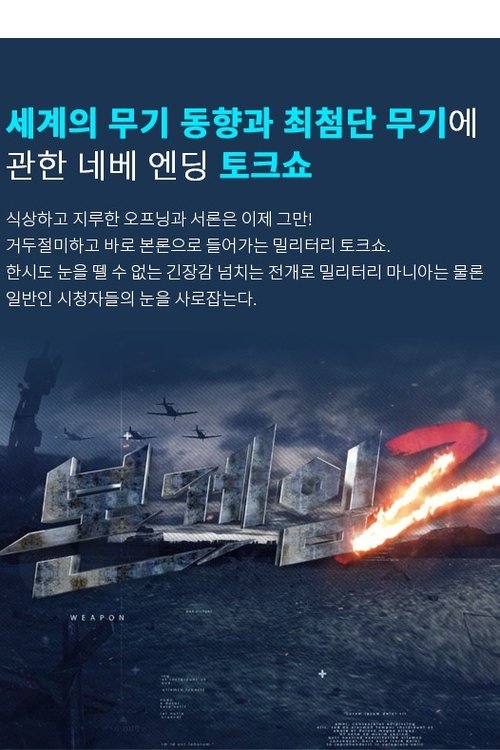
"토크멘터리 전쟁史" is a documentary series that explores various historical wars through a combination of expert commentary, reenactments, and archival footage. The series does not follow a traditional narrative structure with characters and plot points but instead presents a chronological examination of different conflicts, their causes, and consequences.
The series begins with an introduction to the concept of war, discussing its impact on human history. It sets the stage for the exploration of specific wars, highlighting the emotional and physical toll of conflict on soldiers and civilians alike.
The first episode focuses on the Korean War, detailing the events leading up to the conflict. It describes the division of Korea after World War II, the establishment of two separate governments, and the rising tensions between North and South Korea. The episode features interviews with historians who explain the geopolitical context and the motivations of key figures, such as Kim Il-sung and Syngman Rhee.
As the narrative progresses, the series delves into the outbreak of the war in June 1950, when North Korean forces invade South Korea. The documentary uses reenactments to illustrate the chaos of the initial invasion, showing soldiers rushing into battle, civilians fleeing, and the rapid advance of North Korean troops. The emotional weight of the conflict is emphasized through personal stories of those affected by the war.
The series then shifts to the response of the United Nations, led by the United States, to the North Korean aggression. It details the formation of a coalition to defend South Korea, highlighting key military leaders such as General Douglas MacArthur. The documentary captures the strategic decisions made during this period, including the daring amphibious landing at Incheon, which turns the tide of the war.
Following the successful landing, the series portrays the push of UN forces into North Korea, showcasing the harsh winter conditions and the challenges faced by soldiers. The emotional strain on the troops is depicted through interviews with veterans, who recount their experiences and the camaraderie formed in the face of adversity.
The narrative then covers the entry of Chinese forces into the war, marking a significant turning point. The documentary illustrates the fierce battles that ensue, including the Battle of Chosin Reservoir, where UN troops are surrounded and must fight their way out against overwhelming odds. The series captures the desperation and bravery of the soldiers, as well as the heavy casualties suffered on both sides.
As the war drags on, the series highlights the stalemate that develops along the 38th parallel. It discusses the peace negotiations that take place, revealing the complexities and frustrations of diplomacy in wartime. The emotional toll on soldiers and civilians is further explored, with personal accounts of loss and suffering.
The final episodes of the series focus on the armistice signed in 1953, which effectively ends the fighting but leaves Korea divided. The documentary reflects on the long-term consequences of the war, including the ongoing tensions between North and South Korea and the impact on the Korean people.
Throughout the series, the emotional and physical realities of war are brought to life through a combination of expert analysis, personal stories, and vivid reenactments, providing a comprehensive overview of the Korean War and its lasting legacy.

What is the ending?
In the ending of the TV show 토크멘터리 전쟁史, the series culminates in a reflective examination of the impact of war on individuals and society. The final scenes showcase the personal stories of veterans and civilians affected by the conflicts discussed throughout the series. Each character shares their experiences, revealing the emotional scars left by war and the lessons learned. The series concludes with a poignant reminder of the cost of conflict and the importance of understanding history to prevent future wars.
As the final episode unfolds, the screen fades in from black, revealing a somber setting where veterans gather in a community center. The atmosphere is heavy with unspoken memories, and the camera pans across the faces of these men and women, each marked by their experiences. The host of the show, a seasoned journalist, steps forward to facilitate a discussion. His voice carries a weight of empathy as he introduces the theme of the episode: the lasting effects of war on the human spirit.
The first scene focuses on a veteran named Mr. Kim, who recounts his harrowing experiences on the battlefield. His hands tremble slightly as he speaks, revealing the deep emotional turmoil that still lingers within him. He describes a specific moment when he lost a close friend during combat, his voice breaking as he recalls the sound of gunfire and the chaos that ensued. The camera captures the tears welling in his eyes, emphasizing the personal cost of war. The audience can feel the weight of his grief, and it becomes clear that this moment has shaped his entire life.
Transitioning to the next scene, the focus shifts to a civilian woman, Mrs. Lee, who shares her story of survival during a conflict that ravaged her hometown. She describes the fear that gripped her family as they sought refuge from the violence. The visuals depict her childhood home, now a shell of its former self, with crumbling walls and shattered windows. Her voice is filled with a mix of sorrow and resilience as she explains how the war forced her to grow up too quickly, taking away her innocence. The camera lingers on her face, capturing the determination in her eyes as she vows to honor the memory of those lost by advocating for peace.
As the discussion continues, the host encourages the participants to reflect on what they have learned from their experiences. Mr. Kim speaks passionately about the importance of sharing their stories with younger generations, hoping to instill a sense of understanding and empathy in them. His conviction resonates with the audience, and the camera captures nods of agreement from the other veterans. The emotional weight of their shared experiences creates a powerful bond among them, highlighting the theme of camaraderie forged in the fires of conflict.
In the final scene, the camera pulls back to reveal the group standing together, united in their resolve to promote peace. The host delivers a closing statement, emphasizing the necessity of remembering the past to build a better future. As he speaks, the screen fades to black, leaving the audience with a lingering sense of hope amidst the somber reflections on war.
The series concludes with a montage of images from the various conflicts discussed throughout the episodes, interspersed with clips of the veterans and civilians sharing their stories. The final shot is a poignant reminder of the human cost of war, as the screen displays the words: "Let us remember, so we may never forget." The fate of each character is left with a sense of purpose; they have transformed their pain into a mission to educate and advocate for peace, ensuring that their experiences will not be forgotten.
Is there a post-credit scene?
The TV show 토크멘터리 전쟁史, produced in 2016, does not feature a post-credit scene. The series is structured as a documentary-style exploration of various historical wars, focusing on the narratives and experiences of those involved. Each episode concludes with a summary of the discussed events, emphasizing the lessons learned and the impact of war on society, but there are no additional scenes or content after the credits. The focus remains on delivering a comprehensive understanding of the historical context and emotional weight of the conflicts presented throughout the series.
What specific historical events are covered in the episodes of 토크멘터리 전쟁史?
The series delves into various significant historical wars, including the Korean War, World War II, and the Vietnam War, providing detailed accounts of battles, strategies, and the human experiences of soldiers and civilians.
How does the show portray the emotional struggles of soldiers during the Korean War?
The show presents intimate interviews and reenactments that highlight the psychological toll of war on soldiers, showcasing their fears, hopes, and the trauma they endure, often juxtaposed with their longing for home.
What role do personal stories play in the narrative of 토크멘터리 전쟁史?
Personal stories are central to the narrative, as the series features firsthand accounts from veterans and their families, illustrating the impact of war on individual lives and the lasting scars it leaves behind.
How does the series depict the relationship between soldiers and their families during wartime?
The series explores the emotional distance and strain that war places on family relationships, highlighting letters, phone calls, and the longing for connection amidst the chaos of battle.
What are some key character arcs presented in the series, particularly among the veterans?
Key character arcs include the transformation of veterans from eager recruits to battle-hardened soldiers, showcasing their growth, disillusionment, and the struggle to reintegrate into civilian life after experiencing the horrors of war.
Is this family friendly?
The TV show 토크멘터리 전쟁史 (Talk Documentary War History) produced in 2016 delves into various historical conflicts, presenting them through a documentary format that includes interviews, reenactments, and expert commentary. While the show aims to educate viewers about the complexities of war, it does contain several elements that may be considered objectionable or upsetting for children or sensitive individuals.
-
Graphic Depictions of War: The series includes reenactments and historical footage that may portray violence, injuries, and the aftermath of battles, which can be distressing.
-
Emotional Testimonies: Interviews with veterans and historians often include personal accounts of loss, trauma, and the psychological impact of war, which may evoke strong emotions.
-
Discussion of Death and Suffering: The narrative frequently addresses the loss of life, suffering of civilians, and the harsh realities faced during wartime, which can be heavy and unsettling.
-
Historical Atrocities: The show may touch upon war crimes and atrocities committed during conflicts, presenting a stark and sometimes disturbing view of human behavior in extreme situations.
-
Mature Themes: Topics such as betrayal, moral dilemmas, and the consequences of war are explored, which may be complex and difficult for younger viewers to fully grasp.
Overall, while the series is educational and informative, its content may not be suitable for all audiences, particularly younger children or those sensitive to themes of violence and suffering. Viewer discretion is advised.









