


Popular
What challenges does the character Mei face in her career as a journalist?
How does the relationship between Aisha and her mother evolve throughout the series?
What role does the character Suki play in the lives of the other women in the series?
How does the character Lin cope with the societal pressures of marriage?
What significant event leads to a turning point in the friendship between the characters Hana and Yumi?
Should I watch it?
Ask Your Own Question

What is the plot?
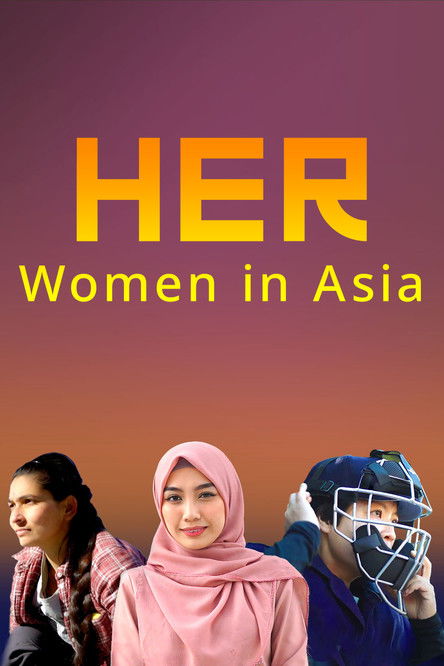
HER - Women in Asia begins with a montage of various women across different Asian countries, showcasing their daily lives, struggles, and aspirations. The opening scenes introduce the audience to the diverse backgrounds of the women featured, including a young student in South Korea, a factory worker in Vietnam, and a single mother in India. Each woman is shown in her environment, highlighting the cultural and societal challenges they face.
The narrative then shifts to the first main character, Mei, a university student in South Korea. She is passionate about social justice and is seen organizing a campus event to raise awareness about gender inequality. During a meeting with her peers, Mei expresses her frustration with the lack of support from the administration. Her determination to make a change is palpable, and she decides to take her activism beyond the campus.
In Vietnam, we meet Linh, a factory worker who is struggling to support her family. The audience sees her long hours at work, the harsh conditions, and the camaraderie she shares with her coworkers. One day, Linh learns about a labor rights organization that is advocating for better working conditions. Inspired, she contemplates joining the movement but fears the repercussions it might have on her job and family.
The story then transitions to India, where we are introduced to Aditi, a single mother raising her daughter alone. Aditi is shown juggling her job and parenting, often feeling overwhelmed. She receives a call from her estranged mother, who wants to reconnect. Aditi is torn between her desire for familial support and the pain of past grievances. After much internal conflict, she decides to meet her mother, hoping for reconciliation.
Back in South Korea, Mei's activism gains traction as she organizes a protest against gender-based violence. The protest is met with resistance from local authorities, leading to a tense standoff. Mei stands firm, rallying her peers and speaking passionately about the need for change. The protest ultimately ends with several participants being arrested, including Mei, which sparks outrage and support from the community.
In Vietnam, Linh finally decides to join the labor rights organization after witnessing a coworker suffer an injury due to unsafe working conditions. She attends her first meeting, where she meets other women who share similar experiences. The camaraderie and shared purpose empower Linh, and she begins to take on a more active role in advocating for workers' rights.
Aditi's meeting with her mother is fraught with emotion. They confront their past, discussing the choices that led to their estrangement. Aditi expresses her feelings of abandonment, while her mother reveals her own struggles. The conversation is tense but ultimately leads to a moment of understanding, and they agree to work on rebuilding their relationship.
As the narrative progresses, the stories of Mei, Linh, and Aditi begin to intertwine. Mei's protest gains national attention, inspiring women across Asia to share their stories. Linh, emboldened by Mei's activism, organizes a strike at her factory, demanding better conditions. Aditi, now more confident after reconciling with her mother, decides to use her voice to support Linh and Mei, sharing her own experiences through social media.
The climax of the series occurs when all three women come together for a major conference on women's rights in Asia. They each share their stories, highlighting the interconnectedness of their struggles. The event is a powerful moment of solidarity, drawing attention from media and activists worldwide. However, it also attracts backlash from conservative groups, leading to threats against the women.
In the final episodes, the women face the consequences of their activism. Mei is released from jail after her arrest, and she is met with both support and criticism from her peers. Linh's strike leads to negotiations with factory owners, but she faces intimidation tactics. Aditi becomes a spokesperson for women's rights, but her newfound visibility puts her and her daughter at risk.
The series concludes with a powerful montage of the women continuing their fight for justice, showing that while the road ahead is fraught with challenges, their determination and solidarity inspire hope for future generations. Each woman is seen taking steps forward, whether through continued activism, personal growth, or community engagement, leaving the audience with a sense of resilience and empowerment.








What is the ending?
In the ending of "HER - Women in Asia," the series culminates in a powerful exploration of the characters' journeys. Each woman confronts her personal struggles and societal expectations, leading to moments of self-discovery and empowerment. The final scenes depict their choices and the paths they take, emphasizing themes of resilience and the quest for identity.
As the final episode unfolds, we see Mei, a young artist, standing in front of her latest exhibition. The gallery is filled with vibrant paintings that reflect her inner turmoil and growth. She feels a mix of anxiety and pride as she watches the crowd engage with her work. The camera captures her nervous fidgeting, her eyes darting around the room, searching for validation. When a prominent art critic approaches her, she holds her breath, fearing rejection. However, he praises her unique perspective, igniting a spark of confidence within her. Mei's emotional state shifts from apprehension to elation, symbolizing her acceptance of her identity as an artist.
Meanwhile, Aisha, a single mother, is seen in her modest apartment, preparing dinner for her daughter. The scene is intimate, filled with the sounds of sizzling vegetables and the laughter of her child. Aisha reflects on her journey, recalling the sacrifices she made to provide for her daughter. As they sit down to eat, she shares stories of her own childhood, instilling a sense of hope and resilience in her daughter. The warmth of their connection is palpable, showcasing Aisha's growth as a nurturing figure who has learned to balance her dreams with her responsibilities.
In a parallel storyline, Sita, a corporate executive, faces a pivotal moment at work. During a crucial board meeting, she stands up to her male colleagues, advocating for a project that supports women's empowerment in the workplace. The tension in the room is thick as she articulates her vision, her voice steady despite the pressure. The scene shifts to her colleagues' reactions--some are skeptical, while others nod in agreement. Sita's determination shines through, and by the end of the meeting, she secures the support she needs, marking a significant victory in her career.
The series concludes with a montage of the three women, each in their respective environments, reflecting on their journeys. Mei is seen painting in her studio, Aisha is helping her daughter with homework, and Sita is leading a team meeting. The camera pans out, showing them in moments of quiet strength, embodying the essence of empowerment and self-acceptance. The final shot lingers on their faces, filled with hope and determination, as the screen fades to black, leaving the audience with a sense of closure and inspiration.
In summary, the ending of "HER - Women in Asia" encapsulates the characters' growth and the choices they make in pursuit of their identities. Mei embraces her artistry, Aisha finds strength in motherhood, and Sita asserts her voice in the corporate world, each woman carving her path in a society that often challenges them.
Is there a post-credit scene?
The TV show "HER - Women in Asia," produced in 2018, does not feature a post-credit scene. The series focuses on the lives and experiences of women across various Asian cultures, highlighting their struggles, triumphs, and the unique challenges they face in contemporary society. Each episode concludes with a reflective moment that encapsulates the themes explored throughout, but there are no additional scenes or content after the credits. The emphasis remains on the narratives presented within the episodes themselves, leaving viewers with a sense of closure and contemplation on the stories shared.
What challenges does the character Mei face in her career as a journalist?
Mei, a determined journalist, grapples with the pressures of a male-dominated industry. She faces skepticism from her peers and superiors, who often undermine her capabilities due to her gender. This leads to moments of self-doubt, particularly when she is assigned to cover less significant stories compared to her male colleagues. Her internal struggle is palpable as she fights to prove herself, often working late nights and sacrificing personal relationships to chase impactful stories.
How does the relationship between Aisha and her mother evolve throughout the series?
Aisha's relationship with her mother is fraught with tension, stemming from generational differences and cultural expectations. Initially, Aisha feels suffocated by her mother's traditional views, which clash with her desire for independence. As the series progresses, pivotal moments--such as Aisha's decision to pursue a career in art against her mother's wishes--force them to confront their differing values. Emotional scenes reveal Aisha's longing for acceptance and her mother's fear of losing her daughter to a world that seems risky and unstructured.
What role does the character Suki play in the lives of the other women in the series?
Suki serves as a mentor figure to the younger women in the series, offering guidance and support as they navigate their personal and professional challenges. Her own backstory, filled with sacrifices and hard-earned wisdom, resonates deeply with the other characters. In key scenes, Suki shares her experiences, encouraging them to embrace their identities and pursue their dreams despite societal pressures. Her presence often acts as a catalyst for change, inspiring the women to stand up for themselves and each other.
How does the character Lin cope with the societal pressures of marriage?
Lin is portrayed as a strong-willed woman who feels the weight of societal expectations regarding marriage. Throughout the series, she struggles with the pressure to conform to traditional roles, which leads to intense emotional conflict. In several poignant scenes, Lin grapples with her desire for personal freedom versus the expectations of her family. Her journey includes moments of rebellion, such as rejecting suitors and openly discussing her fears with friends, showcasing her internal battle and the societal constraints that challenge her sense of self.
What significant event leads to a turning point in the friendship between the characters Hana and Yumi?
A significant turning point in Hana and Yumi's friendship occurs during a heated argument over a controversial art exhibit that Yumi supports but Hana opposes. This conflict exposes deeper issues of trust and loyalty between them. The emotional fallout from this argument leads to a temporary rift, forcing both characters to reflect on their values and the importance of their friendship. In subsequent scenes, they confront their differences, leading to a heartfelt reconciliation that emphasizes the complexities of female friendships in the face of societal challenges.
Is this family friendly?
"HER - Women in Asia," produced in 2018, is a documentary series that explores the lives and experiences of women across various Asian cultures. While the series aims to highlight empowerment and resilience, it does contain themes and scenes that may be sensitive for children or those who are particularly sensitive.
-
Discussions of Gender Inequality: The series addresses issues of gender discrimination and societal expectations, which may be difficult for younger viewers to fully understand.
-
Personal Struggles: Some segments feature women sharing their personal stories of hardship, including domestic violence, mental health struggles, and societal pressures, which could be upsetting.
-
Cultural Practices: Certain cultural practices discussed may be viewed as controversial or distressing, such as arranged marriages or traditional roles that limit women's freedoms.
-
Emotional Testimonies: The emotional weight of the women's testimonies can be intense, as they recount experiences of loss, struggle, and resilience, which may evoke strong feelings.
-
Visual Imagery: There may be scenes that depict the harsh realities of life for some women, including poverty or challenging living conditions, which could be distressing for sensitive viewers.
Overall, while the series is educational and empowering, it does contain elements that may not be suitable for all audiences, particularly younger children or those who are sensitive to heavy emotional content.