

















Popular
What is the significance of the art competition in the storyline?
What are the main conflicts faced by the character of Maja in Småstaden?
How does the relationship between Maja and her best friend evolve throughout the series?
What role does the character of Erik play in Maja's journey?
How does the character of Maja's mother influence her decisions throughout the series?
Should I watch it?
Ask Your Own Question

What is the plot?
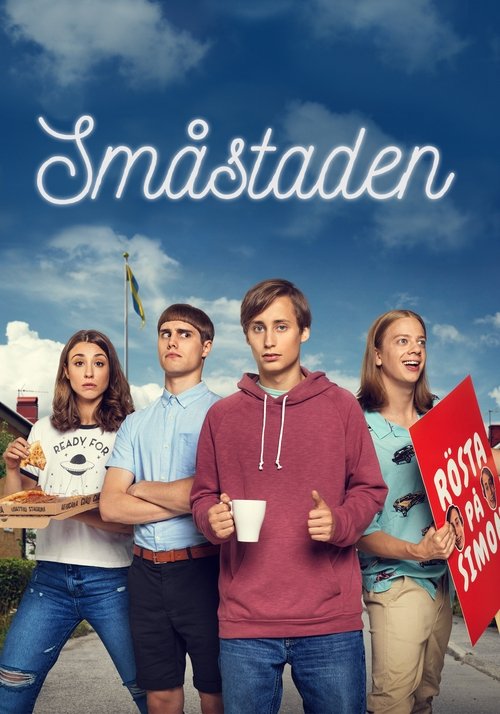
In the small town of Småstaden, the story begins with the arrival of a new family, the Anderssons, who move into a quaint house on the outskirts. The family consists of parents, Erik and Anna, and their teenage daughter, Maja. Maja feels out of place and struggles to fit in at her new school, where she is met with a mix of curiosity and hostility from her peers. The local kids, led by the popular girl, Freja, initially exclude Maja, making her feel isolated.
As Maja navigates her first days at school, she encounters a group of misfits who also feel like outsiders. Among them is Simon, a shy boy with a passion for photography, and Linnea, a rebellious girl with a strong personality. They bond over their shared experiences of feeling like outcasts. Maja begins to find solace in their friendship, and they form a small group that supports one another against the bullying from Freja and her friends.
Meanwhile, Erik and Anna are adjusting to their new life as well. Erik, a local journalist, starts investigating a series of mysterious events happening in Småstaden, including strange disappearances of pets and odd occurrences in the woods. His curiosity leads him to uncover a hidden history of the town, filled with secrets that the residents would rather keep buried. Anna, on the other hand, is focused on making their house a home and connecting with the community, but she feels the strain of her husband's obsession with his investigation.
As Maja grows closer to Simon and Linnea, she learns about the town's dark past, including a legend about a witch who was said to have cursed the land. The trio decides to explore the woods where the witch was rumored to have lived, hoping to find clues that could explain the strange happenings. During one of their adventures, they stumble upon an old, abandoned cabin that seems to hold remnants of the witch's presence. They find old artifacts and a diary that hints at the witch's tragic story, deepening their intrigue.
Tensions rise when Freja and her friends discover Maja's new friendships and decide to confront her. In a heated encounter at school, Freja publicly humiliates Maja, pushing her to the brink. Maja, feeling empowered by her new friends, stands up to Freja, which leads to a physical altercation. The fight escalates, drawing the attention of teachers and students alike, and ultimately results in Maja being suspended from school. This incident solidifies the bond between Maja, Simon, and Linnea, as they rally around her during this difficult time.
As Erik continues his investigation, he uncovers a connection between the recent disappearances and the witch's legend. He learns that the townspeople have been hiding the truth about the witch, who was wrongfully accused and executed. Erik's determination to reveal the truth puts him at odds with some of the town's influential figures, who want to maintain the status quo. This conflict leads to heated confrontations at town meetings, where Erik passionately argues for transparency and justice.
The climax of the story occurs when Maja, Simon, and Linnea decide to confront the source of the town's fears. They organize a gathering in the woods, inviting other kids from school to join them in a symbolic act of defiance against the witch's curse. As they perform a ritual to honor the witch and acknowledge her pain, strange occurrences begin to happen around them, including sudden gusts of wind and flickering lights. The atmosphere becomes charged with energy, and the kids feel a mix of fear and exhilaration.
In the aftermath of the gathering, the town begins to change. The residents start to confront their prejudices and the history they have long ignored. Erik publishes a series of articles revealing the truth about the witch and the town's past, which sparks discussions among the townspeople. Maja, now more confident, finds her place in the community and helps bridge the gap between the misfits and the popular kids, fostering a sense of unity.
The series concludes with a sense of hope and renewal. Maja, Simon, and Linnea stand together, looking out over Småstaden, knowing they have made a difference. Erik and Anna, having navigated their own challenges, find strength in their relationship and the community they have come to love. The final scene hints at the lingering magic of the woods, suggesting that the past will always be a part of Småstaden, but the future is bright with possibility.








What is the ending?
In the ending of "Småstaden," the characters face the consequences of their choices, leading to a resolution that reflects their growth and the impact of their relationships. The main characters find themselves at a crossroads, where their past decisions culminate in a final confrontation that shapes their futures.
As the final episode unfolds, we see the characters grappling with their emotions and the weight of their actions. The town of Småstaden serves as a backdrop for their personal journeys, highlighting the interconnectedness of their lives.
In a pivotal scene, the protagonist, who has been struggling with their identity and relationships, confronts a close friend about a betrayal that has lingered throughout the series. The tension is palpable as they exchange heated words, revealing deep-seated feelings of hurt and disappointment. This confrontation forces both characters to reflect on their choices and the impact they have had on each other.
Meanwhile, another character, who has been on a path of self-discovery, makes a significant decision to leave Småstaden in search of a new beginning. This moment is filled with bittersweet emotions as they say goodbye to friends and family, acknowledging the memories they will carry with them. The scene is poignant, capturing the essence of growth and the bittersweet nature of change.
As the episode progresses, the community comes together for a final event, symbolizing unity despite the conflicts that have arisen. Characters who were once at odds find common ground, and the atmosphere is charged with a sense of hope and reconciliation. The camera captures the smiles and tears of the townspeople, emphasizing the importance of connection and forgiveness.
In the closing moments, we see the protagonist standing at a crossroads, literally and metaphorically. They take a deep breath, reflecting on their journey, and make a choice that signifies acceptance of their past and a commitment to their future. The scene fades out as they walk away, leaving behind the familiar streets of Småstaden, but carrying the lessons learned and relationships forged.
The fate of each main character is intertwined with these final moments. The protagonist embarks on a new chapter, the friend grapples with the consequences of their actions, and the character seeking change finds the courage to pursue their dreams. The community, though scarred by conflict, emerges stronger, united by shared experiences and a renewed sense of purpose.
In summary, the ending of "Småstaden" encapsulates the themes of growth, forgiveness, and the complexity of human relationships, leaving viewers with a sense of closure while also inviting reflection on the characters' journeys.
Is there a post-credit scene?
In the TV show "Småstaden," produced in 2017, there is indeed a post-credit scene that adds an intriguing layer to the narrative. After the final credits roll, the scene opens in a dimly lit café, where the main characters, who have faced numerous challenges throughout the series, gather for a seemingly casual reunion.
The atmosphere is warm yet tinged with an undercurrent of unresolved tension. Laughter and chatter fill the air, but there's a palpable sense of uncertainty among the group. As they reminisce about their past adventures, the camera focuses on each character's face, capturing fleeting expressions of nostalgia, regret, and hope.
Suddenly, the door swings open, and a new character enters--a mysterious figure whose identity is initially obscured by shadows. The group falls silent, their laughter fading as they turn to face this newcomer. The tension in the room thickens, and the camera zooms in on the characters' reactions, revealing a mix of curiosity and apprehension.
The scene ends with the mysterious figure making eye contact with one of the main characters, a knowing smile playing on their lips. This moment leaves viewers with a sense of intrigue and anticipation, hinting at potential new conflicts or alliances that could unfold in a future season. The post-credit scene effectively encapsulates the themes of connection and uncertainty that permeate "Småstaden," leaving the audience eager for more.
What is the significance of the art competition in the storyline?
The art competition serves as a crucial turning point in the storyline of Småstaden. It represents not only Maja's chance to showcase her talent but also her struggle against societal expectations. As she prepares for the competition, Maja faces self-doubt and external pressure from her family, who prioritize traditional career paths over her artistic aspirations. The competition becomes a metaphor for her journey towards self-acceptance and independence. The emotional stakes are high, as Maja must confront her fears and ultimately decide whether to follow her passion or conform to her family's wishes.
What are the main conflicts faced by the character of Maja in Småstaden?
Maja, a central character in Småstaden, grapples with her identity and the expectations placed upon her by her family and society. Throughout the series, she faces the challenge of balancing her personal aspirations with her family's traditional values. This internal conflict is heightened when she discovers a hidden talent for art, which her family does not support. Maja's emotional turmoil is palpable as she navigates her desire for independence while feeling the weight of familial obligations.
How does the relationship between Maja and her best friend evolve throughout the series?
Maja's relationship with her best friend, Sara, undergoes significant changes as the series progresses. Initially, they share a close bond, supporting each other through the trials of adolescence. However, as Maja begins to pursue her passion for art, Sara feels increasingly left behind and struggles with jealousy. This tension culminates in a confrontation where both girls express their fears and insecurities. The emotional fallout from this moment leads to a temporary rift, forcing them to reevaluate their friendship and ultimately grow stronger as they learn to communicate openly.
What role does the character of Erik play in Maja's journey?
Erik serves as a pivotal figure in Maja's journey of self-discovery. He is a fellow artist who encourages her to embrace her talent and pursue her dreams. Their relationship begins as a friendship, but Erik's unwavering support and understanding help Maja gain confidence in her abilities. As Maja faces opposition from her family, Erik becomes a source of solace, providing her with the emotional strength to stand up for herself. His character embodies the theme of mentorship and the importance of having someone believe in you during challenging times.
How does the character of Maja's mother influence her decisions throughout the series?
Maja's mother plays a significant role in shaping her daughter's decisions and emotional landscape. She embodies traditional values and has high expectations for Maja, often pushing her towards a more conventional path. This creates a constant source of tension between them, as Maja feels suffocated by her mother's ambitions for her. Maja's mother's disapproval of her artistic pursuits leads to feelings of guilt and rebellion within Maja. As the series unfolds, Maja's struggle for autonomy becomes increasingly intertwined with her relationship with her mother, culminating in moments of confrontation that force both characters to confront their fears and desires.
Is this family friendly?
"Småstaden," produced in 2017, is a Swedish drama series that explores the lives of various characters in a small town. While the show does delve into themes of community, relationships, and personal struggles, it also contains elements that may not be suitable for all audiences, particularly children or sensitive viewers.
-
Emotional Turmoil: The series features characters dealing with significant emotional distress, including themes of loneliness, betrayal, and loss. These moments can be intense and may evoke strong feelings.
-
Conflict and Tension: There are scenes of interpersonal conflict that can be quite heated, showcasing arguments and confrontations that may be distressing for younger viewers.
-
Substance Use: Some characters engage in drinking and other forms of substance use, which may not be appropriate for children and could be upsetting for sensitive viewers.
-
Family Issues: The show addresses complex family dynamics, including divorce and estrangement, which may resonate deeply with some viewers and could be upsetting for children who are sensitive to such topics.
-
Social Issues: The series touches on social issues such as bullying and discrimination, which can be heavy themes that might be difficult for younger audiences to process.
Overall, while "Småstaden" offers rich storytelling and character development, its exploration of darker themes and emotional struggles may not be suitable for all viewers, particularly children or those who are sensitive to such content.









