








Popular
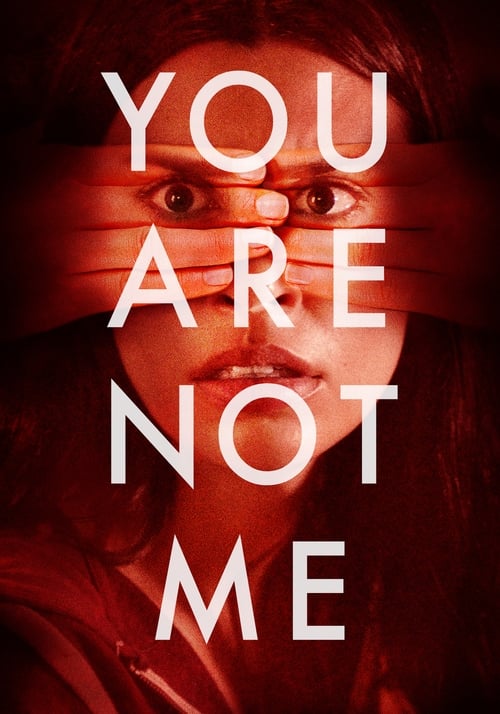
Who is Nadia in You Are Not Me, and why is she living with Aitana’s parents?
What is the relationship between Aitana and her brother Saúl in the film?
Why do Aitana’s parents seem to favor Nadia over Aitana?
What happens when Aitana arrives home with Gabi and João?
Are there any strange or suspicious men connected to Nadia’s story?
Should I watch it?
Ask Your Own Question

What is the plot?
On Christmas Eve, three years after she last set foot in her parents' house, Aitana drives through rural Spain with her wife Gabi and their infant son João, trying to turn a return home into a joyful surprise. Instead, the trip feels cursed from the start: the road is dark, the air is tense, and an accident and blood-staining mishap on the way to Valencia sour the journey before she even reaches the villa, as if the film is warning her that whatever she is driving toward is already rotten.
Aitana arrives expecting awkward hugs, a little shock, maybe tears, and then reconciliation. She has left home, abandoned the pre-arranged marriage her conservative parents wanted for her, and built a new life in Brazil with Gabi and their adopted child, so this is the first time she can introduce them to her family and prove that her life is real, stable, and happy. But the welcome she receives is immediately wrong. The door is opened not by Dori or Justo but by a strange woman, Pepita, who blandly claims to be "a friend of the family" staying there with her husband Oriol for the night. Inside, the villa feels occupied by people Aitana does not know, and her parents' surprise seems less like delight than irritation.
Then Aitana sees the true wound: Nadia, a young Romanian refugee, is living as if she belongs there more than Aitana does. Nadia is in Aitana's old room, wearing Aitana's clothes, and even occupying her bed, as though Aitana has been erased and replaced in her own house. Worst of all, she is wearing Aitana's unused wedding dress, the one meant for the man Aitana refused to marry, turning an object of escape into a trophy of humiliation. Dori and Justo treat Nadia as their surrogate daughter, with a kind of possessive tenderness they never show Aitana, while making it obvious that Aitana's arrival is an inconvenience they did not want. The emotional violence is immediate and precise: Aitana comes home hoping to be seen, and instead learns that her place has been taken.
Because every room in the villa is supposedly occupied and the nearby hotels are scarce, Aitana and Gabi are pushed into the old turret, a cramped, drafty, isolated space that physically separates them from the rest of the house. That decision matters more than it first appears, because it establishes the logic of the place: the family wants Aitana close enough to witness the new order, but not close enough to challenge it. The villa itself becomes a hostile organism, with shadowy staircases, oppressive corridors, and walls covered in hunting trophies that make the house feel less like a home than a shrine to predation. Everything in the setting suggests something ancient, ritualized, and vicious.
Gabi initially tries to calm Aitana, reading the situation as a painful but ordinary family coldness rather than a true betrayal. But Aitana cannot shake the feeling that what is happening is not merely rude; it is deliberate. Her parents are acting as if Nadia has stepped into a role written for her, and the longer Aitana stays, the more obvious it becomes that Nadia has not simply been welcomed into the family but installed there. The cruelty is partly social and partly symbolic. Nadia is an immigrant, poor, vulnerable, and dependent, yet Dori and Justo--openly conservative and anti-immigrant--embrace her in a way that makes no sense on the surface. The contradiction is so sharp it becomes unsettling. Aitana begins to suspect Nadia of some kind of scam, imagining that she has manipulated her way into the household by playing a long con. That theory gives the family's behavior a more familiar shape, but the film keeps undermining it.
Saúl, Aitana's brother, is the only family member who is genuinely pleased to see her. He is confined to a wheelchair by a motor-neuron disease, and his frailty gives him an eerie, half-removed presence in the house. He also suffers seizures and claims he speaks with their grandfather's ghost, which introduces a supernatural pressure into the story without fully explaining it. His scenes are among the film's strangest: he feels both deeply human and spiritually compromised, as if illness has made him porous to the dead. His affection for Aitana is real, and unlike Dori and Justo he does not hide his emotions behind politeness. Through him, the household's rot becomes something inherited rather than accidental.
Aitana begins to investigate in earnest. She sneaks through the house in the dark, moving along the staircases and hallways like a spy in her own childhood home. She climbs balconies and rooftops, listens at doors, and rifles through Nadia's belongings in her old room. These scenes are tense not because of jump scares but because of recognition: every corner of the villa is loaded with memory, and every step reminds Aitana that she is trespassing in a place that used to define her identity. The camera's movement through the house mirrors her psychological descent. She is no longer returning to a family; she is uncovering a structure.
What she discovers is worse than simple replacement. Nadia is not merely pretending to be the daughter of the house. Dori and Justo have consciously absorbed her into the family, and the affection they show her has the cold, ceremonial quality of something performed under obligation. The house's logic begins to resemble folk horror, with its dead animals mounted on the walls, its isolated location, and its sense of customs older than morality itself. Aitana keeps finding evidence that suggests a deeper pattern behind Nadia's presence, while Saúl's ghost talk hints that the grandfather--dead or not--still exerts influence over the living. The film never turns this into simple supernatural spectacle; instead, it lets the possibility of ancestral coercion hang in the air, making every domestic gesture feel contaminated.
The tension rises through small humiliations. Aitana watches Nadia move through the villa with ease, taking up the spaces that once belonged to her, while her parents minimize her, dismiss her, and subtly imply that she is the one creating the problem. This is one of the film's sharpest reversals: the woman who has returned with a loving wife and child is made to feel like the unstable outsider, while her conservative parents behave as though their replacement daughter is the obvious and correct arrangement. The more Aitana presses, the more the atmosphere curdles. Gabi tries to keep the peace, but even she can sense that this house is operating on rules she cannot see.
A separate threat appears outside the perimeter fence when two shady men come looking for Nadia, suggesting that Nadia's connection to the house is entangled with something criminal, likely opiates, and perhaps with Saúl's hidden world as well. This deepens the sense that Nadia is a vulnerable figure caught in dangerous currents, not an agent of them. At the same time, it reinforces the idea that the villa is not just a family home but a node in a wider network of exploitation and secrecy. Aitana's suspicion of Nadia begins to fracture; Nadia is not simply the intruder. She may also be a victim.
As Christmas Eve deepens into night, the film keeps tightening its grip. Aitana's loneliness becomes sharper because she has brought her new family here in good faith. She wants to show Gabi and João the people and place from which she came, but the visit now feels like a trap. Every attempt at connection is rebuffed or corrupted. Dori's criticism is never loud enough to be openly incriminating, but it cuts all the same, functioning as "plausible deniability" so that she can wound Aitana while pretending to be reasonable. Justo is equally withholding. Together they create the sense that Aitana's absence for three years has not been mourned but managed.
Saúl's ghost conversations become more unnerving as the night unfolds. His claims do not read like a simple delusion; they feel like an inherited channel to the family's dead, especially the grandfather, whose unseen authority seems to hover over the household. Aitana's conversations with Saúl are emotionally loaded because he is the one person who remembers her as herself. He sees what she sees, even if he interprets it through fear and superstition. His presence makes the house feel like a living archive of old wounds, and his dependence on the family gives him a tragic role: he knows something is wrong, but he cannot free himself from the structure that is feeding on him.
The more Aitana probes, the more the central secret comes into focus. Nadia is not a random refugee who happened to enter the family's orbit; she has been selected and absorbed into a ritualized replacement process. The family's embrace of a Romanian girl by explicitly anti-immigrant parents is not a contradiction but the point. Their morality is not based on kindness or ideology in any normal sense. It is governed by something older, uglier, and more compulsive. The film's "bloody truth" emerges as a folk-horror revelation: the family believes in preserving itself through substitution, and that means replacing the lost daughter with a new one, feeding the household's continuity with blood, obedience, and sacrificial logic. The exact mechanism is withheld for as long as possible, but the implication is devastating. Aitana has not come home to be welcomed back. She has come home to become a problem to be managed by a family that already thinks in terms of replacement and sacrifice.
The climax arrives when Aitana's investigation can no longer be contained inside furtive glances and whispered suspicions. She confronts the family directly, demanding to know what Nadia is doing there and why her room, her clothes, and even her wedding dress have been handed over to a stranger. The answer, when it comes, is not an apology. It is an exposure of the family's inhuman priorities. Dori and Justo do not simply prefer Nadia; they have organized their domestic life around her presence and around Aitana's symbolic erasure. What Aitana experiences as betrayal, they treat as necessity. The house is not haunted in the conventional sense. It is inhabited by a system of belief that demands substitution.
In the final violent stretch, the truth turns bloody. The film's sources do not spell out every beat of the physical resolution, but they are clear that the story culminates in a disturbing and bloody revelation and that the family's secret is not merely emotional but lethal. The horror is not that someone pretends to be Aitana. The horror is that the family can turn replacement into a sacrament. Saúl's ghostly connection to the grandfather suddenly reads as part of the same inherited machinery, the ancestral dead legitimizing the present abuse. The house's hunting trophies, once mere décor, now feel like emblems of the family's predatory appetite. Aitana sees that the affection she hoped for never existed on the terms she wanted; whatever love remains in that house is conditional, ritualistic, and violent.
What follows is a collapse of any remaining illusion that a simple reunion is possible. Aitana, Gabi, and João can no longer trust the family, and the film's terror becomes existential: if your own parents can replace you, then home is not a place of belonging but a mechanism of erasure. The confrontation resolves into a final break from the villa and its logic. The ending does not restore the family; it exposes it. Aitana is forced to understand, in the deepest possible way, the meaning of the title: she is not who her parents want, and in their eyes she is not the daughter the house has chosen to keep.
The final movement leaves the villa behind in darkness, with Aitana, Gabi, and João severed from the home she tried to reclaim. The story does not end on comfort or vindication but on alienation and grim recognition: Aitana has come back as a daughter and leaves as a witness to a family horror that can never be normalized. The Christmas visit that was supposed to restore a family bond instead reveals that the bond was already broken, perhaps long before she ever left.

What is the ending?
Aitana comes home for Christmas with her wife and baby and finds that her parents have replaced her place in the family with Nadia, a young woman they now treat like a daughter. By the end, Aitana uncovers a disturbing truth behind that replacement, and the film closes on a dark, unsettling note for her.
Aitana returns to her family home expecting a reunion, but the visit turns into a slow and disturbing unmasking of what her parents have done in her absence. She arrives with Gabi and João, only to discover that Nadia has taken over her room, her role, and her parents' affection. As the night goes on, Aitana keeps pressing for answers, while the house's tension grows tighter and more threatening around her.
Scene by scene, the ending moves from confusion to revelation. Aitana first faces the shock of being treated like an outsider in her own home, while Nadia is welcomed as the daughter she has somehow replaced. The family's behavior makes Aitana feel rejected and displaced, and the film steadily builds toward the reason for that replacement. The final stretch reveals that the situation in the house is not what it first appeared to be, and that the family's choice has a horrific explanation.
By the end, Aitana is left with a painful truth and "dark questions," and the movie cuts off on that bleak uncertainty. The main characters' fates at the end are left in these terms: Aitana survives the encounter but is emotionally and psychologically shaken by what she learns; Nadia's role in the family is exposed as part of the film's disturbing secret; and the parents' actions are revealed as the source of the horror rather than a simple misunderstanding. Saúl remains part of the family crisis at the center of the story, but the ending's focus is on the revelation surrounding Aitana, Nadia, and the parents.
Is there a post-credit scene?
I couldn't verify a post-credit scene for 2024's You Are Not Me from the provided results. The search results do not include any source specifically describing that film's end credits, so I can't confirm whether it has a post-credit scene or describe one accurately.
If you want, I can help you check a more specific source type for this title, such as festival coverage, a review, or a credits database entry.
Who is Nadia in You Are Not Me, and why is she living with Aitana’s parents?
Nadia is the young woman who has effectively taken over Aitana's place in the family home. Reviews describe her as a Romanian refugee street kid who arrived about nine months before Aitana's Christmas visit and is now being treated by Dori and Justo as their daughter, living in Aitana's room and caring for Saúl.
What is the relationship between Aitana and her brother Saúl in the film?
Aitana's bond with Saúl is repeatedly described as the one family connection she still trusts. While her parents minimize and exclude her, she feels a real emotional connection to Saúl, who suffers from a motor-neuron disease and is being cared for in the house by Nadia.
Why do Aitana’s parents seem to favor Nadia over Aitana?
The film sets up the mystery around why Dori and Justo warmly accept Nadia while pushing Aitana aside. Reviews note that Nadia has taken over Aitana's room and role in the household, and that the parents' reasons are not immediately clear, creating the central tension around their motives and their treatment of Aitana.
What happens when Aitana arrives home with Gabi and João?
Aitana returns from Brazil on Christmas Eve with her partner Gabi and their adopted son João intending to surprise her family, but the visit goes badly from the start. She is met by an unfamiliar woman at the door, discovers strangers in the home, and quickly realizes that the holiday reunion has turned into an unsettling confrontation.
Are there any strange or suspicious men connected to Nadia’s story?
Yes. One review notes that two shady men appear outside the family property looking for Nadia, suggesting she may be involved in something dangerous. Their presence adds to the mystery around her past and to the sense that the family's situation is far more troubling than it first appears.
Is this family friendly?
No, You Are Not Me is not family friendly for children. It is a horror/thriller with a tense, disturbing tone, and reviewers describe it as emotionally intense and unsettling throughout.
Potentially objectionable or upsetting aspects include:
- Family dysfunction and emotional cruelty: the story centers on alienation, rejection, and severe tension within a family home.
- Disturbing secrets and a "bloody truth": multiple reviews and the synopsis indicate the film builds toward a dark, disturbing revelation.
- Threatening or ominous strangers: there are suspicious houseguests and menacing outside figures, which adds a sustained sense of danger.
- Fear, dread, and jump scares: reviewers mention slow-burn suspense, jump scares, and a generally oppressive atmosphere.
- Horror imagery and possible gore: reviews explicitly describe the film as having a "bloody" component and "macabre" or "disturbing" material.
- Sexual content or mature adult material: one review mentions "geriatric sex rendered monstrous," indicating sexual content presented in a disturbing way.
- Themes that may be upsetting to sensitive viewers: immigration, identity, isolation, illness, and parental favoritism are central emotional triggers.
If you want, I can also give you a parent-friendly age recommendation or a spoiler-free content warning by severity.









