

Popular
What are the main cases that Professor Tsokos investigates in the series?
How does Professor Tsokos' personal life affect his work as a forensic expert?
What role does the character of Detective Koller play in the investigations?
What are some of the ethical dilemmas faced by Professor Tsokos in his investigations?
How does the series portray the impact of forensic science on solving crimes?
Should I watch it?
Ask Your Own Question

What is the plot?
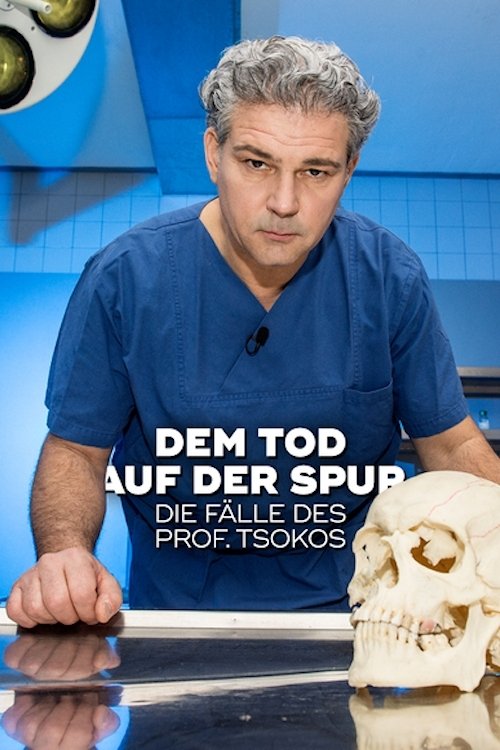
In the first episode of "Dem Tod auf der Spur – Die Fälle des Prof. Tsokos," we are introduced to Professor Michael Tsokos, a forensic pathologist, who is called to a crime scene where a body has been discovered in a remote area. The victim is a young woman, and the scene is chaotic, with police cordoning off the area. Tsokos examines the body, noting the signs of struggle and the unusual markings on the victim's skin, which suggest a deeper story behind her death.
As Tsokos begins his investigation, he collaborates with the lead detective, who is skeptical of his methods but recognizes his expertise. Tsokos conducts an autopsy, revealing critical evidence: the victim had been drugged before her death. He also discovers a unique tattoo that could be a clue to her identity. This revelation prompts Tsokos to dig deeper into the victim's background, leading him to interview friends and family.
In the following scenes, Tsokos uncovers that the victim was involved in a secretive online community that focuses on extreme sports and thrill-seeking activities. He learns that she had recently participated in a dangerous event, which raises questions about her lifestyle and the people she associated with. Tsokos's investigation takes him to various locations, including the victim's home and the sites of her last activities, where he interviews witnesses who provide conflicting accounts of her behavior.
As the investigation progresses, Tsokos faces pressure from the police department to close the case quickly. However, he remains committed to uncovering the truth, driven by a sense of justice for the victim. He discovers that the tattoo on the victim's body is linked to a notorious group known for illegal activities, which leads him to suspect that her death may not have been an accident but rather a targeted killing.
In a pivotal moment, Tsokos receives a tip-off about a potential suspect who was seen with the victim shortly before her death. He tracks down this individual, who initially denies any involvement but eventually reveals that the victim had been threatened by someone within the group. This revelation adds a new layer to the investigation, as Tsokos realizes that the case is more complex than he initially thought.
The tension escalates when Tsokos confronts the suspect, leading to a heated exchange. The suspect becomes defensive and attempts to flee, resulting in a physical confrontation. Tsokos manages to subdue the suspect, but not before he learns that there are others involved who may be connected to the victim's death. This encounter leaves Tsokos shaken but more determined to solve the case.
As Tsokos continues to piece together the evidence, he faces personal challenges, including doubts from his colleagues and the emotional toll of dealing with the victim's family. He struggles with the weight of his responsibility to provide answers and justice. Despite these challenges, he remains focused on the investigation, driven by his commitment to uncovering the truth.
In the climax of the episode, Tsokos gathers enough evidence to confront the leader of the group linked to the victim. He sets up a meeting under the pretense of wanting to join their activities. During this tense encounter, Tsokos skillfully navigates the conversation, gathering crucial information while maintaining his cover. The leader, unaware of Tsokos's true intentions, reveals details about the group's operations and their involvement in the victim's death.
The episode concludes with Tsokos presenting his findings to the police, who are initially skeptical but eventually come to recognize the validity of his evidence. The case takes a dramatic turn as arrests are made, and the truth about the victim's death is finally revealed. Tsokos reflects on the emotional journey he has undergone, feeling a mix of relief and sorrow for the victim and her family. The episode ends with Tsokos preparing for the next case, knowing that his work is far from over.






What is the ending?
In the ending of "Dem Tod auf der Spur – Die Fälle des Prof. Tsokos," Professor Tsokos uncovers the truth behind a complex murder case, leading to the arrest of the perpetrator. The resolution brings closure to the victims' families, while Tsokos reflects on the moral implications of his work.
As the final episode unfolds, the tension escalates in the dimly lit forensic lab where Professor Tsokos meticulously examines the evidence collected throughout the investigation. The camera pans over the scattered files and photographs of the victims, each image a haunting reminder of the lives lost. Tsokos, with a furrowed brow, pieces together the clues that have eluded him and his team.
In a pivotal scene, Tsokos gathers his colleagues, including his trusted assistant, who has been instrumental in the investigation. They huddle around a large table, the atmosphere thick with anticipation. Tsokos lays out the evidence, his voice steady yet urgent. He points to a series of inconsistencies in the testimonies of key witnesses, revealing a web of deceit that has clouded the case. The team listens intently, their expressions shifting from confusion to realization as the pieces fall into place.
The narrative shifts to a flashback, illustrating the moments leading up to the crime. The audience sees the victim's last days, filled with tension and fear, as they unknowingly approach their tragic fate. This sequence is interspersed with scenes of the perpetrator, whose motivations are slowly unveiled, showcasing a blend of desperation and malice.
Back in the present, Tsokos and his team confront the suspect in a tense interrogation room. The atmosphere is charged with emotion as Tsokos lays bare the evidence against them. The suspect, initially defiant, begins to crack under the pressure, revealing their guilt in a moment of vulnerability. The camera captures the shift in their demeanor, highlighting the internal conflict as they grapple with the weight of their actions.
As the episode nears its conclusion, the police arrive to arrest the suspect, marking a significant turning point. Tsokos watches as the handcuffs click into place, a mixture of relief and sorrow washing over him. He understands that justice has been served, yet the emotional toll of the case lingers in the air.
In the final scenes, Tsokos visits the families of the victims, offering them a sense of closure. The emotional weight of their loss is palpable, and Tsokos, though professional, allows a moment of empathy to shine through. He listens to their stories, acknowledging their pain and the impact of the tragedy on their lives.
The episode closes with Tsokos standing alone in his lab, surrounded by the remnants of the case. He reflects on the moral complexities of his work, the fine line between justice and the harsh realities of human nature. The camera slowly zooms out, leaving viewers with a lingering sense of contemplation about the nature of life, death, and the pursuit of truth.
In the end, Professor Tsokos emerges as a figure of resilience, having navigated the dark waters of human tragedy. His colleagues, having grown through the experience, stand by him, united in their commitment to uncovering the truth. The fate of the perpetrator is sealed with their arrest, while the victims' families are left to heal, a testament to the enduring impact of Tsokos's work.
Is there a post-credit scene?
In the TV show "Dem Tod auf der Spur – Die Fälle des Prof. Tsokos," there are no post-credit scenes. The episodes conclude without additional content after the credits, focusing instead on wrapping up the narrative and character arcs within the main storyline. Each episode typically ends with a resolution to the case at hand, leaving viewers with a sense of closure regarding the events that unfolded. The focus remains on the intricate details of the investigations led by Professor Tsokos and the emotional and psychological implications of the cases he encounters.
What are the main cases that Professor Tsokos investigates in the series?
Throughout the series, Professor Tsokos investigates a variety of complex and often gruesome cases. Each episode presents a new mystery, ranging from homicides to unusual deaths, where he applies his forensic expertise to uncover the truth behind the circumstances. The cases often involve intricate details that challenge both his intellect and emotional resilience.
How does Professor Tsokos' personal life affect his work as a forensic expert?
Professor Tsokos' personal life is intricately woven into the narrative, showcasing his struggles with the emotional toll of his work. His relationships, particularly with colleagues and family, often reflect the weight of the cases he handles. The series delves into his internal conflicts, revealing how the darkness of his profession impacts his ability to connect with others and cope with his own feelings.
What role does the character of Detective Koller play in the investigations?
Detective Koller serves as a crucial ally to Professor Tsokos, providing law enforcement insight and practical support during investigations. Their dynamic is characterized by a blend of professional respect and occasional tension, as Koller often grapples with the legal implications of Tsokos' findings. This partnership highlights the intersection of forensic science and police work, showcasing how they rely on each other's expertise to solve cases.
What are some of the ethical dilemmas faced by Professor Tsokos in his investigations?
Throughout the series, Professor Tsokos encounters several ethical dilemmas that challenge his moral compass. These dilemmas often arise when he must decide whether to reveal certain findings that could impact ongoing investigations or the lives of those involved. His commitment to truth and justice is tested, leading to moments of introspection where he weighs the consequences of his actions against his professional responsibilities.
How does the series portray the impact of forensic science on solving crimes?
The series vividly illustrates the impact of forensic science through detailed depictions of autopsies, evidence analysis, and the application of cutting-edge technology. Each case showcases how forensic findings can dramatically shift the direction of an investigation, often revealing hidden truths that law enforcement might overlook. The meticulous process of gathering and interpreting evidence is portrayed with a sense of urgency and importance, emphasizing the role of science in the pursuit of justice.
Is this family friendly?
"Dem Tod auf der Spur – Die Fälle des Prof. Tsokos" is a crime drama series that delves into the world of forensic science and criminal investigations. Given its themes and content, it may not be considered family-friendly for younger audiences or sensitive viewers.
Potentially objectionable or upsetting aspects include:
-
Graphic Crime Scenes: The show often depicts detailed forensic examinations of crime scenes, which can include images of deceased individuals and descriptions of violent acts.
-
Murder Investigations: The central focus on murder cases can be distressing, especially for those sensitive to themes of death and violence.
-
Emotional Trauma: Characters often deal with the emotional fallout of crime, including grief, loss, and the psychological impact of violence, which may be heavy for younger viewers.
-
Dark Themes: The series explores themes of morality, justice, and the darker aspects of human nature, which may not be suitable for all audiences.
-
Intense Situations: There are moments of tension and suspense that could be frightening or unsettling, particularly for children.
Overall, the series is more appropriate for mature audiences who can handle its serious and often grim subject matter.