




Popular
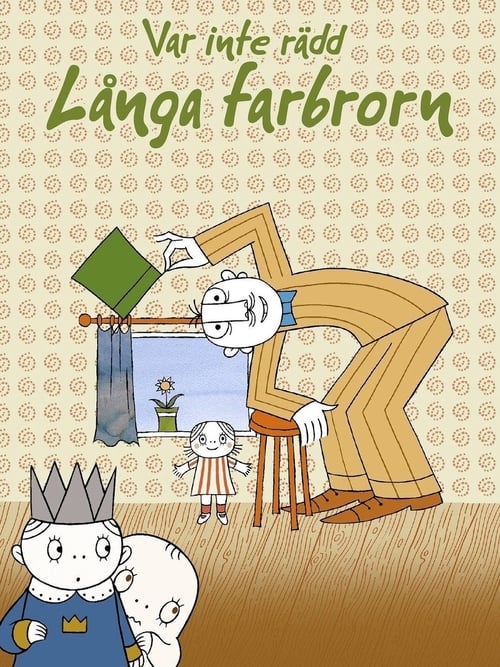
Who is Långa Farbrorn and what role does he play in the story?
What is the significance of the children's fear of Långa Farbrorn?
How do the children react to the stories about Långa Farbrorn?
What challenges do the main characters face in their encounters with Långa Farbrorn?
How does the setting influence the children's perception of Långa Farbrorn?
Should I watch it?
Ask Your Own Question

What is the plot?
Sorry, we aren't able to watch and write up a full detailed plot yet. Check back in a few days.
More Movies Like This
Browse All Movies →



What is the ending?
In the ending of "Var inte rädd, Långa Farbrorn," the main character, a young boy named Albin, confronts his fears and ultimately finds a way to cope with the loss of his father. The film concludes with a sense of resolution as Albin learns to embrace his memories and the love he shared with his father, while also accepting the presence of the mysterious figure, Långa Farbrorn, who represents both fear and comfort.
As the film approaches its conclusion, we see Albin grappling with the emotional turmoil of losing his father. The scenes shift to a dimly lit room where Albin sits alone, surrounded by remnants of his father's life. The atmosphere is heavy with grief, and Albin's internal struggle is palpable. He clutches a small toy that once belonged to his father, a symbol of their bond, and his eyes reflect a mixture of sadness and longing.
In the next scene, Albin encounters Långa Farbrorn, the tall, enigmatic figure who has haunted his dreams. Initially, Albin is filled with trepidation, his heart racing as he faces the embodiment of his fears. However, as they engage in a dialogue, the tone shifts. Långa Farbrorn reveals a softer side, sharing stories that resonate with Albin's memories of his father. This moment serves as a turning point for Albin, as he begins to understand that fear can coexist with love and remembrance.
The climax unfolds as Albin, now more resolute, decides to confront his fears head-on. He steps outside into the night, where the shadows loom large, but instead of retreating, he walks towards them. The imagery is striking; the moonlight casts a gentle glow, illuminating Albin's path. He recalls moments spent with his father, and with each step, he feels a sense of empowerment. The haunting presence of Långa Farbrorn transforms from a figure of dread to one of guidance, symbolizing the journey from fear to acceptance.
In the final scenes, Albin stands at a crossroads, both literally and metaphorically. He looks back at the memories of his father, now infused with warmth rather than sorrow. The film closes with Albin smiling softly, a tear rolling down his cheek, as he whispers a farewell to his father. Långa Farbrorn nods in understanding, and as Albin walks away, the figure fades into the shadows, signifying that while fear may always be present, it can be managed and understood.
The fate of Albin is one of growth and acceptance. He learns to navigate his grief, finding solace in the memories of his father while also acknowledging the complexities of his emotions. Långa Farbrorn, once a source of fear, becomes a symbol of the duality of life--where love and loss coexist. The ending encapsulates the film's exploration of childhood fears, the process of mourning, and the journey towards healing.
Is there a post-credit scene?
In the movie "Var inte rädd, Långa Farbrorn," there is no post-credit scene. The film concludes its narrative without any additional scenes or content after the credits roll. The story wraps up in a way that leaves the audience with a sense of closure regarding the characters and their journeys, focusing on the themes of fear, childhood, and the complexities of growing up. The absence of a post-credit scene reinforces the film's emotional resolution and the finality of the characters' experiences.
Who is Långa Farbrorn and what role does he play in the story?
Långa Farbrorn, or the Long Uncle, is a mysterious and somewhat ominous figure in the film. He embodies the fears and anxieties of the children in the story, particularly through his tall, shadowy presence. His character serves as a catalyst for the children's adventures and confrontations with their own fears, ultimately leading them to confront the unknown.
What is the significance of the children's fear of Långa Farbrorn?
The children's fear of Långa Farbrorn represents their struggle with the unknown and the transition from childhood innocence to the complexities of adulthood. This fear drives the narrative, as the children must navigate their emotions and confront what Långa Farbrorn symbolizes in their lives.
How do the children react to the stories about Långa Farbrorn?
The children react with a mix of fear and curiosity to the stories about Långa Farbrorn. Initially, they are terrified, sharing whispers and fearful glances, but as the story progresses, their curiosity leads them to seek out the truth behind the legend, pushing them to explore their own bravery and resilience.
What challenges do the main characters face in their encounters with Långa Farbrorn?
The main characters face various challenges, including overcoming their fears, dealing with peer pressure, and confronting their own insecurities. Each encounter with Långa Farbrorn forces them to confront not only the physical presence of the character but also their internal struggles, leading to moments of growth and self-discovery.
How does the setting influence the children's perception of Långa Farbrorn?
The setting plays a crucial role in shaping the children's perception of Långa Farbrorn. The dark, shadowy woods and the eerie atmosphere create a sense of foreboding that amplifies their fears. The contrast between the safety of their homes and the dangers lurking outside heightens their anxiety and curiosity, making their journey into the unknown all the more significant.
Is this family friendly?
"Var inte rädd, Långa Farbrorn" is a Swedish film that, while aimed at a family audience, contains some elements that may be unsettling for younger viewers or sensitive individuals.
-
Themes of Fear and Anxiety: The film explores deep emotional themes, including fear of the unknown and anxiety, which may resonate strongly with children and could be distressing.
-
Mysterious and Eerie Atmosphere: The film has a dark, atmospheric quality that includes suspenseful moments and unsettling imagery, which might be frightening for younger audiences.
-
Parental Absence: There are scenes that depict the absence of parental figures, which could evoke feelings of abandonment or insecurity in children.
-
Confrontation with a Mysterious Character: The character of the Long Man, who embodies fear and the unknown, may be perceived as threatening or intimidating, potentially causing discomfort.
-
Emotional Turmoil: Characters experience significant emotional struggles, including sadness and fear, which may be intense for younger viewers to process.
Overall, while the film carries important messages about overcoming fear and understanding emotions, its darker themes and imagery may not be suitable for all children.








