












Popular
What motivates Robin Wright to sell her digital likeness to the studio?
How does the world change after the use of the digital avatars?
What is the significance of the character Al's role in Robin's journey?
How does Robin's relationship with her children influence her decisions throughout the film?
What role does the concept of identity play in Robin's character arc?
Should I watch it?
Ask Your Own Question

What is the plot?
Sorry, we aren't able to watch and write up a full detailed plot yet. Check back in a few days.








What is the ending?
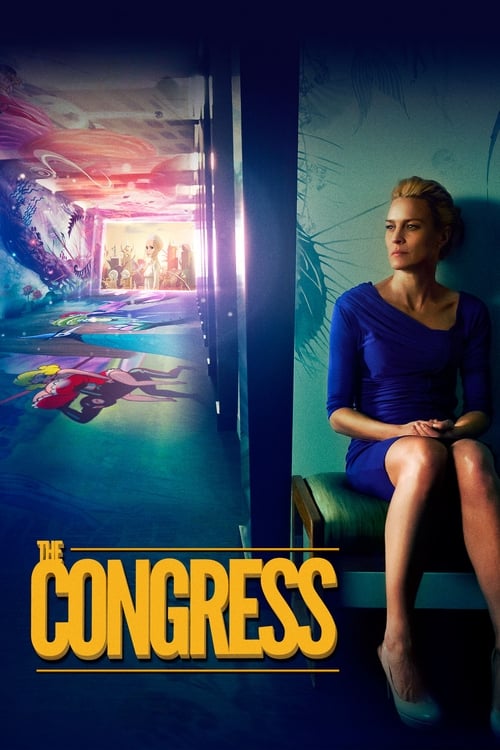
In the ending of "The Congress," Robin Wright, having navigated a surreal and dystopian world, ultimately decides to embrace her own reality. She confronts the consequences of her choices and the nature of her existence, leading to a poignant moment of self-acceptance. The film concludes with her stepping into a new phase of life, symbolizing a blend of hope and uncertainty.
As the film approaches its conclusion, Robin Wright, portrayed by herself, finds herself in a vibrant yet chaotic animated world after having signed away her likeness to the studio. This world is filled with fantastical imagery and characters, reflecting the inner turmoil and desires of its inhabitants. Robin's journey through this animated landscape is both visually stunning and emotionally charged, as she grapples with her identity and the implications of her decision to allow her digital self to be used in films.
In one significant scene, Robin encounters a version of her son, Aaron, who has been affected by the drug-induced reality that permeates this world. Their reunion is bittersweet, as she realizes the impact of her choices on those she loves. Aaron, who has been struggling with his own issues, represents the consequences of living in a world where reality is often distorted by technology and escapism. Their interaction is filled with tension, as Robin seeks to connect with him while also confronting the reality of their situation.
As the narrative unfolds, Robin meets with the enigmatic character of Al, who embodies the complexities of the film's themes. Al, who has been a guiding figure throughout her journey, reveals deeper layers of the world they inhabit. Their conversation delves into the nature of existence, the role of technology in shaping human experience, and the sacrifices made for the sake of art and identity. This dialogue serves as a crucial turning point for Robin, as she begins to understand the weight of her decisions.
In the climax of the film, Robin faces a choice: to remain in this animated world or to return to her own reality. The decision is fraught with emotional stakes, as she reflects on her past, her career, and her relationships. Ultimately, she chooses to step back into her own life, symbolizing a rejection of the artificiality that has consumed her. This moment is marked by a sense of liberation, as she embraces her true self, free from the constraints of her digital persona.
The film concludes with Robin standing in a stark, real-world setting, a contrast to the vibrant animation she has just left behind. This final scene encapsulates her journey of self-discovery and acceptance. It leaves viewers with a sense of ambiguity, as Robin's future remains uncertain, yet filled with potential. The fate of her son, Aaron, remains unresolved, highlighting the ongoing struggle between reality and illusion that permeates the film.
In summary, the ending of "The Congress" serves as a powerful reflection on identity, choice, and the impact of technology on human relationships. Robin Wright's character emerges from her journey with a renewed sense of self, while the fates of other characters, like Aaron and Al, linger in the air, emphasizing the film's exploration of the complexities of existence in a rapidly changing world.
Is there a post-credit scene?
The Congress does not have a post-credit scene. The film concludes with its final moments, leaving the audience to reflect on the themes of identity, reality, and the implications of technology in the world of entertainment. The narrative wraps up without any additional scenes or content after the credits roll, focusing instead on the emotional and philosophical questions raised throughout the film.
What motivates Robin Wright to sell her digital likeness to the studio?
Robin Wright, portrayed by herself, is motivated by a combination of financial desperation and the desire to secure her future. As an aging actress struggling to find work in Hollywood, she faces the harsh realities of her fading career. The offer from the studio represents not only a lucrative opportunity but also a chance to escape the pressures of her current life and provide for her children.
How does the world change after the use of the digital avatars?
After the use of digital avatars becomes widespread, the world transforms into a surreal landscape where people can escape reality by embodying their idealized versions. This leads to a society where individuals prioritize their digital experiences over real-life interactions, resulting in a disconnection from genuine human emotions and relationships. The vibrant, animated sequences contrast sharply with the bleakness of reality, highlighting the consequences of this technological advancement.
What is the significance of the character Al's role in Robin's journey?
Al, played by Harvey Keitel, serves as both a mentor and a manipulator in Robin's journey. He represents the industry that both supports and exploits her. His encouragement for Robin to embrace the digital transformation reflects the pressures of Hollywood, while his personal connection to her adds emotional depth. Al's character embodies the duality of support and control, pushing Robin to confront her fears and ultimately make a life-altering decision.
How does Robin's relationship with her children influence her decisions throughout the film?
Robin's relationship with her children is a driving force behind her decisions. She is deeply concerned about their well-being and future, which amplifies her desperation to secure financial stability. Her children represent her connection to reality and her motivation to navigate the surreal world of the film. As she grapples with the implications of selling her likeness, her desire to protect them from the harshness of the industry and provide them with a better life weighs heavily on her emotional state.
What role does the concept of identity play in Robin's character arc?
The concept of identity is central to Robin's character arc as she grapples with her sense of self in a world that commodifies her likeness. Initially, she struggles with the idea of losing her identity to a digital version of herself, fearing that she will become a mere product rather than a person. As the story progresses, Robin's journey forces her to confront her own insecurities and redefine what it means to be true to herself, ultimately leading to a profound transformation in her understanding of identity and authenticity.
Is this family friendly?
"The Congress," produced in 2013, is not considered family-friendly due to several potentially objectionable or upsetting scenes and themes. Here are some aspects that may be concerning for children or sensitive viewers:
-
Substance Use: The film features scenes depicting drug use and the effects of hallucinogenic substances, which may be unsettling or inappropriate for younger audiences.
-
Sexual Content: There are instances of sexual themes and suggestive imagery that may not be suitable for children.
-
Violence and Disturbing Imagery: The film includes surreal and sometimes disturbing visual sequences that can be disorienting or frightening.
-
Emotional Themes: The narrative explores heavy themes such as identity, aging, and the impact of technology on human relationships, which may be difficult for younger viewers to understand or process.
-
Existential Questions: The film raises complex philosophical questions about reality and existence that may be challenging for sensitive individuals.
Overall, the film's mature themes and visual style make it more appropriate for adult audiences.








