





















Popular
What role does the antagonist play in the protagonist's journey?
How does the character of the detective evolve throughout the film?
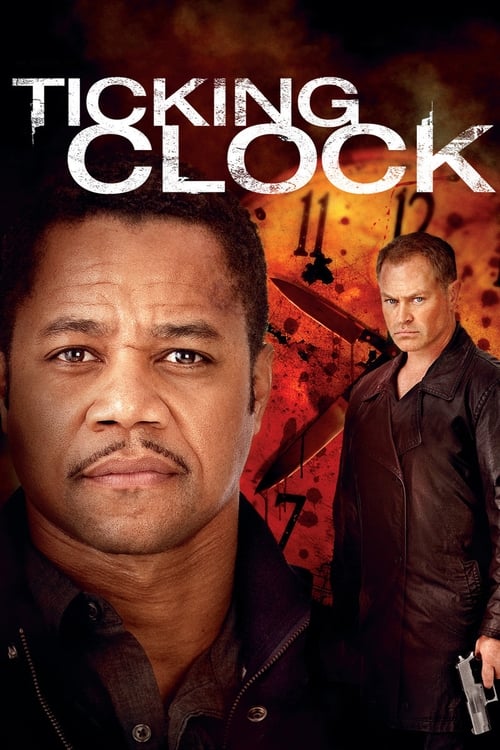
What is the significance of the mysterious clock in the story?
How does the protagonist's relationship with his family impact his decisions?
What are the key moments that reveal the true nature of the clock's power?
Should I watch it?
Ask Your Own Question

What is the plot?
Sorry, we aren't able to watch and write up a full detailed plot yet. Check back in a few days.




What is the ending?
In the ending of "Ticking Clock," the protagonist, a journalist named Jack, confronts the antagonist, a serial killer named Victor, in a final showdown. Jack manages to outsmart Victor, leading to a tense climax where he saves a kidnapped woman and ultimately brings Victor to justice. The film concludes with Jack reflecting on the events, having faced his own demons and the moral complexities of his actions.
As the film approaches its climax, the tension escalates. Jack, portrayed as a determined journalist, has been on the trail of Victor, a cunning and ruthless serial killer. The narrative builds as Jack discovers that Victor has been using a mysterious clock as a symbol of his killings, each tick representing a life lost. Jack's internal struggle is palpable; he is driven by a need for justice but also haunted by the fear of failing to save the innocent.
In the penultimate scene, Jack tracks Victor to an abandoned warehouse, where he believes the killer is holding a woman captive. The atmosphere is thick with suspense as Jack enters the dimly lit space, his heart racing. He navigates through the shadows, the sound of the ticking clock echoing ominously in the background. Jack's determination is fueled by the urgency of the situation; he knows that time is running out for the woman.
As Jack confronts Victor, the tension reaches its peak. Victor, calm and collected, taunts Jack, revealing his twisted philosophy about life and death. Jack's emotions surge--anger, fear, and a desperate need to protect the woman. The confrontation is intense, with Victor attempting to manipulate Jack psychologically, trying to break his resolve. Jack, however, channels his fear into courage, refusing to back down.
In a dramatic turn, Jack manages to outsmart Victor, using the very clock that symbolizes the killer's reign of terror against him. With a clever maneuver, Jack frees the woman and subdues Victor, leading to a physical struggle that showcases Jack's determination to end the cycle of violence. The fight is brutal, filled with visceral moments that highlight the stakes involved. Jack's internal conflict is resolved as he embraces his role as a protector, finally overcoming his fears.
As the police arrive, Jack stands over Victor, who is now defeated. The ticking clock comes to a halt, symbolizing the end of Victor's reign of terror. Jack's relief is palpable, but it is mixed with the weight of the lives lost and the trauma he has endured. The film closes with Jack reflecting on the events, a sense of closure washing over him as he contemplates the moral complexities of his journey. He has faced darkness and emerged, but not without scars.
In the final moments, Jack is seen walking away from the warehouse, the sun rising in the background, symbolizing hope and new beginnings. The fate of Victor is sealed as he is taken into custody, his reign of terror finally over. The woman Jack saved is grateful, and their brief exchange highlights the impact of Jack's actions. Jack's journey has transformed him, and while he has achieved justice, he is left to grapple with the emotional aftermath of his choices.
Is there a post-credit scene?
In the movie "Ticking Clock," there is no post-credit scene. The film concludes without any additional scenes or content after the credits roll. The story wraps up with the resolution of the main plot, focusing on the protagonist's confrontation with the antagonist and the implications of the events that transpired throughout the film. The ending leaves the audience with a sense of closure regarding the characters and their fates, without any further revelations or cliffhangers.
What role does the antagonist play in the protagonist's journey?
The antagonist is a shadowy figure whose actions drive the plot forward, creating a sense of dread and urgency. Their motivations are revealed gradually, and they serve as a mirror to the protagonist's struggles, pushing him to confront his own fears and ultimately leading to a climactic confrontation.
How does the character of the detective evolve throughout the film?
The detective, played by the protagonist, begins as a man burdened by personal loss and a sense of failure in his career. As the story unfolds, he becomes increasingly determined to uncover the truth behind the clock and the murders, showcasing his growth from a passive observer to an active participant in the fight against evil.
What is the significance of the mysterious clock in the story?
The mysterious clock serves as a central plot device that symbolizes the urgency and impending danger faced by the protagonist, as it counts down to a critical moment that could change everything. It represents the race against time that the characters must navigate to prevent a catastrophic event.
How does the protagonist's relationship with his family impact his decisions?
The protagonist's relationship with his family is strained due to his obsession with the case and the clock. His emotional turmoil regarding his family's safety and his desire to protect them influence his choices, often leading him to make reckless decisions that heighten the tension and stakes of the narrative.
What are the key moments that reveal the true nature of the clock's power?
Key moments include the protagonist's initial discovery of the clock's ability to manipulate time and events, as well as the chilling realization of its connection to the murders. These revelations are marked by intense emotional reactions, as the protagonist grapples with the moral implications of using the clock's power to alter fate.
Is this family friendly?
"Ticking Clock," produced in 2011, is not considered family-friendly due to its intense themes and graphic content. Here are some potentially objectionable or upsetting aspects that may affect children or sensitive viewers:
-
Violence: The film contains several scenes of graphic violence, including physical confrontations and the use of weapons, which may be disturbing to younger audiences.
-
Murder and Threats: There are depictions of murder and threats to characters' lives, creating a tense and suspenseful atmosphere that may be unsettling.
-
Psychological Tension: The film explores dark themes of revenge and moral dilemmas, which may be too complex or distressing for younger viewers.
-
Emotional Distress: Characters experience significant emotional turmoil, including fear, anger, and desperation, which could be upsetting for sensitive individuals.
-
Adult Language: The dialogue includes strong language that may not be appropriate for children.
Overall, the film's mature themes and intense scenes make it more suitable for an adult audience.








