



















Popular
What motivates General Enrique Gorostieta to lead the Cristero War?
How does the character of José Luis Sánchez del Río evolve throughout the film?
What role does the character of Father Christopher play in the Cristero movement?
How does the film depict the relationship between the Cristeros and the Mexican government?
What is the significance of the title 'For Greater Glory' in relation to the characters' motivations?
Should I watch it?
Ask Your Own Question

What is the plot?
Sorry, we aren't able to watch and write up a full detailed plot yet. Check back in a few days.


What is the ending?
In the ending of "For Greater Glory," the Cristeros face a decisive battle against the Mexican government forces. The film culminates in a series of intense confrontations, leading to the deaths of key characters, including José Luis Sánchez del Río, who is executed as a martyr. The Cristeros ultimately achieve a bittersweet victory, as their sacrifices lead to a change in the government's stance, but at a great personal cost.
As the film approaches its conclusion, the tension escalates. The Cristeros, led by General Enrique Gorostieta, prepare for a final stand against the oppressive government forces. The atmosphere is thick with determination and despair, as the men know they are fighting not just for their lives, but for their faith and the freedom to practice it openly.
In a pivotal scene, the Cristeros engage in a fierce battle against the government troops. The landscape is marred by gunfire and chaos, with the sounds of clashing metal and cries of the wounded echoing through the air. The camera captures the grit and resolve on the faces of the Cristeros, each man driven by a deep sense of purpose. General Gorostieta, portrayed with a mix of bravery and vulnerability, rallies his men, reminding them of their cause and the sacrifices made by those who have fallen before them.
As the battle rages on, the film shifts focus to José Luis Sánchez del Río, a young boy who has become a symbol of hope and faith for the Cristeros. His unwavering spirit shines through even in the face of imminent danger. Captured by government forces, he is subjected to brutal treatment, yet he remains defiant, clutching a crucifix and proclaiming his faith. His fate becomes a poignant reflection of the film's themes of sacrifice and martyrdom.
In a heart-wrenching moment, José Luis is executed, his death serving as a catalyst for the Cristeros' resolve. The scene is heavy with emotion, as the camera lingers on his face, capturing the innocence and bravery of a boy who chose to stand for his beliefs. His martyrdom ignites a fire within the remaining Cristeros, pushing them to fight harder against the oppressive regime.
The film then transitions to the aftermath of the battle. The Cristeros, though battered and diminished, find a sense of victory in their struggle. The government, recognizing the futility of their oppression, begins to reconsider their stance on religious freedom. The final scenes depict the surviving Cristeros, weary yet proud, as they reflect on their journey and the lives lost along the way.
General Gorostieta, having witnessed the cost of their fight, is left with a profound sense of loss but also a glimmer of hope for the future. The film closes with a montage of the characters' sacrifices, underscoring the enduring spirit of those who fought for their beliefs. The final image is one of resilience, as the Cristeros' struggle paves the way for a new era of religious freedom in Mexico, honoring the legacy of those who gave everything for their faith.
Is there a post-credit scene?
In the movie "For Greater Glory," there is no post-credit scene. The film concludes with a powerful and emotional ending that encapsulates the struggles and sacrifices of the Cristeros during the Cristero War in Mexico. The final moments focus on the legacy of the characters and the impact of their fight for religious freedom, leaving the audience with a sense of resolution regarding their struggles rather than a teaser for future events. The film emphasizes themes of faith, sacrifice, and the enduring spirit of those who fought for their beliefs.
What motivates General Enrique Gorostieta to lead the Cristero War?
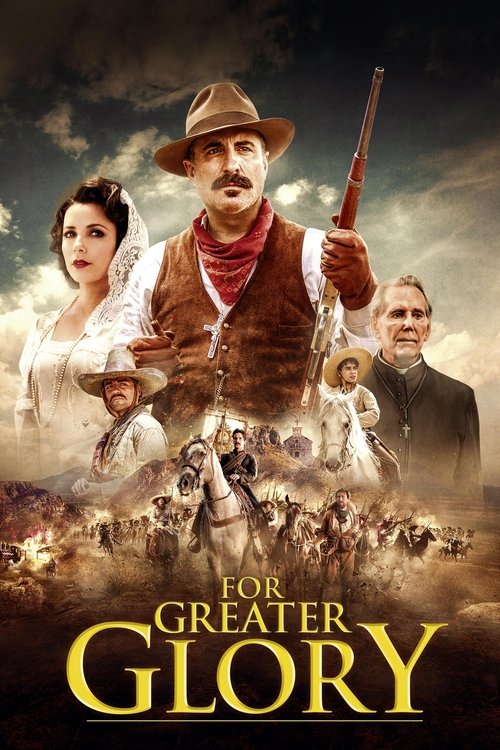
General Enrique Gorostieta, played by Andy Garcia, is initially motivated by a sense of duty and honor. As a former soldier, he is drawn to the cause of the Cristeros when he witnesses the brutal oppression of Catholics by the Mexican government. His internal conflict grows as he grapples with the moral implications of leading a rebellion, ultimately driven by a desire to protect his faith and the rights of his fellow citizens.
How does the character of José Luis Sánchez del Río evolve throughout the film?
José Luis Sánchez del Río, portrayed by Mauricio Kuri, begins as a young boy eager to join the Cristero fighters. His journey is marked by innocence and a deep faith. As he faces the harsh realities of war, including capture and torture, his character evolves into a symbol of courage and sacrifice. His unwavering commitment to his beliefs, even in the face of death, highlights his transformation from a naive boy to a martyr for the cause.
What role does the character of Father Christopher play in the Cristero movement?
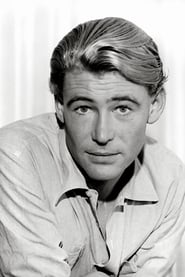
Father Christopher, played by Peter O'Toole, serves as a spiritual leader and moral compass for the Cristero fighters. He provides guidance and support, emphasizing the importance of faith in their struggle. His character embodies the conflict between the church and the state, and he often reflects on the sacrifices made for religious freedom, urging the fighters to remain steadfast in their beliefs despite the overwhelming odds.
How does the film depict the relationship between the Cristeros and the Mexican government?
The film portrays a deeply antagonistic relationship between the Cristeros and the Mexican government, led by President Plutarco Elías Calles. The government enforces strict anti-Catholic laws, leading to violent crackdowns on religious practices. This oppression fuels the Cristero rebellion, showcasing the desperation and determination of the fighters as they resist the government's attempts to eradicate their faith, leading to a brutal and bloody conflict.
What is the significance of the title 'For Greater Glory' in relation to the characters' motivations?
The title 'For Greater Glory' reflects the characters' motivations to fight for their faith and the greater good. It signifies their willingness to sacrifice their lives for a cause they believe transcends personal gain. This theme is embodied in characters like Gorostieta and José Luis, who are driven by a profound sense of purpose and the desire to achieve a legacy of freedom and dignity for future generations.
Is this family friendly?
"Outlaws: For Greater Glory" is a historical drama that depicts the Cristero War in Mexico during the 1920s, focusing on the conflict between the Mexican government and those who oppose its anti-Catholic policies. While the film has a strong message about faith, freedom, and sacrifice, it does contain several elements that may be objectionable or upsetting for children or sensitive viewers.
-
Violence and Warfare: The film features numerous scenes of armed conflict, including gunfights, ambushes, and battles. These scenes can be intense and graphic, showcasing the brutality of war.
-
Death and Suffering: Characters experience loss, and there are moments of death that are portrayed with emotional weight. The impact of these losses on families and communities is a central theme.
-
Religious Persecution: The film addresses themes of religious oppression, including the persecution of priests and the faithful. This may be distressing for viewers sensitive to issues of faith and freedom.
-
Emotional Turmoil: Characters grapple with deep emotional struggles, including fear, despair, and moral dilemmas. These internal conflicts may resonate strongly with viewers, potentially evoking sadness or discomfort.
-
Mature Themes: The film explores complex themes such as sacrifice, loyalty, and the fight for one's beliefs, which may be difficult for younger audiences to fully grasp.
Overall, while "Outlaws: For Greater Glory" carries a powerful message, its depiction of violence, emotional suffering, and mature themes may not be suitable for all children or sensitive viewers.









