
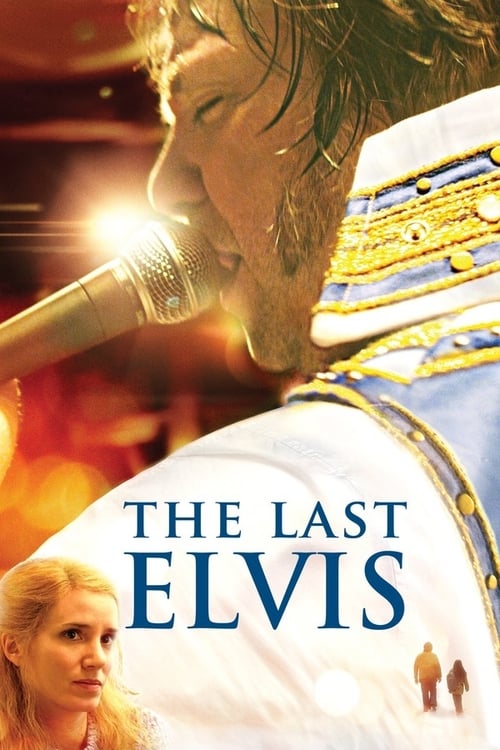









Popular
What motivates the main character, Carlos, to impersonate Elvis Presley?
How does Carlos's relationship with his daughter, Lisa, evolve throughout the film?
What role does the character of the Elvis impersonator, who Carlos competes against, play in the story?
How does the film depict Carlos's internal conflict between reality and his Elvis persona?
What significance does the setting of Buenos Aires have on Carlos's journey as an Elvis impersonator?
Should I watch it?
Ask Your Own Question

What is the plot?
In the gritty, sun-drenched streets of Buenos Aires, Argentina, the camera opens on a modest, working-class neighborhood, the hum of city life blending with distant music. It is the early 2010s, though no exact date is given. Inside a small, dimly lit nightclub plastered with Elvis Presley posters and memorabilia, Carlos Gutiérrez, a 42-year-old man dressed in a glittering Elvis jumpsuit, commands the stage. His voice, filled with passion and longing, echoes through the sparse room as he croons Elvis's timeless hits. Yet, the crowd is indifferent, a few patrons nursing drinks, their faces blank or distracted. Carlos's performance is more than a show--it is his identity. Between songs, he declares with a fervent conviction, "I am not just an impersonator. I am Elvis. I am the King." This is no mere act for Carlos; it is a lived reality, a delusion that colors every aspect of his existence.
Backstage, Carlos's world is a shrine to Elvis Presley. His cramped apartment nearby is cluttered with costumes, records, and posters, a tangible manifestation of his obsession. Here, he retreats from the harshness of his life, practicing moves and singing to empty rooms. Yet, outside this fantasy, reality waits. His ex-wife, María Gutiérrez, is a practical, weary woman who struggles to raise their young daughter, Lisa Marie, alone. In her modest apartment, she watches over Lisa Marie, who clutches a small Elvis doll--a gift from María meant to connect her daughter to her father's world, however fractured. María's protective gaze masks a simmering resentment toward Carlos's absence and his refusal to prioritize his family over his fantasy.
Carlos's life is a fragile balance between these two worlds: the nightclub stage where he is Elvis, and the quiet apartments where his fractured family lives. His daughter Lisa Marie is a silent witness to this divide, her innocence touched by her father's mythic persona but also by his neglect.
One evening, after a lackluster performance, Carlos drives home through the bustling streets of Buenos Aires, the radio playing Elvis's voice. Lost in song, his mind drifts into his fantasy, and he fails to notice a red light. The screech of tires and the crunch of metal shatter the reverie. Carlos's car crashes violently. He is injured but alive, the hospital's sterile walls a stark contrast to the vibrant chaos of his stage life. The accident is a brutal wake-up call, forcing him to confront the consequences of his obsession.
In the hospital, María visits him, her face a mixture of anger and concern. She confronts Carlos sharply: "You are not Elvis. You are Carlos, and you have a daughter who needs you." Her words cut through his delusions, but Carlos struggles to accept them. The tension between them is palpable, a clash of harsh reality and fragile fantasy. María's accusations are rooted in years of disappointment--Carlos's neglect, his inability to be present for Lisa Marie, and his refusal to let go of the Elvis persona.
Carlos's internal battle intensifies. Alone in his hospital room, he wrestles with his identity. Flashbacks reveal a childhood steeped in Elvis's music, a young boy who found solace and escape in the King's songs. Now, as a man, he clings desperately to that identity, unable to separate himself from the myth. His monologues are raw and revealing: "I am Elvis. I have always been Elvis." Yet, the accident and María's confrontation begin to crack this illusion.
As Carlos recovers, he visits María's apartment to see Lisa Marie. The reunion is tentative; Lisa Marie holds the Elvis doll tightly, a symbol of the father she barely knows. Carlos brings her another doll, this time with a different message. Looking into her eyes, he says softly, "This is just a toy. I am your father, and I will always be here for you." It is a moment of vulnerability and hope, signaling his desire to reclaim his role as a father rather than a mythic figure.
The film's climax unfolds in the hospital, where Carlos and María have a final, emotionally charged confrontation. María demands accountability, insisting that Carlos must stop living in his fantasy and face his responsibilities. Carlos, weakened but resolute, finally admits, "I am not Elvis. I am Carlos, and I have a daughter who needs me." This admission marks a turning point, a relinquishing of his delusion in favor of reality.
No other deaths occur in the narrative; the car accident is the sole life-altering event, caused by Carlos's distracted driving. The story's tension arises from Carlos's internal struggle and fractured relationships rather than external violence.
In the closing scenes, Carlos sheds his Elvis costume, symbolizing his acceptance of his true self. He plays with Lisa Marie in María's apartment, their laughter filling the room. The camera lingers on Carlos's face, no longer masked by the King's persona but open and human. The final image is one of tentative reconciliation and the possibility of redemption--a man who has lost his fantasy but found his family.
Thus, The Last Elvis is a poignant exploration of identity, obsession, and the painful journey toward self-acceptance, set against the vibrant backdrop of Buenos Aires and the haunting legacy of Elvis Presley.





What is the ending?
In the ending of "The Last Elvis," the protagonist, Carlos, faces a tragic realization about his life and the impact of his obsession with Elvis Presley. After a series of personal losses and confrontations, he ultimately decides to embrace his identity as a father, leading to a poignant moment of acceptance and change.
As the film progresses towards its conclusion, Carlos, who has been living a dual life as an Elvis impersonator, grapples with the consequences of his choices. His relationship with his estranged daughter, who has been a source of conflict and longing, comes to a head. In a climactic scene, Carlos performs one last tribute to Elvis, pouring his heart into the performance, which serves as both a farewell to his idol and a moment of clarity for himself.
In the final moments, Carlos makes a significant decision regarding his future and his role as a father, indicating a shift from his obsession with Elvis to a commitment to his daughter. The film closes on a note of bittersweet hope, as Carlos begins to understand the importance of family over fame.
As the film nears its conclusion, we find Carlos, the Elvis impersonator, in a state of turmoil. The weight of his obsession with Elvis Presley has taken a toll on his personal life, particularly his relationship with his daughter, who has been largely absent from his life. The scene opens with Carlos in his modest apartment, surrounded by memorabilia of Elvis, a shrine to the King that has consumed him for years. The walls are adorned with posters, and the air is thick with nostalgia and regret.
In a pivotal moment, Carlos receives a call from his daughter, who is struggling with her own issues. She expresses her frustration and disappointment in him, highlighting the emotional distance that has grown between them. Carlos, feeling the sting of her words, is momentarily shaken. He realizes that his devotion to Elvis has overshadowed his responsibilities as a father. This confrontation serves as a catalyst for Carlos, igniting a flicker of self-awareness that he has long avoided.
The next scene shifts to a local venue where Carlos is scheduled to perform. The atmosphere is electric, filled with fans eager to see him channel the spirit of Elvis. As he steps onto the stage, the lights dim, and the familiar strains of "Can't Help Falling in Love" fill the air. Carlos, adorned in a sequined jumpsuit, transforms into Elvis, losing himself in the performance. The audience is captivated, but as he sings, a deep sense of emptiness washes over him. He realizes that this performance, while exhilarating, is a façade that cannot replace the genuine connections he has neglected.
After the show, Carlos is approached by a few fans who praise his performance, but their words feel hollow to him. He steps outside, the cool night air hitting his face, and he reflects on the choices he has made. The weight of his dual life presses down on him, and he begins to understand that his obsession with Elvis has cost him dearly.
In a moment of clarity, Carlos decides to reach out to his daughter once more. He finds her at a diner, where she is working. The scene is tense; both characters are filled with unspoken emotions. Carlos, vulnerable and raw, apologizes for his absence and the way he has prioritized his impersonation over their relationship. His daughter, initially resistant, begins to soften as she sees the sincerity in his eyes. They share a heartfelt conversation, where Carlos expresses his desire to be a better father, to be present in her life.
The film culminates in a final performance, where Carlos dedicates a song to his daughter, a poignant moment that symbolizes his commitment to change. As he sings, the camera captures the emotional weight of the moment--the tears in his eyes, the pride in his daughter's gaze. This performance is not just a tribute to Elvis; it is a declaration of his newfound priorities.
In the closing scenes, we see Carlos and his daughter walking together, a tentative but hopeful bond beginning to form. The film ends with a sense of bittersweet resolution, as Carlos steps away from the shadow of Elvis and embraces his role as a father. The final shot lingers on Carlos, no longer just an impersonator, but a man ready to face the challenges of life with a renewed sense of purpose. The fate of Carlos is one of redemption, while his daughter, having witnessed his transformation, is left with a glimmer of hope for their future together.
Is there a post-credit scene?
The Last Elvis does not have a post-credit scene. The film concludes with a poignant and emotional ending that encapsulates the struggles and aspirations of its main character, Carlos, who is a devoted Elvis impersonator. The narrative wraps up without any additional scenes after the credits, leaving the audience to reflect on the themes of identity, loss, and the pursuit of dreams. The focus remains on Carlos's journey and the impact of his choices throughout the film, rather than extending the story further in a post-credit sequence.
What motivates the main character, Carlos, to impersonate Elvis Presley?
Carlos, a middle-aged man living in Buenos Aires, is deeply affected by his past and his unfulfilled dreams. He sees himself as a failed musician and feels a strong connection to Elvis Presley, whose music represents a life of success and freedom that he yearns for. His desire to escape his mundane reality and find purpose drives him to impersonate Elvis, allowing him to channel his frustrations and aspirations through the character.
How does Carlos's relationship with his daughter, Lisa, evolve throughout the film?
Carlos's relationship with his daughter, Lisa, is strained at the beginning of the film. He is often absent and consumed by his obsession with Elvis. As the story progresses, Carlos's attempts to connect with Lisa become more pronounced, especially as he tries to provide for her and be a better father. Their relationship is marked by moments of tension and reconciliation, ultimately leading to a deeper understanding of each other's struggles.
What role does the character of the Elvis impersonator, who Carlos competes against, play in the story?
The rival Elvis impersonator serves as a foil to Carlos, highlighting his insecurities and the lengths he is willing to go to achieve recognition. This character embodies the competitive nature of the impersonation scene and challenges Carlos's self-image. Their rivalry pushes Carlos to confront his own limitations and the reality of his aspirations, ultimately forcing him to reflect on what it truly means to be an artist.
How does the film depict Carlos's internal conflict between reality and his Elvis persona?
Carlos experiences a profound internal conflict as he oscillates between his identity as a struggling father and his alter ego as Elvis. The film visually contrasts his mundane life with the vibrant performances he gives as Elvis, showcasing his emotional highs and lows. This duality creates a tension within Carlos, as he grapples with the desire for fame and the responsibilities of his real life, leading to moments of despair and elation.
What significance does the setting of Buenos Aires have on Carlos's journey as an Elvis impersonator?
Buenos Aires serves as a rich backdrop for Carlos's journey, reflecting both the vibrancy and struggles of his life. The city's music scene, filled with passionate performers and fans, mirrors Carlos's own aspirations and frustrations. The cultural landscape influences his performances and interactions, emphasizing the contrast between his dreams of grandeur as an Elvis impersonator and the harsh realities of his everyday existence.
Is this family friendly?
"The Last Elvis," produced in 2012, is not considered family-friendly due to several potentially objectionable or upsetting elements. Here are some aspects that may be concerning for children or sensitive viewers:
-
Substance Abuse: The film depicts the protagonist's struggles with alcohol, showcasing scenes of drinking and the consequences that follow, which may be distressing.
-
Emotional Turmoil: The main character experiences significant emotional pain and existential crises, leading to scenes of deep sadness and despair that could be upsetting.
-
Family Conflict: There are intense moments of conflict between family members, particularly involving themes of abandonment and loss, which may resonate negatively with younger audiences.
-
Themes of Grief: The film explores themes of loss and mourning, particularly related to the protagonist's relationship with his deceased wife, which could be heavy for sensitive viewers.
-
Adult Situations: There are references to adult relationships and situations that may not be appropriate for children.
These elements contribute to a mature narrative that may not be suitable for younger audiences or those who are sensitive to such themes.







