









Popular
What is the significance of the character Viktor Frankenstein in the film?
How do the soldiers in Frankenstein's Army become monstrous creations?
What role does the character of the film crew play in the story?
What is the relationship between the character of the soldier and the female character, and how does it affect the plot?
How does the setting of World War II influence the events of Frankenstein's Army?
Should I watch it?
Ask Your Own Question

What is the plot?
Sorry, we aren't able to watch and write up a full detailed plot yet. Check back in a few days.
More Movies Like This
Browse All Movies →







What is the ending?
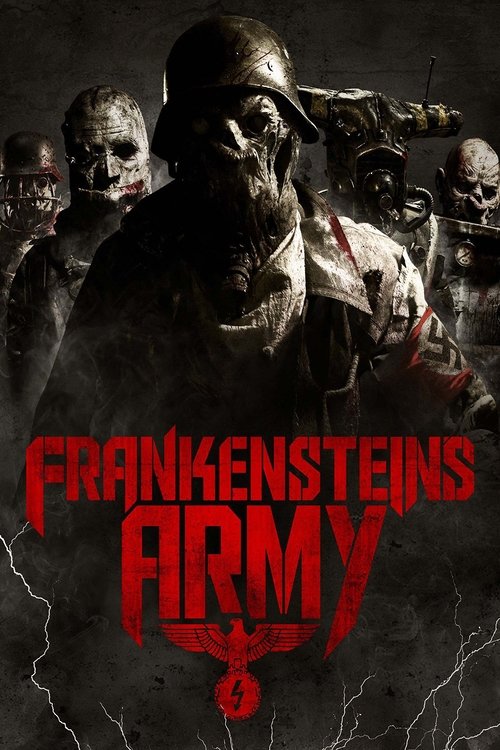
In the ending of "Frankenstein's Army," the remaining characters face the monstrous creations of the mad scientist, Viktor Frankenstein. As they attempt to escape the horrors of the laboratory, they confront the reality of their situation. The film concludes with a shocking twist, revealing that one of the characters has been transformed into a creature, leaving the fate of the others uncertain.
As the film approaches its climax, the atmosphere is thick with tension and dread. The remaining members of the group, including the soldier, the cameraman, and a few others, find themselves deep within the labyrinthine corridors of the laboratory. The flickering lights cast eerie shadows on the walls, heightening their sense of impending doom. They are pursued by the grotesque creations of Viktor Frankenstein, each more horrifying than the last, a testament to the twisted experiments that have taken place.
In a frantic bid for survival, the group stumbles upon a large chamber filled with various mechanical monstrosities. The air is heavy with the stench of decay and the metallic tang of blood. As they navigate through the room, they witness the remnants of previous victims, their bodies grotesquely fused with machinery, a chilling reminder of the fate that awaits them if they fail to escape.
The soldier, driven by a mix of fear and determination, takes charge, urging the others to keep moving. His internal struggle is palpable; he grapples with the weight of his responsibility to protect his comrades while battling his own terror. The cameraman, capturing every moment, is torn between documenting the horror and the instinct to flee. His lens becomes a window into the chaos, reflecting the horror that surrounds them.
As they push deeper into the lab, they encounter Viktor Frankenstein himself, a figure of madness and genius. He reveals his twisted vision of creating a new breed of soldier, one that is part human, part machine. The confrontation is intense, filled with a sense of desperation as the group realizes the extent of his depravity. They fight back, but the odds are stacked against them.
In a heart-stopping moment, one of the characters, a young woman, is captured by one of Frankenstein's creations. The group watches in horror as she is transformed into a creature, her humanity stripped away. This moment serves as a stark reminder of the consequences of unchecked ambition and the loss of identity in the face of monstrous creation.
As the chaos unfolds, the remaining characters make a final push for escape. They race through the corridors, the sounds of mechanical limbs and anguished cries echoing behind them. The soldier, now filled with a sense of urgency, leads the charge, but the group is fragmented by fear and the relentless pursuit of the creatures.
In the final moments, the soldier and the cameraman find themselves cornered. The soldier makes a desperate stand, sacrificing himself to buy the cameraman time to escape. The emotional weight of this decision is heavy; the soldier's bravery is a testament to his character, showcasing his growth from a frightened soldier to a selfless hero.
The cameraman, now alone, makes his way to the surface, the horrors of the lab still fresh in his mind. As he emerges into the light, he turns the camera back towards the entrance, capturing the last glimpse of the laboratory. The film ends with a chilling revelation: the transformation of the young woman into a creature is complete, and she stands at the threshold, a haunting reminder of the cost of ambition and the fragility of humanity.
The fate of the characters is sealed in tragedy; the soldier's sacrifice, the cameraman's survival, and the young woman's transformation serve as a poignant conclusion to the harrowing tale. The film closes on a note of uncertainty, leaving the audience to ponder the implications of Frankenstein's experiments and the darkness that lies within the human soul.
Is there a post-credit scene?
Frankenstein's Army does not have a post-credit scene. The film concludes with its final moments, leaving the audience with a sense of dread and uncertainty about the fate of the characters and the monstrous creations unleashed by the titular character. The ending emphasizes the horror and chaos that ensues, aligning with the film's overall themes of madness and the consequences of playing god.
What is the significance of the character Viktor Frankenstein in the film?
Viktor Frankenstein is portrayed as a mad scientist who has taken his experiments to a horrifying level during World War II. His character embodies the themes of unchecked ambition and the moral implications of playing God. He is responsible for creating the monstrous soldiers, known as 'Frankenstein's Army,' which are a blend of human and machine, showcasing his twisted vision of creating an army of the undead.
How do the soldiers in Frankenstein's Army become monstrous creations?
The soldiers in Frankenstein's Army are transformed into grotesque creatures through Viktor Frankenstein's experiments. He uses body parts from fallen soldiers and combines them with mechanical components, resulting in horrific hybrids that retain some human characteristics but are primarily monstrous. This transformation reflects the dehumanization and brutality of war, as well as Frankenstein's obsession with creating life.
What role does the character of the film crew play in the story?
The film crew, consisting of a group of Soviet soldiers and filmmakers, serves as the primary perspective through which the audience experiences the horrors of Frankenstein's creations. Their initial mission to document the war quickly turns into a fight for survival as they encounter the monstrous beings. Each character's reactions to the unfolding terror reveal their individual fears, motivations, and the impact of war on their psyche.
What is the relationship between the character of the soldier and the female character, and how does it affect the plot?
The soldier, known as 'the cameraman,' develops a bond with a female character, who represents a glimmer of hope amidst the chaos. Their relationship adds emotional depth to the narrative, as it highlights the human desire for connection even in dire circumstances. This bond is tested as the horrors of Frankenstein's creations unfold, ultimately influencing the soldier's decisions and actions as he fights to protect her.
How does the setting of World War II influence the events of Frankenstein's Army?
The setting of World War II is crucial to the events of Frankenstein's Army, as it provides a backdrop of chaos, destruction, and moral ambiguity. The war's brutality amplifies the horror of Frankenstein's experiments, as the characters grapple with the loss of humanity in the face of conflict. The war also serves as a catalyst for the characters' motivations, pushing them to confront their fears and the consequences of their actions in a world where life and death are constantly at stake.
Is this family friendly?
"Frankenstein's Army," produced in 2013, is not considered family-friendly due to its graphic content and intense themes. Here are some potentially objectionable or upsetting aspects that may affect children or sensitive viewers:
-
Graphic Violence: The film features numerous scenes of extreme violence, including dismemberment and brutal killings, which are depicted in a very explicit manner.
-
Horror Elements: The movie includes disturbing imagery and horror elements, such as grotesque creatures and unsettling transformations, which can be frightening.
-
Gore: There are significant amounts of blood and gore throughout the film, with scenes that showcase the aftermath of violent encounters in a visceral way.
-
Dark Themes: The narrative explores themes of madness, war, and the consequences of playing God, which may be too intense for younger audiences.
-
Strong Language: The dialogue includes strong language and profanity, which may not be suitable for children.
-
Psychological Tension: The film builds a sense of dread and psychological tension that can be unsettling, particularly for sensitive viewers.
Overall, the combination of these elements makes "Frankenstein's Army" more appropriate for mature audiences.







