


Popular
What motivates Khatia Buniatishvili to pursue her passion for music throughout the film?
How does Khatia's relationship with her family influence her musical journey?
What challenges does Khatia face in her career as a pianist?
How does the film portray Khatia's growth as an artist?
What role does the setting play in Khatia's story?
Should I watch it?
Ask Your Own Question

What is the plot?
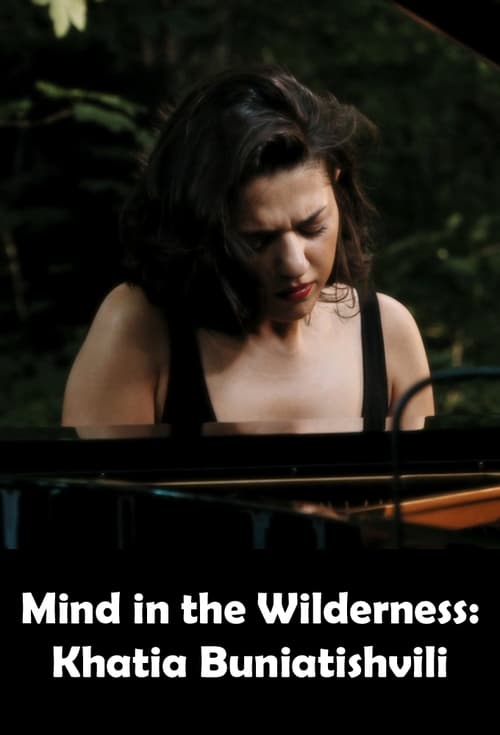
The film opens not as a conventional story with conflict and resolution, but as a performance piece wrapped in atmosphere: Khatia Buniatishvili enters a quiet forest near Berlin, where a wooden stage sits among trees and greenery like a temporary temple for music. The setting is deliberately hushed and intimate, and the camera treats the space as both concert hall and natural sanctuary, inviting the viewer to experience the performance as something physical, emotional, and almost elemental.
From the start, the film presents Khatia Buniatishvili not as a character in a drama but as the center of a living artistic world. She is introduced as a concert pianist whose playing is inseparable from movement, body, and expression, and the film frames her in that way: a musician who does not merely sit at the piano but inhabits the music with her whole presence. There is no fictional backstory to uncover, no hidden conspiracy, and no threat waiting in the shadows of the forest; instead, the "story" begins in the act of performance itself.
As the recital unfolds, the program becomes the structure of the film's emotional arc. The music is the forward motion. Each piece carries the film from one mood into another, building a sense of progression through sound rather than plot. The forest remains the constant visual backdrop, but the emotional landscape changes with every passage Khatia Buniatishvili plays, shifting between tenderness, intensity, reflection, and exuberance. The camera lingers on the contrast between the formal precision of the piano performance and the softness of the surrounding wilderness, making the stage feel both exposed and protected at once.
Interwoven with the performances are intimate interview segments in which Khatia Buniatishvili speaks about her musical upbringing, her career, and the works she performs in the program. These conversations function as the film's only real form of revelation, not because they expose secrets, but because they allow her to articulate the inner life behind the music. Through her reflections, the viewer learns how she understands her art: not as a detached technical exercise, but as a way of reaching people, of touching something deep inside them, and of communicating something larger than words. The tone is personal and direct, and the interviews give the recital a human frame, turning each performance into an extension of her own identity.
One of the few additional presences in the film is Gvantsa Buniatishvili, Khatia's older sister, who appears as a special guest for four-hand performances by Antonín Dvořák, Johannes Brahms, and Astor Piazzolla. Her arrival introduces the film's closest equivalent to a shared scene or relational turning point, though even this remains within the language of music rather than drama. The two sisters sit together at the piano, and their collaboration adds a layer of familial intimacy to the film's already personal tone. The four-hand works become moments of musical dialogue, with their phrasing and timing reflecting not confrontation but communion.
The film never turns toward conflict in the usual sense, because there is no antagonist to oppose Khatia Buniatishvili and no narrative crisis to resolve. There are no deaths, no murders, no betrayals, and no climactic revelations of the kind found in a fictional thriller or drama. Instead, the tension comes from performance itself: the vulnerability of playing live, the discipline required to sustain concentration, and the emotional risk of exposing one's inner life through interpretation. The forest setting heightens that sensation, making each note feel both fragile and defiant against the surrounding silence.
As the recital continues, the film emphasizes the physicality of music-making. Khatia Buniatishvili is shown as a performer whose body is deeply involved in the act of expression, and that physical presence becomes part of the storytelling. Her hands move with precision, her posture shifts with the demands of the score, and her face reflects concentration, release, and intensity in quick succession. The effect is to make the audience feel that the performance is not simply being observed but witnessed in real time, as if something fleeting and unrepeatable is being created in the forest air.
The interview material broadens that experience by grounding the performance in biography. When she speaks about her upbringing and career, the film suggests a life shaped by discipline, devotion, and a sustained commitment to musical excellence. These moments do not produce plot twists, but they do reframe what the viewer sees: the piano becomes a culmination of years of practice, family influence, and artistic ambition. Her comments on the pieces in the program give the recital an interpretive dimension, inviting the audience to hear the music not only as sound but as a conversation between composer, performer, and listener.
The collaboration with Gvantsa Buniatishvili carries special emotional weight because it places family relationship directly into the concert framework. Their four-hand pieces by Dvořák, Brahms, and Piazzolla feel like brief acts of shared memory, of synchronized breath and mutual trust. The film does not explain their relationship through exposition, but their coordination at the keyboard communicates closeness more effectively than words could. In a film otherwise focused on one artist, these passages quietly expand the emotional field and suggest that Khatia Buniatishvili's musical identity is also shaped through connection with others.
Visually, the forest near Berlin remains central throughout, and the film continually returns to its serene, natural textures: the trees, the open air, the wooden platform, the filtered light. The location is not just a backdrop but part of the film's meaning. It transforms the recital into an encounter between art and nature, order and wildness, structure and freedom. The stage looks temporary, as though it has been set down briefly in the woods for a ceremony that will vanish once the music ends. That transience gives the performance an understated poignancy, because the viewer knows this is not a permanent concert hall but a moment carved out of a living landscape.
Because the film is a concert documentary, its momentum comes from accumulation rather than plot escalation. The more Khatia Buniatishvili plays, the more the viewer is drawn into the physical and emotional rhythm of the recital. Her interpretations become the film's scenes, her pauses become transitions, and the changing character of each work creates a narrative of feeling rather than event. There are no disguises, no hidden motives, no revelations about secret identities, and no final confrontation to untangle. The film is honest about what it is: an immersive portrait of performance, framed by nature and deepened by conversation.
If there is a climax, it is musical rather than dramatic. It arrives in the intensity of the later performances, when the recital's emotional temperature has fully risen and the audience is asked to feel the culmination of everything that has come before. Khatia Buniatishvili's playing, paired with the visual quiet of the forest, creates a tension between outward stillness and inward force. The result is less a plot climax than an artistic peak: a moment when the viewer feels the full gravity of her expressive power and the concert's singular atmosphere.
The ending follows naturally from this structure. The final moments are not built around a surprise or resolution of a conflict, because none has been established. Instead, the film closes as the recital reaches its end, leaving behind the memory of the performances, the interviews, and the sensory impression of music flowing through a forest near Berlin. Khatia Buniatishvili's presence remains the final emotional note: poised, intense, and fully committed to the act of sharing music with her audience. The closing effect is contemplative rather than conclusive, as though the performance has briefly opened a space where art, landscape, and personal expression meet and then quietly separate again.
In the end, nothing is "solved" because nothing was broken. No one dies, no one betrays anyone, and no hidden truth is exposed as a last-minute shock. What remains is the portrait of an artist and the atmosphere she creates: a recital in the woods, an intimate set of reflections, and a rare sense of music as lived experience rather than staged entertainment. The film finishes by preserving that feeling, letting the final resonance of the piano hang in the air as the forest absorbs the silence that follows.
More Movies Like This
Browse All Movies →







What is the ending?
In the ending of "Mind in the Wilderness: Khatia Buniatishvili," Khatia performs a powerful piano piece that encapsulates her journey and emotional struggles. The film concludes with her reflecting on her experiences, showcasing her growth as an artist and individual.
As the final scenes unfold, Khatia is seen preparing for a significant performance. The atmosphere is charged with anticipation, and the camera captures her deep concentration and the weight of her emotions. She sits at the grand piano, her fingers poised above the keys, embodying both vulnerability and strength. The audience is silent, their eyes fixed on her, as she begins to play.
The music flows from her, a blend of passion and pain, resonating with the struggles she has faced throughout her life. Each note seems to tell a story, reflecting her journey through the wilderness of her mind and the challenges she has overcome. The camera alternates between close-ups of her expressive face and wide shots of the audience, who are visibly moved by her performance.
As the piece reaches its climax, Khatia's intensity grows. The music swells, and she pours her heart into every note, revealing the depth of her emotions. The audience is captivated, some with tears in their eyes, as they connect with the raw honesty of her expression. In this moment, Khatia transcends her fears and insecurities, fully embracing her identity as an artist.
The performance concludes with a powerful final chord, and the silence that follows is palpable. The audience erupts into applause, a wave of appreciation and admiration for her talent and vulnerability. Khatia stands, taking a moment to absorb the moment, her face a mixture of relief and joy. She bows deeply, acknowledging the support of those around her.
In the closing moments, the film shifts to Khatia reflecting on her journey. She walks through a serene landscape, symbolizing her newfound clarity and peace. The camera captures her serene expression, suggesting a sense of fulfillment and acceptance of her past. The film ends with her looking towards the horizon, embodying hope and the promise of new beginnings.
Throughout this ending, Khatia's character arc is completed. She has faced her inner demons, embraced her artistry, and found a sense of belonging within herself. The film leaves the audience with a sense of inspiration, highlighting the transformative power of music and the importance of self-acceptance.
Is there a post-credit scene?
The movie "Mind in the Wilderness: Khatia Buniatishvili" does not feature a post-credit scene. The film concludes its narrative without any additional scenes or content after the credits roll. The focus remains on the journey of Khatia Buniatishvili, her experiences, and her emotional connection to music throughout the film.
What motivates Khatia Buniatishvili to pursue her passion for music throughout the film?
Khatia Buniatishvili's motivation to pursue her passion for music is deeply rooted in her childhood experiences and her family's influence. The film showcases her early encounters with music, highlighting the emotional connection she has with the piano. Her determination is fueled by a desire to express herself and connect with her heritage, as well as a longing to overcome the challenges she faces as a young artist.
How does Khatia's relationship with her family influence her musical journey?
Khatia's relationship with her family plays a crucial role in shaping her musical journey. The film depicts her close bond with her mother, who supports her ambitions and encourages her to embrace her talent. However, there are also moments of tension, particularly with her father, who has high expectations. This dynamic creates a complex emotional landscape that drives Khatia to prove herself, both to her family and to the world.
What challenges does Khatia face in her career as a pianist?
Throughout the film, Khatia faces numerous challenges in her career as a pianist, including the pressure of competition, the struggle for recognition, and the emotional toll of performing. The film illustrates her battles with self-doubt and the fear of failure, as well as the physical demands of rigorous practice. These challenges are depicted through intense rehearsal scenes and performances that test her resilience and commitment to her art.
How does the film portray Khatia's growth as an artist?
The film portrays Khatia's growth as an artist through a series of pivotal moments that showcase her evolution. From her early performances filled with uncertainty to her later, more confident interpretations of complex pieces, the narrative highlights her journey of self-discovery. Key scenes illustrate her increasing mastery of the piano and her ability to convey deep emotions through her music, marking her transformation into a mature artist.
What role does the setting play in Khatia's story?
The setting plays a significant role in Khatia's story, with various locations reflecting her emotional state and artistic journey. The film features picturesque landscapes that symbolize her connection to her Georgian roots, as well as the contrasting environments of concert halls that represent the pressures of the music world. These settings enhance the narrative by visually representing Khatia's internal struggles and triumphs as she navigates her path as a pianist.
Is this family friendly?
"Mind in the Wilderness: Khatia Buniatishvili" is a documentary that explores the life and artistic journey of the Georgian pianist Khatia Buniatishvili. While the film primarily focuses on her music and personal experiences, there are a few aspects that may be considered potentially objectionable or upsetting for children or sensitive viewers:
-
Emotional Struggles: The film delves into Khatia's emotional challenges and the pressures of being a performer, which may be intense for younger audiences to understand.
-
Personal Reflections: There are moments of introspection where Khatia discusses her fears and insecurities, which could evoke strong emotions.
-
Cultural Context: The film touches on themes of identity and belonging, particularly related to Khatia's Georgian heritage, which may require some contextual understanding.
-
Visual Imagery: Some scenes may include stark or somber visuals that reflect Khatia's internal struggles, which could be unsettling for sensitive viewers.
Overall, while the film is centered around music and personal growth, its exploration of deeper emotional themes may not be suitable for very young children or those who are particularly sensitive to such topics.







