




Popular
What motivates the main character, a young man named Aiden, to embark on his journey in The Mountain?
How does Aiden's relationship with his mother evolve throughout the film?
What role does the mountain itself play in Aiden's personal growth?
Who is the character of the guide, and what impact does he have on Aiden's journey?
What significant event occurs during Aiden's climb that alters his perspective on life?
Should I watch it?
Ask Your Own Question

What is the plot?
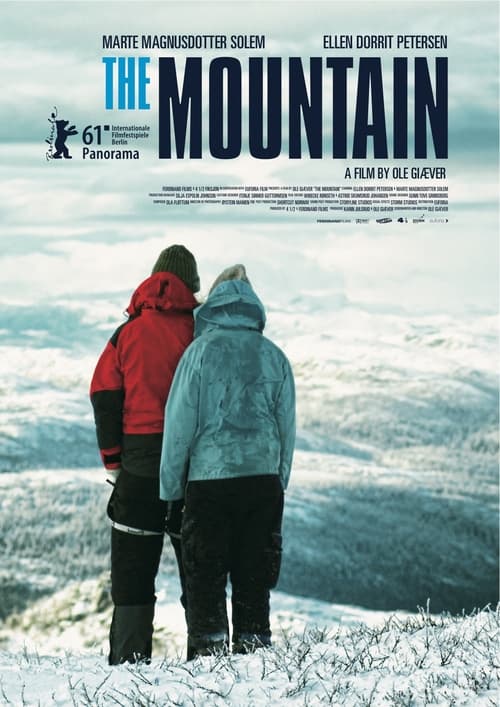
What you're asking for matches Killer Mountain (2011), not a separate film reliably identifiable as The Mountain (2011). The available sources show that this is a Syfy mountain-climbing creature thriller about Ward Donovan, the missing expedition, and the hidden truth on Gangkhar Puensum.
The story opens with the legend of Gangkhar Puensum in Bhutan, the world's highest unclimbed mountain, where local belief holds that above 6,000 meters is sacred ground reserved for the gods and strictly forbidden to climbers. The mountain's English nickname, "Killer Mountain," is not just a warning but a prophecy, because the film establishes that people who go there do not come back. Long before the main expedition, a prologue set in 1954 shows an earlier climbing party struck down on the mountain by an unseen force, and that buried history becomes the first shadow hanging over everything that follows.
Years later, another expedition vanishes on the same mountain, and the disappearance draws the attention of a wealthy, suspiciously determined businessman named Barton or Walter Burton depending on the source version of the synopsis. He hires veteran climber Ward Donovan--played by Aaron Douglas--to lead a rescue mission into the forbidden range. Ward has retired from serious climbing, and at first he refuses. He knows the mountain is nearly impossible, he knows the locals forbid the climb, and he has no interest in dragging a new team into a death trap. But Barton reveals the real reason Ward is being asked: Kate, Ward's ex-girlfriend and former climbing partner, was part of the missing expedition. That revelation changes everything. Ward's professional caution gives way to personal urgency, and he agrees to go back into the mountains in the hope of finding Kate alive.
Ward assembles a new team for the climb, including Chance, Dr. Nina, and Tyler, identified in some sources as the businessman's son and in others under the name Creighton. The shifting name does not change the basic dynamic: the expedition is not just a rescue mission, but also a test of Ward's judgment, the investors' greed, and the team's willingness to survive one another as much as the mountain itself. From the start, there is tension between the practical climbers and the rich sponsor's hidden agenda. The mountain is supposed to be about rescue, but the whispers around the expedition suggest something else entirely--something tied to the legend of Shambhala or Shangri-La, a fabled hidden kingdom said to offer wisdom, youth, wealth, or even immortality. That legend is the real bait. The missing climbers are only the excuse.
Once the team reaches Bhutan and moves toward the mountain, the atmosphere turns hostile and uncanny. The air thins, the weather worsens, and the local warnings suddenly feel less like folklore and more like military intelligence. At base camp, they recover or hear a desperate final transmission from Kate's group, and the message makes clear that the missing climbers were attacked by something terrible rather than lost to ordinary weather. The radio fragments and the evidence on the mountain create the film's first major twist: this is not simply a rescue story. The previous expedition has uncovered something hidden on the mountain, and whatever it is, it is still there.
As Ward and his team climb higher, the mountain begins to reveal its true nature. In some descriptions, the hidden force is a dragon or monster; in others, it is tied to the drac, a legendary guardian creature of the sacred peak. The film keeps the exact mythology just vague enough to turn the mountain into a living predator. The expedition moves through blinding snow and broken ice, and the sense of isolation becomes total. The climb is no longer a journey upward but a trap tightening around them. One by one, team members begin to die or disappear, and each loss confirms that the old legends are real in the worst possible way.
The first deaths from the earlier expedition are revealed through the remains they discover on the mountain, turning the search into a grim excavation of failure. The climbers who went before them did not simply vanish; they were killed, likely by the creature or force guarding the mountain's secret. These discoveries are important because they strip away any remaining illusion that the rescue can be clean or heroic. The team is climbing into a graveyard.
The present-day expedition then begins to suffer its own casualties. Reports and reviews do not always agree on the exact order of every death, but they are consistent on the core point: several team members are picked off one by one by the mountain's hidden monsters or dragon-like guardian. The helicopter also becomes a death scene when one of the creatures takes it down, proving that escape by air is just as impossible as escape on foot. This escalation shifts the story from suspense to survival horror. The mountain is not merely dangerous; it is actively hunting them.
Ward's emotional center remains Kate. The search for her gives the film its personal drive, and every new clue about the missing expedition makes her seem more and more like the key to everything. The sources suggest that by the time Ward reaches the deeper hidden structures on the mountain, he learns that the expedition was never just about climbing and never just about rescue. Barton's real goal is to find Shambhala, the legendary place said to hold the secret of eternal life. The mountain is therefore both a sacred space and a treasure vault, and the expedition's collapse becomes a moral judgment on the greed that brought them there.
The abandoned temple complex discovered in the snow is one of the story's most important revelations. Rather than finding simple ruins, the team finds signs of a buried civilization and a route toward the mountain's hidden heart. This discovery strengthens the implication that the forbidden mountain is protected by design, not coincidence. The temple and the legends fit together: the mountain is not empty, and humanity was never meant to take what is inside it. The more the team pushes forward, the more the film frames Barton's mission as a reckless theft disguised as a rescue.
The final stretch becomes a desperate race against death, altitude, weather, and the creature stalking them in the snow. The remaining survivors are forced into direct confrontations with the mountain's guardian, and the outcome of each clash is fatal for someone. The earlier faith in technical climbing skill disappears. Ropes, ice axes, and training mean little against something that knows the mountain better than they do. Ward, as the only experienced climber with enough judgment to understand the danger, becomes the story's true center of resistance. He is no longer simply trying to retrieve Kate; he is trying to get anyone out alive.
The film's climax comes when the expedition reaches the threshold of the mountain's hidden truth, where the promise of immortality and the threat of annihilation sit side by side. Barton's obsession is exposed as the engine of the entire disaster. He does not merely want answers; he wants access, profit, and power. The rescue mission has been a cover for a greedy ascent into a sacred place. That revelation recasts every prior decision, including the use of Ward and the presence of the scientists, as part of a calculated exploitation of the mountain's legend.
The surviving climbers are then forced to confront the creature directly and survive the final collapse of the expedition. The mountain itself, the hidden temple, and the guardian force converge into one last violent struggle. As the climbers are killed off, the story makes clear that the mountain will not be conquered. Whoever survives does so not by winning but by escaping. In the final movement, Ward's personal mission and the larger supernatural threat merge: he must save Kate if he can, but the mountain's power and Barton's ambition make a clean rescue impossible.
The ending is not a triumphant discovery but a ruinous retreat. The sources consistently indicate that only some members of the expedition make it back, while others are consumed by the mountain's monster or lost in the disaster. Barton's plot to reach Shambhala fails because the mountain resists exploitation, and the expedition's deaths are the price of trying to turn a sacred, forbidden place into a prize. The final note of the story is that the mountain remains what the locals always said it was: a place protected by old power, where trespass is punished. Ward's emotional arc resolves not in conquest but in survival, and the film ends with the terrible certainty that Gangkhar Puensum keeps its secrets.








What is the ending?
In the ending of "The Mountain," the protagonist, a young man named Lee, confronts the emotional and physical challenges posed by his father's expectations and the harsh realities of life. The film culminates in a poignant moment where Lee must decide how to navigate his relationship with his father and his own identity. The story concludes with a sense of unresolved tension, leaving Lee at a crossroads.
As the film approaches its conclusion, we find Lee grappling with the weight of his father's ambitions and the expectations placed upon him. The setting shifts to the mountain, a symbol of both challenge and aspiration. Lee's internal struggle is palpable as he reflects on his father's relentless pursuit of success and the toll it has taken on their relationship.
In a climactic scene, Lee stands at the base of the mountain, looking up at its imposing peak. The camera captures the vastness of the landscape, emphasizing Lee's feelings of insignificance and the daunting task ahead. He recalls moments from his childhood, filled with both admiration and resentment towards his father, who has always pushed him to achieve greatness. This internal conflict is mirrored in the physical challenge of the mountain itself.
As Lee begins his ascent, the audience witnesses his determination but also his vulnerability. Each step is fraught with memories of his father's harsh words and the pressure to conform to an ideal that feels increasingly unattainable. The mountain, with its rugged terrain and unpredictable weather, serves as a metaphor for Lee's journey toward self-discovery and acceptance.
In a pivotal moment, Lee reaches a ledge where he pauses to catch his breath. Here, he reflects on the sacrifices made by both himself and his father. The emotional weight of their relationship hangs heavy in the air, and Lee's face reveals a mixture of frustration and longing for approval. He realizes that the mountain is not just a physical challenge but a representation of the emotional barriers he must overcome.
As the film nears its end, Lee reaches the summit, a moment that should be triumphant but is instead tinged with ambiguity. He stands at the peak, looking out over the vast expanse before him, feeling both a sense of accomplishment and an overwhelming sense of isolation. The camera lingers on his expression, capturing the complexity of his emotions as he grapples with the realization that reaching the top does not necessarily equate to fulfillment.
In the final scenes, Lee descends the mountain, a journey that symbolizes his return to reality and the unresolved nature of his relationship with his father. The film closes with Lee standing at the base once more, contemplating his next steps. The audience is left with a sense of uncertainty about Lee's future and the dynamics of his relationship with his father, highlighting the ongoing struggle between personal ambition and familial expectations.
Ultimately, the fate of Lee is one of introspection and the search for identity, while his father remains a figure of both inspiration and conflict. The film concludes without a clear resolution, emphasizing the complexities of their relationship and the challenges of navigating personal aspirations in the shadow of parental expectations.
Is there a post-credit scene?
The movie "The Mountain," produced in 2011, does not contain a post-credit scene. The film concludes its narrative without any additional scenes or content after the credits roll. The story wraps up with a focus on the emotional and psychological journeys of the characters, leaving the audience to reflect on the themes presented throughout the film.
What motivates the main character, a young man named Aiden, to embark on his journey in The Mountain?
Aiden is driven by a deep sense of loss and a desire to connect with his deceased father. His father's passion for climbing and the mountains serves as a catalyst for Aiden's journey, as he seeks to understand his father's legacy and confront his own feelings of grief and abandonment.
How does Aiden's relationship with his mother evolve throughout the film?
Aiden's relationship with his mother is strained at the beginning of the film, as she struggles with her own grief and the emotional distance that has developed between them. As Aiden embarks on his journey, he begins to understand her pain, leading to moments of reconciliation and a deeper emotional connection as they both confront their shared loss.
What role does the mountain itself play in Aiden's personal growth?
The mountain serves as both a physical and metaphorical challenge for Aiden. As he faces the dangers and difficulties of climbing, he also confronts his inner fears and insecurities. The mountain becomes a symbol of his journey towards self-discovery, resilience, and acceptance of his father's death.
Who is the character of the guide, and what impact does he have on Aiden's journey?
The guide, an experienced climber, plays a crucial role in Aiden's journey by providing not only physical guidance but also emotional support. He challenges Aiden to push beyond his limits, helping him to confront his fears and ultimately leading him to a greater understanding of himself and his father's legacy.
What significant event occurs during Aiden's climb that alters his perspective on life?
During a critical moment in Aiden's climb, he faces a life-threatening situation that forces him to confront his mortality and the weight of his unresolved feelings about his father. This harrowing experience becomes a turning point for Aiden, leading him to a profound realization about the importance of embracing life and the memories of those he has lost.
Is this family friendly?
The Mountain, produced in 2011, contains several elements that may not be suitable for children or sensitive viewers. Here are some potentially objectionable or upsetting aspects:
-
Themes of Grief and Loss: The film explores heavy themes surrounding death and the emotional turmoil that follows, which may be distressing for younger audiences.
-
Intense Emotional Scenes: There are moments of deep emotional conflict and despair that could be overwhelming, particularly for sensitive viewers.
-
Depictions of Isolation: The characters experience significant isolation and loneliness, which may resonate negatively with some viewers.
-
Mature Subject Matter: The film touches on complex adult themes, including existential questions and personal struggles, that may be difficult for children to understand.
-
Visual Imagery: Some scenes may contain stark or unsettling imagery that could be disturbing, depending on the viewer's sensitivity.
Overall, while the film is not overtly graphic, its emotional weight and thematic depth may not be appropriate for a family-friendly viewing experience.









