





Popular
What challenges does the character Ricky face throughout the film?
How does the relationship between Ricky and his mother evolve during the film?
What role does the subway play in Ricky's journey?
Who are the key supporting characters that Ricky meets during his adventure?
What internal conflicts does Ricky experience while lost in the city?
Should I watch it?
Ask Your Own Question

What is the plot?
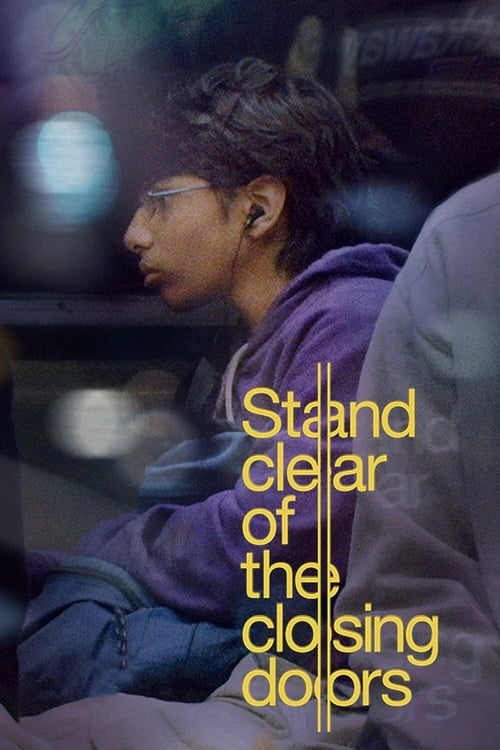
Ricky Garcia is a 13-year-old autistic boy living in Rockaway Beach, Queens, with his mother, Mariana, and his older sister, Carla, while his father, Ricardo Sr., is mostly absent from the home. The story opens in late October 2012, with the city still ordinary on the surface but already shadowed by Hurricane Sandy's approach, and the film quickly establishes Ricky's rigid routines, his sensitivity to the world around him, and his deep fascination with dragons. He is not the kind of child who naturally drifts through a day; he needs structure, repetition, and supervision, and Mariana knows this better than anyone because she works hard as a maid and carries the constant fear that one disruption could send Ricky spiraling away from safety.
The first scenes at home make that fragility painfully clear. Mariana is exhausted from work and from life itself, Carla is teenage, impatient, and self-absorbed, and Ricardo Sr. is not there in the way he should be. Ricky is shown as bright but isolated, living partly in his own imagination and partly in a world of routines that keep him grounded. One of the film's recurring details is his dragon obsession, which is not treated as a simple quirk but as a window into how he organizes meaning: dragons are powerful, beautiful, and controllable in a way the real world is not. His drawings and fantasies suggest that he has built a private inner refuge, and the film keeps returning to that imagery as though it is the key to his emotional life.
The crisis begins on an ordinary school day that quickly becomes disastrous. Carla, who usually helps bring Ricky home, fails to pick him up after school because she chooses to spend time with a friend instead. When she later tries to minimize it, she tells her mother that Ricky is thirteen and can decide for himself when and how he'll get home, but that excuse only deepens Mariana's anger because she understands that Ricky's age does not make him independent in the way Carla imagines. The late afternoon stretches into panic when Mariana realizes Ricky never arrived home, and the family's private unease becomes a full-scale emergency.
Ricky's disappearance is triggered by a small but fateful sensory lure. While walking alone after school, he becomes captivated by a stranger's denim jacket or sweatshirt, which bears a red dragon image, later described as an Ouroboros, the dragon eating its own tail. The image seizes him with almost mythic force. Ricky follows the stranger into the New York City subway, and the moment he crosses into that underground world, the film changes into an odyssey. He is not simply lost in a transit system; he is absorbed by it. The subway's noise, motion, fluorescent light, and constant movement become an intense sensory environment that can overwhelm most people but somehow gives Ricky a strange kind of focus. He rides line after line, platform after platform, through Manhattan and back again, remaining in motion while above ground his family begins a desperate search.
The film divides itself between Ricky's journey and the family's frantic efforts to locate him. Up on the surface, Mariana realizes immediately that something is terribly wrong, but her undocumented status means she cannot freely turn to the authorities without risking her own exposure. That legal fear gives the movie its sharpest social edge: the family is trapped not only by Ricky's disappearance but by the reality that calling the police may endanger them as much as help them. Mariana and Carla stay in the apartment at first, torn between anger, guilt, and hope, and then Mariana begins to widen the search in whatever ways are available to her. She roams the neighborhood and the beach, one of Ricky's favorite places, scanning the world for the child who has vanished into it. The beach settings matter because they emphasize the family's location at the edge of the city, a liminal place where land meets water and, in the background, the storm is also coming in from the sea.
As Ricky travels, the subway becomes a kind of underground universe of strangers, passing faces, and accidental guardians. He moves through the city with no clear destination, yet the film presents his wandering as coherent from his point of view, because each station and car offers a fresh sensory event to study. He watches commuters, listens to announcements, and drifts between danger and shelter. The cars are crowded but anonymous, public yet isolating. At times, he appears calm; at others, he is vulnerable in ways that the people around him barely notice. The effect is to make the subway feel both menacing and strangely protective, a place where Ricky can disappear but also survive.
One of the movie's strongest emotional undercurrents is the contrast between Ricky's inner world and the ordinary adult world around him. The subway sequence is not played as a conventional thriller chase, but tension builds steadily because the audience understands that every transfer, every wrong turn, and every hour spent underground moves him farther from home. Mariana's search above ground grows more desperate by the hour. She is furious at Carla, terrified for Ricky, and increasingly forced to confront the fact that no one in the family is well-equipped to handle this crisis. Carla's guilt hardens into defensiveness, and the conflict between mother and daughter becomes one of the film's key confrontations: Mariana blames Carla for leaving Ricky behind, and Carla's immaturity is exposed in the face of real responsibility.
The looming hurricane intensifies everything. Hurricane Sandy is not just weather in the background; it becomes part of the film's emotional structure, a slow, inexorable pressure closing in on the city while Ricky remains lost beneath it. As the storm approaches, the subway system becomes more consequential because it is both the place Ricky is trapped and the infrastructure the storm threatens to disable. The city feels like it is tightening around him, and the title's warning--stand clear of the closing doors--takes on an almost fatal resonance, as though the world itself is trying to shut him out or lock him in.
The film is careful not to turn Ricky into a simple victim. Along the way, he forms fleeting, wordless connections with people he encounters, and the journey reveals both his vulnerability and his resilience. He is observant, adaptable in his own way, and drawn to patterns and images that make sense to him. The dragon motif returns repeatedly, echoing the Ouroboros symbol and suggesting a cycle of departure and return, self-creation and self-consuming fear. Ricky's movement through the subway becomes a kind of accidental self-discovery: he is lost, but the film also shows him making his way through a world that his routine-bound life had not prepared him to navigate on his own.
Back above ground, Mariana's fear grows into exhaustion and helplessness. Her undocumented status continues to narrow her choices, and the film never lets the audience forget that this family's crisis is compounded by social vulnerability. She cannot simply rely on institutions to recover Ricky. The search is personal, improvised, and emotionally brutal. Carla, meanwhile, cannot fully escape her role in the disaster. Her failure to do the one thing she normally does--bring her brother home--becomes the moral center of her conflict with Mariana. Ricardo Sr.'s absence, which has existed quietly in the background, now becomes another wound. The father is not the immediate cause of the crisis, but his distance underlines how much the family depends on Mariana's overwork and on routines that break far too easily.
As the days pass, the movie's tension comes less from external action than from accumulation: hours of searching, hours of riding, the city slowly going into storm mode, the family's fear hardening into something almost unbearable. The subway odyssey stretches on for what is described as about eleven days, and the scale of that duration gives the story a mythic quality even as it remains grounded in the very concrete geography of New York transit. Ricky rides the A train and other lines through Manhattan and back, observing the world without truly joining it. The film's restraint is crucial here; it does not manufacture a big melodramatic confrontation or a sensational rescue. Instead, it lets the emotional pressure build out of separation, guilt, and uncertainty.
The climax arrives as Hurricane Sandy nears and the city itself becomes less stable. The subway, which has been Ricky's strange refuge, now feels increasingly precarious as the storm threatens to shut it down. Mariana continues searching, and the family's crisis converges on the fact that Ricky is still in transit while the world above him is changing fast. The final movement emphasizes endurance rather than catharsis. There is no death in the story, no tragic violence, and no shocking twist that resolves the nightmare through loss. Instead, the film's revelation is that survival itself becomes the achievement: Ricky's odyssey ends not in destruction but in an understated, emotionally charged resolution that brings the separate strands of the story back together.
By the end, the film makes clear that its deepest conflict was never merely about a lost child. It is about a family held together by routine, love, exhaustion, and fear, and about how quickly that structure collapses when one piece goes missing. Mariana's helplessness, Carla's guilt, Ricky's drift through the underground, and the father's absence all come together in a final emotional shape that feels both realistic and eerie, as if the city's subway labyrinth has temporarily swallowed the family whole before releasing them back into a world made harsher by the storm. The ending does not offer a triumphant victory; it offers a fragile return, a sense that Ricky's journey has changed the family and exposed all of its fault lines while still leaving them alive and, in some limited way, together.








What is the ending?
In the ending of "Stand Clear of the Closing Doors," the film culminates with the character of Ricky, a young boy with autism, being found after a harrowing journey through the subway system. His mother, who has been desperately searching for him, finally reunites with him. The film closes on a note of hope, as they embrace, suggesting a renewed connection and understanding between them.
Now, let's delve into the ending in a more detailed narrative fashion.
As the film approaches its climax, the scene shifts to the bustling New York City subway system, where Ricky, having wandered away from his mother, is lost. The camera captures the chaotic energy of the subway, filled with commuters, the sounds of trains arriving and departing, and the flickering lights of the underground. Ricky, portrayed with a sense of innocence and curiosity, navigates the maze of platforms and tunnels, his face a mixture of wonder and confusion.
Meanwhile, his mother, a single parent struggling with the challenges of raising a child with autism, is depicted in a state of frantic desperation. The film shows her pacing the platform, her eyes wide with fear and anxiety. She calls out his name, her voice trembling, as she envisions the worst possible scenarios. The emotional weight of her search is palpable, and the audience can feel her deep love and concern for her son.
As the narrative unfolds, we see Ricky interacting with various strangers in the subway. He is drawn to the vibrant world around him, fascinated by the trains and the people. However, his innocence also makes him vulnerable, and the film captures moments of tension as he narrowly avoids danger. The cinematography emphasizes his isolation amidst the crowd, highlighting his unique perspective of the world.
In a pivotal moment, Ricky finds himself in a subway car, surrounded by a mix of commuters who are oblivious to his plight. The camera focuses on his face, revealing a blend of excitement and fear as the train speeds through the dark tunnels. The audience feels the urgency of his situation, knowing that his mother is desperately searching for him.
The climax reaches its peak when Ricky's mother finally receives a call from the police, who have found her son. The scene shifts to a police station, where she rushes in, her heart racing. The moment she sees Ricky, the world around them fades away. The camera captures the raw emotion of their reunion, as she kneels down to embrace him tightly. Tears stream down her face, a mixture of relief and overwhelming love. Ricky, initially startled, slowly wraps his arms around her, signaling a moment of connection that had been strained throughout the film.
As they leave the station, the film closes with a poignant scene of them walking together through the streets of New York. The camera lingers on their hands intertwined, symbolizing a renewed bond. The final shot captures the bustling city around them, contrasting their intimate moment with the chaos of the world, suggesting that while challenges remain, there is hope for understanding and connection.
In summary, the fates of the main characters are intertwined in this emotional conclusion. Ricky, having faced the vastness of the city alone, is finally safe in his mother's arms, while she, having endured the fear of losing him, finds solace in their reunion. The film ends on a hopeful note, emphasizing the importance of family, understanding, and the journey of navigating life's challenges together.
Is there a post-credit scene?
The movie "Stand Clear of the Closing Doors," produced in 2014, does not have a post-credit scene. The film concludes its narrative without any additional scenes or content after the credits roll. The story focuses on the journey of a young boy with autism, Ricky, who goes missing in the subway system of New York City, and the emotional turmoil experienced by his mother, as well as the various individuals who intersect with his journey. The film wraps up its themes of connection, isolation, and the challenges faced by those with disabilities without extending into a post-credit sequence.
What challenges does the character Ricky face throughout the film?
Ricky, a 13-year-old boy with autism, faces numerous challenges throughout the film, primarily stemming from his struggle to communicate and connect with the world around him. His journey begins when he becomes separated from his mother on the subway, leading him into the vast and often intimidating landscape of New York City. As he navigates this unfamiliar environment, he encounters various obstacles, including the dangers of the city, the indifference of strangers, and his own internal fears and anxieties. His experiences highlight his vulnerability and the difficulties he faces in expressing his needs and emotions.
How does the relationship between Ricky and his mother evolve during the film?
Ricky's relationship with his mother, who is deeply concerned for his well-being, is central to the narrative. Initially, there is a sense of tension and misunderstanding between them, as she struggles to cope with the challenges of raising a child with autism. When Ricky goes missing, her desperation and fear become palpable, driving her to search for him throughout the city. As the story unfolds, the film explores her emotional turmoil and the lengths she is willing to go to find her son, ultimately revealing the depth of her love and the complexities of their bond.
What role does the subway play in Ricky's journey?
The subway serves as a critical backdrop for Ricky's journey, symbolizing both the chaos of the city and the isolation he feels. After becoming separated from his mother, Ricky finds himself navigating the subway system, which is both a source of danger and a means of exploration. The underground tunnels and trains represent his internal struggles, as he grapples with his fears and the overwhelming sensory experiences of the bustling city. The subway also acts as a catalyst for his encounters with various characters, each reflecting different aspects of society and human connection.
Who are the key supporting characters that Ricky meets during his adventure?
Throughout his journey, Ricky encounters several key supporting characters who impact his experience in the city. One notable character is a homeless man who offers Ricky guidance and companionship, providing a glimpse into the struggles of those living on the fringes of society. Another significant figure is a young girl who befriends Ricky, showcasing the innocence of childhood and the potential for connection despite their differences. Each character adds depth to Ricky's journey, highlighting themes of empathy, understanding, and the human experience.
What internal conflicts does Ricky experience while lost in the city?
As Ricky navigates the city alone, he experiences profound internal conflicts that reflect his emotional state. He grapples with feelings of fear and confusion, often overwhelmed by the noise and chaos around him. His autism amplifies these sensations, leading to moments of panic and withdrawal. Simultaneously, there is a yearning for connection and safety, as he longs for his mother's presence. These internal struggles manifest in his interactions with the environment and the people he meets, illustrating his desire to find his place in a world that often feels alien and unwelcoming.
Is this family friendly?
"Stand Clear of the Closing Doors" is a film that explores complex themes and emotional struggles, which may not be suitable for younger audiences or sensitive viewers. Here are some potentially objectionable or upsetting aspects:
-
Mental Health Issues: The film delves into the challenges faced by individuals with mental health conditions, which may be distressing for some viewers.
-
Family Struggles: There are scenes depicting familial conflict and emotional distress, highlighting the struggles of a family dealing with a member's mental health.
-
Isolation and Loneliness: The protagonist experiences feelings of isolation, which can evoke strong emotions and may be upsetting for sensitive viewers.
-
Urban Environment: The film is set in a gritty urban landscape, which includes scenes of public transportation and the challenges of navigating city life, potentially overwhelming for some.
-
Emotional Turmoil: Characters experience significant emotional pain and turmoil, which may resonate deeply and provoke discomfort.
These elements contribute to the film's overall tone and message, making it more suitable for mature audiences.