

















Popular
What is the significance of the lie that the main characters tell each other?
How do the main characters, Juliette and Antoine, first meet?
What role does Juliette's family play in the story?
How does Antoine's profession affect his relationship with Juliette?
What are the main obstacles that Juliette and Antoine face in their relationship?
Should I watch it?
Ask Your Own Question

What is the plot?
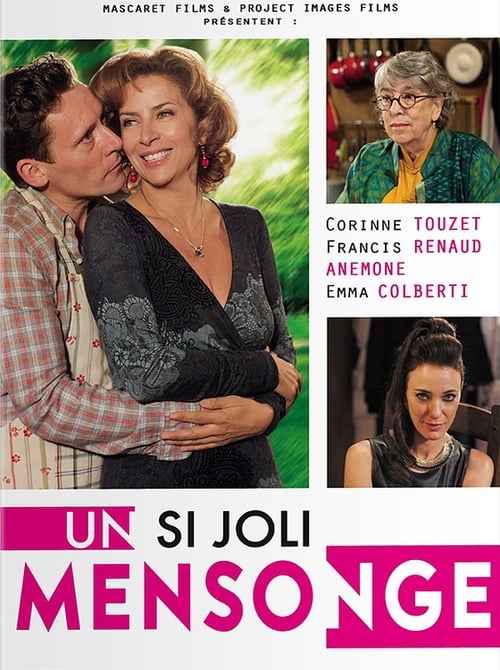
Christine, a 50-year-old dermatologist who still looks years younger than she is, spends the film trying to keep one lie alive long enough for it to become truth. The lie begins the moment she meets Bruno, a comic-book writer who is immediately drawn to her beauty, her calm confidence, and the way she seems untouched by time. She tells him she is 42, not 50, and that single number becomes the fragile hinge on which everything turns. What starts as flirtation grows into an affair, then into a desperate emotional trap, because Bruno quickly decides that Christine is the woman he wants to build a future with. He does not just want romance; he wants a child. Christine, who has been raising her daughter Sophie alone and who cannot bear the idea of losing the possibility of maternity, hears this wish as both a promise and a threat.
At the beginning, Christine is already facing the truth she has spent years trying not to name. She visits her gynecologist, who is also her close friend, and is told that she is menopausal. The diagnosis lands like a quiet catastrophe. Christine reacts not with acceptance but with resistance, almost indignation, as if the body has betrayed her by refusing to stay open to the future she still imagines for herself. This emotional wound sits underneath every scene that follows. She wants to be desired, but she also wants to remain a woman who can still begin again. Her lie to Bruno is not only vanity; it is a defense against aging, grief, and the humiliating certainty that time is closing in.
Six months earlier, the story has already been moving toward this crisis. Christine takes Sophie to see her friend Gwendoline at a comic-book signing by Bruno. In that public, informal space, the first thread of attraction is spun. Bruno notices Christine at once. The setting matters: it is a place of signing tables, conversation, and social performance, and Christine is already, in a sense, performing a younger version of herself. The camera and the mood linger on the spark between them, the kind of instant recognition that makes everyone else in the room seem to recede. Soon after, Christine and Bruno find themselves at a restaurant with Bruno's daughter Julie, his partner Céline, and friends including Frédéric. The social gathering creates a charged, awkward tension. Christine slips into the conversation with disarming ease, then deepens the deception by implying that she is 42 and has been alone for a long time. Bruno accepts the image she gives him, and the lie takes root.
From that moment, the affair unfolds with growing urgency. Bruno is enthusiastic, warm, and increasingly attached. He is not merely infatuated; he is emotionally invested in Christine's future. He speaks of having a son, of creating a new life together, of moving from passion into family. That desire should be joyful, but for Christine it becomes terrifying. She knows the child he imagines may never be possible in the way he expects, and she knows that every affectionate gesture is now sharpened by the danger of exposure. The film's tension comes from watching her manage two incompatible realities at once: the intimacy she craves with Bruno and the factual truth of her age and menopause.
As the relationship deepens, Bruno's attachment only makes the lie more dangerous. Christine has to keep inventing small evasions, and every one of them increases the stakes. Bruno sees a woman who seems vital, sensual, and available for a future he has already begun to picture. Christine sees the same future collapsing under the weight of the number 50, the biological finality of menopause, and the dread that she will be discarded the moment Bruno learns the truth. Her fear is not abstract. She has already spent years doing everything alone, and her bond with Sophie shows how much of her identity is built around resilience, care, and control. Bruno threatens that structure because he makes her want something she can no longer guarantee.
The conflict intensifies around a family weekend and reunion tied to Bruno's relatives. This is where the film turns from romantic deception into social nightmare. Christine is drawn into a dense family gathering, a space loaded with old loyalties, competing expectations, and unresolved history. Bruno's mother dominates the atmosphere, steering conversations and setting the tone with the force of someone used to control. The presence of Bruno's former partner adds another layer of pressure, because Christine is forced to confront the life Bruno already had before her and the emotional shadow of that past. The situation becomes even more suffocating with the engagement of "their" daughter and the arrival of the broader family, transforming the weekend into a ritual of exposure. What should be a chance to fold into Bruno's life becomes the opposite: a trap that amplifies every concealed detail and makes honesty feel almost impossible.
Christine enters this gathering already on edge, carrying the knowledge that the truth is now unavoidable. The more Bruno's family treats her as if she belongs in his future, the more unbearable the lie becomes. She wants to tell him who she really is. She wants to confess that she is not 42, that she is 50, and that the body he imagines as fertile is already in menopause. But the timing is cruel. Every attempt to speak seems to collide with another interruption, another obligation, another social performance demanded by the weekend. Bruno's mother's presence is especially destabilizing; it adds a layer of judgment to the room, as if Christine is being tested not just as a lover but as a possible daughter-in-law, mother, and heir to family continuity. Her silence grows heavier with each scene.
The dramatic engine of the film is that Bruno is not simply deceived by numbers. He is deceived by the fantasy that Christine's youthfulness represents. He believes she can give him the kind of shared future he wants, and he begins to anchor that hope in concrete dreams of children. Christine, meanwhile, is torn between desire and shame. She wants to remain the woman Bruno loves, but she also cannot bear to be reduced to her age or to the biological verdict delivered by her gynecologist. The truth is not only that she is older than she claimed; it is that she feels herself to be at the edge of the life Bruno is imagining. That knowledge makes every affectionate conversation feel like a countdown.
The revelation itself arrives not as a single neat confession but as the unavoidable collapse of all the false arrangements Christine has built. During the family celebration, with all the pressures converging, the lie is finally forced toward the surface. Christine can no longer sustain the version of herself she has created. The atmosphere of the reunion turns from festive to hostile, from convivial to humiliating, because once the age lie is exposed, everything else becomes suspect. Bruno is left to confront not only the factual deception but the emotional meaning of it: he has been in love with a woman who has been terrified of telling him the truth. Christine's pain is not erased by that exposure; if anything, it becomes sharper, because her silence has been motivated by fear rather than malice, and yet the consequences are just as destructive.
The film's emotional climax lies in the collision between Bruno's desire for a child and Christine's biological reality. The revelation that she is menopausal gives the relationship its final tragic shape. Bruno has attached his future to a possibility Christine cannot fulfill. Whether he feels anger, shock, grief, or a combination of all three, the result is the same: the romance is shattered by time itself. The conversation that should have saved them comes too late. The confession does not restore trust; instead it exposes how completely they have been living in different temporal worlds. Bruno has been moving toward a shared tomorrow, while Christine has been trying to hold together a present that is already slipping away.
No deaths are indicated in the available material, and none are clearly supported by the plot information available here. The film's catastrophe is emotional and relational rather than literal. Its damage is measured in broken trust, shattered fantasies, and the humiliation of being seen truthfully at the worst possible moment. The lie that seemed small at first--a seven-year age gap--reveals itself as enormous because it touches the deepest fears of both characters: his fear of building a future with no child, her fear of becoming invisible to desire and useless to love.
By the end, the family gathering has become the place where Christine's hope collapses into the truth she has tried to outrun from the start. Bruno is forced to reevaluate everything he thought he knew about her, and Christine is left facing the consequences of having tried to preserve love through deception. The final effect is one of sadness more than scandal. What ruins the relationship is not only the lie, but the cruel honesty of aging, fertility, and the impossibility of controlling another person's future expectations. Christine's story closes as a quiet tragedy of desire versus time: she wants to be loved without being measured, but the world insists on counting.

What is the ending?
In the ending of "Un si joli mensonge," the main characters confront the truths behind their lies. The film concludes with a series of revelations that lead to a resolution of their intertwined relationships, ultimately highlighting the importance of honesty and the complexities of love.
As the film approaches its climax, we find ourselves in a picturesque setting where the characters gather for a final confrontation. The atmosphere is tense, filled with unspoken emotions and unresolved conflicts. The protagonist, who has been living a lie, is faced with the consequences of their deception.
In a pivotal scene, the protagonist's partner discovers the truth about the lies that have been woven throughout their relationship. This moment is charged with raw emotion, as the partner grapples with feelings of betrayal and confusion. The protagonist, feeling the weight of their actions, attempts to explain their motivations, revealing a deep-seated fear of vulnerability and rejection.
As the confrontation unfolds, other characters who have been affected by the lies also come to the forefront. Each character's reaction adds layers to the emotional landscape, showcasing a spectrum of hurt, anger, and ultimately, a desire for understanding. The setting shifts from the initial confrontation to a more intimate space where the characters can express their feelings more openly.
In the final moments, the protagonist and their partner share a heartfelt dialogue, where they both acknowledge the pain caused by the lies but also the love that still exists between them. This exchange is pivotal, as it signifies a turning point where they choose to confront their issues rather than run away from them.
The film concludes with a sense of hope. The characters, having faced their truths, begin to rebuild their relationships on a foundation of honesty. The protagonist, now more self-aware, understands the importance of being truthful, not just to others but to themselves.
As the credits roll, we see glimpses of the characters moving forward, suggesting that while the journey of love is fraught with challenges, it is also filled with the potential for growth and redemption. Each character's fate is intertwined with the lessons learned from their experiences, leaving the audience with a sense of closure and the belief that love can endure even the most difficult trials.
Is there a post-credit scene?
In the movie "Un si joli mensonge," there is no post-credit scene. The film concludes its narrative without any additional scenes after the credits roll. The story wraps up with the main characters resolving their conflicts and misunderstandings, leaving the audience with a sense of closure regarding their journeys. The focus remains on the emotional arcs and relationships developed throughout the film, rather than extending the story further in a post-credit sequence.
What is the significance of the lie that the main characters tell each other?
The lie serves as a catalyst for the development of the relationship between the two main characters, revealing their vulnerabilities and desires. It creates a complex web of emotions that drives the narrative forward.
How do the main characters, Juliette and Antoine, first meet?
Juliette and Antoine meet in a chance encounter that is both humorous and awkward, setting the tone for their relationship. Their initial interaction is filled with misunderstandings that highlight their contrasting personalities.
What role does Juliette's family play in the story?
Juliette's family adds layers of complexity to her character and the plot. Their expectations and dynamics create tension, influencing her decisions and ultimately impacting her relationship with Antoine.
How does Antoine's profession affect his relationship with Juliette?
Antoine's profession as a successful architect shapes his worldview and his approach to relationships. His ambition and dedication to his work often clash with his emotional needs, creating conflict in his budding romance with Juliette.
What are the main obstacles that Juliette and Antoine face in their relationship?
Juliette and Antoine face several obstacles, including their initial lies, personal insecurities, and external pressures from family and society. These challenges test their commitment to each other and force them to confront their true feelings.
Is this family friendly?
"Un si joli mensonge" is a romantic comedy that generally maintains a light-hearted tone, making it suitable for family viewing. However, there are a few aspects that might be considered objectionable or upsetting for children or sensitive viewers:
-
Mature Themes: The film explores themes of love, deception, and relationships, which may include discussions or situations that are more appropriate for older audiences.
-
Romantic Situations: There are scenes that involve romantic tension and flirtation, which may include suggestive dialogue or situations that could be uncomfortable for younger viewers.
-
Emotional Conflict: Characters experience emotional turmoil and conflict, including moments of jealousy and heartbreak, which could be distressing for sensitive viewers.
-
Mild Language: There may be instances of mild profanity or suggestive language that could be deemed inappropriate for younger audiences.
Overall, while the film is primarily comedic and romantic, parents may want to consider these elements when deciding if it is suitable for their children.








