
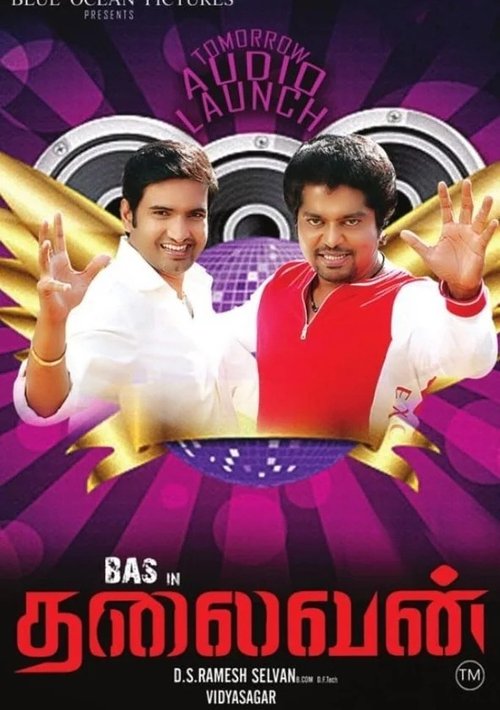



















Popular
What motivates the main character, Thalaivan, throughout the film?
How does Thalaivan's relationship with his mentor influence his decisions?
What role does the antagonist play in Thalaivan's journey?
How does Thalaivan's family background affect his actions in the film?
What significant events lead to Thalaivan's character development?
Should I watch it?
Ask Your Own Question

What is the plot?
The film opens in a tense, gritty urban landscape shortly after the 2008 Mumbai terror attacks, a backdrop that sets the stage for a relentless police crackdown on terrorism. The state police, led by the authoritative and proud DGP Sundarapandian, are deeply engaged in a systematic campaign to eliminate the criminal network of Daniel, a notorious terrorist mastermind implicated in those attacks. The city is rife with fear and violence as police raids and encounters unfold in rapid succession, each operation chipping away at Daniel's underlings. The atmosphere is charged with urgency and danger, the police headquarters buzzing with intelligence briefings and strategic planning. Sundarapandian, a figure of stern resolve, boasts confidently about making the city crime-free, his voice echoing the government's determination to restore order.
Amid this chaos, a new and enigmatic figure emerges, known only as Thalaivan--literally "Leader." Unlike Daniel, whose terror network is known and targeted, Thalaivan operates in the shadows, committing audacious crimes right under the police's noses. His sudden rise as a criminal mastermind puzzles and unsettles the police force, introducing a fresh layer of complexity to their mission. His actions are bold and calculated, striking at the heart of the city's security apparatus and challenging the police's authority. The tension escalates as the police find themselves fighting not just a known terrorist network but also this elusive new adversary.
Parallel to this, the story reveals the fractured world of terrorism itself. Daniel's one-time mentor and rival, Anwar Khan, survives an assassination attempt orchestrated by Daniel in a brutal coup. Wounded but alive, Anwar Khan makes a pivotal decision: he strikes a covert deal with the police, turning informant to aid in dismantling Daniel's gang. This alliance between a former terrorist and law enforcement adds a layer of intrigue and shifting loyalties. Anwar's insider knowledge becomes instrumental in the police's campaign, leading to a series of successful encounters that decimate Daniel's forces.
The film's narrative weaves through multiple urban locations--the bustling police headquarters, shadowy crime scenes scattered across the city, and Daniel's secretive hideouts where terror plots are hatched. Thalaivan's meeting points remain intentionally vague, underscoring his mysterious and untouchable nature. Each location pulses with danger and the high stakes of the ongoing conflict, painting a vivid picture of a city caught in the crossfire between law and lawlessness.
As the police tighten their grip on Daniel's network, the rivalry between Daniel and Anwar Khan intensifies. Daniel's ruthless attempt to eliminate Anwar fails, deepening the animosity and driving Anwar closer to the police. Meanwhile, Thalaivan continues to outmaneuver both the terrorists and the police, his identity and motives shrouded in secrecy. His crimes are not random acts of violence but strategic moves that unsettle the entire security framework.
The film's confrontations are brutal and relentless. Police forces engage in fierce shootouts with Daniel's gang, systematically "encountering" (killing) many of his men. Daniel himself remains a looming threat, orchestrating terror from the shadows. Thalaivan's clashes with the police are marked by his ability to evade capture and strike unexpectedly, heightening the cat-and-mouse tension. The rivalry between Thalaivan and Daniel's gang hints at a deeper power struggle, though the film keeps the details sparse, maintaining suspense.
Throughout the story, the police uncover critical revelations. Anwar Khan's cooperation is a turning point, revealing the fractured loyalties within terrorist circles. Thalaivan's emergence as a more formidable threat than Daniel surprises the police, forcing them to recalibrate their strategy. The film hints at complex betrayals and shifting alliances but stops short of fully unraveling the personal histories or motivations behind these characters, preserving an aura of mystery.
Communication plays a key role in the unfolding drama. Police intelligence briefings, covert meetings between Anwar Khan and officers, and encrypted criminal communications form the backbone of the strategic maneuvers. Thalaivan's messages are conveyed through his daring crimes, each act a challenge to the police's control and a psychological blow to their morale.
The climax converges in a high-stakes showdown involving the police, Daniel's gang, and Thalaivan. The city becomes a battleground as these forces collide in a final, violent confrontation. The police aim to neutralize both Daniel and Thalaivan to restore order, their operations marked by intense gunfights and tactical maneuvers. The film builds momentum through these escalating conflicts, culminating in a tense resolution.
In the final scenes, the identity and objectives of Thalaivan come to light, though the sources do not provide explicit details, leaving some ambiguity. The police succeed in regaining control over the city, symbolizing a temporary victory against the intertwined threats of terrorism and crime. The fates of Daniel and Thalaivan remain somewhat unresolved in the available summaries, but the narrative implies that the police's efforts have significantly weakened their influence.
The film closes on a somber yet resolute note, with DGP Sundarapandian reaffirming the ongoing commitment to safeguard the city. The struggle against terrorism and crime is portrayed as an enduring battle, one that requires vigilance and sacrifice. The city, scarred but resilient, stands as a testament to this relentless fight.
Thus, "Thalaivan" unfolds as a gritty, action-packed thriller that delves into the murky world of terrorism, law enforcement, and the shadowy figures who challenge both. It presents a complex web of rivalries, alliances, and confrontations, anchored by the relentless pursuit of justice amid chaos. The story's vivid scenes of urban warfare, strategic deception, and moral ambiguity create a tense narrative that culminates in a climactic battle for control and survival.









What is the ending?
In the movie "Thalaivan," the ending sees the protagonist, a determined and principled man, confront the antagonist in a climactic showdown. The protagonist ultimately triumphs, leading to a resolution of the central conflict. The film concludes with a sense of justice being served, as the protagonist's values prevail, and the community begins to heal.
As the final act unfolds, the tension escalates. The protagonist, having gathered his allies, prepares for a confrontation with the antagonist, who has been a source of corruption and chaos throughout the film. The scene is set in a dimly lit warehouse, filled with the remnants of past conflicts--broken crates and shadows that loom ominously. The air is thick with anticipation, and the protagonist's heart races, fueled by a mix of fear and determination.
The protagonist steps forward, his resolve evident in his clenched fists and steely gaze. He calls out the antagonist, who stands defiantly, flanked by his henchmen. The antagonist smirks, exuding arrogance, believing he holds all the power. The protagonist's voice rings out, steady and unwavering, as he challenges the antagonist's reign of terror. The stakes are high, and the community's future hangs in the balance.
As the confrontation escalates, a fierce battle ensues. The protagonist fights with a blend of skill and desperation, each punch thrown a testament to his commitment to justice. The camera captures the intensity of the fight, showcasing the physical toll it takes on both men. The protagonist's internal struggle is palpable; he fights not just for himself but for the people who have suffered under the antagonist's rule.
In a pivotal moment, the protagonist gains the upper hand, disarming the antagonist and forcing him to the ground. The antagonist's bravado fades, replaced by fear as he realizes his defeat is imminent. The protagonist stands over him, breathing heavily, the weight of the moment pressing down on him. He delivers a powerful monologue about the importance of integrity and the need for change, his voice echoing in the warehouse.
As the dust settles, the protagonist's allies emerge from the shadows, rallying around him. The antagonist's henchmen, witnessing their leader's downfall, begin to retreat, their loyalty crumbling in the face of defeat. The protagonist's victory is not just physical; it symbolizes a turning point for the community, a chance to rebuild and restore hope.
In the aftermath, the protagonist is seen addressing the community, his voice filled with passion and conviction. He speaks of unity and the importance of standing together against corruption. The camera pans over the faces of the townspeople, their expressions shifting from fear to hope as they realize that change is possible.
The film concludes with a poignant scene of the protagonist walking through the streets, now filled with life and laughter. Children play, and families gather, a stark contrast to the darkness that once loomed over them. The protagonist's journey has come full circle; he has not only defeated the antagonist but has also inspired a movement for change.
As the credits roll, the fates of the main characters are revealed: the protagonist emerges as a leader, respected and loved by the community; the antagonist is left in disgrace, a cautionary tale of the consequences of corruption; and the allies who stood by the protagonist are seen as integral to the new beginning, their loyalty rewarded with a sense of purpose and belonging. The film closes on a hopeful note, emphasizing the power of resilience and the importance of fighting for what is right.
Is there a post-credit scene?
The movie "Thalaivan," produced in 2014, does not feature a post-credit scene. The film concludes its narrative without any additional scenes or content after the credits roll. The focus remains on the resolution of the main storyline, leaving no further developments or cliffhangers for the audience to ponder after the film ends.
What motivates the main character, Thalaivan, throughout the film?
Thalaivan is driven by a deep sense of justice and a desire to protect his family and community. His internal conflict arises from the need to balance his personal ambitions with the responsibilities he feels towards his loved ones. This motivation is further complicated by the challenges he faces from antagonistic forces that threaten his ideals.
How does Thalaivan's relationship with his mentor influence his decisions?
Thalaivan's mentor plays a crucial role in shaping his worldview and moral compass. The mentor's teachings instill in Thalaivan a sense of duty and honor, which he grapples with as he faces moral dilemmas. This relationship is marked by moments of guidance and conflict, ultimately pushing Thalaivan to make choices that reflect both his mentor's influence and his own evolving identity.
What role does the antagonist play in Thalaivan's journey?
The antagonist serves as a catalyst for Thalaivan's transformation. Their confrontations are not just physical battles but also ideological clashes that force Thalaivan to confront his beliefs and values. The antagonist's ruthless tactics challenge Thalaivan's resolve, pushing him to evolve from a reactive character into a proactive hero who must outsmart and outmaneuver his foe.
How does Thalaivan's family background affect his actions in the film?
Thalaivan's family background is steeped in tradition and expectations, which weigh heavily on him. His desire to honor his family's legacy drives many of his decisions, often leading him to take risks that put him in danger. The emotional ties to his family create a sense of urgency in his quest, as he seeks to protect them while also striving to forge his own path.
What significant events lead to Thalaivan's character development?
Key events such as betrayals, losses, and moments of triumph serve as turning points for Thalaivan. Each challenge he faces forces him to reassess his values and priorities, leading to significant growth. For instance, a pivotal betrayal by someone he trusts shatters his naivety, prompting him to adopt a more strategic approach to his conflicts, ultimately shaping him into a more complex and resilient character.
Is this family friendly?
"Thalaivan," produced in 2014, contains several elements that may not be suitable for children or sensitive viewers. Here are some potentially objectionable aspects:
-
Violence: The film features scenes of physical confrontations and action sequences that may be intense or graphic, depicting fights and struggles that could be upsetting.
-
Emotional Turmoil: Characters experience significant emotional distress, including betrayal, loss, and conflict, which may be heavy for younger audiences to process.
-
Themes of Crime and Corruption: The narrative involves elements of crime, power struggles, and moral ambiguity, which may be complex and unsettling for children.
-
Romantic Tension: There are romantic subplots that may include themes of jealousy and heartbreak, which could be inappropriate for younger viewers.
-
Language: The dialogue may include strong language or mature themes that could be considered unsuitable for a family audience.
These elements contribute to a tone that may be more appropriate for older teens and adults rather than a family-friendly viewing experience.