























Popular
What internal struggles does General von Choltitz face throughout the film?
What is the main conflict between the characters of Raoul Nordling and General von Choltitz?
How does Raoul Nordling attempt to convince General von Choltitz to spare Paris?
What role does the setting of Paris play in the film's narrative?
How does the relationship between Raoul Nordling and General von Choltitz evolve during their conversation?
Should I watch it?
Ask Your Own Question

What is the plot?
Sorry, we aren't able to watch and write up a full detailed plot yet. Check back in a few days.
More Movies Like This
Browse All Movies →



What is the ending?
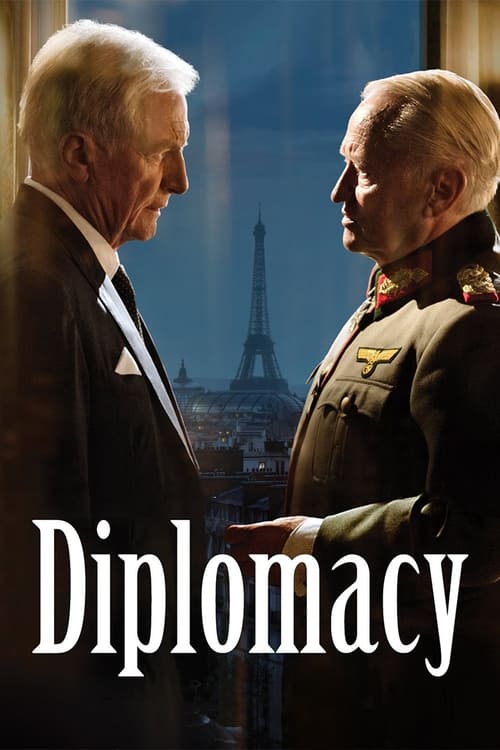
In the ending of "Diplomacy," the German General von Choltitz ultimately decides to spare Paris from destruction, defying orders from Hitler. He and the Swedish consul Raoul Nordling reach a tense agreement, leading to the preservation of the city. The film concludes with the realization of the importance of diplomacy and the human cost of war.
As the final scenes unfold, the atmosphere is thick with tension. The clock is ticking, and the fate of Paris hangs in the balance. General von Choltitz, portrayed with a complex mix of authority and vulnerability, sits in his office, grappling with the orders he has received from Hitler to destroy the city. The weight of his decision is palpable, as he is acutely aware of the historical significance of Paris and the lives that will be lost if he follows through with the destruction.
Raoul Nordling, the Swedish consul, enters the scene, his demeanor calm yet urgent. He understands the gravity of the situation and the stakes involved. The two men engage in a heated dialogue, with Nordling appealing to von Choltitz's sense of humanity and the moral implications of annihilating a city filled with innocent lives. The tension in the room is almost suffocating, as both men are aware that the clock is ticking down to the moment when the order to destroy Paris will be executed.
As they converse, the emotional stakes rise. Von Choltitz reveals his internal conflict; he is a soldier bound by duty but also a man who appreciates beauty and life. The juxtaposition of his military resolve and his growing empathy creates a compelling dynamic. Nordling, on the other hand, embodies the spirit of diplomacy, using every ounce of persuasion to convince von Choltitz to reconsider his orders. The dialogue is charged with urgency, as they both understand that the fate of millions rests on this conversation.
In a pivotal moment, von Choltitz reflects on the consequences of his actions. He recalls the beauty of Paris, the art, the culture, and the people who inhabit it. This reflection is crucial, as it marks a turning point in his decision-making process. The emotional weight of his memories clashes with the cold, calculated orders from Berlin. The audience can sense the internal struggle within him, as he weighs his loyalty to the Nazi regime against his moral compass.
As the conversation reaches its climax, von Choltitz makes a monumental decision. He chooses to defy Hitler's orders, a choice that signifies not only a personal victory but also a triumph of humanity over blind obedience. The moment is heavy with significance, as he instructs his officers to stand down and not carry out the destruction of Paris. The relief is palpable, and the tension that has built throughout the film dissipates, replaced by a sense of hope.
The film concludes with a poignant scene that encapsulates the essence of diplomacy and the power of individual choice. Von Choltitz, having made his decision, stands as a figure of complexity--both a soldier and a savior. Nordling, who has fought tirelessly for the preservation of the city, embodies the spirit of resilience and the importance of dialogue in the face of conflict.
As the credits roll, the audience is left with the understanding that the fate of Paris was not just a matter of military strategy but a testament to the power of human connection and the impact of choices made in moments of crisis. The film closes on a note of reflection, emphasizing the enduring significance of diplomacy in a world often torn apart by war.
Is there a post-credit scene?
The movie "Diplomacy," produced in 2014, does not contain a post-credit scene. The film concludes its narrative without any additional scenes or content after the credits roll. The story focuses on the intense negotiations between the German General von Choltitz and the Swedish consul Raoul Nordling during the final days of World War II in Paris, emphasizing the moral dilemmas and emotional stakes involved in their discussions. The film ends on a poignant note, leaving the audience to reflect on the themes of war, peace, and the human capacity for compassion in dire circumstances.
What internal struggles does General von Choltitz face throughout the film?
General von Choltitz experiences significant internal struggles as he grapples with his loyalty to the Nazi regime and his growing conscience regarding the destruction of Paris. He is torn between his duty as a soldier and his personal values, reflecting on the impact of his actions on the city and its people. This conflict is compounded by his interactions with Nordling, which force him to confront the moral implications of his orders.
What is the main conflict between the characters of Raoul Nordling and General von Choltitz?
The main conflict between Raoul Nordling, the Swedish consul, and General von Choltitz, the German military governor of Paris, revolves around the impending destruction of the city during World War II. Nordling is determined to persuade von Choltitz to disobey Hitler's orders to demolish Paris as the Nazis retreat, while von Choltitz grapples with his duty to follow orders versus his growing moral dilemma about the consequences of such destruction.
How does Raoul Nordling attempt to convince General von Choltitz to spare Paris?
Raoul Nordling employs a mix of emotional appeals, logical arguments, and personal anecdotes to persuade General von Choltitz. He highlights the cultural significance of Paris, the potential loss of innocent lives, and the futility of destruction in the face of inevitable defeat. Nordling's passionate pleas are underscored by his understanding of von Choltitz's character, as he seeks to connect on a human level.
What role does the setting of Paris play in the film's narrative?
The setting of Paris serves as a critical backdrop that heightens the stakes of the narrative. The city's iconic landmarks, such as the Eiffel Tower and Notre-Dame, symbolize not only the beauty and history at risk but also the emotional weight of the choices facing the characters. The tension of the impending Allied invasion and the atmosphere of wartime urgency permeate the scenes, emphasizing the gravity of the decisions being made.
How does the relationship between Raoul Nordling and General von Choltitz evolve during their conversation?
The relationship between Raoul Nordling and General von Choltitz evolves from one of initial hostility and suspicion to a complex dynamic of mutual respect and understanding. As they engage in a tense dialogue, both characters reveal their vulnerabilities and motivations, leading to a reluctant camaraderie. Nordling's persistence and emotional appeals gradually break down von Choltitz's defenses, allowing for a deeper connection that influences the general's ultimate decision.
Is this family friendly?
"Diplomacy," produced in 2014, is a historical drama that revolves around the tense negotiations between a German general and a Swedish diplomat during World War II. While the film is primarily focused on dialogue and moral dilemmas, there are several aspects that may be considered objectionable or upsetting for children or sensitive viewers:
-
War Themes: The film deals with the backdrop of World War II, which includes discussions about the consequences of war, occupation, and the potential loss of life. The gravity of these themes may be distressing for younger audiences.
-
Tense Confrontations: The interactions between characters can be intense and emotionally charged, featuring high-stakes negotiations that may evoke feelings of anxiety or discomfort.
-
Moral Dilemmas: The characters grapple with difficult ethical decisions regarding loyalty, sacrifice, and the greater good, which may be complex for younger viewers to fully understand.
-
Historical Context: The film references the atrocities of war and the impact on civilians, which, while not graphically depicted, may still be unsettling for some.
-
Emotional Weight: The film carries a heavy emotional tone, with characters expressing fear, desperation, and moral conflict, which could be overwhelming for sensitive individuals.
Overall, while "Diplomacy" is not overtly graphic or violent, its themes and emotional depth may not be suitable for all children or sensitive viewers.









