








Popular
What challenges do the musicians face while on tour in No Room for Rockstars?
How does the documentary portray the relationship between the band members?
What role does the concept of 'success' play in the lives of the musicians featured?
How do the musicians cope with the pressures of performing?
What personal stories do the musicians share about their backgrounds?
Should I watch it?
Ask Your Own Question

What is the plot?
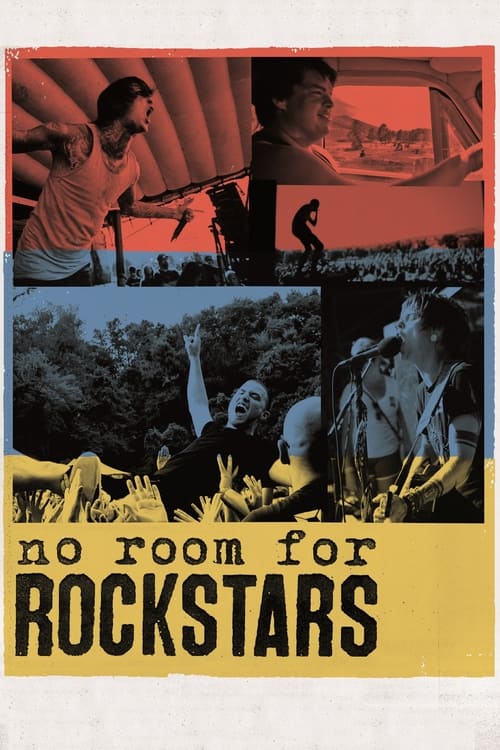
No Room for Rockstars is a documentary rather than a fictional film, so it does not have deaths, twists, or a hidden-clue style climax to spoil. Instead, it follows the 2010 Vans Warped Tour across 52 days and 43 cities, using more than 300 hours of footage to track musicians, staff, and fans as the festival moves from city to city.
The film opens inside the chaotic ecosystem of the tour itself: buses rolling down long stretches of highway, backstage lanes crowded with crew, and the pit packed with fans, all part of a traveling world that exists only for the summer. From the beginning, the documentary makes clear that the Warped Tour is not one single story but several that collide and contrast with one another. Mike Posner appears as the artist on the verge of mainstream breakout, while Christofer Drew of Never Shout Never is shown as someone whose enthusiasm is complicated by doubt and fatigue. Mitch Lucker of Suicide Silence represents a harder, heavier side of the tour, and Joe Candelaria of Forever Came Calling embodies the grinding, low-budget struggle of a smaller band trying to survive by any means necessary. Kevin Lyman, the founder and organizing force behind Warped Tour, serves as the one figure who sees the whole operation from above, managing the logistics and trying to keep the machine moving across the country.
As the tour advances through the summer, the documentary settles into a rhythm of motion, performance, and exhaustion. The film repeatedly contrasts the glamour of large stages with the uncertainty behind them. Mike Posner's thread shows the upside of the circuit: his visibility grows as the tour progresses, and his music reaches bigger crowds while the film treats his rise as part of the changing face of the scene. At the same time, the movie cuts to Joe Candelaria and Forever Came Calling, who are stuck in the far less romantic reality of independent touring. They travel in a van, hustling outside the gates and selling CDs directly to people in line just to keep going and to get noticed. That image becomes one of the film's clearest recurring symbols: a band literally selling its music hand-to-hand on the sidewalk while hoping for a break that may never come.
The tension in Christofer Drew's storyline grows more emotional than dramatic. Rather than facing a single explosive confrontation, he becomes a portrait of internal conflict. He starts the tour as a recognizable presence, but the road wears on him, and the documentary shows him questioning whether signing on was really the right choice. That uncertainty gives the film some of its most personal moments, because Drew is not simply performing for the camera; he is visibly wrestling with the costs of life on the road. The tour becomes less a dream than a test of endurance, and his reactions suggest the strain of being trapped in a job that is supposed to feel like freedom.
Mitch Lucker's sections bring a different energy. His presence anchors the heavy-music side of the tour, and his scenes emphasize the intensity of performance and the communal force of the crowd rather than emotional hesitation. He moves through the festival as someone fully inside its culture, giving the documentary a harder edge whenever it shifts to his band's world. The contrast between his confidence, Posner's ascent, and Drew's doubt helps the film show how differently artists experience the same road.
Kevin Lyman's role ties the scattered threads together. As founder and organizer, he is the one who understands that Warped Tour is not just a set of shows but a temporary city built from schedules, trucks, stages, and human stamina. The documentary uses him to explain the infrastructure beneath the chaos: the daily logistics, the shifting lineup, the challenge of keeping a massive traveling festival alive across the country. His perspective gives the movie a backbone, reminding viewers that every performance depends on a huge hidden network of planning and labor.
Visually, the film leans into the contrast between heat and movement. It shows parking lots, loading zones, tour buses, stage wings, and mosh pits, creating a sense of constant compression, where everyone is always too close, too tired, and too loud. The most vivid scenes often come not from the performances themselves but from the in-between moments: people waiting, sweating, carrying gear, talking in cramped spaces, or standing outside in the sun trying to make the next stop matter. The documentary treats those transitional moments as the true story of the tour, because that is where the struggle lives.
One of the film's key revelations is that the Warped Tour is not a single ladder of success but a collection of parallel realities. For some, it is a platform for rising fame; for others, it is a desperate hustle; for others still, it is a source of doubt, burnout, or identity crisis. The documentary's power comes from showing all of those conditions at once. A musician can be getting louder crowds while another is counting CD sales in the parking lot, and both are part of the same summer machine. That contrast gives the film its emotional shape, even though it lacks a conventional plot twist.
There are no deaths in the film's documented story, and none of the featured figures die as part of its narrative. There is also no central villain, no murder, and no mystery to solve. The conflicts are instead economic, personal, and cultural: whether a band can survive, whether an artist can stay sane, whether a huge traveling subculture still has room for the people who built it. Those are the pressures that generate the documentary's momentum.
By the end, the film does not build to a single showdown or a dramatic final resolution. Instead, it closes as a broad portrait of the 2010 tour's world, leaving the viewer with the sense that every participant has been changed by the road in a different way. Mike Posner's trajectory points upward, Joe Candelaria's thread remains rooted in struggle and persistence, Christofer Drew's story lingers in uncertainty, Mitch Lucker's segments preserve the intensity of his presence, and Kevin Lyman stands as the man holding the whole temporary universe together. The final impression is not triumph or defeat but momentum: a summer that sweeps everyone along, reveals how the scene really works, and then disappears as the tour moves on to the next city, leaving only the noise, sweat, and memory behind.
More Movies Like This
Browse All Movies →







What is the ending?
In the ending of "No Room for Rockstars," the film culminates at the final moments of the Vans Warped Tour, where the various bands reflect on their experiences. The documentary captures the emotional highs and lows of the musicians as they confront the realities of life on the road, the challenges of the music industry, and their personal aspirations. The film closes with a sense of camaraderie among the artists, highlighting their shared struggles and triumphs.
As the final scenes unfold, we see the bands packing up after the last show of the tour. The atmosphere is bittersweet; there is a palpable sense of accomplishment mixed with the sadness of saying goodbye. The camera lingers on the faces of the musicians, capturing their exhaustion but also their joy. They share hugs and words of encouragement, knowing that they have forged connections that will last beyond the tour.
The film ends with a montage of performances and candid moments from the tour, underscoring the passion and dedication of the artists. The final shot is a wide view of the empty venue, a stark contrast to the vibrant energy that filled it just moments before, symbolizing the fleeting nature of their experiences.
In a more detailed narrative, the ending of "No Room for Rockstars" unfolds as the Vans Warped Tour reaches its conclusion. The camera captures the bustling energy of the final day, with bands preparing for their last performances. The air is thick with anticipation and nostalgia, as each musician reflects on the journey they have shared over the summer.
Scene by scene, we witness the final moments of various bands. The first scene focuses on a young band, filled with excitement and nerves, as they take the stage for their last performance. The lead singer, visibly emotional, pours his heart into the lyrics, connecting deeply with the audience. The crowd responds with enthusiasm, creating a powerful moment of unity. As the song ends, the band members embrace, tears in their eyes, realizing the significance of what they have accomplished together.
Next, we shift to a more seasoned band, who have been through the ups and downs of the music industry. They reflect on their journey, discussing the challenges they faced and the lessons learned. The lead guitarist expresses a sense of gratitude for the support of their fans, while the drummer shares his fears about what comes next. This scene highlights the internal struggles of the characters, revealing their vulnerabilities and aspirations.
As the tour wraps up, we see the musicians packing their gear, the camaraderie evident in their interactions. They share stories and laughter, reminiscing about the wild moments and the friendships formed. The camera captures the bittersweet nature of their farewells, as they exchange contact information and promises to stay in touch. Each character's fate is intertwined with the others, emphasizing the bonds created through shared experiences.
In the final moments, the film transitions to a montage of performances from the tour, showcasing the raw energy and passion of the artists. The visuals are accompanied by a powerful soundtrack, amplifying the emotional weight of the scenes. The montage serves as a reminder of the fleeting nature of their time together, as the camera pans over the now-empty venue, echoing the sentiment that while the tour has ended, the memories and connections will endure.
The film concludes with a lingering shot of the empty stage, a poignant symbol of the journey that has come to a close. The characters, having faced their fears and embraced their dreams, leave the tour with a renewed sense of purpose, ready to face whatever challenges lie ahead in their musical careers. Each musician's fate is left open-ended, inviting the audience to reflect on their journeys and the impact of their experiences on their lives.
Is there a post-credit scene?
No, "No Room for Rockstars," produced in 2012, does not have a post-credit scene. The film concludes without any additional scenes or content after the credits roll. The focus remains on the documentary's exploration of the lives of various musicians on the Vans Warped Tour, capturing their struggles, aspirations, and the raw energy of the music scene. The ending emphasizes the emotional journeys of the artists rather than leaving viewers with a cliffhanger or additional narrative.
What challenges do the musicians face while on tour in No Room for Rockstars?
The musicians in No Room for Rockstars face numerous challenges while on tour, including financial struggles, the pressure of performing in front of large crowds, and the emotional toll of being away from home. They deal with the physical exhaustion of constant travel, the stress of maintaining relationships, and the fear of not being accepted by audiences. Each character's journey highlights their personal sacrifices and the harsh realities of life on the road.
How does the documentary portray the relationship between the band members?
The documentary portrays the relationships between band members as complex and often strained. It captures moments of camaraderie and joy, but also highlights conflicts and tensions that arise from the pressures of touring. The emotional dynamics are explored through candid interviews and behind-the-scenes footage, revealing how their bonds are tested by the demands of their music careers.
What role does the concept of 'success' play in the lives of the musicians featured?
The concept of 'success' is a central theme in the lives of the musicians featured in No Room for Rockstars. Each artist grapples with their own definition of success, whether it be achieving fame, financial stability, or personal fulfillment through their music. The documentary delves into their aspirations and the sacrifices they make, showcasing the emotional highs and lows that come with pursuing their dreams.
How do the musicians cope with the pressures of performing?
The musicians cope with the pressures of performing in various ways, including relying on each other for support, engaging in rituals before going on stage, and using music as an outlet for their emotions. Some express their anxiety through humor, while others find solace in the camaraderie of their bandmates. The documentary captures their vulnerabilities and the different strategies they employ to manage the stress of live performances.
What personal stories do the musicians share about their backgrounds?
The musicians share deeply personal stories about their backgrounds, revealing how their upbringing and life experiences shaped their music and aspirations. These narratives often include struggles with family dynamics, financial hardships, and moments of inspiration that led them to pursue a career in music. The documentary provides a raw and intimate look at their lives, allowing viewers to connect with their journeys on a personal level.
Is this family friendly?
"No Room for Rockstars" is a documentary that follows the lives of various punk rock bands on the Vans Warped Tour. While it captures the vibrant energy of the music scene, it also includes elements that may not be suitable for all audiences, particularly children or sensitive viewers.
-
Language: The film features strong language, including profanity, which is common in the punk rock culture and performances.
-
Substance Use: There are scenes depicting the use of alcohol and references to drug use, reflecting the lifestyle of some musicians and fans.
-
Emotional Struggles: The documentary delves into the personal challenges faced by the musicians, including themes of depression, anxiety, and the pressures of fame, which may be distressing for some viewers.
-
Intense Performances: The high-energy performances can be overwhelming, with loud music and chaotic crowd scenes that might be unsettling for younger audiences.
-
Rebellious Themes: The film explores themes of rebellion and nonconformity, which may include discussions or depictions of anti-establishment sentiments that some parents might find inappropriate for children.
Overall, while the film celebrates the spirit of punk rock, its content may not be considered family-friendly due to these elements.








