
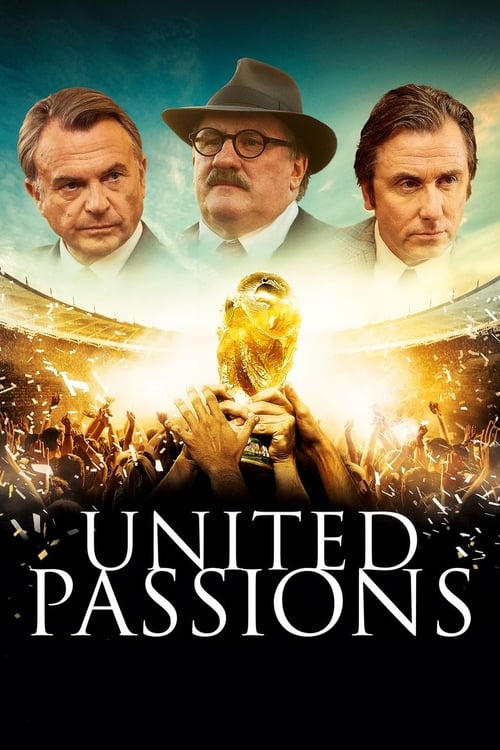














































Popular
Who is the main character in United Passions and what motivates him throughout the film?
What role does FIFA play in the story of United Passions?
How does the film portray the relationship between Jules Rimet and his contemporaries?
What challenges does Jules Rimet face in his quest to establish the World Cup?
What is the significance of the first World Cup in the narrative of United Passions?
Should I watch it?
Ask Your Own Question

What is the plot?
Sorry, we aren't able to watch and write up a full detailed plot yet. Check back in a few days.







What is the ending?
In the ending of "United Passions," the film culminates in the successful establishment of FIFA as a powerful governing body in world football. Jules Rimet, the protagonist, sees his vision of a unified football world come to fruition, but he also faces the challenges of corruption and the changing landscape of the sport. The film concludes with a sense of legacy, as Rimet's contributions to football are recognized, even as the future of the organization he helped build becomes uncertain.
As the film approaches its conclusion, we find ourselves in the mid-20th century, where the narrative has built up to the establishment of the FIFA World Cup. Jules Rimet, portrayed with a sense of determination and idealism, is now deeply entrenched in the politics of football. He is seen in a series of meetings, passionately advocating for the World Cup, believing it will unite nations and promote peace through sport. His vision is met with both enthusiasm and skepticism from various football officials, reflecting the tension between idealism and the harsh realities of governance.
In a pivotal scene, Rimet stands before a gathering of football leaders, passionately delivering a speech about the importance of the World Cup. His eyes gleam with hope as he speaks of football as a universal language that transcends borders. The audience is captivated, and Rimet's charisma shines through, showcasing his unwavering belief in the power of football to bring people together. This moment is crucial, as it solidifies Rimet's role as a visionary leader, despite the mounting challenges he faces.
As the World Cup approaches, the film shifts to the preparations for the inaugural tournament in 1930. Rimet is seen coordinating with various nations, navigating the complexities of international relations and the logistics of hosting such a grand event. The excitement builds, and the atmosphere is charged with anticipation. However, there are undercurrents of tension as rivalries and political maneuvering threaten to overshadow the spirit of the game.
In a contrasting scene, we witness the darker side of football politics. Rimet's idealism is challenged by the emergence of corruption within FIFA. The film portrays the internal struggles as Rimet grapples with the realization that the organization he has dedicated his life to is not immune to greed and manipulation. This internal conflict is palpable, as Rimet's face reflects a mix of disappointment and resolve. He understands that to protect the integrity of football, he must confront these issues head-on.
As the World Cup finally kicks off, the excitement is palpable. The film captures the joy and camaraderie among players and fans, showcasing the unifying power of the sport. Rimet watches with pride as the tournament unfolds, his dream materializing before his eyes. However, the celebration is bittersweet, as he is acutely aware of the challenges that lie ahead for FIFA and the sport itself.
In the final scenes, Rimet's legacy is solidified as he is honored for his contributions to football. The film closes with a montage of the World Cup's impact on the world, highlighting the joy it brings to millions. Rimet, now older and reflective, understands that while he has achieved much, the future of football will require vigilance and integrity to navigate the complexities of the sport.
The fates of the main characters are intertwined with the film's conclusion. Jules Rimet, having fought tirelessly for his vision, leaves a lasting legacy in the world of football, but he also acknowledges the challenges that FIFA will face in the years to come. Other characters, such as the various football officials and players, are depicted as part of a larger narrative, representing the diverse and often tumultuous world of international football. The film ends on a note of hope, emphasizing the enduring spirit of the game and the importance of unity in the face of adversity.
Is there a post-credit scene?
The movie "United Passions," produced in 2014, does not contain a post-credit scene. The film concludes its narrative without any additional scenes or content after the credits roll. The story wraps up with a focus on the founding of FIFA and the evolution of football, leaving the audience with a sense of closure regarding the historical events depicted throughout the film.
Who is the main character in United Passions and what motivates him throughout the film?
The main character in United Passions is Jules Rimet, portrayed by Gérard Depardieu. Rimet is motivated by his passion for football and his desire to unite the sport on a global scale. His journey begins in the early 20th century as he seeks to establish a governing body for football, facing numerous challenges and opposition along the way. His dedication to the sport and vision for its future drive him to overcome obstacles, including political resistance and personal sacrifices.
What role does FIFA play in the story of United Passions?
FIFA, the Fédération Internationale de Football Association, plays a central role in United Passions as it is the organization that Jules Rimet aims to establish and promote throughout the film. The narrative follows Rimet's efforts to create FIFA, highlighting the struggles he faces in gaining support from various countries and football associations. The film depicts key moments in FIFA's history, including the first World Cup in 1930, showcasing how Rimet's vision and leadership were crucial in shaping the future of international football.
How does the film portray the relationship between Jules Rimet and his contemporaries?
The film portrays Jules Rimet's relationships with contemporaries such as Henri Delaunay and other football officials as complex and often fraught with tension. Rimet's unwavering commitment to his vision for football often puts him at odds with those who have differing opinions on how the sport should be governed. Despite these conflicts, there are moments of camaraderie and mutual respect, particularly when they come together to support the establishment of the World Cup. The emotional stakes are high as Rimet navigates alliances and rivalries, reflecting the passion and politics of the sport.
What challenges does Jules Rimet face in his quest to establish the World Cup?
Jules Rimet faces numerous challenges in his quest to establish the World Cup, including skepticism from football associations, political interference, and financial constraints. He struggles to convince countries to participate in the inaugural tournament, facing resistance from those who doubt the viability of such an event. Additionally, Rimet must navigate the complexities of international relations and differing national interests, all while maintaining his vision for a united football community. These challenges test his resolve and commitment to the sport he loves.
What is the significance of the first World Cup in the narrative of United Passions?
The first World Cup, held in 1930, is a pivotal moment in United Passions, symbolizing the culmination of Jules Rimet's efforts to unite the world through football. The tournament serves as a backdrop for the film's climax, showcasing the excitement and challenges of organizing such a monumental event. It represents not only Rimet's personal triumph but also the beginning of a new era for international football. The emotional weight of the event is felt by the characters, as it embodies their dreams, aspirations, and the unifying power of the sport.
Is this family friendly?
"United Passions," produced in 2014, is a biographical drama that chronicles the history of FIFA and the development of football (soccer) as a global sport. While the film primarily focuses on the passion for football and the efforts of key figures in the sport, there are a few aspects that may be considered objectionable or upsetting for children or sensitive viewers.
-
Political and Corruption Themes: The film touches on themes of political maneuvering and corruption within FIFA, which may be complex and difficult for younger audiences to fully understand. The portrayal of power struggles can be intense.
-
Conflict and Tension: There are scenes that depict conflict between characters, including heated discussions and confrontations that may evoke feelings of discomfort or anxiety.
-
Historical Context: The film references historical events and decisions that may involve ethical dilemmas or moral questions, which could be unsettling for some viewers.
-
Mature Themes: While the film does not contain explicit content, the underlying themes of ambition, betrayal, and the darker side of sports governance may not be suitable for younger children.
Overall, while "United Passions" is not overtly graphic or violent, its themes and the nature of its content may require parental guidance for younger viewers.