












Popular
What is the significance of Chise's transformation into a weapon?
How does Shuji's relationship with Chise evolve throughout the film?
What role do Chise's friends play in the story?
How does the film depict the impact of war on civilians?
What are the key moments that highlight Chise's internal conflict?
Should I watch it?
Ask Your Own Question

What is the plot?
Sorry, we aren't able to watch and write up a full detailed plot yet. Check back in a few days.








What is the ending?
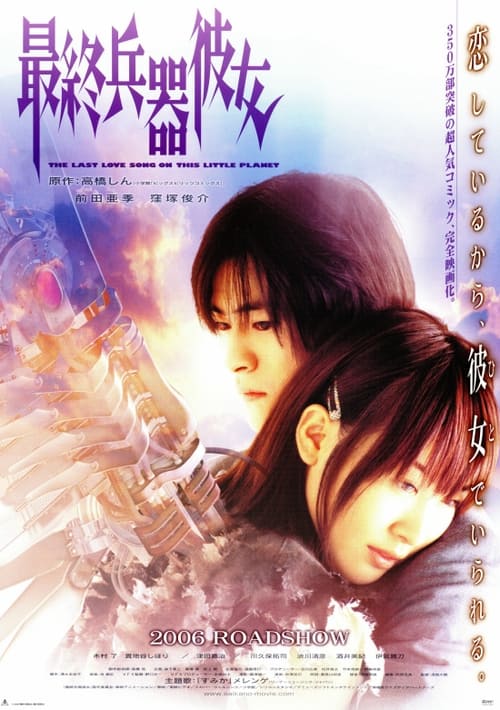
In the ending of "Saikano: The Last Love Song on This Little Planet," Chise, who has been transformed into a powerful weapon, faces the consequences of her existence as a weapon of war. As the conflict escalates, she ultimately sacrifices herself to save her loved ones, particularly her boyfriend Shuji. The film concludes with a poignant sense of loss and the enduring power of love, even in the face of tragedy.
As the final act unfolds, the atmosphere is heavy with tension and despair. The war has reached a critical point, and Chise's transformation into a weapon has taken a toll on her humanity. She is increasingly aware of the destruction she can cause, and this realization weighs heavily on her heart. Shuji, who has been a constant source of support for her, struggles with the knowledge that the girl he loves is also a harbinger of death.
In a pivotal scene, Chise confronts her own identity. She stands amidst the chaos of battle, her body a fusion of human and machine, reflecting the internal conflict she faces. The visual imagery is stark; her once gentle demeanor is overshadowed by the cold, metallic aspects of her transformation. As she prepares to unleash her full power, she is torn between her duty as a weapon and her desire to protect Shuji and those she loves.
Shuji, desperate to save Chise from her fate, rushes to her side. He pleads with her to remember who she is, to hold onto the love they share. Their emotional exchange is filled with raw vulnerability, as Chise grapples with the fear of losing herself completely. The audience can feel the weight of their shared memories, the laughter and joy they once experienced, now overshadowed by the impending doom of war.
As the climax approaches, Chise makes the heart-wrenching decision to use her powers to end the conflict, knowing that it will likely lead to her own demise. In a breathtaking sequence, she unleashes her full potential, a dazzling display of light and energy that illuminates the battlefield. The destruction is immense, and the visuals are both beautiful and tragic, symbolizing the cost of war and the sacrifices made for love.
In her final moments, Chise finds peace in the knowledge that she has protected Shuji and the people she cares about. The film captures her serene expression as she fades away, leaving behind a world forever changed by her actions. Shuji, left to grapple with the loss of Chise, is shown in a state of profound grief, his heart heavy with the memories of their time together. The film closes with a haunting sense of longing, emphasizing the enduring impact of love even in the face of overwhelming loss.
In summary, the fates of the main characters are sealed in tragedy. Chise sacrifices herself, becoming a symbol of love and loss, while Shuji is left to navigate a world without her, forever marked by the memories of their shared experiences. The ending encapsulates the film's exploration of the complexities of love, identity, and the harsh realities of war.
Is there a post-credit scene?
In "Saikano: The Last Love Song on This Little Planet," there is no post-credit scene. The film concludes with a poignant ending that encapsulates the emotional journey of the characters, particularly focusing on the relationship between Chise and Shuji. The narrative wraps up without additional scenes after the credits, leaving the audience to reflect on the themes of love, loss, and the impact of war. The absence of a post-credit scene emphasizes the finality of the story and the deep emotional resonance of the characters' experiences.
What is the significance of Chise's transformation into a weapon?
Chise's transformation into a weapon is central to the narrative, symbolizing the loss of her humanity and the burden of war. As she becomes a powerful weapon, her physical form changes, reflecting the emotional and psychological toll it takes on her. This transformation creates a conflict between her love for Shuji and her role as a tool of destruction, highlighting the tragic consequences of war on personal relationships.
How does Shuji's relationship with Chise evolve throughout the film?
Shuji's relationship with Chise evolves from a typical high school romance to a deep, complex bond strained by the realities of Chise's transformation. Initially, Shuji is supportive and loving, but as Chise's powers grow and her humanity diminishes, he struggles with feelings of helplessness and fear. This evolution showcases his internal conflict as he grapples with wanting to protect Chise while also facing the harsh truth of her situation.
What role do Chise's friends play in the story?
Chise's friends serve as a contrast to her increasingly isolated existence. They represent normalcy and the life Chise is losing. Their interactions with Chise highlight her emotional struggles and the impact of her transformation on her social life. As they become aware of her situation, their reactions range from concern to fear, emphasizing the broader implications of Chise's role as a weapon and the societal consequences of war.
How does the film depict the impact of war on civilians?
The film depicts the impact of war on civilians through the lens of Chise's transformation and the emotional fallout it causes among her loved ones. Scenes of destruction and chaos serve as a backdrop to the personal stories, illustrating how war intrudes upon everyday life. The characters' struggles with loss, fear, and the desire for peace reflect the broader theme of how war affects not just soldiers but also those who are left behind.
What are the key moments that highlight Chise's internal conflict?
Key moments that highlight Chise's internal conflict include her initial acceptance of her role as a weapon, her moments of vulnerability with Shuji, and her realization of the consequences of her powers. Scenes where she grapples with her identity, such as when she questions her humanity or when she witnesses the destruction caused by her actions, are pivotal. These moments reveal her deep emotional turmoil and the struggle between her love for Shuji and her duty as a weapon.
Is this family friendly?
"Saikano: The Last Love Song on This Little Planet" is not considered family-friendly due to its mature themes and emotional intensity. Here are some potentially objectionable or upsetting aspects that may affect children or sensitive viewers:
-
Violence and Destruction: The film features scenes of war and destruction, including battles that result in significant loss of life and devastation, which can be distressing.
-
Death and Grief: Characters experience profound loss and grief, leading to emotional turmoil that may be difficult for younger audiences to process.
-
Romantic Relationships: The film explores complex romantic relationships, including themes of love intertwined with tragedy, which may not be suitable for younger viewers.
-
Existential Themes: The narrative delves into heavy existential questions about life, purpose, and the impact of war, which may be challenging for sensitive individuals.
-
Emotional Distress: The characters undergo significant emotional struggles, including feelings of helplessness and despair, which can be quite intense.
These elements contribute to the film's overall tone and may not be appropriate for all audiences, particularly children.