
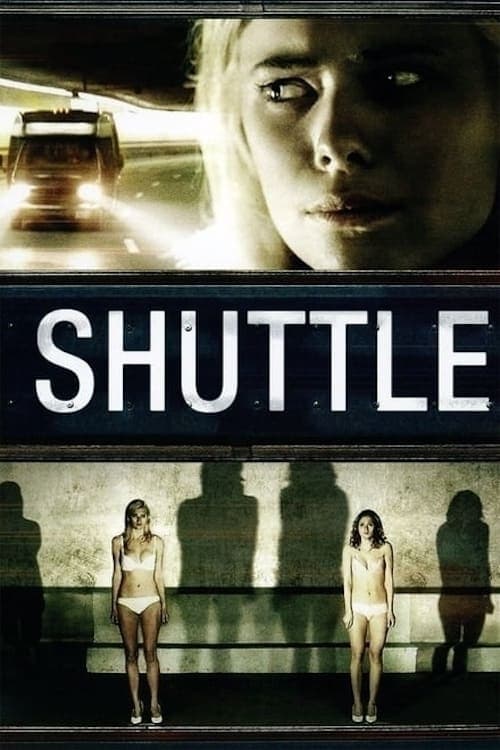









Popular
What role does the mysterious figure play in the story?
What happens to the characters after they get trapped in the shuttle?
How does the character of Mel evolve throughout the film?
How do the relationships between the characters change during the film?
What is the significance of the shuttle as a setting in the film?
Should I watch it?
Ask Your Own Question

What is the plot?
Sorry, we aren't able to watch and write up a full detailed plot yet. Check back in a few days.








What is the ending?
In the ending of "Shuttle," the main characters, Mel and her friend, are trapped in a dark, abandoned warehouse after being kidnapped. They confront their captor, leading to a tense and violent struggle. Ultimately, Mel manages to escape, but the fate of her friend remains uncertain as the film concludes with a haunting sense of unresolved tension.
Now, let's delve into the ending in a more detailed narrative fashion.
As the climax of "Shuttle" unfolds, Mel and her friend, a young woman named Leila, find themselves in a dimly lit, abandoned warehouse, the air thick with tension and fear. The atmosphere is oppressive, filled with the echoes of their earlier panic and the realization of their dire situation. They have been kidnapped after a seemingly innocent trip to the airport, and now they are at the mercy of a mysterious captor.
In a pivotal scene, Mel and Leila are confronted by their captor, a man whose face is obscured by shadows, embodying the threat that looms over them. The captor's intentions are unclear, but his demeanor is menacing, and he exudes a sense of control that heightens the stakes. Mel, driven by a fierce desire to protect her friend and escape, begins to formulate a plan. Her internal struggle is palpable; she oscillates between fear and determination, her heart racing as she weighs her options.
As the confrontation escalates, Mel's instincts kick in. She seizes an opportunity to fight back, using her surroundings to her advantage. The struggle is chaotic, filled with visceral moments of desperation. Mel's emotions surge as she grapples with the captor, her adrenaline fueling her resolve. The warehouse, with its cold concrete walls and scattered debris, becomes a battleground where survival instincts clash with the looming threat of violence.
In a moment of sheer will, Mel manages to overpower the captor, a scene marked by raw intensity and the primal urge to survive. She breaks free, her heart pounding as she races toward the exit, the weight of her friend's fate heavy on her mind. The camera captures her frantic movements, the flickering lights casting eerie shadows that mirror her turmoil.
As Mel escapes into the night, the film shifts focus back to Leila, who remains trapped in the warehouse. The audience is left with a haunting sense of uncertainty regarding her fate. Mel's escape is bittersweet; while she has triumphed over her captor, the unresolved tension regarding Leila lingers in the air. The final moments of the film are steeped in ambiguity, leaving viewers to ponder the implications of survival and the bonds of friendship.
The film concludes with Mel standing outside, the world around her feeling both familiar and foreign. She is free, yet the emotional scars of her experience are evident in her expression. The camera lingers on her face, capturing the mix of relief and sorrow as she grapples with the reality of what has transpired. The ending leaves a chilling impression, emphasizing the fragility of safety and the haunting memories that can linger long after physical escape.
Is there a post-credit scene?
The movie "Shuttle," produced in 2008, does not have a post-credit scene. The film concludes its narrative without any additional scenes or content after the credits roll. The story wraps up with the intense and suspenseful events that unfold throughout the film, leaving the audience with a sense of closure regarding the characters' fates.
What role does the mysterious figure play in the story?
The mysterious figure serves as the primary antagonist, representing the external threat that heightens the tension among the characters. Their presence forces the characters to confront their fears and secrets, driving the plot forward and leading to critical moments of conflict.
What happens to the characters after they get trapped in the shuttle?
After the characters, Mel and her friend, are trapped in the shuttle, they experience escalating tension and fear as they realize they are being stalked by a mysterious figure. The confined space amplifies their panic and desperation, leading to a series of confrontations that reveal their true natures and motivations.
How does the character of Mel evolve throughout the film?
Mel starts as a seemingly carefree young woman, but as the situation escalates, her character reveals deeper layers of vulnerability and strength. She grapples with her fear and the realization of her own survival instincts, ultimately showcasing resilience in the face of danger.
How do the relationships between the characters change during the film?
The relationships between the characters shift dramatically as the stress of their situation unfolds. Friendships are tested, alliances are formed and broken, and underlying tensions come to the surface, revealing betrayals and hidden agendas that complicate their struggle for survival.
What is the significance of the shuttle as a setting in the film?
The shuttle serves as a claustrophobic and isolating setting that heightens the characters' sense of entrapment. Its confined space symbolizes their emotional states and amplifies the tension, forcing the characters to confront not only the external threat but also their internal conflicts and fears.
Is this family friendly?
"Shuttle," produced in 2008, is not considered family-friendly due to its intense themes and graphic content. Here are some potentially objectionable or upsetting aspects that may affect children or sensitive viewers:
-
Violence: The film contains scenes of physical violence that can be disturbing, including confrontations between characters that escalate in intensity.
-
Kidnapping: The central plot revolves around the abduction of the main characters, which can be distressing for younger viewers.
-
Psychological Tension: The film builds a significant amount of psychological suspense and fear, which may be unsettling for sensitive individuals.
-
Mature Themes: Themes of betrayal, survival, and desperation are prevalent, which may not be suitable for younger audiences.
-
Emotional Distress: Characters experience intense fear and anxiety throughout the film, which can evoke strong emotional reactions.
Overall, the film's dark narrative and mature content make it more appropriate for adult audiences.