






































































Popular
What challenges did Édith Piaf face in her early life that shaped her character?
How did Édith Piaf's relationship with Louis Leplée impact her career?
What role did Marcel Cerdan play in Édith Piaf's life and how did their relationship affect her?
How did Édith Piaf cope with the loss of her loved ones throughout her life?
What was the significance of the song 'La Vie en Rose' in Édith Piaf's life and career?
Should I watch it?
Ask Your Own Question

What is the plot?
Sorry, we aren't able to watch and write up a full detailed plot yet. Check back in a few days.






What is the ending?
In the ending of "La Vie en Rose," Edith Piaf, now an aging and ailing woman, reflects on her tumultuous life and career. She struggles with her health and the memories of her past, particularly her lost love, Marcel. The film concludes with her performing one last time, showcasing her enduring spirit despite her hardships.
As the film approaches its conclusion, we find Edith Piaf in a state of decline, both physically and emotionally. The scenes shift to her later years, where she is grappling with the consequences of her past choices and the toll that fame has taken on her body and spirit.
In one poignant scene, Edith is seen in a hospital bed, frail and weak, yet her mind is filled with memories of her youth and the love she once shared with Marcel Cerdan. The audience witnesses her deep sense of loss and longing as she recalls their passionate relationship, which was tragically cut short by Marcel's untimely death in a plane crash. This moment is filled with a haunting sense of nostalgia, as Edith's eyes reflect both the joy of their love and the pain of its absence.
The narrative then transitions to a flashback of her performing on stage, where she is vibrant and full of life, captivating the audience with her powerful voice. This juxtaposition highlights the stark contrast between her past glory and her present struggles. The audience can feel the weight of her memories as she sings, her voice carrying the emotional weight of her experiences.
As the film nears its end, Edith is shown preparing for a final performance. Despite her frail condition, she is determined to take the stage one last time. The scene is charged with emotion as she steps into the spotlight, the audience erupting in applause. This moment symbolizes her indomitable spirit and her connection to the music that has defined her life.
In her final performance, Edith sings "Non, Je Ne Regrette Rien," a powerful anthem of resilience and acceptance. The lyrics resonate deeply with her life story, encapsulating her struggles, losses, and the love she has experienced. As she sings, the camera captures her raw emotion, revealing the depth of her character and the passion that has driven her throughout her tumultuous life.
The film concludes with Edith's performance fading into a montage of her earlier years, showcasing her rise to fame and the relationships that shaped her. The audience is left with a sense of bittersweet closure, as Edith Piaf's legacy as a legendary singer and a woman who loved deeply is solidified.
In the final moments, we see Edith alone, reflecting on her life, surrounded by the echoes of her past. The fate of each main character is intertwined with her journey: Marcel remains a haunting memory, her friends and family have come and gone, and her career, while illustrious, has left her with a profound sense of solitude. The film closes on a note of both triumph and tragedy, encapsulating the essence of Edith Piaf's life--filled with love, loss, and an unwavering passion for music.
Is there a post-credit scene?
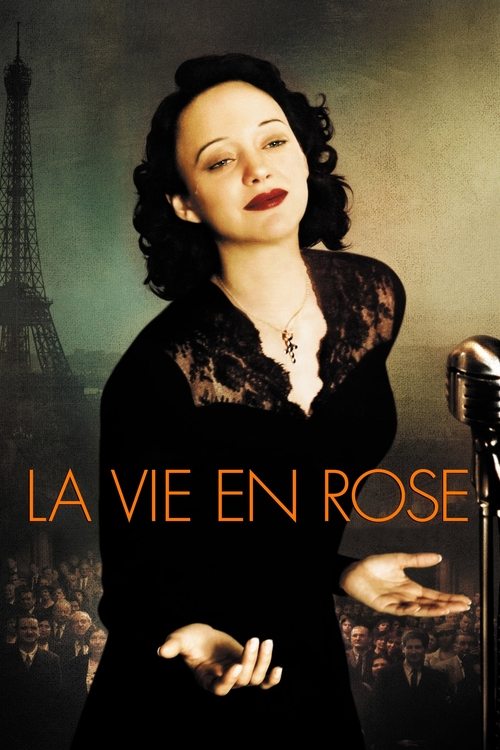
The movie "La Vie en Rose," produced in 2007, does not have a post-credit scene. The film concludes with a poignant and emotional ending that encapsulates the life of the iconic French singer Édith Piaf, portrayed by Marion Cotillard. After a powerful portrayal of her struggles, triumphs, and the bittersweet nature of her life, the film ends without any additional scenes or credits that extend the narrative. The focus remains on Piaf's legacy and the impact of her music, leaving the audience with a sense of reflection on her extraordinary journey.
What challenges did Édith Piaf face in her early life that shaped her character?
Édith Piaf, portrayed by Marion Cotillard, faced numerous challenges in her early life that deeply influenced her character. Born in a poor neighborhood in Paris, she was abandoned by her mother and raised by her grandmother, who ran a brothel. This tumultuous upbringing left her with feelings of abandonment and a longing for love. As a child, she suffered from health issues, including blindness due to keratitis, which was later cured by her father. These hardships instilled in her a fierce determination to succeed and a profound understanding of suffering, which would later resonate in her music.
How did Édith Piaf's relationship with Louis Leplée impact her career?
Louis Leplée, played by Gérard Depardieu, was a pivotal figure in Édith Piaf's early career. He discovered her singing in a bar and became her mentor, helping her to refine her talent and gain exposure. Leplée's belief in her abilities led to her first major performance at the cabaret Le Gerny, where she captivated audiences. However, their relationship took a tragic turn when Leplée was murdered, which deeply affected Piaf emotionally and professionally. His death left her feeling vulnerable and alone, yet it also fueled her desire to honor his memory through her music.
What role did Marcel Cerdan play in Édith Piaf's life and how did their relationship affect her?
Marcel Cerdan, portrayed by Jean-Pierre Martins, was a celebrated boxer and Édith Piaf's great love. Their passionate relationship was marked by intense emotions and deep connection, but it was also fraught with challenges, including Cerdan's commitment to his boxing career and the pressures of fame. Their love affair was a source of inspiration for Piaf's music, infusing her songs with raw emotion. However, their relationship was tragically cut short when Cerdan died in a plane crash, leaving Piaf devastated. This loss profoundly impacted her, leading to a period of deep sorrow and influencing her later performances.
How did Édith Piaf cope with the loss of her loved ones throughout her life?
Throughout her life, Édith Piaf experienced significant losses that shaped her emotional landscape. The death of her father, her mentor Louis Leplée, and her lover Marcel Cerdan left her grappling with profound grief. Piaf coped with these losses through her music, channeling her pain into her performances, which resonated with audiences. She often turned to alcohol and relationships as a means of escape, but these coping mechanisms led to further turmoil in her life. Her ability to express her sorrow through song became a hallmark of her artistry, allowing her to connect with others who shared similar experiences of loss.
What was the significance of the song 'La Vie en Rose' in Édith Piaf's life and career?
The song 'La Vie en Rose' became synonymous with Édith Piaf and marked a turning point in her career. Written in 1945, the song encapsulated her romantic ideals and her longing for love amidst the chaos of her life. It was a reflection of her personal experiences, embodying both hope and melancholy. The song's success catapulted her to international fame, allowing her to transcend her troubled past. 'La Vie en Rose' not only solidified her status as a leading figure in French music but also became an anthem of love and resilience, resonating with audiences around the world.
Is this family friendly?
"La Vie en Rose," the 2007 film about the life of the iconic French singer Édith Piaf, contains several elements that may not be suitable for children or sensitive viewers. Here are some potentially objectionable or upsetting aspects:
-
Depictions of Poverty and Struggle: The film portrays Édith's difficult childhood, including scenes of her living in a poor environment and her experiences with neglect.
-
Substance Abuse: There are scenes that depict drug and alcohol use, reflecting the darker aspects of Édith's life and career.
-
Death and Loss: The film addresses themes of loss, including the deaths of loved ones, which may be emotionally heavy for younger viewers.
-
Romantic Relationships: Édith's relationships are complex and sometimes tumultuous, including infidelity and heartbreak, which may be difficult for children to understand.
-
Violence and Abuse: There are moments that hint at physical and emotional abuse in her life, particularly in her relationships, which could be distressing.
-
Mental Health Struggles: The film touches on themes of depression and emotional turmoil, showcasing Édith's struggles with her mental health.
These elements contribute to the film's mature themes and emotional depth, making it more suitable for older audiences.