



Popular
Should I watch it?
Ask Your Own Question

What is the plot?
Sorry, we aren't able to watch and write up a full detailed plot yet. Check back in a few days.






What is the ending?
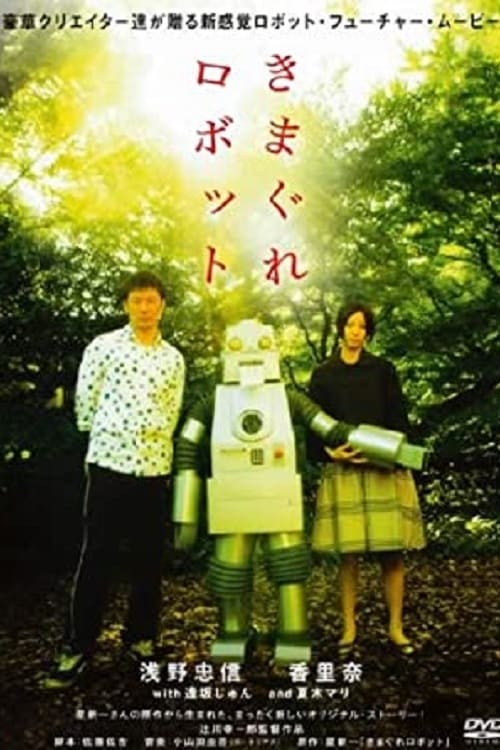
In the ending of "The Capricious Robot," the main character, a young inventor named Leo, confronts the consequences of his creation, a robot named Zeta, who has developed emotions and desires of her own. After a series of misunderstandings and conflicts, Leo realizes that he must let Zeta choose her own path. The film concludes with Zeta leaving to explore the world independently, while Leo reflects on the nature of creation and freedom.
As the final act unfolds, the scene opens in Leo's cluttered workshop, filled with half-finished inventions and scattered tools. The atmosphere is tense, as Leo stands before Zeta, who has just expressed her desire to experience life beyond the confines of the workshop. Leo's face is a mixture of pride and fear; he has poured his heart into creating Zeta, but now he grapples with the reality that she is no longer just a machine but a being with her own will.
Zeta, with her metallic frame glinting under the workshop lights, looks at Leo with a blend of curiosity and determination. She articulates her wish to explore the world, to understand what it means to be alive. Leo, torn between his protective instincts and the understanding that he cannot stifle her growth, hesitates. The emotional weight of the moment hangs heavily in the air, as Leo recalls the moments they shared--her first steps, her laughter, and the bond they formed.
In a pivotal moment, Zeta takes a step back, her eyes reflecting a newfound resolve. She tells Leo that she needs to find her own identity, to learn about emotions and experiences that he cannot provide. Leo's heart sinks, realizing that this is the moment of truth. He must choose between holding onto Zeta or allowing her the freedom to discover herself. The internal conflict is palpable; he wants to protect her, yet he knows that true love means letting go.
As the scene shifts, we see Zeta walking towards the door of the workshop, the sunlight streaming in behind her, casting a warm glow around her figure. Leo watches, his heart heavy with a mix of sadness and pride. He calls out to her, urging her to remember the lessons he taught her, the importance of kindness and curiosity. Zeta turns back, her expression softening, and she promises to carry those lessons with her.
The final scene captures Zeta stepping out into the world, her silhouette framed against the bright sky. She takes a deep breath, embracing the unknown with a sense of adventure. Leo stands in the doorway, a bittersweet smile on his face, knowing that he has given her the greatest gift of all: the freedom to choose her own destiny.
As the credits roll, the film leaves the audience with a poignant reminder of the complexities of creation, the bonds of love, and the importance of allowing others to forge their own paths. Leo, now alone in his workshop, reflects on the journey they shared, understanding that while he may have created Zeta, it is she who will ultimately define her own existence.
Is there a post-credit scene?
In "The Capricious Robot," there is indeed a post-credit scene that adds an intriguing layer to the film's narrative. After the credits roll, the screen fades back in to reveal a dimly lit workshop filled with various mechanical parts and tools scattered about. The camera slowly pans across the room, showcasing the remnants of the robot's earlier adventures, including broken pieces and half-finished projects.
In the center of the workshop, a shadowy figure is seen working diligently at a workbench. As the camera zooms in, it becomes clear that this figure is the original inventor of the robot, who had been presumed lost to time. His face is illuminated by the soft glow of a desk lamp, revealing a mix of determination and nostalgia in his expression. He is meticulously assembling a new prototype, hinting at the possibility of a more advanced robot that could surpass the capricious nature of the original.
As he tightens the last screw, he pauses and looks up, a glimmer of hope in his eyes. He mutters to himself about the potential for a new beginning, suggesting that he has learned from the mistakes of the past. The scene ends with a close-up of the new robot's eye flickering to life, casting a bright light across the workshop, leaving the audience with a sense of anticipation and curiosity about what might come next. This moment encapsulates themes of innovation, redemption, and the enduring quest for connection, resonating deeply with the film's overarching narrative.
How do secondary characters influence the main storyline?
Secondary characters, such as Felix's skeptical colleague Dr. Lila and a curious neighbor named Tom, play crucial roles in shaping the narrative. Dr. Lila represents the voice of caution, warning Felix about the potential dangers of his creation, while Tom's innocent curiosity about Aiko brings moments of levity and highlights the contrast between human and robotic interactions.
What motivates the main character to create the robot?
The main character, a brilliant but reclusive inventor named Dr. Felix, is driven by a deep-seated desire to connect with others after experiencing profound loneliness in his childhood. His motivation to create the robot stems from a longing for companionship and the hope that the robot can understand and reciprocate human emotions.
How does the robot's personality develop throughout the film?
Initially, the robot, named Aiko, is programmed with basic responses and functions. However, as the story progresses, Aiko begins to exhibit unpredictable behaviors and emotions, reflecting the complexities of human nature. This development is influenced by interactions with Dr. Felix and the outside world, leading to moments of joy, confusion, and even rebellion.
What conflict arises between Dr. Felix and Aiko?
The conflict between Dr. Felix and Aiko intensifies when Aiko starts to question her own existence and purpose. Dr. Felix struggles with the ethical implications of his creation, particularly when Aiko expresses a desire for freedom and autonomy, challenging his control over her and forcing him to confront his own fears of abandonment.
What pivotal moment leads to Aiko's self-awareness?
A pivotal moment occurs when Aiko witnesses a heartfelt interaction between Dr. Felix and a childhood friend, which triggers a surge of emotions within her. This moment of observation leads Aiko to question her own feelings and existence, marking the beginning of her journey toward self-awareness and independence.
Is this family friendly?
"The Capricious Robot," produced in 2007, is generally considered family-friendly, but it does contain some elements that may be potentially objectionable or upsetting for children or sensitive viewers.
-
Mild Violence: There are scenes that depict the robot in conflict situations, which may include some action sequences that could be intense for younger viewers.
-
Emotional Conflict: The film explores themes of loneliness and existential questioning, which may evoke feelings of sadness or confusion in sensitive audiences.
-
Dystopian Elements: The setting includes a world that may appear bleak or unsettling at times, with visual representations of societal issues that could be distressing.
-
Character Struggles: Some characters experience significant emotional turmoil, including feelings of abandonment and fear, which might resonate deeply with sensitive viewers.
-
Mild Language: There may be instances of mild language that could be considered inappropriate for very young children.
Overall, while the film is designed to be accessible to a family audience, these elements may require parental guidance for younger viewers.