



















Popular
What is Jenna's relationship with her husband Earl like?
How does Jenna's pregnancy affect her life and decisions?
What role does Dr. Pomatter play in Jenna's life?
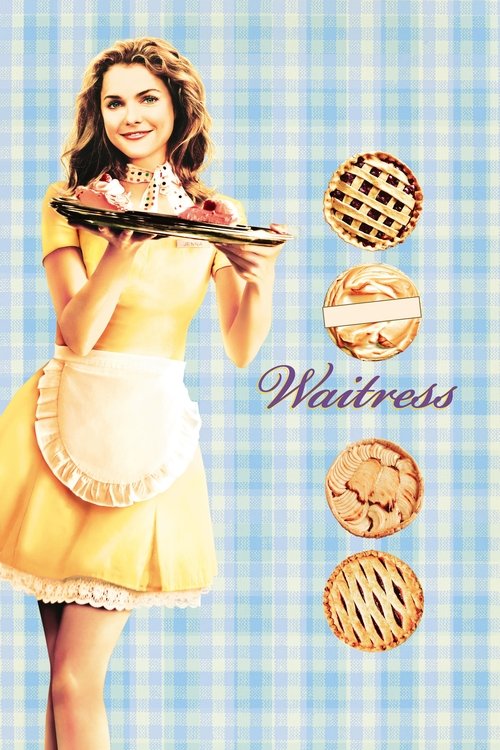
What significance do Jenna's pies have in the story?
How does Jenna's relationship with her coworkers, Dawn and Becky, influence her journey?
Should I watch it?
Ask Your Own Question

What is the plot?
Sorry, we aren't able to watch and write up a full detailed plot yet. Check back in a few days.







What is the ending?
In the ending of "Waitress," Jenna gives birth to her daughter, whom she names Lulu. After a difficult journey, she finds the strength to leave her abusive husband, Earl, and embrace her new life as a single mother. Jenna also begins a new chapter in her life by opening her own pie shop. The film concludes with a sense of hope and renewal as Jenna looks forward to the future with her daughter.
Now, let's delve into the ending in a more detailed, chronological narrative.
As the film approaches its conclusion, Jenna is in the hospital, preparing to give birth. The atmosphere is tense yet filled with anticipation. She is surrounded by her friends, Dawn and Becky, who provide emotional support. Jenna's internal struggle is palpable; she is both excited and terrified about becoming a mother, especially given her tumultuous relationship with her husband, Earl.
In the delivery room, Jenna experiences the pain of childbirth, but there is also a sense of empowerment as she brings new life into the world. The moment she holds her daughter, Lulu, is transformative. Jenna's face lights up with joy, and for the first time, she feels a profound connection to her child, which signifies a turning point in her life. This moment is underscored by the soft lighting and gentle music, emphasizing the beauty of new beginnings.
After the birth, Jenna's thoughts drift to her future. She reflects on her life with Earl, who has been controlling and abusive. The contrast between her past and her present is stark. As she cradles Lulu, Jenna realizes that she wants more for her daughter than what she experienced. This realization fuels her determination to break free from Earl's grasp.
In a pivotal scene, Jenna confronts Earl, who has come to the hospital. He is dismissive and tries to assert his control over her, but Jenna stands her ground. She tells him that she will not be returning home with him. This confrontation is charged with emotion; Jenna's fear is evident, but so is her newfound strength. She is ready to reclaim her life and protect her daughter from the cycle of abuse.
The film then shifts to a few months later. Jenna is seen in her own pie shop, a dream she had long harbored. The shop is filled with the aroma of freshly baked pies, and the atmosphere is warm and inviting. Jenna is not just a waitress anymore; she is a business owner, a mother, and a woman who has taken control of her destiny. The shop serves as a symbol of her independence and resilience.
As Jenna interacts with customers, there is a sense of community and support around her. Dawn and Becky are still by her side, celebrating her achievements and the joy of motherhood. The camaraderie among the women highlights the importance of friendship and solidarity in overcoming life's challenges.
In the final moments of the film, Jenna is seen with Lulu, watching her daughter play. There is a serene smile on her face, reflecting her hope for the future. The camera captures the bond between mother and child, emphasizing the love that has blossomed from Jenna's struggles. The film closes with a sense of optimism, suggesting that while life may be difficult, it is also filled with possibilities and new beginnings.
In summary, the fates of the main characters are as follows: Jenna embraces her role as a mother and a business owner, leaving behind her abusive relationship with Earl. Earl is left to confront the consequences of his actions, while Dawn and Becky continue to support Jenna in her new life. The film concludes on a hopeful note, celebrating resilience, friendship, and the power of new beginnings.
Is there a post-credit scene?
The movie "Waitress," produced in 2007, does not have a post-credit scene. The film concludes with a poignant ending that wraps up the main narrative threads without any additional scenes after the credits. The story focuses on Jenna, a talented pie maker trapped in an unhappy marriage, who finds solace and hope through her passion for baking and her relationships with those around her. The film ends on a hopeful note, emphasizing themes of self-discovery and new beginnings, leaving the audience with a sense of closure.
What is Jenna's relationship with her husband Earl like?
Jenna's relationship with her husband Earl is strained and abusive. Earl is controlling and often belittles her, which leaves Jenna feeling trapped and unhappy. He is possessive, and his jealousy manifests in a way that stifles Jenna's spirit. Despite her love for baking and her dreams of a better life, Earl's behavior creates a constant source of tension and fear in her life.
How does Jenna's pregnancy affect her life and decisions?
Jenna's unexpected pregnancy complicates her life significantly. Initially, she feels trapped by the situation, especially given her tumultuous relationship with Earl. The pregnancy becomes a catalyst for Jenna to reevaluate her life choices and aspirations. It motivates her to seek independence and ultimately leads her to consider leaving Earl, as she desires a better future for herself and her child.
What role does Dr. Pomatter play in Jenna's life?
Dr. Pomatter becomes a pivotal figure in Jenna's life as her obstetrician. Their relationship begins professionally but quickly evolves into a romantic connection. Dr. Pomatter is kind, attentive, and genuinely interested in Jenna's well-being, contrasting sharply with Earl's abusive nature. This relationship provides Jenna with a sense of hope and possibility, allowing her to explore her feelings and desires outside of her oppressive marriage.
What significance do Jenna's pies have in the story?
Jenna's pies serve as a powerful symbol of her creativity, passion, and emotional state. Each pie she creates reflects her feelings and experiences, often named after her personal struggles or dreams. The act of baking becomes a form of self-expression and escape for Jenna, allowing her to channel her emotions into something tangible. The pies also represent her desire for freedom and a better life, as she dreams of opening her own pie shop.
How does Jenna's relationship with her coworkers, Dawn and Becky, influence her journey?
Jenna's relationships with her coworkers, Dawn and Becky, provide her with support and camaraderie. Dawn, who is shy and searching for love, and Becky, who is more outspoken and protective, both encourage Jenna to pursue her dreams and stand up for herself. Their friendship offers Jenna a sense of belonging and understanding, helping her navigate her challenges and ultimately empowering her to make bold choices in her life.
Is this family friendly?
"Waitress," produced in 2007, is a film that, while charming and heartwarming, does contain some elements that may be considered objectionable or upsetting for children or sensitive viewers. Here are some aspects to consider:
-
Marital Strain: The film explores themes of an unhappy marriage, including emotional manipulation and control. The protagonist, Jenna, faces challenges with her abusive husband, which may be distressing for younger audiences.
-
Pregnancy and Abortion: The central plot revolves around Jenna's unexpected pregnancy. The film addresses her thoughts about abortion, which could be a sensitive topic for some viewers.
-
Emotional Turmoil: Jenna experiences a range of emotions, including sadness, frustration, and longing. Her internal struggles with her life choices and relationships may resonate deeply and could be upsetting for some.
-
Adult Relationships: The film includes romantic and sexual themes, including Jenna's affair with her doctor. These elements may not be suitable for younger viewers.
-
Depictions of Conflict: There are scenes of conflict and tension, particularly involving Jenna's relationship with her husband, which may be uncomfortable for some audiences.
Overall, while "Waitress" has a lighthearted tone and a focus on personal growth and resilience, it does contain mature themes that may not be appropriate for all children or sensitive viewers.