










Popular
What motivates the main character, Reena Hale, to become a firefighter?
How does Reena's relationship with her father influence her life choices?
What role does the character of the arsonist play in Reena's life?
How does Reena's romantic relationship with the character of Bo impact her character development?
What are the key events that lead to the climax of the story involving Reena and the arsonist?
Should I watch it?
Ask Your Own Question

What is the plot?
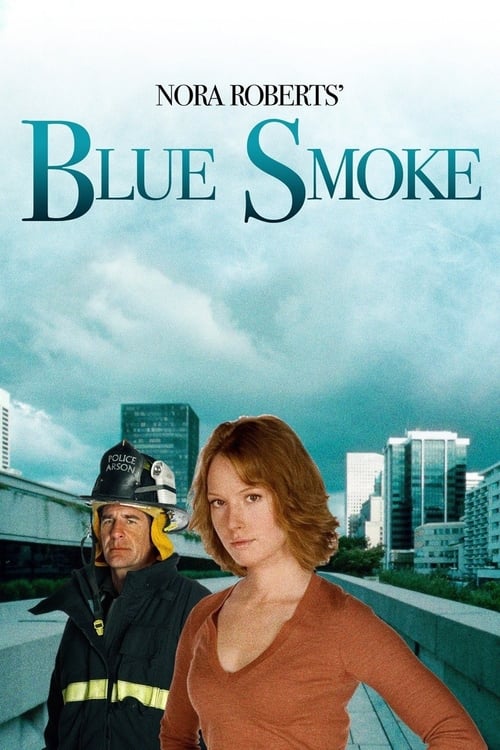
The story opens in Baltimore's Little Italy, in the warm, noisy world of the Hale family and their pizzeria, Sirico's, where food, family, and old neighborhood loyalties shape everything about eleven-year-old Catarina "Reena" Hale's life. That world is shattered the night Reena is attacked by the neighborhood bully, Joey Pastorelli, and the clash between the Hale and Pastorelli families turns ugly almost immediately, with Reena's father confronting Joe Pastorelli Sr. in the street over what has happened to his daughter. The argument leaves a bitter trail of anger hanging over the neighborhood, and that anger soon turns into catastrophe when Sirico's is torched in an arson fire that guts the restaurant and marks the beginning of Reena's obsession with fire.
Reena watches the blaze consume the family business, helpless in the face of the roaring orange wall that swallows the place that had defined her childhood. The fire does more than destroy a restaurant; it fundamentally remakes her. In the ashes, she discovers a terrible fascination with the thing that has just taken everything from her, and that fascination hardens into purpose: she wants to understand fire, master it, and someday become an arson investigator. The sources identify the elder Pastorelli as the person responsible for the original fire, and he is arrested afterward, turning the family feud into a legal and emotional wound that never really closes.
John Minger enters Reena's life at this point as the investigator who helps make sense of the destruction. He becomes a mentor after the restaurant fire, and his guidance gives the shattered little girl a path forward instead of simply leaving her with fear. While the Hale family rebuilds and rallies around one another, Reena quietly turns the trauma into ambition. The family remains tight-knit, Italian, loud, and resilient, but the fire has already set Reena apart: where everyone else wants the pain to end, she wants to learn what made it happen.
The film then moves through Reena's adolescence and young adulthood in a series of emotional losses that keep reinforcing the same lesson: fire keeps coming back into her life, and it always takes something precious. She goes to college and follows the path that will eventually take her into fire investigation and the Baltimore arson unit. At college she falls for Josh Bolton, a sweet journalism student who is genuinely in love with her, and for a while he represents the possibility of something softer and more ordinary than the life she has known. But that hope is burned away when Josh dies in a fire in his apartment. The death is devastating not only because it is tragic, but because no one seems willing to question it the way Reena does; the world treats it as a terrible accident, while she senses the familiar shape of fire's cruelty returning to claim someone she loves.
The pain deepens with the next relationship. Reena later dates Hugh, and this relationship also ends violently, when Hugh is killed in an explosion with a ring in his pocket. That detail lands like a cold, private message inside the blast: it suggests commitment, interrupted future, and a death that is not random at all but staged with personal intent. By now, fire has moved beyond being a childhood trauma and become a pattern of destruction that keeps severing Reena's emotional life. She grows more guarded, more capable, and more determined to stay in control, but each loss leaves another scar beneath the surface.
As an adult, Catarina "Reena" Hale is introduced as a competent, self-possessed Baltimore arson investigator whose career is built directly on the obsession born in childhood. She has become exactly what the eleven-year-old girl in the street watching Sirico's burn once dreamed of becoming. Yet her personal life is still shadowed by fire, and the film makes clear that even success has not protected her from it. Reena buys a house in the old neighborhood, the same area where her family's story began, and that move matters because it physically returns her to the place where everything went wrong. The house places her back in the orbit of her past, close to the memory of Sirico's, close to the old family conflict, and close to the man who is about to become the other great force in her life: Bo Goodnight.
Bo is her next-door neighbor, a carpenter whose work and personality stand in striking contrast to Reena's world of ash, evidence, and dangerous memory. He is introduced as the kind of man who builds rather than destroys, and he immediately becomes a romantic possibility. He had already noticed her years before, having glimpsed her at a college dorm party and kept the image of her as his "Dream Girl," which gives his pursuit of her a slightly fated, patient quality. Now that she is finally next door, he starts to draw her out of her protective shell with easy warmth and obvious admiration. Their connection grows against the backdrop of ordinary domesticity--his carpentry, her new house, the old neighborhood around them--so that the relationship feels like a fragile patch of sunlight in a life repeatedly darkened by smoke.
For a time, Reena begins to believe that maybe she has finally outrun the old curse. Her family approves of Bo, and he seems to offer exactly what her life has lacked: steadiness, humor, and the possibility of uncomplicated love. But the film starts tightening around her again when suspicious fires begin breaking out, and these fires are not just connected to one another; they are connected to Reena. At work, she is pulled into a series of cases that carry the same signature of obsession and personal targeting, and the threat becomes unmistakably intimate when threatening phone calls begin to arrive. The calls are not just harassment. They are a taunt, a reminder that someone from her past is watching her, remembers her, and means to keep her off balance.
The stalker's attacks do not arrive as random explosions of violence. They are carefully aimed at the softest places in Reena's life. Each new incident seems to narrow the circle around her, moving from property damage toward the people she loves. The film and source material describe the danger as escalating from threatening calls and targeted fires to murder, and the pattern is clear: Reena's relationships are being hunted one by one. The shadow over her past becomes personal again when the stalker hints at the earlier deaths, linking the present crimes back to the long-buried trauma that has shaped her entire adult identity.
That is when the full shape of the truth begins to emerge: the man terrorizing Reena is not a stranger, and this is not a new grudge. He is a psychopathic arsonist from her past, tied directly to the childhood violence that began with the attack by Joey Pastorelli and the burning of Sirico's. The central revelation of the story is that the fire that destroyed her childhood and the later crimes against her adult life belong to the same sick pattern of obsession, revenge, and control. Reena's life has not merely been unlucky; it has been deliberately shaped by someone who has carried the old fire forward and used it as a weapon against her and everyone she loves. The Pastorelli family conflict provides the backstory's emotional origin, but the adult stalker turns that old neighborhood hatred into a much more dangerous, personal vendetta.
Reena's own investigation becomes more urgent as each clue lands closer to home. She uses her arson expertise, her instincts, and her hard-earned familiarity with fire's behavior to follow the pattern the stalker leaves behind. She is not a passive victim; she is the person best equipped to understand how the mind behind these crimes works, and that knowledge gives the story its forward momentum. Still, the emotional cost keeps rising. Josh Bolton is already dead by fire, Hugh is already dead by explosion, and the possibility of losing Bo now hangs over every scene involving the two of them. Bo, who has been so openly hopeful, becomes the clearest symbol of what Reena stands to lose if she cannot stop the man chasing her from the past.
The tension peaks as Reena realizes that Bo may be next. The sources make clear that she fears the stalker's next target will be him, and that fear changes the mood of the entire story from mystery to imminent disaster. Her romance with Bo stops being just a love story and becomes a race against murder. He insists on staying close to her, and she cannot make herself push him away, even though loving her has become dangerous. Their relationship becomes one more thing the stalker can use to hurt her, and that is exactly what the killer intends. The threats are no longer abstract. Someone is actively trying to burn her future down in front of her eyes.
In the climax, Reena is forced to confront the man behind the fires directly, using everything she has learned about arson to expose and stop him before he can claim another life. The showdown is the culmination of all her history at once: the burned pizzeria, the dead boyfriends, the threatening calls, the close calls, the returning neighborhood hatred, and the relentless sense that the past has never truly been buried. The final confrontation resolves the immediate danger by revealing the stalker's connection to her past and ending his ability to continue his campaign of intimidation and murder. The sources do not provide every beat of the physical showdown in identical detail, but they agree on the crucial outcome: Reena faces him, the threat is stopped, and the chain of fire that has followed her for so long is finally broken.
What matters in the ending is that Reena survives. Bo survives as well and remains at her side, confirming that the relationship born next door has outlasted the danger that tried to destroy it. The final emotional shape of the story is not simply that a killer is caught or neutralized, but that Reena refuses to let fire define her only as trauma. She has spent her life turning an act of destruction into a profession, a discipline, and a way of taking control over the thing that once terrified her. By the end, that transformation is complete enough that she can stand with Bo in the life she has built and not be pulled backward by the past.
The story ends with the sense that Reena has fought her way through every layer of loss the fire has taken from her: her family's restaurant, her childhood innocence, Josh Bolton, Hugh, and the illusion that she could remain untouched by the old violence. Joe Pastorelli Sr. remains the man tied to the original destruction of Sirico's, and his arrest stands as the legal punishment for the first fire, but the deeper emotional punishment belongs to the stalker who carried the old hatred forward into adulthood. By confronting him and stopping him, Reena finally claims the future that the fire tried to steal. With Bo still alive and present, and with the immediate terror over, the final scene leaves her not as the frightened girl from the pizzeria fire, but as a woman who has survived the blaze, understood it, and refused to be consumed by it.





What is the ending?
In the ending of "Nora Roberts' Blue Smoke," the protagonist, Reena Hale, confronts the arsonist who has been terrorizing her life. After a tense showdown, she manages to escape and ultimately finds closure. The film concludes with Reena embracing her new life, surrounded by her loved ones, and reflecting on her journey.
As the climax of "Blue Smoke" unfolds, we find Reena Hale, a talented chef, grappling with the aftermath of a series of devastating fires that have haunted her since childhood. The tension escalates as she learns that the arsonist, who has been stalking her, is none other than a man named Billy, who has a personal vendetta against her family.
Scene by scene, the narrative builds to a heart-pounding confrontation. Reena, now a successful restaurant owner, is preparing for a significant event at her establishment. The atmosphere is charged with excitement, but beneath the surface, Reena is plagued by anxiety, knowing that the threat of Billy looms large. Her boyfriend, a supportive and loving figure, stands by her side, offering reassurance and strength.
As the night of the event arrives, the restaurant is filled with friends, family, and patrons, all celebrating Reena's achievements. However, the joy is short-lived when Billy makes his presence known. He crashes the event, creating chaos and fear among the guests. Reena's heart races as she realizes the danger is not just to her but to everyone she loves.
In a gripping sequence, Reena confronts Billy, who reveals his twisted motivations. He blames her family for the loss of his own, and his rage is palpable. The confrontation is fraught with tension, as Reena stands her ground, fueled by a mix of fear and determination. She knows she must protect her loved ones and herself.
As the situation escalates, Reena's boyfriend intervenes, attempting to shield her from Billy's wrath. A struggle ensues, and in the chaos, Reena seizes the opportunity to escape. She races through the restaurant, her heart pounding, adrenaline coursing through her veins. The camera captures her fear and resolve as she navigates the familiar space that has become a battleground.
In a final showdown, Reena confronts Billy outside the restaurant. The night is dark, and the tension is thick in the air. With a mix of courage and desperation, she manages to outsmart him, using her knowledge of the surroundings to her advantage. The confrontation culminates in a moment of triumph as she calls for help, and the authorities arrive just in time to apprehend Billy.
As the dust settles, Reena stands outside her restaurant, surrounded by her friends and family, who have rallied to support her. The relief is palpable, and the emotional weight of the night begins to lift. Reena reflects on her journey, acknowledging the pain and fear she has endured but also recognizing her strength and resilience.
In the final scenes, we see Reena embracing her new life, filled with hope and love. She shares a tender moment with her boyfriend, who has been her rock throughout the ordeal. The film closes on a note of optimism, highlighting Reena's growth and the importance of community and support in overcoming adversity. Each character finds their place in this new chapter, with Reena ready to move forward, leaving the shadows of her past behind.
Is there a post-credit scene?
Nora Roberts' Blue Smoke does not have a post-credit scene. The film concludes with a resolution to the main storyline, focusing on the characters' emotional journeys and the culmination of their struggles. The ending wraps up the narrative without any additional scenes or hints at future developments after the credits roll.
What motivates the main character, Reena Hale, to become a firefighter?
Reena Hale is motivated to become a firefighter due to her traumatic childhood experience of witnessing her family's restaurant burn down. This event instills in her a desire to fight fires and protect others from the devastation she experienced.
How does Reena's relationship with her father influence her life choices?
Reena's relationship with her father is complex; he is a firefighter who is both a source of inspiration and a figure of fear. His dedication to his job and the dangers associated with it shape Reena's understanding of bravery and sacrifice, ultimately influencing her decision to pursue a career in firefighting.
What role does the character of the arsonist play in Reena's life?
The arsonist, who is revealed to be a former boyfriend, becomes a significant threat in Reena's life. His obsession with her leads to a series of dangerous encounters, forcing Reena to confront her past and the trauma associated with it, while also highlighting her resilience and determination to overcome fear.
How does Reena's romantic relationship with the character of Bo impact her character development?
Reena's romantic relationship with Bo serves as a source of support and stability in her tumultuous life. Bo's understanding and patience help Reena confront her fears and insecurities, allowing her to grow emotionally and become more confident in her abilities as a firefighter.
What are the key events that lead to the climax of the story involving Reena and the arsonist?
Key events leading to the climax include the escalating threats from the arsonist, Reena's increasing anxiety about her safety, and her determination to protect her loved ones. The tension culminates in a dramatic confrontation where Reena must face the arsonist, showcasing her bravery and the culmination of her character growth.
Is this family friendly?
"Nora Roberts' Blue Smoke," produced in 2007, contains several elements that may not be suitable for children or sensitive viewers. Here are some potentially objectionable or upsetting aspects:
-
Violence and Arson: The film revolves around a series of arson attacks, which include scenes of fire and destruction. This may be distressing for younger viewers.
-
Murder and Threats: The plot involves a murder mystery, with characters facing threats to their lives. There are tense moments that may evoke fear or anxiety.
-
Emotional Trauma: Characters experience significant emotional turmoil, including grief and fear, which may be intense for sensitive viewers.
-
Romantic Relationships: There are romantic elements that include adult themes and situations, which may not be appropriate for younger audiences.
-
Police and Crime Scenes: The presence of law enforcement and crime scene investigations may be unsettling for some viewers, particularly children.
These elements contribute to a more mature viewing experience, and parental discretion is advised.