








Popular
What motivated Jim Jones to create the Peoples Temple and move to Jonestown?
How did the members of the Peoples Temple feel about their life in Jonestown?
What were the living conditions like in Jonestown for the residents?
What role did the visit from the U.S. Congressman Leo Ryan play in the events at Jonestown?
How did Jim Jones manipulate the members of the Peoples Temple emotionally?
Should I watch it?
Ask Your Own Question

What is the plot?
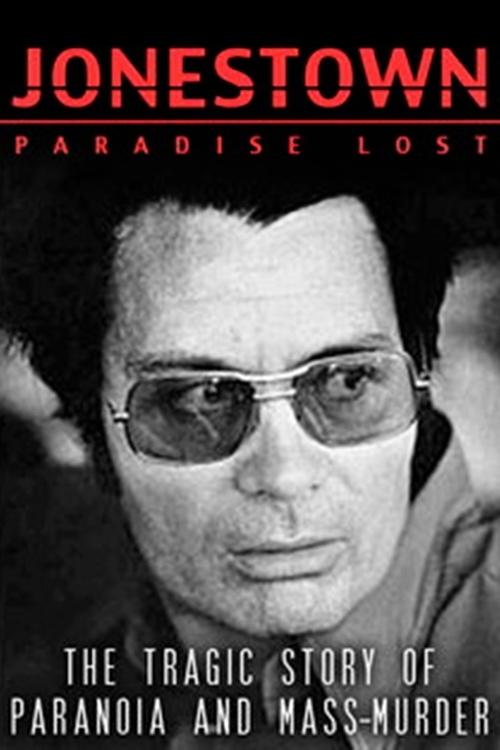
The film opens in the final days before Jonestown's destruction, framing the story through survivor testimony and dramatized reconstruction as the Peoples Temple teeters on the edge of catastrophe in Guyana. Jim Jones stands at the center of everything, not as a charismatic dreamer anymore but as a hollowed, volatile ruler whose grip on the compound is tightening into panic. He presides over Jonestown like a man already at war with the world, and the film makes clear from the start that the "paradise" he promised has become a sealed, fearful prison. Inside the jungle settlement, the air is humid, heavy, and watchful; people work, march, gather, and listen under the gaze of a leader who has replaced faith with surveillance. Jones' voice is everywhere, echoed in speeches, orders, rehearsed answers, and the strained faces of the people who have learned to survive by repeating what he wants to hear.
Marceline Jones appears beside him as his wife and a stabilizing presence within the Temple leadership, but even she cannot soften the strange, collapsing atmosphere around her husband. The settlement is already strained by pressure from outside scrutiny in the United States and by Jones' own growing paranoia. The film shows that he is no longer merely demanding devotion; he is testing obedience, probing for weakness, and preparing for the possibility that the whole experiment may end in disaster. The interviews and reenactments intertwine, so the audience is constantly reminded that these scenes are memory as much as drama, testimony as much as action. That framing matters because the story is not about a single moment of madness, but about how an entire community is slowly pushed toward the edge while the world tries, too late, to look in.
Congressman Leo Ryan enters the story as the force that breaks the sealed world of Jonestown open. He is determined to investigate reports about the Peoples Temple and insists on visiting the compound in Guyana, bringing with him journalists and relatives who hope to see loved ones or expose the truth. The delegation includes journalist Tim Reiterman of the San Francisco Examiner and reporter Don Harris, along with family members and other observers. Their arrival changes the temperature of the film immediately. Jonestown is forced to perform itself. Jones alternates between reluctant cooperation and resistance, trying to decide whether opening the gates will prove his control or destroy him. He eventually allows the visitors in, but the moment they arrive, it is clear that he is already calculating how to manage what they will see.
The first major revelation is that the harmonious community being presented to outsiders is a staged illusion. Jones coaches Temple members on what to say, telling them how to answer questions, how to smile, how to describe their lives, and how to protect the image of the settlement. The film lingers on these rehearsals because they expose the machinery of deceit. People who seem calm are not necessarily free; people who praise the compound may be reciting lines under pressure. The compound's public face is manufactured, and the strain of that performance is visible in the eyes and pauses of the residents. The visitors move through Jonestown sensing that something is badly wrong even when the words spoken to them insist otherwise.
As the delegation spends time with the residents, the pressure inside the community begins to crack. Defections start to surface, and these are among the most important turning points in the film. People begin signaling that they want out. Some do so quietly, others more openly, and each one chips away at Jones' authority. What had been presented as total ideological unity is exposed as a brittle façade held together by fear and habit. The film makes this tension feel suffocating: Jones watches, listens, and reacts with mounting fury as his control slips in front of the very outsiders he hoped to manipulate. His paranoia deepens into something almost theatrical, as if he is trapped in a role he can no longer sustain. The more the truth emerges, the less he resembles a prophet and the more he resembles a man cornered by his own lies.
The visitors' presence turns Jonestown into a pressure cooker. Ryan's party has come to observe, but it becomes clear that observation itself is dangerous in this place because it gives people a chance to speak honestly. Each defection is not just a personal decision; it is a public accusation against Jones' world. The film emphasizes that this is the moment the leader realizes his utopia cannot survive scrutiny. The compound he built to isolate followers from the world is now being seen from the outside and judged by the people he cannot fully control. Jones' reaction is not reconciliation or surrender. It is escalation.
The delegation's efforts to leave Jonestown become the next great source of tension. The atmosphere shifts from uneasy politeness to imminent danger. Jones' people circle, watch, and prepare. Outside, at the Guyanese airstrip, the film begins to convert suspicion into open violence. The attack on the departing delegation is the first unmistakable eruption of the massacre. Congressman Leo Ryan is killed in the ambush, along with Don Harris. Vernon Gosney is shot and wounded but survives. Tim Reiterman is also shot and wounded but survives. These moments are staged as chaos, panic, and stunned disbelief, the kind of violence that moves so quickly it feels unreal even as it happens. The airstrip, which should represent departure and rescue, instead becomes the site where Jones' final command of his empire turns lethal.
The assassination attack is one of the film's most devastating twists because it confirms that the danger was never limited to the compound's walls. The cult's violence reaches beyond its borders. The outside world, which had hoped to document and intervene, is now bloodied by the very community it came to investigate. The wounded survivors become living witnesses to the catastrophe, carrying the truth back with them even as the dead are left behind in the dust and heat of the airstrip. Leo Ryan's death is especially significant because the film frames him as the man whose insistence on seeing Jonestown in person triggers the final chain of events. His presence forces Jones into the open, and the open leads to murder.
After the airstrip attack, the film plunges into the final, most horrifying phase: the destruction of the Jonestown community itself. Jones orders the deaths of all involved and commands the mass poisoning of the Temple members. The story now becomes a nightmare of obedience, fear, and pressure as the poison is prepared and distributed. The film shows the final act not as a clean, voluntary suicide but as a mass murder-suicide driven by Jones' authority and the total collapse of hope. The mixture of coercion and resignation is central to the tragedy. Some members comply because they still believe, some because they are exhausted, some because they are terrified, and some because the world they know has already been shattered beyond repair.
The poison distribution sequence is the film's emotional and visual climax. The atmosphere grows progressively more unbearable as people gather, children are brought forward, and the scale of the atrocity becomes undeniable. Jones' words here matter enormously. He uses speech as a weapon one last time, turning rhetoric into machinery of death. The film presents this as the ultimate perversion of the ideals he once preached. What began as a promise of community has become an assembly line of annihilation. The community spaces that once held meetings, labor, and collective living are transformed into death sites. The camera lingers on faces, hands, and cups, on the terror of realization and the numbness that follows. Every new body is another confirmation that the end is not coming; it is already here.
The film notes that by the end of November 18, 1978, 918 people die. That number hangs over the final sequence as the measure of the catastrophe. Hyacinth Thrash survives by hiding, and her survival provides one of the only small breaches in the wall of death. Stephan Jones survives because he is not at the compound during the massacre, a fact that underscores the cruel randomness of who is present for the final collapse and who is spared. Sherwin Harris survives as well, while his estranged ex-wife Sharon Amos and daughter Lianne die in the broader wave of suicides associated with the tragedy. The film treats these losses as part of the same expanding circle of destruction, showing that the catastrophe is not confined to one room or one moment but spreads across relationships and locations as Jones' world implodes.
The narrative also draws attention to the fact that the final deaths are not all identical in circumstance. Some people are actively forced or strongly pressured into drinking poison. Others are caught in an environment where resistance is nearly impossible. The film's dread comes from that ambiguity and from the knowledge that Jones' command has made ordinary moral choice almost meaningless. The result is not a simple ending but the collapse of a system in which power has become total. The poison, the speeches, the weapons, the rehearsed loyalty, and the earlier deception all converge into one irreversible act. Jones has chosen destruction over exposure, annihilation over surrender.
As the deaths accumulate, the film's documentary framing gives the final scenes the feel of a historical wound still being remembered. The testimony structure reminds the viewer that this is not invented horror but reconstructed memory, and that makes the emotional impact harsher rather than softer. Vernon Gosney and Tim Reiterman survive the airstrip shooting, and their survival matters because they carry out the story of what happened. The dead cannot speak, but the witnesses can. That is part of the film's moral architecture: survival becomes responsibility, testimony becomes the only antidote to Jones' attempt to control the narrative even in death.
The ending is bleak and absolute. There is no rescue of the community, no final repentance, no reversal of the order Jones has given. Instead, the film closes on the aftermath of a man who has brought an entire settlement to the edge and then pushed it over. Jonestown, once sold as a utopian refuge in the Guyanese jungle, ends as a field of corpses and shattered belief. The final scene and resolution do not offer catharsis; they offer ruin. Jones' control ends not in triumph but in obliteration, and the surviving witnesses stand amid the wreckage as proof that the truth must now live outside the compound, in memory and testimony, because the world he built has been erased by his final command.









What is the ending?
In the ending of "Jonestown: Paradise Lost," the film culminates in the tragic events of November 18, 1978, when over 900 members of the Peoples Temple, led by Jim Jones, die in a mass suicide at their settlement in Jonestown, Guyana. The film captures the harrowing moments leading up to this event, showcasing the desperation and manipulation that led to such a catastrophic conclusion.
As the narrative unfolds, the final scenes depict the chaos and despair within Jonestown. The atmosphere is tense, filled with a sense of impending doom. Jim Jones, increasingly paranoid and erratic, addresses his followers, urging them to partake in what he calls a "revolutionary act." The camera captures the fear and confusion on the faces of the members, many of whom are visibly distressed but still loyal to Jones, reflecting their deep emotional investment in his vision.
In a chilling sequence, the members are gathered together, and the atmosphere shifts from a sense of community to one of dread. Jones instructs them to drink a concoction laced with poison, presenting it as a means of escape from a world that he claims is hostile to them. The film poignantly captures the internal struggle of the members, torn between their loyalty to Jones and their instinct for survival. Some members resist, pleading for their lives, while others, overwhelmed by fear and indoctrination, comply.
As the poison takes effect, the camera lingers on the faces of the members, showcasing their final moments filled with anguish, confusion, and resignation. The scene is haunting, with the sounds of crying children and desperate pleas echoing in the background. The film does not shy away from the horror of the moment, presenting the stark reality of the mass death that unfolds.
In the aftermath, the film shifts to the perspective of the outside world, where news of the tragedy begins to spread. The fate of the main characters is revealed: Jim Jones is found dead from a gunshot wound, likely self-inflicted, symbolizing his ultimate failure to control the narrative he had created. The surviving family members and friends of those who perished are left to grapple with the loss and the betrayal of trust, highlighting the devastating impact of Jones's manipulation.
The film concludes with a somber reflection on the events, leaving viewers with a haunting reminder of the fragility of faith and the dangers of blind loyalty. The emotional weight of the ending resonates deeply, as the stories of the individuals lost in Jonestown are brought to the forefront, emphasizing their humanity amidst the tragedy.
Is there a post-credit scene?
The movie "Jonestown: Paradise Lost," produced in 2007, does not contain a post-credit scene. The film concludes with a powerful examination of the events surrounding the Jonestown Massacre, focusing on the testimonies of survivors and the impact of the tragedy on their lives. The ending emphasizes the emotional weight of the story, leaving viewers with a sense of reflection on the consequences of blind faith and manipulation.
What motivated Jim Jones to create the Peoples Temple and move to Jonestown?
Jim Jones, portrayed as a charismatic yet deeply troubled leader, was driven by a desire to create a utopian society free from the racial and social injustices he perceived in America. His vision was rooted in a mix of socialist ideals and a quest for personal power, which he believed could be realized in the remote jungles of Guyana.
How did the members of the Peoples Temple feel about their life in Jonestown?
The members of the Peoples Temple initially felt a sense of hope and community in Jonestown, believing they were part of a revolutionary movement. However, as conditions deteriorated, many experienced fear, disillusionment, and a growing sense of entrapment, particularly as Jim Jones's authoritarian control intensified.
What were the living conditions like in Jonestown for the residents?
The living conditions in Jonestown were harsh and oppressive. The settlement was marked by inadequate shelter, limited food supplies, and a lack of medical care. The residents faced grueling work schedules and were subjected to constant surveillance and control by Jones and his inner circle, leading to a pervasive atmosphere of fear and paranoia.
What role did the visit from the U.S. Congressman Leo Ryan play in the events at Jonestown?
Congressman Leo Ryan's visit to Jonestown was pivotal; he aimed to investigate reports of abuse and coercion within the Peoples Temple. His presence initially brought hope to some members, but it also triggered Jones's paranoia. The visit culminated in violence when Ryan and several others were ambushed and killed as they attempted to leave, escalating the crisis in Jonestown.
How did Jim Jones manipulate the members of the Peoples Temple emotionally?
Jim Jones employed a range of manipulative tactics to control the members emotionally, including preaching messages of love and unity while simultaneously instilling fear of external threats. He used psychological manipulation, such as public shaming and forced confessions, to maintain loyalty, and he often portrayed himself as a messianic figure, demanding absolute devotion and obedience.
Is this family friendly?
"Jonestown: Paradise Lost" is a documentary that delves into the tragic events surrounding the Jonestown Massacre, which occurred in 1978. Given its subject matter, the film is not considered family-friendly.
Potentially objectionable or upsetting aspects include:
-
Graphic Descriptions of Violence: The documentary includes accounts of the mass suicide and the violence that occurred in Jonestown, which may be distressing for children or sensitive viewers.
-
Emotional Testimonies: Survivors and family members share harrowing personal stories and experiences related to the cult, which can evoke strong emotional reactions.
-
Themes of Manipulation and Control: The film explores the psychological manipulation exerted by Jim Jones over his followers, which may be unsettling for younger audiences.
-
Images of Death: There are references to and possibly images of the aftermath of the tragedy, which can be disturbing.
-
Cult Dynamics: The exploration of cult behavior and the impact on families can be complex and may be difficult for younger viewers to understand.
Overall, the film addresses heavy themes and contains content that may not be suitable for children or those who are sensitive to such topics.