
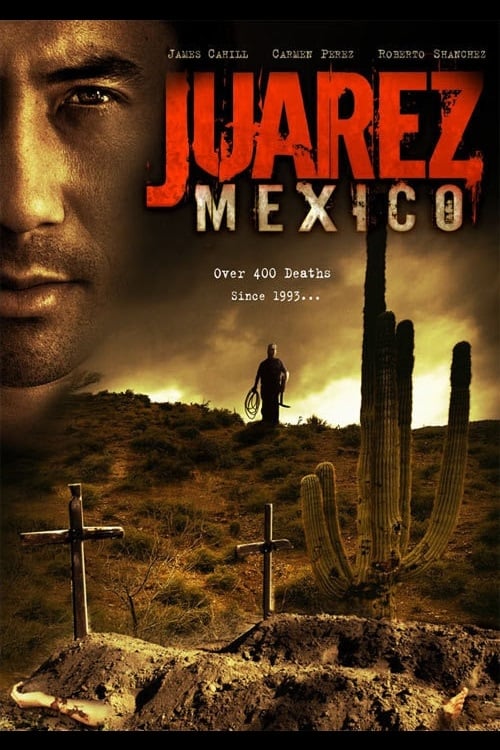





Popular
What motivates the character of Detective Rodriguez in Juarez, Mexico?
How does the character of Ana contribute to the narrative of Juarez, Mexico?
What role does the drug cartel play in the events of Juarez, Mexico?
How does the film portray the relationship between law enforcement and the community in Juarez, Mexico?
What is the significance of the setting in Juarez, Mexico, for the characters' development?
Should I watch it?
Ask Your Own Question

What is the plot?
Eva Jiménez is riding home from work in Ciudad Juárez when the bus gradually empties. She is a young woman from Oaxaca who works in one of the maquiladoras, the border factories that employ thousands of migrants for low wages. By the time the bus reaches the outskirts of the city, Eva is the only passenger left. The driver tells her he must stop at a gas station and asks whether she minds waiting. Eva agrees, unaware that the detour is a trap.
Instead of going to the station, the driver takes the bus to an isolated area. There, he and another man overpower Eva. They rape her, beat her, and attempt to strangle her. Believing that she is dead, the two men carry her into the desert and bury her in a shallow grave. Darkness closes over Eva as the men leave her beneath the dirt.
She regains consciousness underground. Her body is battered, her breathing is shallow, and panic gives way to a desperate instinct to survive. Eva claws through the soil until she breaks free and crawls from the grave. She is alive, but she understands immediately that the men who attacked her will kill her if they discover that she survived.
The attack places Eva inside the larger nightmare consuming Ciudad Juárez. Since the early 1990s, hundreds of women--many of them young maquiladora workers--have disappeared. Their bodies are found in the desert, on vacant land, and near the roads used by factory buses. Many have been raped, mutilated, and abandoned as if their lives have no value. The authorities repeatedly treat the deaths as separate incidents, blame the victims, or claim that the women simply put themselves in danger. The city's factories continue operating, American companies continue profiting from inexpensive labor, and the disappearances become part of the landscape.
In Chicago, Lauren Adrian works for the Chicago Sentinel. She is ambitious, impatient, and determined to become a foreign correspondent. Her editor, George Morgan, sees an opportunity to test her. He assigns her to travel to Juárez and investigate the murders of the factory women. The assignment is dangerous, but Lauren recognizes that it could change her career. If she can produce a major story, she may earn the overseas position she wants.
Lauren crosses into Mexico and returns to a city she knows through both journalism and memory. There she reconnects with Alfonso Díaz, a Mexican journalist and the editor of a local newspaper. Alfonso is her former colleague and former lover. Their reunion carries the awkwardness of unfinished emotions, but the city's crisis quickly pushes their personal history into the background. Alfonso has spent years reporting on the murdered and missing women, even though local officials threaten him and powerful interests want his newspaper silenced.
His office is filled with photographs, clippings, missing-person reports, and records of bodies found outside the city. The files reveal the pattern that officials refuse to acknowledge. The victims are frequently young women who work in maquiladoras. They leave factories at night, board poorly protected buses, walk through dangerous neighborhoods, and vanish before reaching home. Their bodies are later discovered in places where someone expects the desert to conceal them.
Lauren wants official confirmation, but the police offer only evasions. Officers dismiss connections among the cases and resist the idea that the murders are coordinated. They suggest that the victims' private lives, behavior, or relationships explain their deaths. Lauren recognizes the familiar language of a cover-up: each woman is reduced to an isolated tragedy, and the authorities avoid asking why so many workers from the same industrial system are disappearing in the same way.
Alfonso tells Lauren that the problem is not merely incompetent policing. The maquiladora economy is essential to the city and to cross-border commerce. The factories provide cheap labor for products sold in the United States, while local and foreign business interests have every reason to prevent scandal. Acknowledging that factory workers are being systematically hunted would expose unsafe transportation, official corruption, and the human cost of the economic arrangement.
As Lauren and Alfonso investigate, they learn that Eva survived one of the attacks. She is the only known survivor of the pattern they are studying. Her wounds are physical, but fear has damaged her trust in everyone around her. She knows what the attackers look like and remembers enough about the assault to identify them. Her testimony could establish that the murders are not random and could connect the attackers to the broader series of crimes.
Eva is taken under the protection of a sympathetic Mexican woman, but safety remains temporary. She understands that the men who buried her will search for her if they learn she is alive. The authorities are not willing to guarantee her protection, and the people helping her know that official institutions may be compromised. Lauren approaches Eva carefully, refusing to treat her merely as evidence. She listens to her account and tries to convince her that speaking out could prevent another woman from suffering the same fate.
Eva initially resists. She has watched the city abandon the dead, and she does not believe a police investigation will protect her. Every request for cooperation seems to place her in greater danger. Lauren tells her that her survival gives the victims a voice, but Eva answers through fear: if she testifies, the men will find her.
Meanwhile, Alfonso's newspaper continues publishing articles about the murders. Each report challenges the official version of events and preserves the names and faces of women whom the authorities would rather reduce to statistics. The newspaper becomes a target. Alfonso receives threats, and the pressure around him grows more direct. The people trying to stop the investigation do not need to disprove the evidence if they can frighten the witnesses, intimidate the reporters, and make publication impossible.
Lauren also realizes that she cannot understand the murders from a distance. She goes undercover inside a maquiladora, presenting herself as a factory worker. The disguise places her inside the world inhabited by Eva and the other victims. She experiences the exhausting factory environment and sees how easily workers can become vulnerable once their shifts end. The workers are expected to endure long hours and then travel through areas where transportation is unreliable and protection is nonexistent.
The undercover assignment brings Lauren closer to the danger. She is nearly killed while pursuing information about the attacks. The attempted killing makes clear that someone is monitoring her investigation. She is not simply confronting a group of street criminals; she is approaching a network that has enough reach to identify and attack a journalist.
Her experiences also deepen the emotional connection between Lauren and Eva. Lauren begins the assignment wanting a career-making story, but her motives change as the women's lives become more than material for a newspaper. She sees the fear in the factory workers, the grief of families searching for daughters, and the indifference of officials who have learned to absorb murder without accepting responsibility.
Alfonso and Lauren gradually assemble the truth. The murders involve more than unrelated predators. The victims have been selected from a vulnerable population, attacked along predictable routes, and abandoned with the confidence that no serious investigation will follow. The police suppress evidence and discourage attempts to connect the cases. Business and political interests protect the system because acknowledging the crimes could damage the factories and the cross-border trade they represent.
The danger becomes personal for Alfonso. He has already risked his career by publishing the truth, but now his reporting makes him a direct obstacle. One day, as he is traveling through Juárez, a car approaches and gunmen open fire in a drive-by shooting. Alfonso Díaz is shot and killed. His death is not an accident and not an ordinary consequence of the city's violence; it is an assassination intended to silence the newspaper and frighten everyone connected to the investigation.
Lauren is devastated. Alfonso was her former lover, her local guide, and the person who understood the case more deeply than anyone else. His murder confirms that the people behind the cover-up will kill to protect it. The newspaper loses its editor, and the investigation loses its strongest local advocate, but Alfonso's death also makes his work impossible for Lauren to dismiss as merely professional. His files and reporting become part of the evidence she must carry forward.
Eva now understands that her own life is in immediate danger. The attackers know, or suspect, that she survived. If she testifies, they may be identified. If she remains silent, they can continue operating while the official story claims that nothing connects the cases.
Under pressure, Eva changes her mind about testifying. She tries to flee to the United States with other migrants hidden in the trunk of a car. The attempted escape is desperate and dangerous. She is caught at the border by immigration or border authorities and sent back to Mexico. The return destroys her hope that crossing into the United States will automatically make her safe. She is again in Juárez, again exposed to the men who want her dead, and again forced to decide whether speaking is worth the risk.
Lauren finds her and urges her not to surrender to fear. She tells Eva that Alfonso died because people wanted the truth buried, just as Eva was buried in the desert. If Eva remains silent, the attackers and the officials protecting them will control the story. Eva is terrified, but Lauren finally persuades her to testify.
At the same time, Lauren's article encounters resistance in Chicago. George Morgan initially supports the investigation, but political pressure reaches the Chicago Sentinel. Powerful Mexican business figures and plutocrats tied to the maquiladora economy use their influence with American politicians. The murders threaten the public image of free trade and the companies benefiting from cheap labor, so officials and business interests want the story contained.
The pressure reaches Morgan. Lauren's report is delayed or suppressed, and she is ordered to return to the United States shortly before Eva is scheduled to testify. The order is presented as an editorial or professional decision, but its real purpose is to separate Lauren from Eva at the critical moment and keep the investigation from becoming a public scandal. Lauren has gathered the evidence, but the institution that employs her now becomes another barrier between the evidence and the public.
Her forced departure is one of the story's most painful betrayals. Lauren has worked undercover, endured threats, and watched Alfonso die, only to discover that American media is also vulnerable to political and commercial pressure. The cover-up crosses the border. It is not confined to Mexican police or local officials; it is sustained by an international system that values economic stability and corporate reputation over the lives of poor women.
Eva is left facing the consequences alone. She is the survivor who can identify the attackers, but she is also the witness everyone wants to control. Those who attacked her want her dead. Officials who failed to investigate want her testimony weakened or erased. The people protecting her can offer shelter but cannot promise that they can overcome the entire system.
The final confrontation takes place in a shantytown. Violence erupts as the pursuit of Eva's attackers reaches its climax. One of the men involved in her assault is caught in a fire and burned to death. The available account does not establish that a named character deliberately sets the fire or clarify whether anyone else dies in it, but the attacker's death is the direct violent consequence of the final pursuit. He does not receive a formal trial, and the larger conspiracy is not neatly dismantled through the courts.
The fire is a grim, chaotic form of justice. It mirrors the desert grave where Eva was supposed to disappear: the men who believed they could erase women without consequence are finally exposed to the destruction they helped create. Yet the death does not solve the murders. It does not identify every perpetrator, restore Alfonso's life, or force every corrupt official to answer for the women found in the desert.
Eva survives. Lauren survives the attempt on her life and the institutional campaign against her. Alfonso Díaz does not survive; he is killed in the drive-by shooting. The attacker who is trapped in the shantytown fire dies as well. Eva's original attackers also commit the attempted murder against her by beating, strangling, and burying her, but Eva escapes before they can finish killing her. The many other women whose bodies are discovered around Juárez remain victims of the wider murder system, and the film does not provide a complete name-by-name accounting of those deaths.
Lauren's work eventually brings the story to a wider audience, even though it is obstructed and pressured. Eva's testimony becomes the central human evidence of what the authorities have denied. Her survival prevents the attack from being filed away as another unsolved death and gives the murdered women a living witness.
The resolution is deliberately incomplete. The film does not end with every killer arrested, every case solved, or every official prosecuted. The maquiladoras remain, the economic interests remain, and the institutional failures remain. The system that made the women vulnerable is larger than the individual attackers who assaulted Eva.
But the final meaning of Eva's survival is equally clear. The perpetrators intended to reduce her to a body in a shallow grave, another anonymous victim in the desert. Instead, she climbs out, tells what happened, and becomes the voice of those who cannot speak. Lauren carries the investigation beyond the border, and Alfonso's newspaper stands as evidence that someone in Juárez continued recording the truth even when doing so cost him his life.
The final image and resolution leave the city wounded rather than healed. Juárez remains a place where poverty, factory labor, corruption, and political power intersect. The murders are not transformed into a solved mystery. They remain a continuing crime and a continuing indictment. Eva is alive, but justice is only partial; one attacker dies, Alfonso is gone, and the larger forces that permitted the killings remain largely intact.
The story ends with survival, testimony, and public memory as the only victories the characters can secure. Eva is no longer an invisible victim. Lauren is no longer merely an ambitious reporter seeking a foreign assignment. Alfonso's death does not silence the truth he spent years publishing. The women of Juárez are still denied full justice, but they are no longer allowed to disappear completely.







What is the ending?
In the ending of "Juarez, Mexico," the film culminates in a tense confrontation that highlights the brutal realities of the drug war and the personal stakes for the characters involved. The main characters face dire consequences as their lives intertwine with the violence surrounding them, leading to tragic outcomes.
As the film progresses towards its conclusion, we see the characters grappling with their choices and the impact of the drug trade on their lives. The protagonist, a journalist, is determined to expose the truth about the corruption and violence in Juarez. However, his pursuit of justice puts him in grave danger. The film ends with a sense of hopelessness, as the cycle of violence continues unabated, leaving the characters to confront their fates in a world that seems unforgiving.
In a more detailed narrative, the final scenes unfold with a palpable tension. The journalist, driven by a fierce commitment to uncover the truth, finds himself in a precarious situation. He has gathered evidence of the drug cartel's operations and the complicity of local authorities. As he prepares to publish his findings, he is acutely aware of the risks involved. The weight of his responsibility hangs heavily on him, and his determination is fueled by a desire to bring justice to the victims of the violence that has plagued Juarez.
Meanwhile, the other main characters, including a local woman who has been deeply affected by the violence, are also facing their own crises. She has lost loved ones to the drug war and is torn between her desire for revenge and the hope for a peaceful resolution. Her internal struggle is mirrored in the chaos around her, as the city becomes increasingly dangerous.
As the climax approaches, the journalist's investigation leads him to a confrontation with members of the cartel. The scene is charged with tension as he realizes the extent of the danger he is in. The cartel members, ruthless and unyielding, are determined to silence him. The stakes are high, and the atmosphere is thick with fear and desperation.
In a heart-stopping moment, the journalist is ambushed. The scene is chaotic, filled with the sounds of gunfire and the cries of those caught in the crossfire. The local woman, witnessing the violence unfold, is faced with a choice: to flee or to stand her ground. Her decision reflects her internal conflict and the broader themes of the film, as she grapples with the consequences of the ongoing violence.
As the dust settles, the fates of the main characters are revealed. The journalist, despite his bravery, becomes a victim of the very system he sought to expose. His fate serves as a grim reminder of the dangers faced by those who dare to challenge the status quo. The local woman, too, is left to confront the aftermath of the violence, her hopes for a better future shattered.
The film concludes with a haunting sense of inevitability, as the cycle of violence continues in Juarez. The characters' struggles and sacrifices highlight the harsh realities of life in a city ravaged by the drug trade, leaving the audience with a poignant reflection on the cost of seeking justice in a world fraught with corruption and despair.
Is there a post-credit scene?
The movie "Juarez, Mexico," produced in 2007, does not contain a post-credit scene. The film concludes its narrative without any additional scenes or content after the credits roll. The focus remains on the intense and emotional story surrounding the struggles and violence in Juarez, emphasizing the harsh realities faced by its characters throughout the film.
What motivates the character of Detective Rodriguez in Juarez, Mexico?
Detective Rodriguez is driven by a deep sense of justice and a personal connection to the violence in Juarez. His determination to solve the murders of women in the city stems from his own experiences and the loss of loved ones to the rampant crime. This personal stake fuels his relentless pursuit of the truth, even as he faces corruption and danger.
How does the character of Ana contribute to the narrative of Juarez, Mexico?
Ana serves as a poignant representation of the victims of violence in Juarez. Her character is introduced as a hopeful young woman with dreams, but as the story unfolds, her fate becomes a tragic reflection of the societal issues plaguing the city. Her journey highlights the emotional toll of the violence and the impact on families and communities.
What role does the drug cartel play in the events of Juarez, Mexico?
The drug cartel is a central antagonist in Juarez, Mexico, representing the pervasive corruption and violence that affects the city. Their influence is felt throughout the narrative, as they are responsible for many of the murders and the climate of fear. The cartel's actions drive the plot forward, creating obstacles for Detective Rodriguez and illustrating the broader societal issues.
How does the film portray the relationship between law enforcement and the community in Juarez, Mexico?
The film depicts a strained relationship between law enforcement and the community, characterized by mistrust and fear. Detective Rodriguez often finds himself at odds with corrupt officials and the drug cartel, which complicates his efforts to protect the citizens. This dynamic highlights the challenges faced by those trying to uphold justice in a city plagued by crime.
What is the significance of the setting in Juarez, Mexico, for the characters' development?
The setting of Juarez is crucial to the characters' development, as it shapes their experiences and motivations. The city is depicted as a place of despair and danger, influencing characters like Detective Rodriguez and Ana. The harsh realities of life in Juarez force the characters to confront their fears and desires, ultimately shaping their choices and fates.
Is this family friendly?
"Juarez, Mexico," produced in 2007, is not considered family-friendly due to its intense and mature themes. The film deals with the harsh realities of drug trafficking, violence, and the struggles faced by individuals in a crime-ridden environment.
Potentially objectionable or upsetting aspects include:
-
Violence: The film contains scenes depicting gun violence and the aftermath of violent confrontations, which may be distressing for younger viewers.
-
Death: There are moments that involve the death of characters, which can be emotionally heavy and unsettling.
-
Drug-related themes: The narrative explores the drug trade and its impact on families and communities, which may be inappropriate for children.
-
Emotional distress: Characters experience significant emotional turmoil, including fear, despair, and loss, which could be upsetting for sensitive viewers.
-
Adult language: The dialogue includes strong language that may not be suitable for younger audiences.
Overall, the film's serious subject matter and graphic content make it more appropriate for mature audiences.