















Popular
What motivates Dr. Jekyll to create the potion that transforms him into Mr. Hyde?
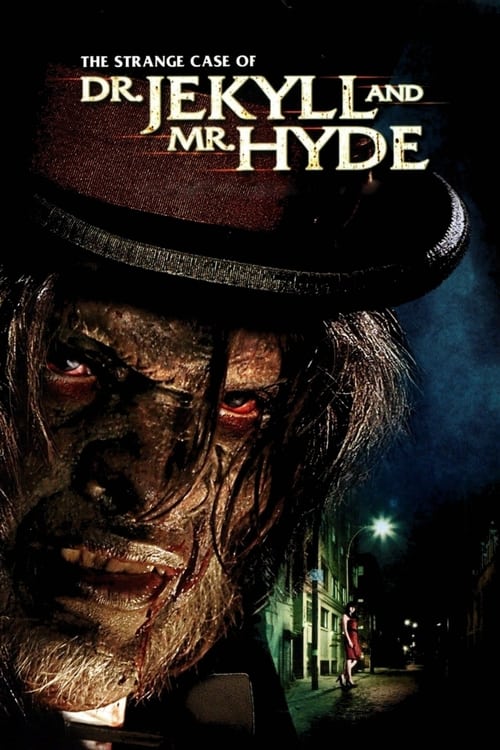
How does Mr. Hyde's appearance differ from Dr. Jekyll's?
What are the consequences of Mr. Hyde's actions on Dr. Jekyll's life?
How does Dr. Jekyll's relationship with his friends, particularly Mr. Utterson, evolve throughout the film?
What role does the setting play in the transformation of Dr. Jekyll into Mr. Hyde?
Should I watch it?
Ask Your Own Question

What is the plot?
Sorry, we aren't able to watch and write up a full detailed plot yet. Check back in a few days.








What is the ending?
In the ending of "The Strange Case of Dr. Jekyll and Mr. Hyde" (2006), Dr. Jekyll confronts the monstrous Mr. Hyde in a final struggle for control over his own identity. Ultimately, Jekyll realizes that he cannot escape the darkness within him. In a desperate attempt to rid himself of Hyde, he takes a lethal dose of his own potion, leading to his demise. The film concludes with the tragic realization that the duality of human nature cannot be easily separated, leaving a haunting legacy of Jekyll's internal battle.
As the film approaches its climax, the tension escalates. Dr. Jekyll, portrayed with a mix of intelligence and desperation, is seen in his laboratory, surrounded by the remnants of his experiments. The dim light casts shadows across his face, reflecting the turmoil within him. He is torn between his noble intentions to separate the good and evil within himself and the overwhelming power of Mr. Hyde, who has begun to dominate his psyche.
In a pivotal scene, Jekyll prepares the potion one last time, his hands trembling as he measures the ingredients. The camera zooms in on his face, capturing the fear and determination in his eyes. He knows that this could be his final chance to rid himself of Hyde once and for all. As he drinks the potion, the transformation begins. The screen flickers with a mix of light and dark, symbolizing the battle between his two identities.
Suddenly, Jekyll convulses, and the transformation into Hyde is violent and chaotic. The audience witnesses the physical change, with Hyde emerging as a grotesque figure, embodying all of Jekyll's suppressed desires and rage. Hyde, now fully in control, revels in his freedom, but there is a palpable sense of dread as he begins to wreak havoc once more.
In a dramatic confrontation, Jekyll, still partially aware, fights against Hyde's influence. The struggle is visceral, with Jekyll's internal voice pleading for control. The setting shifts to a dark alley, where Hyde encounters a victim, and the brutality of his actions is laid bare. The violence escalates, and the audience feels the weight of Jekyll's moral conflict as he grapples with the consequences of his dual existence.
As the climax reaches its peak, Jekyll realizes that he cannot continue living this way. In a moment of clarity, he decides to take drastic action. He returns to his laboratory, where he prepares a final dose of the potion, this time with the intent to end his own life. The emotional weight of this decision is palpable; Jekyll is filled with sorrow and regret, understanding that he has lost the battle against Hyde.
In the final moments, Jekyll drinks the potion one last time, and the transformation occurs again. However, this time, it is not just a change into Hyde; it is a surrender to the darkness. The screen fades to black as Jekyll's last breath is taken, leaving the audience with a haunting silence.
The film concludes with a somber reflection on the nature of humanity. The fate of Dr. Jekyll is sealed in tragedy, as he succumbs to the very darkness he sought to control. Mr. Hyde, though defeated in a sense, lives on as a representation of the darker aspects of human nature that cannot be easily eradicated. The legacy of Jekyll's experiments serves as a cautionary tale about the dangers of tampering with the duality of the human soul, leaving viewers to ponder the complexities of good and evil within themselves.
Is there a post-credit scene?
The 2006 film "The Strange Case of Dr. Jekyll and Mr. Hyde" does not feature a post-credit scene. The film concludes with a focus on the resolution of Dr. Jekyll's internal struggle and the consequences of his experiments, leaving the audience with a sense of closure regarding the character's fate and the moral implications of his actions. The narrative wraps up without any additional scenes or hints at further developments after the credits roll.
What motivates Dr. Jekyll to create the potion that transforms him into Mr. Hyde?
Dr. Jekyll is driven by a deep-seated desire to explore the duality of human nature. He believes that within every person lies both good and evil, and he seeks to separate these two sides. His motivation is rooted in a scientific curiosity and a personal struggle with his own repressed desires, leading him to concoct a potion that allows him to unleash his darker self.
How does Mr. Hyde's appearance differ from Dr. Jekyll's?
Mr. Hyde is depicted as a physically repulsive figure, embodying the darker aspects of Jekyll's personality. He is shorter, with a hunched posture, and has a sinister, almost animalistic demeanor. His facial features are described as ugly and deformed, contrasting sharply with Jekyll's more refined and respectable appearance, highlighting the stark divide between the two identities.
What are the consequences of Mr. Hyde's actions on Dr. Jekyll's life?
Mr. Hyde's violent and immoral actions begin to take a toll on Dr. Jekyll's life, leading to a series of tragic events. As Hyde commits increasingly heinous acts, including murder, Jekyll finds himself grappling with guilt and fear. The line between the two identities blurs, causing Jekyll to lose control over his transformations and ultimately threatening his reputation, relationships, and sanity.
How does Dr. Jekyll's relationship with his friends, particularly Mr. Utterson, evolve throughout the film?
Initially, Mr. Utterson is a close friend and confidant of Dr. Jekyll, concerned about his well-being as he becomes increasingly isolated. As the story progresses and Hyde's actions come to light, Utterson's concern turns to suspicion. He becomes determined to uncover the truth behind Jekyll's connection to Hyde, leading to a strained relationship filled with tension and betrayal as Utterson realizes the extent of Jekyll's internal conflict.
What role does the setting play in the transformation of Dr. Jekyll into Mr. Hyde?
The setting plays a crucial role in the transformation, with the dark, fog-laden streets of Victorian London reflecting the moral decay and duality of the characters. The contrast between the respectable society in which Jekyll operates and the seedy underbelly that Hyde inhabits emphasizes the struggle between good and evil. The laboratory, where Jekyll conducts his experiments, serves as a physical manifestation of his inner turmoil, a place where his scientific ambitions lead to his ultimate downfall.
Is this family friendly?
The 2006 film "The Strange Case of Dr. Jekyll and Mr. Hyde" contains several elements that may not be suitable for children or sensitive viewers. Here are some potentially objectionable aspects:
-
Violence and Gore: The film includes scenes of violence that depict physical altercations and the transformation of Dr. Jekyll into Mr. Hyde, which can be graphic and unsettling.
-
Dark Themes: The exploration of duality, identity, and the darker aspects of human nature may be disturbing for younger audiences. The moral dilemmas faced by Dr. Jekyll can evoke feelings of fear and confusion.
-
Psychological Horror: The film delves into psychological horror, showcasing the internal struggle of Dr. Jekyll as he battles with his darker impulses, which may be intense for sensitive viewers.
-
Mature Situations: There are moments that touch on themes of addiction and moral corruption, which may not be appropriate for younger viewers.
-
Emotional Turmoil: The characters experience significant emotional distress, including fear, guilt, and despair, which could be upsetting for some audiences.
These elements contribute to a darker tone that may not be suitable for all viewers, particularly children.